Archaeologists identify ancient Maya astronomer Sak Tahn Waax in Xultun
Archaeologists in Xultun, Guatemala, have identified Sak Tahn Waax, a Classic Maya mathematician-astronomer, through hieroglyphs found in a workshop. This discovery provides a rare link between individual intellectual labor and the broader traditions of ancient Maya astronomy.
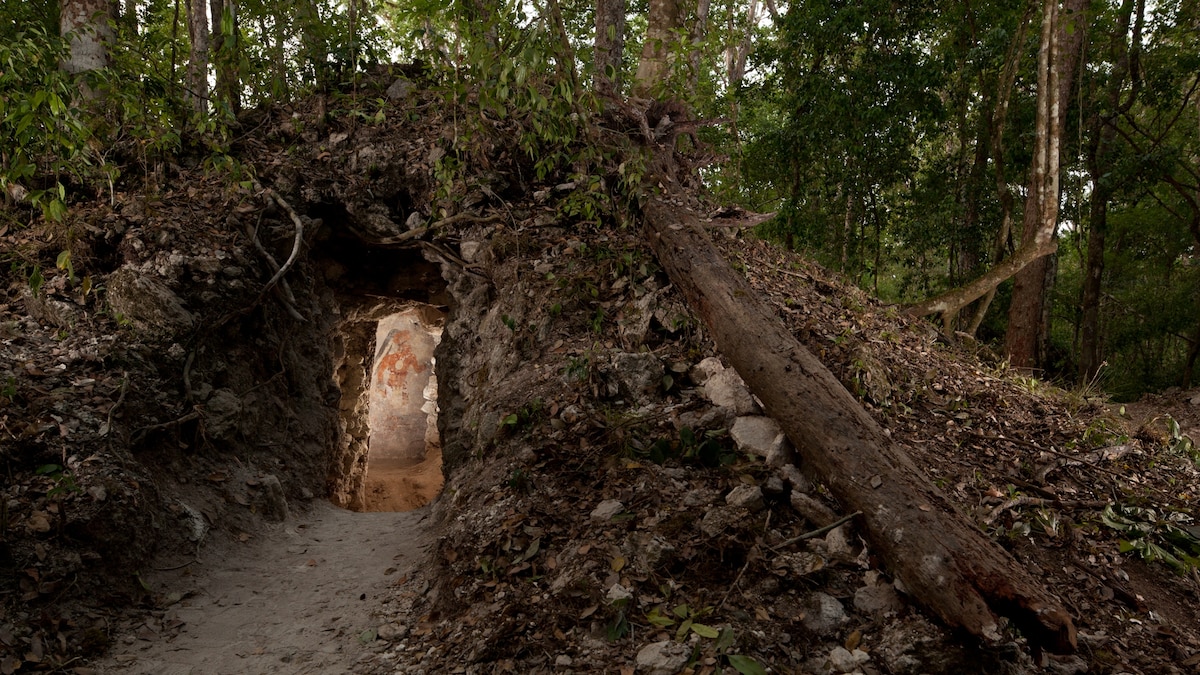
Archaeologists working in the ancient Maya city of Xultun, Guatemala, have identified the first named mathematician-astronomer from the Classic Maya period. The discovery, detailed in a paper published 14 July 2026 in the journal Antiquity, centers on a series of hieroglyphs inscribed in a small residential structure known as 10K-2. Researchers have deciphered these markings to reveal the name Sak Tahn Waax, which translates to “White-chested Fox.”
This identification is a notable shift in the study of Mesoamerican history. While previous excavations have unearthed the names of royalty and political figures, the scholars responsible for the complex calendrical and mathematical systems that defined Maya life have historically remained anonymous. The finding provides a rare, direct link between individual intellectual labor and the broader traditions of Indigenous astronomy.
Related media


The Discovery at Structure 10K-2
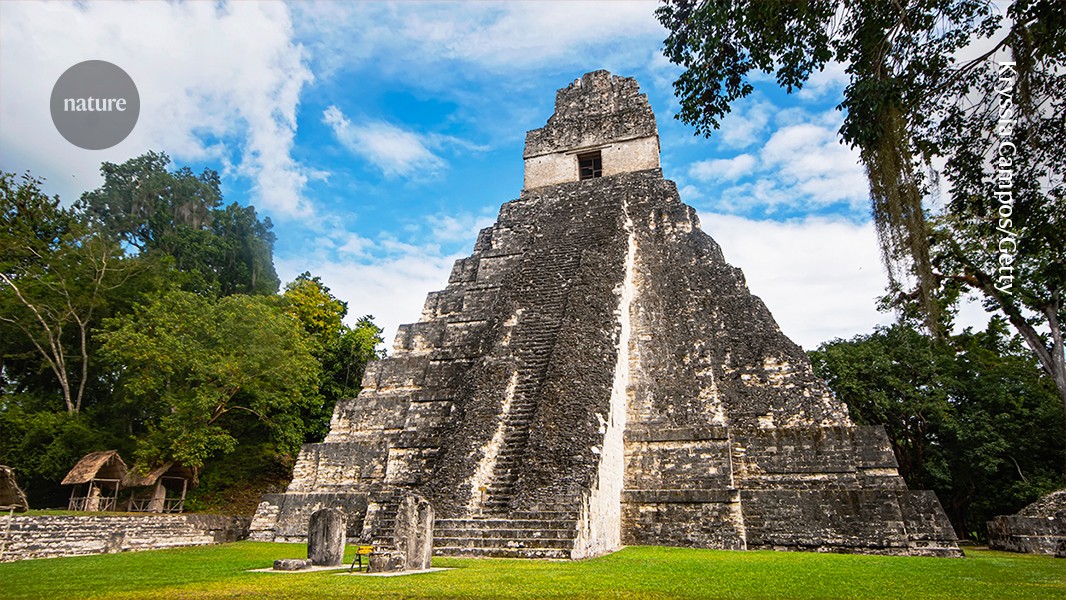
The site of Xultun, located in the northern Petén region of Guatemala, has been the focus of ongoing research since 2008. The chamber where Sak Tahn Waax’s name was found was initially uncovered by a team led by archaeologists between 2010 and 2012 after a looting tunnel pierced the structure’s wall. Inside, researchers discovered more than 50 “microtexts”—faint, painted calculations and glyphic inscriptions covering the walls of the small, rectangular room.
Franco Rossi, an archaeologist at the Massachusetts Institute of Technology and lead author of the study, described the process of decipherment as a long-term analytical effort. Using a combination of multispectral imaging, digital enhancement, and hand-drawn reconstructions, the team focused on a specific cluster of 11 hieroglyphs. The final two glyphs, read as “che-he-na” followed by the name SAK-TAHN-wa-xi, provided the critical attribution.
A Mathematical “Mic Drop”
The text accompanying the name contains a unique mathematical formula that relates several significant celestial cycles, including the 260-day ritual calendar, the solar year, and the movements of Mars and Venus. According to Heather Hurst, an archaeologist at Skidmore College and senior author of the study, the formula demonstrates a sophisticated level of mathematical playfulness. The work aims to achieve a 2,920-day convergence, representing five cycles of Venus and eight solar years.
Hurst characterized the inscription as a deliberate expression of professional expertise.
"I think it was a mathematical flex. Somebody was saying ‘I’ve got this amazing pattern, and it’s so good it needs to be written down’. It was like, ‘Boom! Mic drop!’"
Heather Hurst, Archaeologist at Skidmore College, via Nature
Because the chamber contained papermaking tools and depictions of scribes, experts believe the space served as a workshop for training and the drafting of codices. The inscriptions on the walls likely functioned as “rough drafts” for larger documents, similar to the surviving bark-based books produced by the Maya in later centuries, such as the Dresden Codex.
Implications for Maya Science
The attribution of the work to Sak Tahn Waax suggests that intellectual contributions were highly valued within 8th-century Maya society. This aligns the Maya tradition with other ancient civilizations, such as those in India, Greece, and China, where astronomical achievements were similarly credited to individual thinkers.
Researchers remain cautious about the exact Nature of the signature. It is possible that Sak Tahn Waax inscribed the formula himself, or that a colleague or student recorded his name as an attribution for the intellectual work. Regardless of the exact scenario, the discovery confirms that specific scholars were recognized for their ability to calculate the movements of the planets, which in turn guided royal inaugurations, architectural alignments, and religious festivals.
What to Watch Next
- Analysis of remaining microtexts: Researchers have only fully deciphered a small fraction of the 50-plus texts found in structure 10K-2. Further study may reveal if Sak Tahn Waax contributed other formulas to the chamber.
- Scribal identification: The team hopes to distinguish between different "hands" present on the walls, which could provide evidence of a guild or collaborative group of astronomers working at the site.
- Site-wide surveys: With 900 hectares of the urban zone at Xultun still obscured by forest, future excavations are expected to continue searching for similar workspaces that could offer additional names and insights into the lives of ancient Maya professionals.
Archypedia is dedicated to independent, evidence-backed reporting. This briefing was synthesized from primary source reporting, corroborated across independent newsrooms, and verified against our Editorial Standards.
Transparency record
Evidence behind this report
This report synthesizes 9 distinct sources. Open the source ledger below to compare the underlying coverage.
- nationalgeographic.com
- thestandard.com.hk
- theartnewspaper.com
- nature.com
- sciencealert.com
- slguardian.org
- unitedcultures.org
- gizmodo.com
- scientificamerican.com
Prepared under the Archypedia Editorial Policy by the Niko Vale editorial desk profile. AI-assisted tools may support drafting and verification; public accountability remains with Archypedia. Report an error.