What does it mean to be ‘quantum’? A physicist explains the basics
Scientists are transitioning from exploring quantum mechanics to harnessing qubits for advanced computing, while addressing the cybersecurity threats posed.
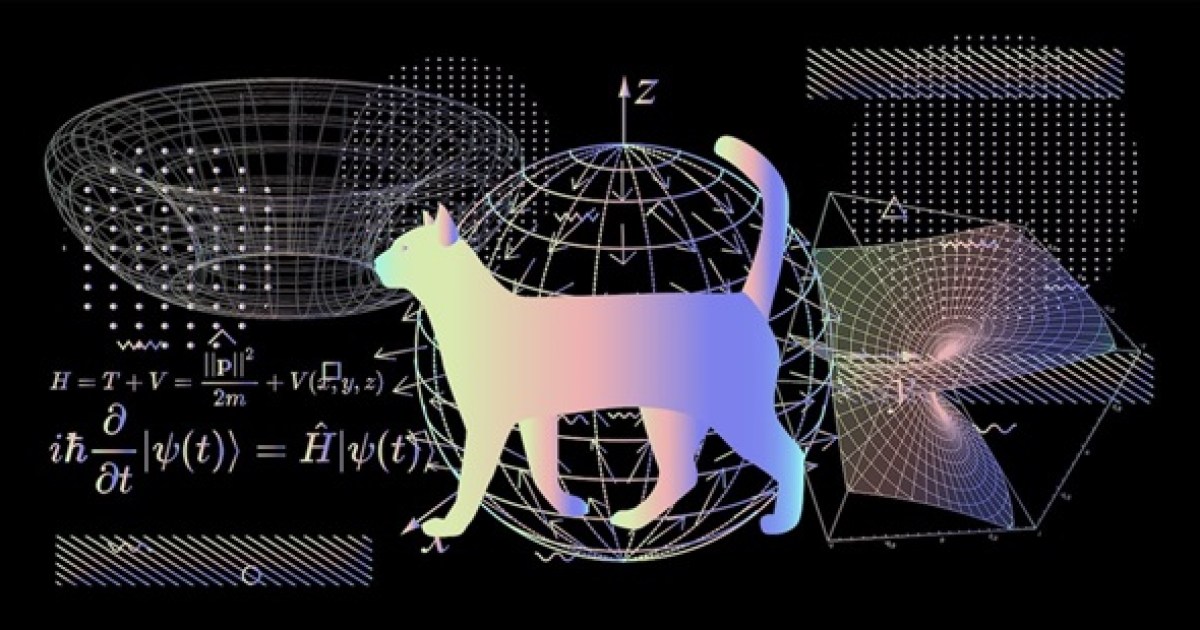
Quantum mechanics describes a reality that defies everyday human intuition. While classical physics explains the movement of a tennis ball or the operation of a light switch through predictable, fixed states, the atomic scale operates under entirely different laws. At this level, particles such as electrons and photons exist in a state known as superposition. Rather than occupying one definite position or state, these particles remain in a cloud of multiple potential outcomes simultaneously. According to Aldo Romero of West Virginia University, writing via The Conversation, reality at the quantum scale does not settle until an observation or measurement is performed, forcing the system to collapse into a single, definite result.
This fragility of quantum states poses a significant challenge for researchers. External interactions — including heat, vibrations, and stray electromagnetic fields — can trigger decoherence, destroying the delicate superposition and forcing the system into a single state prematurely. To maintain these states, current quantum computers often require cooling systems that reach temperatures colder than outer Space.
Related media
The Mystery of Entanglement
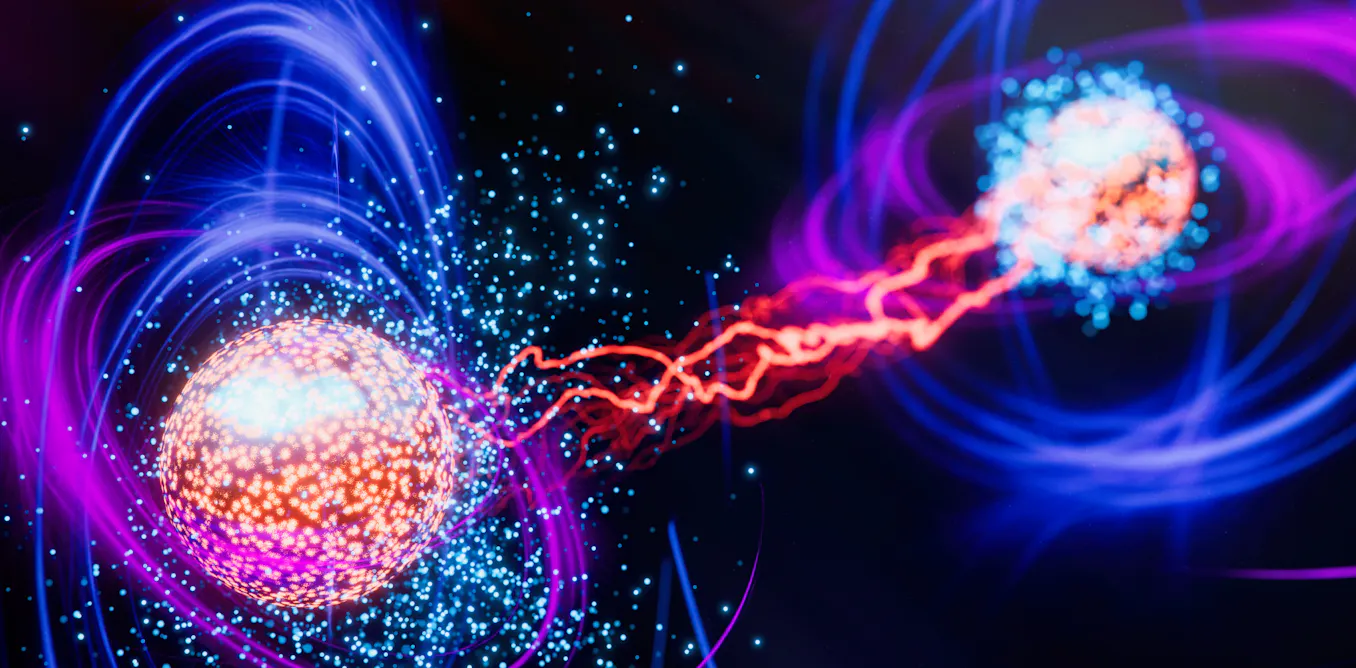
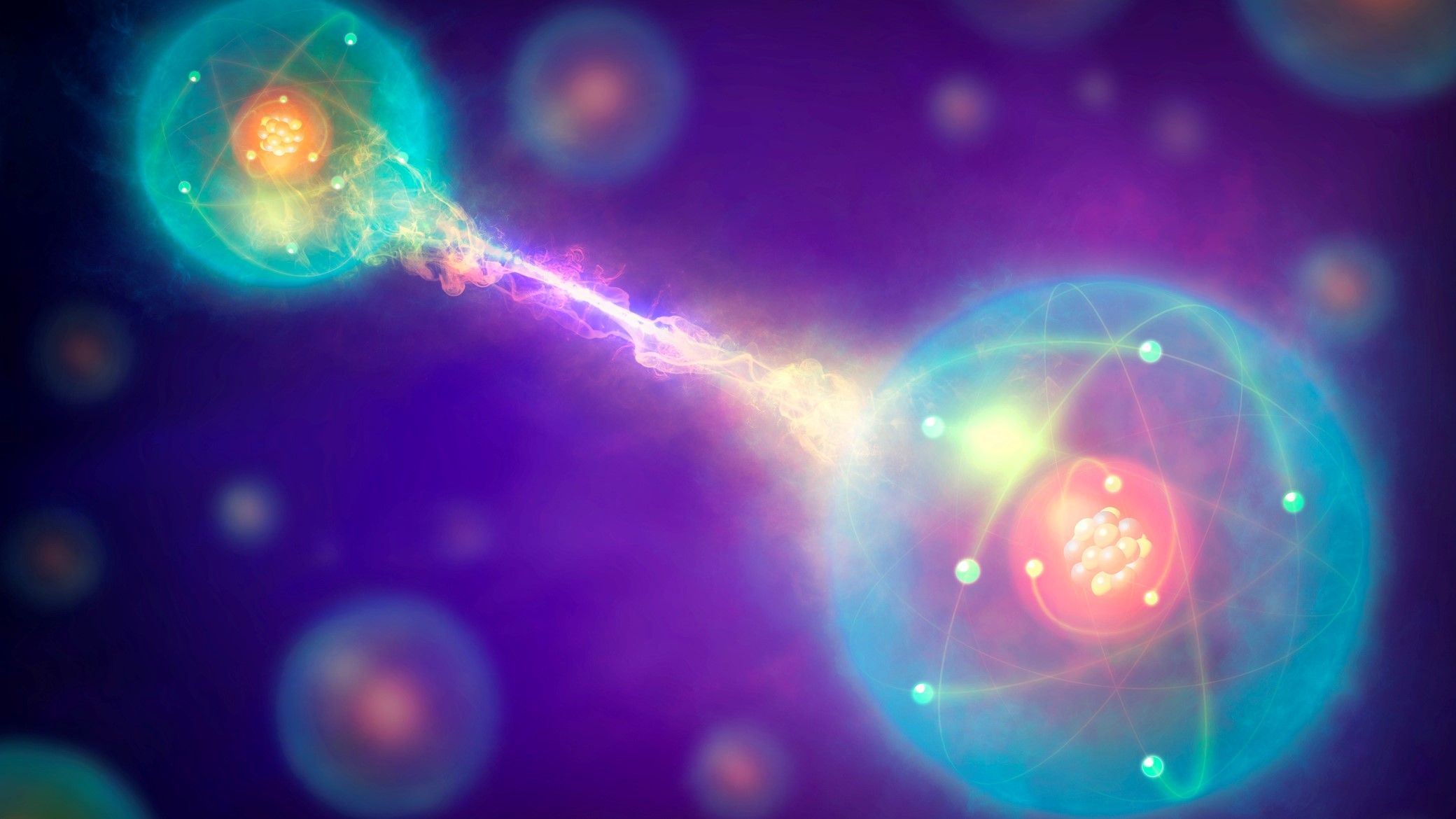
Beyond superposition lies the phenomenon of quantum entanglement. When particles interact in specific ways, their properties become deeply linked, forming a unified system regardless of the distance separating them. Measuring one particle instantly reveals the state of its partner, a correlation that occurs even across cosmic distances. Albert Einstein, who doubted this aspect of quantum theory, famously labeled it "spooky action at a distance." He and his colleagues, Boris Podolsky and Nathan Rosen, proposed in 1935 that the theory was likely missing "hidden variables" that would explain these correlations without violating the speed-of-light constraints of special relativity.
The debate remained largely philosophical until the 1960s, when physicist John Bell developed a mathematical framework known as Bell’s inequality. This scheme allowed researchers to test whether hidden variables or true quantum nonlocality governed these interactions. Experiments conducted over subsequent decades, most notably those recognized by the 2022 Nobel Prize in Physics, demonstrated that Bell’s inequalities are violated. As noted by Andreas Muller of the University of South Florida, these results ruled out local hidden-variable theories, confirming that entanglement is an inherent feature of the universe, not an illusion or a gap in scientific knowledge.
Key Concepts in Quantum Mechanics
- Superposition: The ability of a quantum particle to exist in multiple potential states simultaneously until measured.
- Entanglement: A link between particles where the state of one is tied to the state of another, regardless of the physical distance between them.
- Decoherence: The process by which interaction with the environment forces a quantum system out of superposition into a classical, definite state.
- Collapse: The transition from a set of probabilistic possibilities to a single observed outcome following measurement.
Practical Applications and Emerging Threats
Scientists are now transitioning from exploring quantum mysteries to harnessing them. Traditional computers operate using bits, switches that are either on (1) or off (0). Quantum computers, by contrast, use qubits, which leverage superposition to represent multiple states at once. This capacity allows quantum systems to perform complex calculations, such as molecular simulations for drug design or new material discovery, far beyond the capabilities of current supercomputers.
However, this technology introduces significant cybersecurity concerns. Current internet encryption, such as RSA, relies on the mathematical difficulty of factoring large numbers, a task that mathematician Peter Shor demonstrated in 1994 could be solved in hours by a sufficiently powerful quantum computer. While current hardware is not yet capable of breaking these keys, security experts warn of a "harvest now, decrypt later" strategy, where adversaries intercept encrypted data today with the intention of unlocking it once quantum capabilities mature. To counter these threats, governments are actively developing quantum-safe networks and quantum key distribution, a method that uses the sensitivity of quantum states to detect eavesdroppers.
What to Watch Next
- Hardware Stability: Ongoing efforts by IBM, Google, and IonQ to reduce qubit fragility and improve error correction.
- Quantum Networking: The development of the "quantum internet," following successful satellite-based distribution trials.
- Encryption Upgrades: A global shift toward post-quantum cryptography to protect data from future decryption capabilities.
While the prospect of quantum computing has triggered concerns regarding privacy and security, experts emphasize that the technology itself remains neutral. Its impact will depend entirely on how it is applied, from advancing medical science to altering the global balance of power. As research continues, the focus remains on stabilizing these systems to move them from specialized research tools toward practical, real-world utility.
Archypedia is dedicated to independent, evidence-backed reporting. This briefing was synthesized from primary source reporting, corroborated across independent newsrooms, and verified against our Editorial Standards.
Transparency record
Evidence behind this report
This report synthesizes 9 distinct sources. Open the source ledger below to compare the underlying coverage.
- theconversation.com
- tech.yahoo.com
- astronomy.com
- space.com
- scitechdaily.com
- quantummechanicsstreet.com
- science.nasa.gov
- quantamagazine.org
- en.wikipedia.org
Prepared under the Archypedia Editorial Policy by the Niko Vale editorial desk profile. AI-assisted tools may support drafting and verification; public accountability remains with Archypedia. Report an error.
