Enceladus ocean contains life-sparking energy and essential molecules
New research indicates Enceladus possesses a high-energy chemical environment and hydrothermal activity, suggesting its ocean could support biological life.

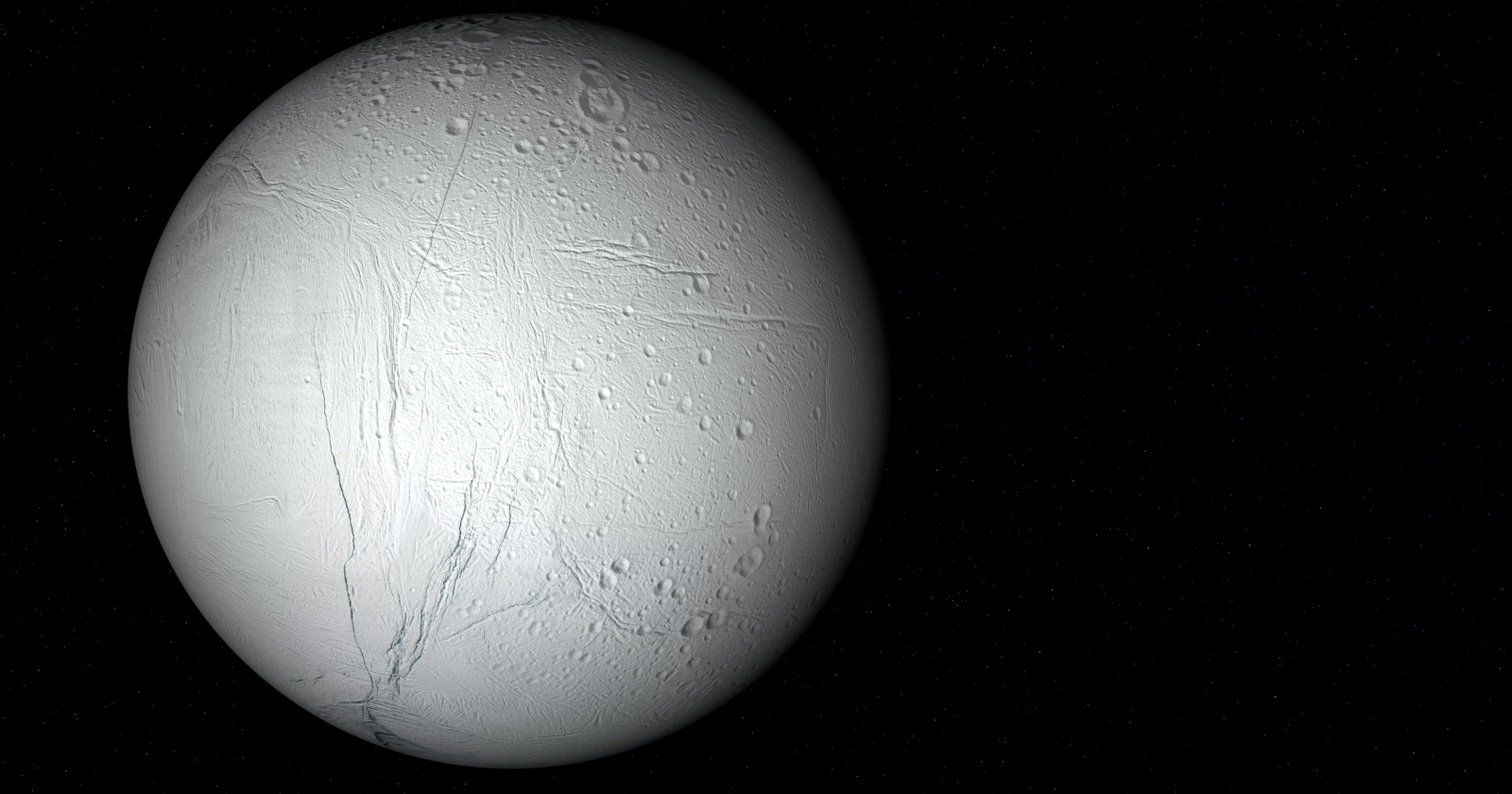
Enceladus, a moon of Saturn roughly 500 kilometers in diameter, has emerged as a focal point in the search for extraterrestrial life. Although the moon is covered in a highly reflective, icy shell, recent analyses of data from the NASA Cassini mission, which operated until 2017, reveal that the world is geologically active and contains a subsurface saltwater ocean. This ocean is not only a reservoir of liquid water but also a environment equipped with the chemical building blocks and energy sources required to support biological life.
Chemical Signatures and Energy Potentials
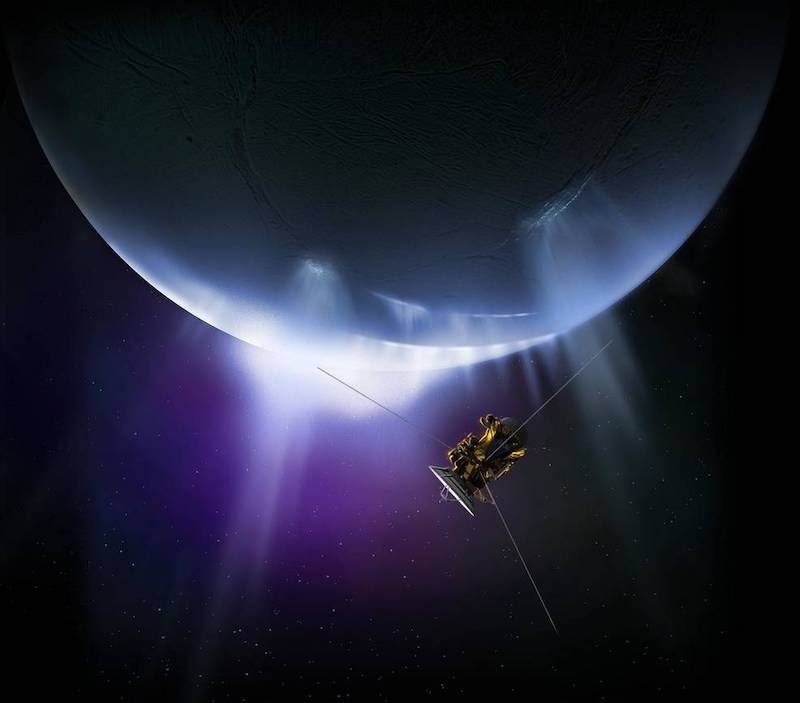
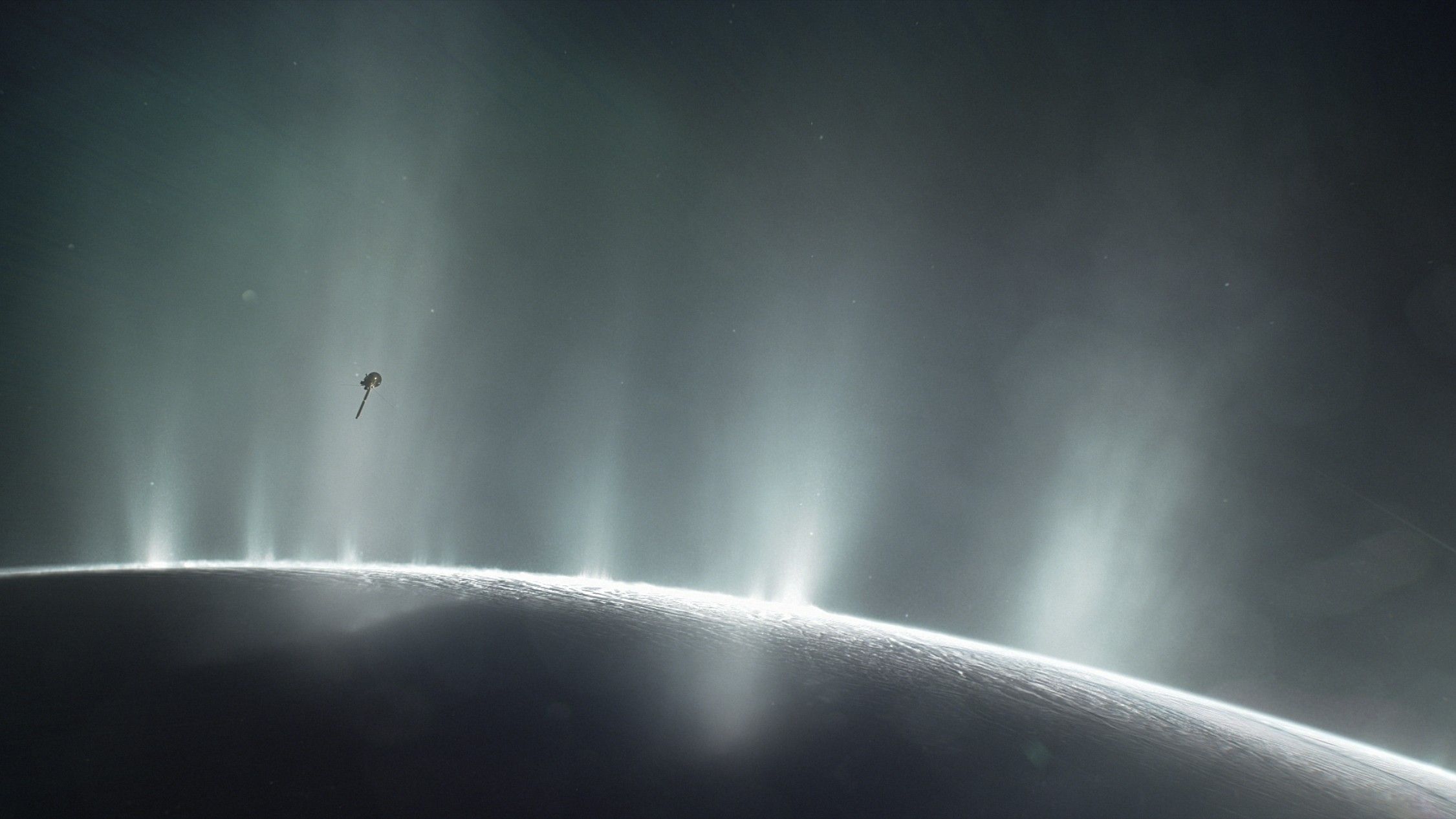
Scientists have long known that Enceladus erupts in geyser-like jets of water vapor and ice particles from fractures in its south polar region, known as tiger stripes
. These plumes supply material to Saturn’s E ring. Recent studies have confirmed the presence of hydrogen cyanide, a versatile molecule often described by researchers as a Swiss army knife of amino acid precursors
. Its detection is significant because hydrogen cyanide is fundamental to the formation of amino acids, which are the building blocks of proteins.
Related media
Beyond molecular components, investigations indicate the presence of a robust energy source. Earlier findings had identified a process called methanogenesis, where the combination of carbon dioxide, hydrogen, and methane suggested a chemical pathway comparable to a small watch battery
. However, updated research indicates the presence of a more diverse array of oxidized organic compounds. According to researchers at the Jet Propulsion Laboratory, this energy profile is more akin to a car battery
, providing significant potential to sustain metabolic processes over long periods.
Global Heat Flow and Stability
For an environment to be truly habitable, it must remain stable over geological timescales. Research published in Science Advances on November 7, 2025, has provided new insights into the moon's thermal state. While heat loss was previously thought to be concentrated at the south pole, scientists from the University of Oxford, the Southwest Research Institute, and the Planetary Science Institute have confirmed that heat is also leaking from the north pole. Measurements indicate a total heat output of approximately 54 gigawatts across both poles. This heat flow indicates a balance between internal tidal heating and surface loss, suggesting the subsurface ocean has remained liquid for a duration sufficient for life to potentially emerge.
This evidence is complemented by observations from the James Webb Space Telescope, which detected a massive plume erupting from the moon, demonstrating that the jets extend significantly further into space than previously documented. These plumes are believed to originate from hydrothermal vents on the ocean floor, where mineral-rich water interacts with rock, a process further supported by the presence of silica grains.
Future Exploration
While the identified conditions are promising, scientists emphasize that discovering the requirements for life is not equivalent to finding life itself. Future mission concepts are currently under consideration by agencies including the European Space Agency and NASA to move beyond flyby observations. Proposed missions include the Enceladus Orbilander, designed to orbit the moon, sample the plumes directly, and eventually land on the surface to perform microscopic analysis and DNA sequencing. Another concept, the Exobiology Extant Life Surveyor, proposes an autonomous snake robot
intended to navigate the moon’s internal environment and explore the seafloor using lidar and cameras.
Archypedia is dedicated to independent, evidence-backed reporting. This briefing was synthesized from primary source reporting, corroborated across independent newsrooms, and verified against our Editorial Standards.
Transparency record
Evidence behind this report
This report synthesizes 12 distinct sources. Open the source ledger below to compare the underlying coverage.
- science.nasa.gov
- jpl.nasa.gov
- spacedaily.com
- planetary.org
- earthsky.org
- livescience.com
- esa.int
- scientificamerican.com
- nasa.gov
- sciencedaily.com
- astronomy.com
- sciencealert.com
Prepared under the Archypedia Editorial Policy by the Niko Vale editorial desk profile. AI-assisted tools may support drafting and verification; public accountability remains with Archypedia. Report an error.