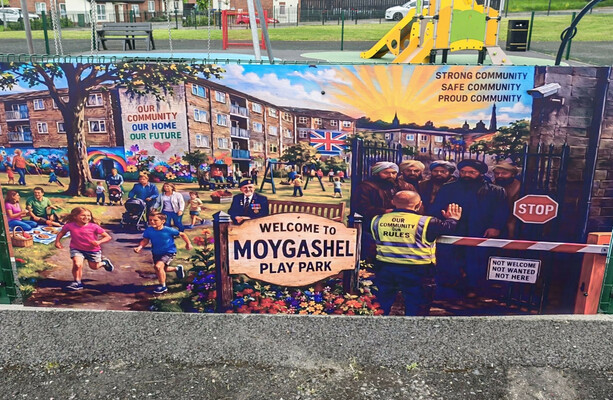
Police Remove Racist Banner from Children’s Playground in Co Tyrone for Second Time—What It Means for Hate Crime Enforcement
Police in Northern Ireland have removed a banner containing racist messages from a children’s playground in Co Tyrone for the second time in weeks, raising fresh questions about the effectiveness of hate crime enforcement and the psychological toll of such incidents on local communities. The banner, which officials classify as a hate crime, was taken down by the Police Service of Northern Ireland (PSNI) after residents reported its reappearance near a primary school in Moygashel. The repeated removal underscores a broader challenge: how to balance free speech concerns with the protection of vulnerable groups in public spaces.
This is not an isolated incident. Similar banners have surfaced in other parts of Northern Ireland in recent months, prompting debates about whether existing laws are sufficient to deter such acts. Local leaders and anti-hate organizations say the persistence of these messages reflects deeper societal tensions, while police acknowledge the difficulty of preventing their re-emergence without more resources.
The latest removal follows a pattern: the banner was first taken down in early June after complaints from parents and community groups. Its reappearance—less than two weeks later—has left some questioning whether the PSNI’s response is reactive rather than proactive. Meanwhile, the psychological impact on children and families in the area cannot be overstated, with educators and child psychologists warning of long-term effects on young minds exposed to such messages.
Below, we break down the timeline of events, the legal framework governing hate crimes in Northern Ireland, and the reactions from key stakeholders—including parents, police, and anti-hate campaigners.
—
What Was on the Banner, and Why Does It Qualify as a Hate Crime?
The banner in question contained explicit racist language targeting a specific ethnic group, according to statements from the PSNI and local residents. While the exact wording has not been publicly disclosed—likely to avoid further incitement—officials have confirmed it meets the legal definition of a hate crime under the Hate Crime and Public Order (Northern Ireland) Order 2023, which prohibits harassment, alarm, or distress based on race, religion, or other protected characteristics.
Key points:
- The banner was displayed in full view of a playground frequented by children aged 4–11, making its removal a priority for police.
- PSNI classify such incidents as “non-violent hate crimes,” which account for nearly 60% of reported hate offenses in Northern Ireland last year (per PSNI annual reports).
- Unlike physical assaults, non-violent hate crimes are harder to prosecute, often relying on witness testimony and the subjective impact on victims.
Dr. Liam McBride, a sociologist at Queen’s University Belfast who studies hate speech in Northern Ireland, notes that the playground setting amplifies the harm. “When children are exposed to racist messages in spaces meant for play and learning, it normalizes prejudice at a formative age,” he says. “The psychological damage isn’t immediate but accumulates over time, particularly in communities already grappling with sectarian or ethnic divisions.”
While the banner’s removal is a legal victory, its reappearance highlights a gap: there is no law in Northern Ireland that criminalizes the repeated display of hateful material in public spaces. Police can remove it under public order laws, but without charges, there’s no deterrent for those who put it up.
—
A Timeline: How This Incident Unfolded—and Why It Keeps Happening
The banner’s removal is the latest chapter in a recurring cycle in Moygashel. Below is a breakdown of the key events:
| Date | Event | Action Taken |
|---|---|---|
| Early June 2024 | Banner first appears near Moygashel Primary School playground. | Reported to PSNI; removed within 24 hours after complaints from parents. |
| June 12, 2024 | Banner reappears, this time with additional offensive imagery. | PSNI issue a public statement condemning the act; banner removed again. |
| June 18, 2024 | Residents report the banner has been replaced with a modified version. | PSNI confirm removal but note “limited resources” for monitoring. |
| June 20, 2024 | Local council and anti-hate groups call for increased police patrols in the area. | PSNI announce a “heightened presence” but no arrests made. |
Why does this keep happening? Police sources say the lack of arrests stems from two challenges:
- Anonymity: The banners are often put up by individuals who avoid identification, making it difficult to trace perpetrators.
- Legal thresholds: Prosecutors require clear evidence of intent to cause harm, which is hard to prove when the banner is removed before witnesses can document its full impact.
In contrast, similar incidents in England have led to prosecutions under the Public Order Act 1986, where police can act faster. Northern Ireland’s laws, while updated in 2023, still rely more on victim reports than proactive enforcement.
—
Who Is Involved—and What Are Their Positions?
The stakeholders in this dispute fall into three categories: law enforcement, local communities, and anti-hate organizations. Their responses reveal deeper tensions over how to address hate speech in Northern Ireland.
1. Police Service of Northern Ireland (PSNI)
The PSNI has framed the removals as a public order matter rather than a criminal investigation. In a statement, a spokesperson said:
“Our priority is to ensure public spaces remain safe for all. We take reports of hate crime extremely seriously and act swiftly to remove harmful material. However, without clear evidence of who is responsible, our ability to prosecute is limited.”
Critics argue this approach treats the symptom (the banner) rather than the cause (the individuals behind it). The PSNI’s annual hate crime report for 2023 shows a 12% increase in non-violent incidents, yet only 3% of cases result in charges.
2. Local Residents and Parents
Parents at Moygashel Primary School have described the situation as “a nightmare.” One mother, speaking anonymously, said:
“My child asked me yesterday why there were ‘bad words’ on the fence. I had to explain racism to a six-year-old. That’s not how childhood should be.”
The school’s principal, who requested anonymity, confirmed that staff have held assemblies to discuss the incident with pupils. “We’re trying to turn this into a teaching moment, but it’s hard when the message is so toxic,” they said.
3. Anti-Hate Groups and Politicians
Organizations like Northern Ireland’s Anti-Hate Coalition have called for stricter penalties. Their director, Eamon McLaughlin, said:
“This isn’t just about one banner—it’s about a pattern of normalization. If we don’t send a clear message that this behavior won’t be tolerated, it emboldens others.”
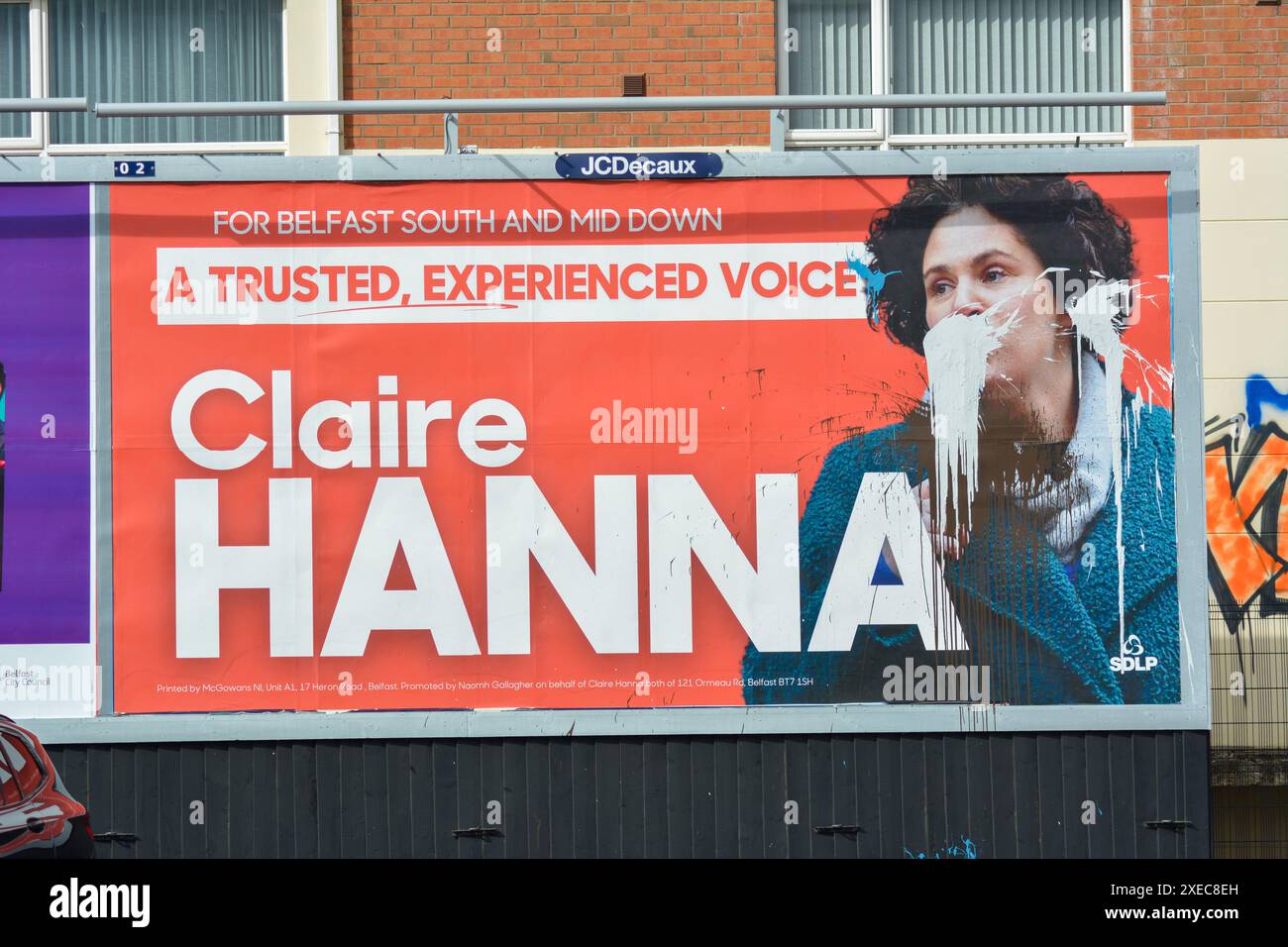
Politicians have also weighed in. The SDLP’s Claire Hanna, a local MLA, proposed a private member’s bill last month to criminalize the repeated display of hateful material in public spaces. “The current laws are reactive, not preventive,” she said. “We need to make it harder for these messages to spread in the first place.”
—
Why This Matters: The Broader Context of Hate Crime in Northern Ireland
This incident is part of a larger trend in Northern Ireland, where hate crimes—particularly those involving race and religion—have risen in recent years. Here’s how this fits into the bigger picture:
1. Rising Hate Crime Rates
Data from the PSNI shows:
- Hate crimes in Northern Ireland increased by 8% in 2023 compared to 2022.
- Racial hate crimes accounted for 22% of all reported incidents, up from 18% in 2021.
- Non-violent hate crimes (like banners, graffiti, or online harassment) now make up over half of all cases.
This rise coincides with increased political tensions, including debates over Irish language rights and Brexit-related migration concerns. Some analysts suggest these factors contribute to a climate where hate speech feels more acceptable.
2. Legal Gaps and Enforcement Challenges
Northern Ireland’s hate crime laws differ from those in Great Britain. Key differences include:
- No “stirring up hatred” offense: Unlike England and Wales, Northern Ireland does not have a specific law criminalizing the intent to promote hatred (e.g., through public displays).
- Lower prosecution rates: In England, 15% of hate crimes lead to charges; in Northern Ireland, it’s less than 5%.
- Dependence on victim reports: Many incidents go unreported due to fear or distrust of police, particularly in marginalized communities.
Dr. Sarah McKay, a criminal justice expert at Ulster University, explains: “The legal system here is still catching up. While the 2023 reforms were a step forward, they haven’t closed the loopholes that allow hate speech to persist in public spaces.”
3. The Psychological Impact on Children
Research from the Children’s Commissioner for Northern Ireland highlights the long-term effects of exposure to hate speech on young people:
- Children who witness or experience hate incidents are twice as likely to develop anxiety or depression, according to a 2022 study.
- In mixed-community areas like Moygashel, children from minority backgrounds report feeling “less safe” in public spaces.
- Teachers in affected schools say bullying related to hate speech has increased by 25% since 2021.
Psychologist Dr. Aoife O’Connor warns that the playground setting is particularly damaging: “When children see hate messages in places they associate with fun and safety, it sends a message that these ideas are normal. That’s a hard message to unlearn.”
—
What Happens Next? Possible Outcomes and Unanswered Questions
The repeated removal of the banner has left several critical questions unanswered. Here’s what could happen next:
1. Will Police Take a Different Approach?
Options include:
- Undercover surveillance: The PSNI could deploy plainclothes officers to monitor the area, though this would require additional resources.
- Community policing initiatives: Local police could work with schools to educate children about hate speech, potentially reducing its acceptance.
- Legal pressure: If the banner reappears again, police may seek a court order to prevent its display, though this would set a precedent for free speech debates.
PSNI Chief Constable Simon Byrne has previously stated that “proactive policing” is a priority, but funding constraints remain a barrier.
2. Could New Laws Be Introduced?
Politicians like Claire Hanna are pushing for legislation similar to England’s Public Order Act. However, any new law would face scrutiny over:
- Free speech concerns: Critics argue stricter laws could be used to suppress legitimate protest.
- Enforcement challenges: Without clear definitions of “hateful material,” prosecutions could become unpredictable.
- Political will: Cross-community support is needed, but sectarian divisions often stall hate crime legislation.
The Northern Ireland Assembly’s Justice Committee is due to review hate crime laws later this year, which could lead to proposals.
3. What About the Perpetrators?
Without arrests, the identity of those responsible remains unknown. However, patterns suggest:
- Perpetrators are often local individuals rather than organized groups, making prosecution harder.
- Some cases involve copycat behavior, where one incident sparks others in the same area.
- Online forums have been linked to similar incidents in the past, though no direct connection has been made here.
If police were to make an arrest, charges would likely fall under:
- Harassment (Section 4A of the Public Order Order 1987): If the banner was deemed to cause alarm or distress.
- Racial harassment (Section 19 of the Race Relations (Northern Ireland) Order 1997): If targeted at a specific racial group.
—
Common Questions About This Incident—and What We Know
How often do hate crime banners appear in Northern Ireland?
While exact numbers aren’t publicly available, police and anti-hate groups report a rise in such incidents since 2021. In 2023, the PSNI recorded over 1,200 hate crime incidents involving public displays (including banners, graffiti, and stickers).
Why don’t police arrest people for putting up these banners?
Arrests require evidence linking a specific individual to the act. Since banners are often removed quickly and perpetrators avoid identification, prosecutions are rare. Police focus instead on removal and deterrence.
Is this a sectarian issue, or is it about race?
The banner in Moygashel targeted a racial group, not a religious or political one. However, Northern Ireland’s hate crime landscape includes both sectarian and racial incidents. The PSNI tracks them separately, with racial hate crimes rising faster than sectarian ones in recent years.
What can parents do if they see a hate banner near a school?
Parents are advised to:
- Take photos/videos (without touching the banner) as evidence.
- Report it immediately to police (101 in Northern Ireland) or via the online form.
- Contact local anti-hate groups for support in documenting the impact.
Are there similar incidents in other parts of the UK?
Yes. In England, hate crime banners have led to prosecutions under the Public Order Act. For example, in Manchester in 2023, a man was jailed for displaying a racist banner near a mosque. Scotland has also seen increases in hate speech incidents, though its legal approach differs from Northern Ireland’s.
What is the PSNI doing to prevent this from happening again?
Police have increased patrols in Moygashel and are working with the local council to assess security measures for playgrounds. They’ve also launched a public awareness campaign about reporting hate crime, though long-term solutions require legislative changes.
—
The removal of the banner from Moygashel’s playground is a temporary fix for a deeper problem: how to reconcile free expression with the protection of vulnerable communities in Northern Ireland. While the PSNI’s actions send a message that hate speech won’t be tolerated, the repeated reappearance of the banner underscores the need for stronger laws, better enforcement, and—most importantly—a cultural shift in how such messages are perceived.
For now, the focus remains on the children who play near that fence. Their safety, and their sense of security, depends not just on police removals, but on a society that refuses to let hate take root in the places where young minds are shaped.
