
NMC stands firm on arbitral ruling amid China’s objections – Philippine News Agency
The National Maritime Council (NMC) has reaffirmed that the 2016 arbitral ruling is final and binding, categorically rejecting China’s objections to the award. According to reports from the Philippine News Agency, the Philippine government maintains its sovereign rights over the West Philippine Sea, asserting that Beijing’s claims have no legal basis under international law.
What is the NMC’s current position on the arbitral ruling?
The National Maritime Council (NMC) maintains a rigid stance regarding the 2016 Permanent Court of Arbitration (PCA) award. According to the Philippine News Agency, the council views the ruling not as a subject for negotiation, but as a settled legal fact. The NMC asserts that the decision is final and binding, meaning it is legally conclusive and must be respected by all parties involved, regardless of whether they participated in the proceedings.
This position is mirrored by statements reported by Rappler and Philstar.com, which indicate that the Philippines “categorically rejects” any claims made by Beijing that attempt to invalidate or diminish the 2016 award. The Philippine government’s strategy relies on the premise that the ruling provides the definitive legal framework for maritime entitlements in the region. By standing firm, the NMC aims to signal to the international community that Manila will not concede its Exclusive Economic Zone (EEZ) through diplomatic pressure or bilateral concessions.
Key elements of the NMC’s current stance include:
- Legal Finality: The 2016 award is treated as an immutable legal document.
- Rejection of Overlapping Claims: The NMC rejects the “nine-dash line” as a valid basis for maritime claims.
- Sovereign Rights: The council emphasizes the right to explore and exploit natural resources within the Philippine EEZ.
How does the 2016 Arbitral Award define rights in the West Philippine Sea?
To understand why the NMC stands firm, it is necessary to look at the specifics of the 2016 ruling. The Permanent Court of Arbitration in The Hague ruled that China’s “nine-dash line”—a sweeping boundary used by Beijing to claim nearly 80% of the South China Sea—has no legal basis under the United Nations Convention on the Law of the Sea (UNCLOS). According to reports from Philstar.com, the ruling clarified that no land feature in the Spratly Islands is capable of generating an EEZ of its own.
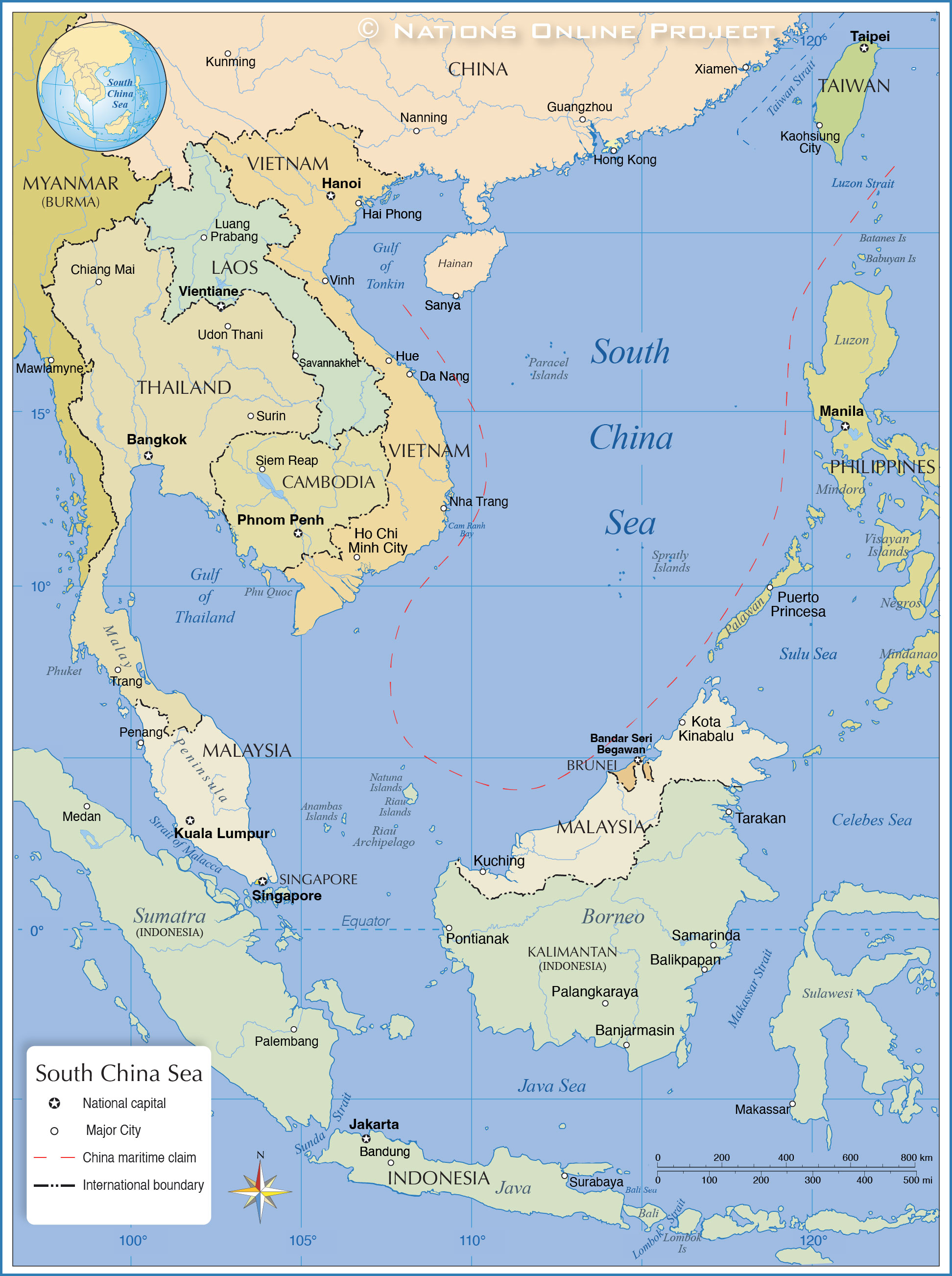
This distinction is critical. Under UNCLOS, a “rock” that cannot sustain human habitation or economic life of its own only generates a 12-nautical-mile territorial sea, not a 200-nautical-mile EEZ. The 2016 award determined that the features China had occupied or built upon did not meet the criteria for “islands.” Therefore, these features cannot be used to overlap with the Philippines’ own 200-nautical-mile EEZ.
The 2016 arbitral award serves as the legal bedrock for the Philippines’ claims, effectively stripping the legal veneer from the nine-dash line and affirming the Philippines’ right to its own maritime resources.
The implication of this ruling is that any Chinese activity—including fishing, oil exploration, or the construction of artificial islands—within the Philippine EEZ is a violation of international law. The NMC uses this ruling as the primary justification for its patrols and its rejection of Chinese objections.
Why does the DFA reject China’s BBNJ declarations?
Recent tensions have expanded beyond territorial waters into the realm of international environmental treaties. The Department of Foreign Affairs (DFA) has addressed declarations made by China regarding the Biodiversity Beyond National Jurisdiction (BBNJ) treaty, also known as the “High Seas Treaty.” According to Cebu Daily News, the DFA stated that any Chinese BBNJ declaration will not diminish Philippine rights over the West Philippine Sea.
The BBNJ treaty focuses on the conservation and sustainable use of marine biological diversity in areas beyond national jurisdiction. China has attempted to use its interpretation of these international frameworks to bolster its presence in the region. However, the DFA argues that the BBNJ applies to the “high seas”—waters that belong to no specific state. Because the West Philippine Sea falls within the Philippine EEZ, it is not “beyond national jurisdiction.”
The DFA’s logic is straightforward: a treaty designed for the high seas cannot be used to override the sovereign rights of a coastal state within its own EEZ. By rejecting the BBNJ-related claims, the Philippines prevents Beijing from using environmental diplomacy as a tool to legitimize its presence in disputed waters.
| Issue | Philippine Position (NMC/DFA) | Chinese Position |
|---|---|---|
| 2016 Arbitral Award | Final, binding, and non-negotiable. | Null and void; “piece of paper.” |
| Nine-Dash Line | No legal basis under UNCLOS. | Historical right to the waters. |
| BBNJ Treaty | Does not apply to the Philippine EEZ. | Used to project regional influence. |
| Maritime Features | Rocks/low-tide elevations (no EEZ). | Islands capable of generating EEZs. |
Are tensions hindering the South China Sea Code of Conduct?
While the NMC stands firm on legal rulings, the diplomatic track involves the long-delayed Code of Conduct (COC). ThinkChina raises the question of whether the escalating tensions between Manila and Beijing are effectively sinking the prospects of a finalized COC. The COC is intended to be a set of rules agreed upon by ASEAN members and China to prevent conflict and manage disputes.
The conflict arises from a fundamental disagreement over the COC’s nature. The Philippines and several other ASEAN nations want a COC that is legally binding and based on UNCLOS. In contrast, China has historically preferred a non-binding agreement that emphasizes bilateral negotiations over international law. Because the NMC and the Philippine government have doubled down on the “final and binding” nature of the 2016 award, there is little room for the kind of compromise China seeks.

Analysts suggest that the more the Philippines leans on the arbitral ruling, the more Beijing views the COC as a secondary tool for containment rather than a genuine peace treaty. This creates a deadlock: the Philippines cannot accept a COC that ignores the 2016 ruling, and China cannot accept a COC that validates it.
Potential consequences of this deadlock include:
- Increased Militarization: A shift from diplomatic negotiation to “gray zone” tactics and naval presence.
- ASEAN Fragmentation: Differing levels of commitment to the 2016 ruling among ASEAN members may weaken a collective front.
- Reliance on External Allies: The Philippines’ increased reliance on defense pacts, such as the Mutual Defense Treaty (MDT) with the United States, to offset the lack of a binding COC.
Timeline of the Maritime Dispute and Legal Milestones
The current stand of the NMC is the result of a decade of legal and political maneuvering. The following timeline outlines the progression from the initial filing to the current state of tension.
| Year | Event | Significance |
|---|---|---|
| 2013 | Philippines files case at PCA | First formal legal challenge to the nine-dash line. |
| 2016 | Arbitral Award issued | Ruled in favor of PH; invalidated nine-dash line. |
| 2016-2021 | Period of “Quiet Diplomacy” | Reduced public emphasis on the ruling to maintain ties. |
| 2022-Present | Policy shift to “Transparency” | Publicly asserting the ruling and documenting incursions. |
| Current | NMC Affirmation | Explicit rejection of Chinese objections to the award. |
Contrasting the Framing of the Dispute
Different news outlets and official bodies frame this conflict through different lenses, revealing the gap between legalism and geopolitical realism. The Philippine News Agency and Philstar.com frame the story as a matter of law and sovereignty. In their reporting, the 2016 award is the central fact, and any deviation from it is presented as an illegal act. The narrative is one of a small nation defending its rights against a larger power using the only tool available: international law.
Conversely, analysis from outlets like ThinkChina frames the issue through regional stability and diplomacy. From this perspective, the insistence on the 2016 ruling is seen as a potential obstacle to a broader regional agreement (the COC). The focus shifts from “who is legally right” to “what is practically possible.” This contrast highlights the core of the struggle: Manila is fighting a legal war, while Beijing is fighting a geopolitical one.
Furthermore, the DFA’s response to the BBNJ declarations shows a strategic attempt to close “legal loopholes.” By preemptively stating that the BBNJ treaty does not apply to the EEZ, the Philippines is preventing China from shifting the goalposts of the argument from territorial sovereignty to environmental management.
Common Misconceptions Regarding the Arbitral Ruling
There are several frequent misunderstandings about the 2016 award that often cloud public debate. First, many believe the PCA ruled on who “owns” the islands. In reality, the court did not have the jurisdiction to decide on sovereignty (who owns the land). Instead, it ruled on maritime entitlements (who owns the water and the resources beneath it). The ruling says that regardless of who owns a specific rock, that rock cannot generate a 200-mile EEZ that overlaps with the Philippines’.
Second, there is a misconception that the ruling is “unenforceable” because there is no international police force to compel China. While it is true there is no enforcement agency, the ruling creates a “legal reality.” It allows the Philippines to build a coalition of international support. When the U.S., Japan, or Australia cite the 2016 award in their own statements, they are using the legal legitimacy provided by the ruling to justify their presence in the region.
Finally, some argue that the ruling is outdated. However, the NMC and DFA maintain that UNCLOS is a “living treaty” and the ruling is a definitive interpretation of that treaty. As long as UNCLOS remains the global standard for the law of the sea, the 2016 award remains the authoritative interpretation of rights in the West Philippine Sea.
Frequently Asked Questions
What does “final and binding” mean in the context of the NMC’s statement?
According to the Philippine News Agency and legal standards of the Permanent Court of Arbitration, “final and binding” means that the decision is conclusive. There is no higher court to appeal to, and the parties involved are legally obligated to comply with the ruling under the terms of UNCLOS.

Can China legally ignore the 2016 arbitral ruling?
While China has chosen to ignore the ruling, the Philippines and the international community maintain that the ruling remains legally valid. Under international law, a state’s refusal to acknowledge a ruling does not erase the legal obligations created by that ruling.
How does the BBNJ treaty relate to the West Philippine Sea?
The BBNJ treaty governs the “high seas” (waters beyond any nation’s jurisdiction). The DFA has clarified that since the West Philippine Sea is within the Philippine EEZ, it is under national jurisdiction, and therefore, China’s declarations regarding the BBNJ cannot override Philippine sovereign rights.
Will the Code of Conduct (COC) replace the 2016 arbitral ruling?
The Philippine government, as reflected in reports from Philstar.com and Rappler, does not view the COC as a replacement for the ruling. Instead, the Philippines seeks a COC that is consistent with UNCLOS and the 2016 award.
What happens if the NMC continues to stand firm while China objects?
This leads to a continued state of diplomatic and maritime tension. The Philippines is likely to increase its “transparency initiative”—publicizing Chinese incursions—and strengthen defense ties with allies to ensure its sovereign rights are protected despite China’s objections.
For more information on maritime law, readers may find a related explainer on UNCLOS and EEZ boundaries helpful in understanding the technical aspects of these claims.
