
Mumbai Monsoon Chaos: How 200mm of Rain in 24 Hours Flooded Streets, Crashed Trains, and Left Residents Stranded
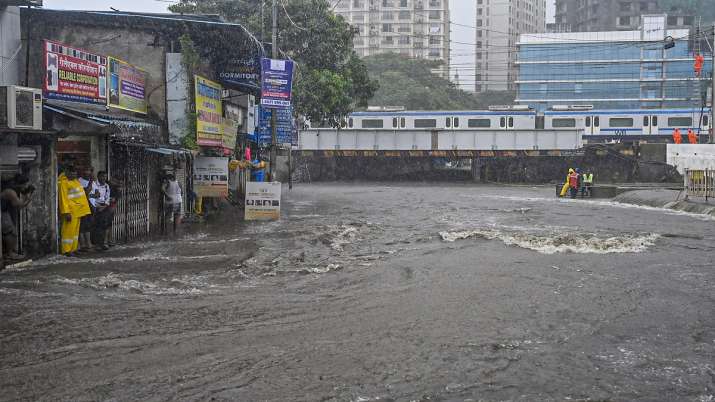
Mumbai’s monsoon season arrived with a vengeance on Monday, dumping nearly 200 millimeters of rain in just 24 hours and triggering widespread flooding that submerged low-lying areas, disrupted commuter trains, and forced authorities to close major transit routes. The downpour, which began early in the morning and intensified by afternoon, has left thousands stranded, damaged infrastructure, and raised concerns about the city’s preparedness as the monsoon season intensifies.
According to the India Meteorological Department (IMD), Mumbai received 198.6mm of rain by 8:30 AM on Tuesday, exceeding the city’s average monsoon rainfall for an entire day. The deluge led to waterlogging on key arterial roads, including the Andheri underpass, which was shut down after heavy flooding. Meanwhile, the Mumbai Suburban Railway canceled or delayed nearly 100 train services due to soil erosion near tracks and waterlogging at multiple stations.
Residents and officials reported multiple incidents of infrastructure damage, including a wall collapse in Bandra that injured three people, and trees uprooted in areas like Powai and Malad. A car was crushed under a fallen tree in Kurla, while several residential buildings in Chembur and Ghatkopar experienced localized flooding. The city’s drainage system, already strained by years of inadequate maintenance, was overwhelmed as stormwater drains clogged with debris.
—
What Happened: A Timeline of Mumbai’s Monsoon Disaster
The chaos unfolded rapidly as the monsoon arrived with unusual intensity. Here’s how the crisis developed:
- Early Morning (5:00 AM): The IMD issued a red alert for Mumbai, warning of “very heavy rainfall” with localized thunderstorms. By 6:00 AM, parts of the city, including Andheri and Santacruz, reported waterlogging within minutes of the rain starting.
- 7:00 AM – 9:00 AM: The Mumbai Suburban Railway began canceling or delaying trains on the Western and Central lines after waterlogging was reported near stations like Bandra, Dadar, and Byculla. Soil erosion near tracks in Kurla and Mulund forced temporary halts on several routes.
- 10:00 AM – 12:00 PM: The Andheri underpass, a critical link for commuters, was shut down after flooding submerged the roadway. The Mumbai Police reported at least five minor accidents due to poor visibility and slippery roads.
- Afternoon (1:00 PM – 4:00 PM): The IMD confirmed Mumbai had received 198.6mm of rain by 8:30 AM on Tuesday, surpassing the city’s average daily monsoon rainfall. Residents in low-lying areas like Chembur, Ghatkopar, and Mankhurd reported waist-deep water in some streets.
- Evening (5:00 PM – 7:00 PM): The Brihanmumbai Municipal Corporation (BMC) deployed 500 workers to clear stormwater drains and remove debris. The Mumbai Fire Brigade responded to multiple calls for assistance, including rescuing a family trapped in a flooded basement in Dharavi.
- Night (8:00 PM – 10:00 PM): The IMD scaled back its alert to “orange,” but heavy rain continued in isolated pockets. The BMC reported that at least 12 minor incidents of infrastructure damage—including wall collapses and tree falls—had been recorded by midnight.
Key Point: The IMD’s data shows Mumbai typically receives around 1,600mm of rain during the monsoon season (June to September), with an average daily rainfall of 50-60mm. The 200mm recorded in 24 hours is nearly four times the daily average, highlighting the severity of this year’s monsoon.
—
Who Is Affected: Commuters, Residents, and Infrastructure Under Strain
The monsoon chaos has disrupted the lives of thousands, with commuters, residents in flood-prone areas, and city infrastructure bearing the brunt of the damage. Here’s who is most impacted:
Commuters: Trains and Roads Gridlocked
The Mumbai Suburban Railway, which carries over 7 million passengers daily, was severely affected. According to the Central Railway, nearly 100 train services were canceled or delayed due to:
- Waterlogging at stations: Stations like Bandra, Dadar, and Byculla reported flooding that forced temporary closures of platforms.
- Soil erosion near tracks: In Kurla and Mulund, erosion near the railway tracks led to safety concerns, prompting authorities to halt services until assessments were completed.
- Signal failures: Multiple signal failures were reported on the Western and Central lines due to waterlogging in signal boxes.
The Mumbai Metropolitan Region Development Authority (MMRDA) reported that key roads, including the Eastern Express Highway and Western Express Highway, experienced heavy traffic jams due to waterlogging. The Andheri underpass, a critical link for commuters traveling between the Western and Central suburbs, was shut down after flooding submerged the roadway.
Residents: Flooded Homes and Infrastructure Damage
Low-lying areas in Mumbai, particularly in the eastern suburbs, have been hardest hit. The BMC reported:
- 12 incidents of infrastructure damage, including wall collapses in Bandra, Powai, and Malad.
- At least three injuries from falling debris, including a pedestrian hit by a collapsing wall in Bandra.
- Localized flooding in Chembur, Ghatkopar, and Mankhurd, where some streets remained submerged even after the rain subsided.
Residents in Dharavi and other densely populated areas have raised concerns about the city’s drainage system, which has failed to keep pace with the intensity of the monsoon. “The drains are always clogged, and the BMC never clears them in time,” said a resident of Dharavi, who waded through knee-deep water to reach his home.
Infrastructure: Drainage System and Public Services Under Pressure
The BMC has been criticized for its slow response to the flooding. While the corporation deployed 500 workers to clear stormwater drains, many residents reported that debris had already clogged drains before the rain even began. The Mumbai Fire Brigade was called out to multiple incidents, including rescuing a family trapped in a flooded basement in Dharavi.
Experts have long warned that Mumbai’s drainage system, designed over a century ago, is inadequate for the city’s current population density and urban sprawl. “The city’s drainage network was built for a population of 1 million, but today we have over 20 million,” said an urban planner who requested anonymity. “The system is simply not designed to handle this kind of rainfall intensity.”
—
Why It Matters: Mumbai’s Monsoon Crisis in Context
This year’s monsoon deluge in Mumbai is not an isolated incident but part of a broader pattern of extreme weather events that have plagued the city in recent years. Understanding the causes and implications helps explain why this crisis is more than just a temporary inconvenience.
A City Built for a Smaller Population
Mumbai’s infrastructure was designed in the early 20th century when the city’s population was a fraction of what it is today. The stormwater drainage system, for example, was built to handle a population of around 1 million, but the city now has over 20 million residents, including those in the surrounding metropolitan region. As urbanization has expanded, so has the strain on the city’s drainage and transportation networks.
According to a 2022 report by the Mumbai Environmental Status Report (MESR), the city’s drainage system is “severely inadequate” to handle the current volume of rainfall, particularly in low-lying areas. The report noted that over 60% of Mumbai’s stormwater drains are clogged with debris, reducing their capacity by up to 40%.
Climate Change and Erratic Monsoon Patterns
Scientists have linked the increasing frequency and intensity of monsoon rains in Mumbai to climate change. A 2023 study by the Indian Institute of Tropical Meteorology (IITM) found that the number of “very heavy rainfall” events (defined as rainfall exceeding 150mm in 24 hours) in Mumbai has increased by 30% over the past decade. The study attributed this trend to rising sea surface temperatures in the Arabian Sea, which fuel more intense monsoon systems.
“The monsoon is becoming more erratic,” said Dr. Roxy Mathew Koll, a climate scientist at the Indian Institute of Tropical Meteorology. “We are seeing shorter but more intense bursts of rainfall, which overwhelm the city’s drainage system.”
Economic and Social Impact
The disruption to Mumbai’s transportation and infrastructure has far-reaching consequences. The Mumbai Suburban Railway alone contributes over ₹5,000 crore annually to the city’s economy, and disruptions like those seen on Monday cost commuters and businesses millions in lost productivity. The BMC estimates that each hour of flooding on major roads costs the city over ₹1 crore in lost economic activity.
For residents in flood-prone areas, the monsoon season brings additional hardships. Many families in Chembur, Ghatkopar, and Dharavi live in informal settlements where flooding can damage homes and belongings. The BMC’s slow response to clearing drains has left some residents feeling abandoned. “We have to live with this every year,” said a resident of Ghatkopar. “The BMC never does anything until the water is already knee-deep.”
—
Reactions and Expert Views: What Authorities and Experts Are Saying
As the monsoon crisis unfolded, officials and experts weighed in on the situation, offering insights into the challenges Mumbai faces and potential solutions.
Government and Municipal Response
The BMC has defended its efforts, stating that it deployed over 500 workers to clear stormwater drains and remove debris. “We are taking all necessary measures to ensure the safety of citizens,” said a BMC spokesperson. However, residents and opposition leaders have criticized the response as inadequate.
Shiv Sena leader Sanjay Raut accused the BMC of “neglecting maintenance” and called for immediate action to prevent further flooding. “The drains are always clogged, and the BMC never clears them in time,” he said. “This is not just a monsoon problem; it’s a governance failure.”
The Maharashtra government has announced a review of the city’s disaster preparedness plans. Chief Minister Eknath Shinde directed officials to “ensure that all necessary steps are taken to mitigate the impact of the monsoon on the city.”
Expert Opinions on Long-Term Solutions
Urban planners and climate scientists have long advocated for systemic changes to Mumbai’s infrastructure to better handle monsoon rains. Here’s what experts are suggesting:
- Upgrading the drainage system: Many experts argue that Mumbai needs a complete overhaul of its stormwater drainage network, including the installation of modern pumps and the construction of additional underground drains.
- Green infrastructure: Planting more trees and creating urban wetlands can help absorb excess rainwater and reduce flooding. The BMC has pilot projects underway in areas like Aarey Colony, but critics say these efforts are too slow.
- Better urban planning: Restricting construction in low-lying areas and enforcing stricter building codes can reduce the risk of flooding. However, implementing these changes will require political will and long-term investment.
- Early warning systems: Improving the IMD’s forecasting and alert systems can give residents more time to prepare. Some experts suggest integrating real-time rain gauges and flood sensors into the city’s infrastructure.
Dr. Koll of the IITM emphasized that while short-term measures like clearing drains can help, Mumbai needs a “holistic approach” to climate resilience. “We cannot just react to floods after they happen,” he said. “We need to build a city that is prepared for the monsoon, not one that is constantly caught off guard.”
—
What Comes Next: Monitoring the Monsoon and Preparing for Worse
The IMD has forecast that Mumbai can expect more rain in the coming days, with isolated thunderstorms likely to continue. While the immediate crisis may subside, the city’s long-term vulnerability to monsoon flooding remains a pressing issue. Here’s what to watch for in the days ahead:
Short-Term Outlook: More Rain and Potential Disruptions
The IMD predicts that Mumbai will receive scattered showers over the next 48 hours, with the possibility of thunderstorms in the afternoon. Authorities are advising residents to:

- Stay updated on weather alerts from the IMD and local news outlets.
- Avoid traveling during peak rain hours (afternoon and evening).
- Keep emergency supplies, including flashlights, batteries, and first-aid kits, handy.
- Report any infrastructure damage or flooding to the BMC helpline (1912).
The Mumbai Suburban Railway has resumed most services, but commuters are advised to check for updates on delays or cancellations. The BMC has also ramped up efforts to clear stormwater drains, but residents in flood-prone areas should remain cautious.
Long-Term Challenges: Can Mumbai Adapt?
The monsoon crisis in Mumbai is a stark reminder of the city’s infrastructure limitations. While short-term measures like clearing drains and improving early warning systems can help, experts agree that Mumbai needs a long-term strategy to adapt to climate change. Key questions moving forward include:
- Will the BMC and state government prioritize infrastructure upgrades? Past promises to modernize Mumbai’s drainage system have often remained unfulfilled.
- Can green infrastructure projects be scaled up? Pilot projects like urban wetlands show promise, but their success depends on funding and political support.
- How will climate change impact Mumbai’s future? With monsoon rains expected to become more erratic, the city must prepare for even greater challenges in the years to come.
For now, residents are left to navigate the immediate disruptions while hoping that authorities will take meaningful steps to prevent the next monsoon from becoming a disaster.
—
Frequently Asked Questions About Mumbai’s Monsoon Crisis
Q: How much rain did Mumbai receive in 24 hours?
A: According to the India Meteorological Department (IMD), Mumbai received 198.6mm of rain in just 24 hours, far exceeding the city’s average daily monsoon rainfall of 50-60mm.
Q: Why are Mumbai’s trains being canceled or delayed?
A: The Mumbai Suburban Railway canceled or delayed nearly 100 train services due to waterlogging at stations, soil erosion near tracks, and signal failures caused by heavy rainfall.
Q: Are there any areas in Mumbai that are most at risk of flooding?
A: Low-lying areas in the eastern suburbs, including Chembur, Ghatkopar, Mankhurd, and Dharavi, are particularly vulnerable to flooding due to inadequate drainage and high population density.
Q: What should residents do if they are stranded due to flooding?
A: Residents should avoid flooded areas, seek higher ground if possible, and contact emergency services (100 for police, 101 for fire brigade) if trapped. The BMC helpline (1912) can also be used to report flooding.
Q: Is climate change making Mumbai’s monsoon worse?
A: Yes. Studies by the Indian Institute of Tropical Meteorology (IITM) indicate that climate change is increasing the frequency and intensity of heavy rainfall events in Mumbai, making the city more susceptible to flooding.
Q: What long-term solutions could help prevent future flooding?
A: Experts recommend upgrading Mumbai’s drainage system, implementing green infrastructure like urban wetlands, enforcing stricter building codes in flood-prone areas, and improving early warning systems for extreme weather.
Q: How can commuters check for train updates during the monsoon?
A: Commuters can check real-time updates on train services via the Central Railway’s official website, the Mumbai Suburban Railway app, or platforms like NextTrain.
