
Africa’s Diamond Industry Faces a New Reality as Petra Moves Key Mine into Rescue and Cuts Jobs
The global diamond landscape is undergoing a seismic shift, and the latest casualty is one of the continent’s most prominent producers. In a move that signals deep structural instability within the natural gemstone market, Petra Diamonds has announced it is placing its South African Finsch mine under business rescue—a form of bankruptcy protection intended to restructure the operation. This drastic measure is accompanied by a group-wide reduction in headcount, as the London-headquartered company struggles to navigate a perfect storm of economic volatility and shifting consumer preferences.
The announcement that Africa’s diamond industry faces a new reality as Petra moves key mine into rescue and cuts jobs highlights a growing crisis that extends far beyond a single company. For an industry that has long relied on the perceived scarcity and timeless value of natural diamonds, the current convergence of geopolitical turmoil, currency fluctuations, and the rise of synthetic alternatives is creating a precarious environment for traditional mining operations across South Africa, Botswana, and Namibia.
The Collapse of Stability: What is Happening at Petra Diamonds?
On Friday, May 29, 2026, Petra Diamonds revealed a sweeping restructuring plan designed to stave off further losses. The center-piece of this strategy is the placement of the Finsch mine in South Africa into business rescue. This legal mechanism allows the company to restructure its debts and operational costs under the protection of the court, shielding it from certain creditors while it attempts to find a sustainable path forward.
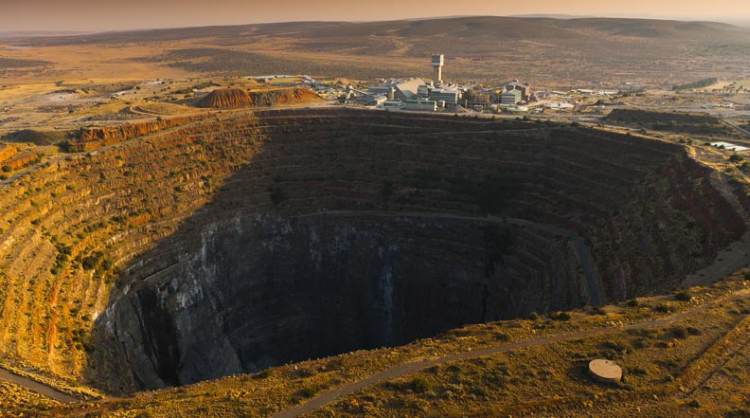
The crisis at the Finsch mine is not an isolated operational failure but a symptom of broader market pressures. The mine is a critical asset for the company, having accounted for 34% of Petra’s total revenue in fiscal 2025. However, the specific nature of the diamonds produced at Finsch has made it particularly vulnerable to current market trends. The mine primarily produces stones of 2 carats and below—a segment of the market that is currently experiencing a severe and potentially permanent decline in value.
In addition to the rescue of the Finsch operation, Petra Diamonds is implementing job cuts across its entire group. While the company has not disclosed the exact number of positions to be eliminated, it employs more than 4,000 people globally. The company has stated that it is launching a consultation process with employees and unions to manage the workforce reduction.
“The company does not expect a material near-term recovery in smaller diamond values,” stated CEO Vivek Gadodia, underscoring the bleak outlook for the specific product mix that the Finsch mine relies upon.
The severity of the situation is further evidenced by the company’s decision to suspend its fiscal guidance for the period between 2026 and 2030. By withdrawing these forecasts, Petra Diamonds is effectively admitting that the volatility of the current market makes any medium-to-long-term financial planning impossible.
Decoding the “Structural Decline”: Why Smaller Diamonds are Failing
To understand why the Finsch mine is in rescue, one must understand the difference between “cyclical” and “structural” declines. A cyclical decline is a temporary dip caused by a recession or a short-term drop in demand, which eventually recovers. A structural decline, however, suggests a fundamental change in the market that may never return to previous norms.
Petra Diamonds is currently facing a structural decline in the pricing of smaller diamonds (those under 2 carats). Several factors are contributing to this “new reality”:

- The Rise of Lab-Grown Diamonds: Synthetic diamonds, which are chemically identical to natural ones but produced in laboratories, have flooded the market. These stones are significantly cheaper to produce and are increasingly preferred by younger consumers for engagement rings and fashion jewelry, particularly in the smaller carat range.
- Weakening Luxury Demand: Global economic uncertainty has dampened the appetite for luxury goods. While ultra-high-net-worth individuals may still purchase massive, rare stones, the “aspirational” luxury buyer—who typically purchases smaller diamonds—has pulled back.
- Market Saturation: An oversupply of smaller natural diamonds, coupled with a lack of new demand, has pushed prices down to levels that make mining them increasingly unprofitable.
Because the Finsch mine specializes in these smaller stones, it has become the epicenter of Petra’s financial distress. When a mine’s primary output loses its market value, the cost of extraction often exceeds the price the stones can fetch at auction or through wholesalers.
The Macroeconomic Squeeze: Currency and Geopolitics
While the product mix is the primary internal struggle, Petra Diamonds is also battling external macroeconomic forces that are beyond its control. The company specifically cited three external pressures that have squeezed its business margins:
| Pressure Factor | Impact on Petra Diamonds |
|---|---|
| Stronger South African Rand | Increases operational costs in local currency terms while revenues are often tied to US Dollar-denominated global markets. |
| Middle East Turmoil | Disrupts traditional trade routes and creates instability in key diamond trading hubs and consumer markets. |
| Weak Diamond Market | General decline in demand for natural gemstones, leading to lower realized prices across the board. |
The strength of the South African rand is a particularly painful point for mining companies. In the mining sector, costs (labor, electricity, equipment) are often paid in the local currency, while the product is sold in US Dollars. When the local currency strengthens, the company effectively pays more for its operations but earns less when converting its dollar sales back into local currency to pay those bills.
Wider Implications for Africa’s Diamond Industry
The plight of Petra Diamonds is being viewed as a canary in the coal mine for the broader African mining sector. For decades, diamonds have been a cornerstone of the economies of South Africa, Botswana, and Namibia, providing essential export earnings, foreign direct investment, and thousands of high-paying jobs.
The transition of the Finsch mine into business rescue suggests that the industry is entering a phase of consolidation and contraction. If a major producer like Petra cannot sustain its operations due to the rise of lab-grown stones and falling prices, other mines—particularly those that do not produce “investment-grade” large stones—may face similar fates.
This shift poses several risks to the regional economy:

- Employment Instability: With Petra already cutting jobs across its group, there is a fear that further mine closures could lead to widespread unemployment in mining communities.
- Revenue Loss for Governments: African nations rely heavily on royalties and taxes from diamond mining. A structural decline in diamond prices directly reduces the national budgets available for infrastructure and social services.
- Investment Flight: The suspension of long-term guidance by Petra may signal to international investors that the natural diamond sector in Africa is becoming too risky, potentially diverting capital toward other minerals or synthetic diamond production.
The industry is now forced to grapple with the fact that the “prestige” of natural diamonds is no longer a sufficient shield against the economic efficiency of laboratory-produced stones. The “new reality” is one where natural diamonds must compete not just on beauty, but on a value proposition that lab-grown stones cannot replicate—such as provenance, rarity, and long-term investment value.
Common Misconceptions About the Diamond Crisis
In the wake of news regarding business rescues and job cuts, several misconceptions often arise. It is important to clarify the actual nature of the crisis facing Petra Diamonds and the industry.
Misconception 1: The diamonds are “gone” or the mine is empty.
The business rescue of the Finsch mine is not due to a lack of diamonds in the ground. Rather, it is an economic failure. The diamonds are still there, but the cost to get them out of the earth is now higher than the price the market is willing to pay for them. This is a crisis of value, not volume.
Misconception 2: Lab-grown diamonds are “fake” diamonds.
From a scientific perspective, lab-grown diamonds are chemically, physically, and optically identical to natural diamonds. The market shift is not about “fakes” deceiving buyers, but about buyers consciously choosing a more affordable, ethically marketed, and sustainable alternative for their jewelry.
Misconception 3: This is just a temporary dip in the market.
While many industry analysts hope for a recovery, the use of the term “structural decline” by leadership at Petra Diamonds suggests otherwise. A structural change means the rules of the game have changed. The emergence of synthetic diamonds is a permanent technological disruption, similar to how digital photography disrupted the film industry.
Analyzing the Path Forward
For Petra Diamonds, the business rescue process is a gamble on the ability to lean out operations. By cutting jobs and restructuring debt, the company hopes to lower its “break-even” point—the price at which it can sell its diamonds and still cover its costs. However, if the price of smaller diamonds continues to slide, even a leaner operation may not be enough to ensure survival.
The broader industry may need to pivot. Some producers are exploring ways to better differentiate natural diamonds through blockchain tracking (to prove origin and ethical sourcing) or by focusing exclusively on the “ultra-luxury” segment where lab-grown stones have less impact. Others may eventually have to diversify their portfolios into other critical minerals required for the global energy transition.
As the consultation process with unions continues and the restructuring of the Finsch mine unfolds, the eyes of the global mining community will be on Petra. The outcome will likely serve as a blueprint—or a warning—for other natural diamond producers across the African continent.
Frequently Asked Questions
Why is Petra Diamonds placing the Finsch mine under business rescue?
The company is facing a structural decline in prices for smaller diamonds (2 carats and below), which the Finsch mine primarily produces. This, combined with a stronger South African rand, Middle East instability, and competition from lab-grown diamonds, has made the operation financially unsustainable in its current form.

How many jobs are being cut at Petra Diamonds?
Petra Diamonds has not disclosed the specific number of job cuts, but it has confirmed that reductions are happening across the group. The company employs more than 4,000 people and is currently in consultations with unions and employees.
What is the impact of lab-grown diamonds on the natural diamond industry?
Lab-grown diamonds provide a cheaper, chemically identical alternative to natural stones. This has significantly reduced demand and pricing for smaller natural diamonds, which are the primary output of mines like Finsch, leading to structural revenue losses for traditional miners.
What does “business rescue” mean in this context?
Business rescue is a legal process in South Africa that allows a company to restructure its financial affairs and operations under the guidance of a practitioner. It provides bankruptcy protection from creditors to prevent the company from being liquidated while it attempts to return to solvency.
What percentage of Petra’s revenue came from the Finsch mine?
In fiscal 2025, the Finsch mine accounted for 34% of Petra Diamonds’ total revenue, making its current financial instability a significant blow to the company’s overall health.
For those tracking the evolution of the mining sector, further reading on the related explainer on African mining trends may provide additional context on how other minerals are faring in the current economic climate.
