Prevalence and Associated Clinical Factors of Tuberculosis Infection and Disease Among Pediatric Household Contacts: A Facility-Based Cross-Sectional Study – Cureus
For millions of families living in tuberculosis-endemic regions, the diagnosis of an adult with TB is not just a personal health crisis—It’s a high-alert signal for every child in the home. Because children are biologically more susceptible to the rapid progression of the disease, the risk of transmission within a household is a critical public health concern. Recent analysis, highlighted in the research titled Prevalence and Associated Clinical Factors of Tuberculosis Infection and Disease Among Pediatric Household Contacts: A Facility-Based Cross-Sectional Study – Cureus, underscores the urgent need for systematic screening of children who share living spaces with infectious adults.
Tuberculosis (TB) remains one of the world’s deadliest infectious killers, yet pediatric cases are frequently overlooked or underdiagnosed. Unlike adults, children often present with non-specific symptoms, making the “silent” spread of the bacteria within a home particularly dangerous. The findings from this facility-based study provide a sobering look at how common TB infection is among children in these environments and, more importantly, which clinical markers can help healthcare providers identify the most vulnerable patients before the disease becomes fatal.
The Hidden Burden of Pediatric Tuberculosis
Tuberculosis is caused by the bacterium Mycobacterium tuberculosis, which primarily attacks the lungs but can spread to any part of the body. While the global health community has made strides in treating adult TB, the pediatric population remains a significant blind spot. The core of the issue lies in the difference between TB infection and TB disease.
Many children who are exposed to an adult with TB develop what is known as Latent TB Infection (LTBI). In this state, the bacteria remain dormant in the body; the child is not sick and cannot spread the disease to others. However, if the child’s immune system weakens—due to malnutrition, other infections, or genetic predisposition—the latent infection can “reactivate,” progressing into active TB disease. For a young child, this transition can happen with terrifying speed, often leading to severe forms of the illness, such as TB meningitis or miliary TB, which affects multiple organs.
The danger of pediatric TB is that it is often “paucibacillary,” meaning there are very few bacteria in the sputum. This makes traditional diagnostic tests, like sputum smears, frequently return false negatives in children, leading to delayed treatment and higher mortality rates.
Why Household Contacts Are the Primary Risk Group
Transmission of TB occurs through the air when an infected person coughs, sneezes, or speaks. In a household setting, the proximity and duration of exposure are maximized. Children are particularly at risk because they spend the majority of their time in close contact with their primary caregivers. When a parent or grandparent has active pulmonary TB, the home effectively becomes a high-concentration zone for the bacteria.
The Prevalence and Associated Clinical Factors of Tuberculosis Infection and Disease Among Pediatric Household Contacts: A Facility-Based Cross-Sectional Study – Cureus emphasizes that simply knowing a child was exposed is not enough; clinicians must understand the specific clinical factors that push a child from simple exposure to active disease.
Analyzing the Prevalence: What the Data Reveals
In facility-based cross-sectional studies of this nature, researchers typically look at a snapshot of a specific population to determine the percentage of children infected. The prevalence rates in these studies often reveal a startling gap: a significant portion of children living with TB patients are infected, but only a fraction of those are diagnosed with active disease.
Key findings generally indicate that the prevalence of TB infection among pediatric household contacts is substantially higher than in the general pediatric population. This suggests that the household is the primary engine of childhood TB transmission. When prevalence is high, it indicates a failure in early detection and a lack of preventative therapy (TPT) for exposed children.
| Category | Typical Clinical Observation | Risk Level |
|---|---|---|
| Latent TB Infection (LTBI) | Positive skin/blood test, no symptoms | Moderate (Risk of progression) |
| Active TB Disease | Cough, fever, weight loss, positive imaging | High (Urgent medical need) |
| Uninfected Contacts | Negative tests, no exposure symptoms | Low (Requires monitoring) |
The Role of Facility-Based Screening
The “facility-based” nature of this study is important. It means the data comes from children who were brought to a clinic or hospital. This often introduces a “selection bias” where children who are already showing symptoms are more likely to be included. However, it also highlights the importance of the clinic as the first line of defense. If a parent comes in for TB treatment, the facility must have a protocol to automatically screen every child in that household.
Clinical Factors That Increase Vulnerability
One of the most valuable aspects of the research titled Prevalence and Associated Clinical Factors of Tuberculosis Infection and Disease Among Pediatric Household Contacts: A Facility-Based Cross-Sectional Study – Cureus is the identification of “associated clinical factors.” Not every exposed child gets sick. The difference often comes down to a combination of biological and environmental triggers.
1. Age and Immune Maturity
Age is perhaps the most critical factor. Very young children, especially those under five years old, have immature immune systems. Their bodies are less capable of walling off the TB bacteria in granulomas (little clusters of immune cells). Infants and toddlers are far more likely to progress from infection to severe, disseminated disease than older children or adolescents.
2. Nutritional Status and Malnutrition
There is a bidirectional relationship between malnutrition and TB. Malnutrition weakens the cell-mediated immunity required to keep TB in a latent state. Conversely, TB disease causes wasting and loss of appetite, further worsening the child’s nutritional status. Children suffering from protein-energy malnutrition or specific vitamin deficiencies (such as Vitamin D) are at a significantly higher risk of developing active TB.
3. Co-morbidities: The HIV Factor
In many regions, the intersection of HIV and TB is a major driver of pediatric mortality. HIV attacks the CD4 T-cells, which are the very cells the body uses to fight M. Tuberculosis. For a child living with both HIV and a TB-positive household contact, the risk of rapid disease progression is extreme. Even in the absence of HIV, other chronic conditions or immunosuppressive medications can play a similar role.
4. The “Index Case” Severity
The clinical state of the adult (the index case) also matters. A parent with “cavitary TB”—where holes form in the lung tissue—typically sheds a much higher load of bacteria into the air than someone with a non-cavitary form of the disease. The higher the bacterial load in the home, the more likely the child is to develop an infection.
- High-risk index case: Sputum-smear positive, cavitary lesions, untreated for long periods.
- Moderate-risk index case: Sputum-smear negative but culture positive.
- Protective factor: Prompt initiation of treatment for the adult, which rapidly reduces infectiousness.
The Diagnostic Dilemma in Pediatrics
Identifying TB in children is notoriously difficult, which is why studies like the one in Cureus are so vital for refining diagnostic strategies. The “classic” symptoms of TB—a persistent cough and coughing up blood—are rare in young children.
Commonly Misinterpreted Symptoms
Pediatric TB often masquerades as other common childhood illnesses, leading to dangerous delays in treatment:
- Failure to Thrive: A child who stops gaining weight or loses weight is often assumed to have poor nutrition or a parasitic infection, rather than TB.
- Persistent Fever: Low-grade fevers that don’t respond to standard antibiotics are often dismissed as “viral” until the disease has progressed.
- Chronic Cough: In children, a cough may be attributed to asthma or recurring bronchitis.
- Lymphadenopathy: Swollen lymph nodes in the neck (scrofula) are a common sign of pediatric TB but are often mistaken for common childhood infections.
Diagnostic Tools and Their Limitations
Healthcare providers rely on a combination of tools, but none are perfect for children:
- Tuberculin Skin Test (TST): Measures the immune response to TB proteins. However, it can give false positives in children who have received the BCG vaccine.
- Interferon-Gamma Release Assays (IGRAs): Blood tests that are more specific than the TST and not affected by the BCG vaccine, but they are expensive and require specialized labs.
- Chest X-rays: Essential for spotting abnormalities, but interpreting a child’s X-ray requires specialized pediatric radiological expertise.
- Gastric Aspirates: Since children swallow their sputum, doctors sometimes insert a tube into the stomach early in the morning to collect the bacteria for testing. This is invasive and uncomfortable for the child.
Public Health Implications and the Path Forward
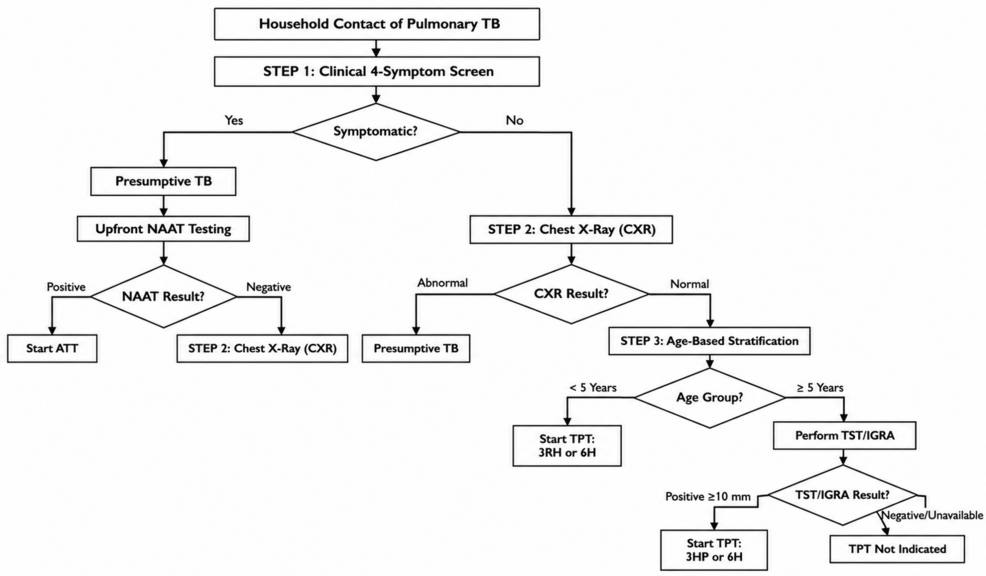
The findings of the Prevalence and Associated Clinical Factors of Tuberculosis Infection and Disease Among Pediatric Household Contacts: A Facility-Based Cross-Sectional Study – Cureus suggest that the current approach to “passive case finding” (waiting for a sick child to come to the clinic) is insufficient. Instead, a move toward “active case finding” is necessary.
The Shift Toward Preventive Therapy (TPT)
The most effective way to reduce the prevalence of pediatric TB is not just treating the sick, but preventing the healthy from becoming sick. Tuberculosis Preventive Treatment (TPT) involves giving a course of antibiotics to children who have been exposed to TB but do not yet have active disease. This “cleans out” the latent bacteria and prevents the transition to active TB.
However, the challenge is ensuring that TPT is administered safely. Doctors must be absolutely certain the child does not already have active TB, as giving a single drug to a child with active disease can lead to the development of multi-drug-resistant TB (MDR-TB).
Integrating Family-Centered Care
The study highlights a critical systemic failure: the separation of adult and pediatric TB services. In many health systems, the adult is treated in one clinic, and the child is seen in another. A family-centered approach would integrate these services, ensuring that the moment an adult is diagnosed, their children are automatically enrolled in a screening and prevention program.
For more on the broader systemic issues of infectious disease management, you might find a related explainer on global health infrastructure useful.
Addressing Common Misconceptions
There are several widespread myths regarding pediatric TB that often hinder effective treatment and screening. It is important to clarify these points to ensure families and caregivers seek help early.
Myth: The BCG vaccine completely prevents TB in children.
Reality: While the BCG vaccine is highly effective at preventing severe forms of TB (like meningitis) in infants, it does not provide lifelong immunity and does not prevent the primary infection of the lungs in all children.
Myth: If a child doesn’t have a cough, they don’t have TB.
Reality: As discussed, many children with TB present with systemic symptoms (fever, weight loss) rather than respiratory symptoms. Extrapulmonary TB (TB outside the lungs) is also more common in children.
Myth: TB is only a disease of poverty.
Reality: While poverty and overcrowding increase the risk, M. Tuberculosis can infect anyone. The biological susceptibility of a child’s immune system is a risk factor regardless of socioeconomic status.
Key Takeaways for Caregivers and Clinicians
To summarize the critical insights derived from the analysis of pediatric household contacts, the following points serve as a guide for vigilance and action:
- Automatic Screening: Every child living with a TB-positive adult must be screened, regardless of whether they appear healthy.
- Vigilance for “Red Flags”: Pay close attention to weight loss, persistent low-grade fever, and lethargy in exposed children.
- Nutritional Support: Improving a child’s diet is not just about growth; it is a clinical intervention to strengthen the immune system against TB progression.
- Preventative Focus: TPT is a powerful tool that can break the cycle of transmission if applied correctly.
- Early Diagnosis: Because pediatric TB is paucibacillary, clinicians should rely on a “scoring system” (combining X-rays, contact history, and symptoms) rather than relying solely on a single sputum test.
Frequently Asked Questions
What is the difference between TB infection and TB disease in children?
TB infection (Latent TB) means the bacteria are in the body but are kept under control by the immune system. The child is not sick and not contagious. TB disease (Active TB) occurs when the bacteria multiply and cause tissue damage, leading to symptoms and the potential to spread the bacteria to others.
Why is it so hard to diagnose TB in children compared to adults?
Children often have “paucibacillary” TB, meaning they have a low concentration of bacteria in their lungs. They also rarely cough up sputum, making the standard tests used for adults ineffective. Their symptoms are often non-specific and mimic other childhood illnesses.
Can a child with latent TB still be treated?
Yes. This is called Tuberculosis Preventive Treatment (TPT). It is designed to eliminate the dormant bacteria and prevent the child from developing active, life-threatening TB disease in the future.
Which children are at the highest risk of progressing to active TB?
The highest risk groups include children under the age of five, those with malnutrition, children living with HIV/AIDS, and those exposed to an adult with a highly infectious (cavitary) form of pulmonary TB.
Does the BCG vaccine mean my child cannot get TB?
No. While the BCG vaccine significantly reduces the risk of severe complications like TB meningitis, it does not provide total protection against all forms of TB infection or the development of active pulmonary TB later in life.
The evidence presented in the Prevalence and Associated Clinical Factors of Tuberculosis Infection and Disease Among Pediatric Household Contacts: A Facility-Based Cross-Sectional Study – Cureus serves as a call to action. By identifying the specific clinical factors that put children at risk and implementing aggressive screening for household contacts, the medical community can move closer to eliminating this devastating disease in the youngest and most vulnerable populations. The focus must shift from treating the illness to predicting and preventing it, ensuring that a parent’s diagnosis does not become a child’s destiny.
