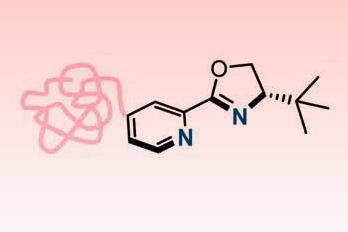
PEGylated Ligands Accelerate Mechanochemical Arylations for Greener Chemical Synthesis
Researchers have developed PEGylated ligands that significantly increase the reaction speed and selectivity of mechanochemical arylations by reducing friction and enhancing molecular mobility. By attaching polyethylene glycol chains to catalysts, scientists can achieve high-yield carbon-carbon bond formations without the need for bulk organic solvents, addressing a primary bottleneck in solvent-free synthetic chemistry.
How do PEGylated ligands improve mechanochemical arylations?
PEGylated ligands boost performance by acting as internal lubricants during the grinding process. In traditional mechanochemistry, reactants are milled together in a ball mill, where mechanical energy drives the reaction. However, these reactions often suffer from poor mass transfer and high friction, which can lead to slow reaction times or degraded products. According to the research, adding polyethylene glycol (PEG) chains to the ligands creates a “liquid-like” environment at the molecular level.
This modification leverages a concept known as Liquid Assisted Grinding (LAG). While standard LAG involves adding a small amount of external solvent to a mill, PEGylated ligands integrate this functionality directly into the catalyst. The PEG chains increase the mobility of the reactants on the surface of the milling media, allowing the arylating agents and substrates to meet more frequently and with better orientation. This results in faster reaction kinetics and higher selectivity, meaning the reaction produces the desired isomer more consistently than non-PEGylated alternatives.
Key technical improvements include:
- Reduced Induction Periods: Reactions start faster because the PEG chains facilitate the initial formation of the active catalyst species.
- Enhanced Selectivity: The steric and electronic environment provided by the PEG chains helps steer the reaction toward specific target molecules.
- Solvent Elimination: The process removes the need for volatile organic compounds (VOCs) that typically characterize arylations.
What is the difference between traditional arylations and mechanochemical methods?
Traditional arylation—the process of attaching an aryl group to another molecule—typically requires large volumes of organic solvents like dimethylformamide (DMF) or toluene. These solvents are necessary to dissolve the reactants and heat them to high temperatures to overcome the energy barrier of the reaction. However, these solvents are often toxic, flammable, and expensive to dispose of.
Mechanochemical arylations replace heat and solvents with mechanical force. In a ball mill, heavy spheres collide with the chemical reactants, creating localized high-pressure zones that force molecules together. This approach is inherently more sustainable, but it often struggles with “clumping” or the formation of stagnant zones where the reaction stops. The introduction of PEGylated ligands solves this by ensuring the mixture remains fluid-like, even in the absence of a bulk liquid solvent.
| Feature | Traditional Solution Arylation | Standard Mechanochemistry | PEGylated Mechanochemistry |
|---|---|---|---|
| Medium | Bulk Organic Solvents | Solvent-Free (Dry) | Internalized Lubrication (PEG) |
| Energy Source | Thermal Heat | Mechanical Impact | Mechanical Impact |
| Reaction Speed | Moderate to Fast | Often Slow/Inconsistent | Accelerated |
| Waste Profile | High (Solvent Waste) | Low | Very Low |
| Selectivity | High (Controllable) | Variable | High/Optimized |
Why does the PEG chain specifically enhance selectivity?
Selectivity in chemistry refers to the ability to produce one specific product over several possible side products. In arylations, this often means ensuring the aryl group attaches to the correct carbon atom (regioselectivity). The PEG chain does not just lubricate; it alters the physical state of the reaction interface.
Because PEG is a flexible, hydrophilic polymer, it creates a micro-environment around the metal center of the catalyst. This environment can stabilize transition states that are otherwise unstable in a completely dry, solid-state reaction. According to the findings, the PEG chains help maintain the catalyst in a more active, “dissolved-like” state even though no bulk solvent is present. This prevents the catalyst from aggregating into inactive clumps, which is a common cause of poor selectivity in standard ball milling.
Furthermore, the PEG chains can influence the diffusion rates of different reactants. By controlling how quickly substrates reach the catalyst, the system can be tuned to favor the most kinetically accessible path, reducing the formation of unwanted byproducts.
For more on how this fits into broader trends, see a related explainer on green catalyst design.
What are the environmental implications of this technology?
The chemical industry is one of the largest producers of hazardous waste, with solvents accounting for the vast majority of the mass intensity in pharmaceutical manufacturing. The shift toward PEGylated mechanochemical arylations aligns with the “Twelve Principles of Green Chemistry,” specifically the principles of waste prevention and the use of safer solvents.

By eliminating the need for bulk solvents, this method reduces the “E-factor” (environmental factor), which is the ratio of the mass of waste to the mass of the product. In traditional arylations, the E-factor can be staggeringly high because the solvent outweighs the product by a factor of 100 or more. Mechanochemistry reduces this ratio to near zero for the reaction phase.
Additional environmental benefits include:
- Lower Energy Consumption: Mechanical milling often requires less total energy than maintaining large-scale reflux heating for several hours.
- Reduced Toxicity: Eliminating solvents like DMF reduces the risk of worker exposure to reproductive toxins and carcinogens.
- Simplified Purification: Without solvents to strip away, the work-up process (isolating the final product) is often faster and requires fewer chemicals.
How is this applied in pharmaceutical and materials science?
Arylations are foundational in the synthesis of active pharmaceutical ingredients (APIs). Many modern drugs, including anti-cancer agents and antivirals, contain biaryl structures—two aromatic rings linked together. These structures are often difficult to synthesize efficiently.
The ability to perform these reactions faster and with higher selectivity using PEGylated ligands means pharmaceutical companies could potentially synthesize complex drug candidates more quickly. The speed increase provided by the PEG chains allows for “high-throughput” mechanochemical screening, where chemists can test hundreds of different catalyst-substrate combinations in small milling jars without spending weeks managing solvent waste.
In materials science, this technology is applicable to the creation of organic light-emitting diodes (OLEDs) and organic photovoltaics. These materials often require precise aryl-aryl couplings to ensure the correct electronic properties. The high selectivity of PEGylated ligands ensures that the resulting polymers or small molecules have the exact structural purity required for high-efficiency electronics.
“The integration of PEG chains into the ligand structure effectively bridges the gap between the efficiency of solution-phase chemistry and the sustainability of solvent-free processing.”
What are the current limitations and future directions?
Despite the advantages, mechanochemical arylations using PEGylated ligands face challenges regarding scale-up. While a ball mill works efficiently for gram-scale laboratory synthesis, translating this to ton-scale industrial production requires different equipment, such as twin-screw extruders (TSE). In a TSE, the materials are pushed through a heated, rotating screw, providing continuous mechanical shear.
Researchers are currently investigating how PEGylated ligands behave in continuous-flow mechanochemical systems. There is also a need to explore a wider variety of polymers beyond PEG to see if other chains—such as polyphosphazenes or siloxanes—could provide even greater speed or selectivity for different types of chemical bonds.
Another area of focus is the recovery of the PEGylated catalyst. Because the catalyst is integrated into the reaction mixture, developing ways to recycle these expensive ligands without using solvents for extraction is a priority for making the process commercially viable.
For a deeper look at industrial scaling, read our analysis of continuous-flow chemistry.
Common misconceptions about solvent-free chemistry
A frequent misconception is that solvent-free reactions are simply “dry” mixtures that rely on heat. In reality, mechanochemistry is about the application of force. The “heat” generated in a ball mill is localized and transient—occurring at the point of impact—rather than being a uniform temperature throughout the vessel. This is why PEGylated ligands are so important; they manage the energy transfer at those impact points.
Another common belief is that mechanochemistry is only for simple molecules. The success of PEGylated ligands in arylations proves that complex, high-value molecules can be synthesized with precision. The idea that “you need a solvent to move molecules” is being challenged by the discovery that polymer-assisted mobility can mimic the benefits of a liquid phase without the environmental cost.
Frequently Asked Questions
What exactly is a PEGylated ligand?
A PEGylated ligand is a molecule used to coordinate with a metal catalyst that has been chemically modified with polyethylene glycol (PEG) chains. These chains act as a molecular lubricant, improving the movement of reactants during mechanical grinding.
Why is selectivity important in arylations?
Selectivity ensures that the aryl group attaches to the specific part of the molecule intended by the chemist. Poor selectivity leads to isomers or byproducts that must be removed, increasing waste and decreasing the overall yield of the desired drug or material.
Can any ligand be PEGylated to get these results?
Not necessarily. The length of the PEG chain and the point of attachment on the ligand must be carefully optimized. If the chain is too long, it may interfere with the catalyst’s active site; if it is too short, it may not provide enough lubrication to speed up the reaction.
Does this method work for all types of chemical reactions?
While this specific research focuses on arylations, the principle of using PEGylated ligands to enhance mass transfer is being explored for other cross-coupling reactions and polymerizations. However, the effectiveness depends on the specific chemistry of the reactants.
Is mechanochemistry faster than traditional heating?
In many cases, yes. By eliminating the time required to heat large volumes of solvent and by using high-energy impacts to overcome activation barriers, mechanochemical reactions can often reach completion in a fraction of the time required for traditional reflux methods.
The development of PEGylated ligands represents a shift toward “smart” catalysts that do more than just lower activation energy—they actively manage the physical environment of the reaction. As the pharmaceutical and materials industries face increasing pressure to reduce their carbon footprints, the transition from bulk solvent systems to lubricated mechanochemical processes offers a viable path toward sustainable, high-performance synthesis.
