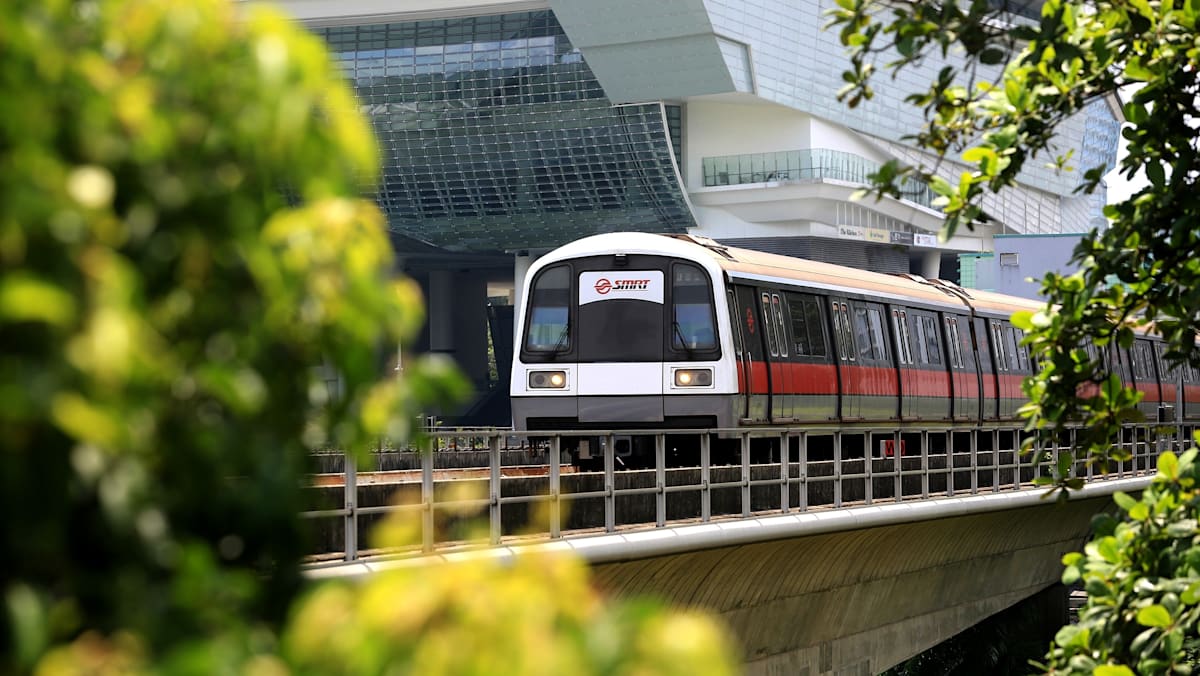
MRT Reliability Nears Record High as Circle Line Performance Improves by 50%
Singapore’s MRT network is approaching record reliability levels, highlighted by a 50% improvement in performance on the Circle Line. Data indicates a significant reduction in service disruptions across the rail network, which officials attribute to targeted maintenance overhauls and infrastructure upgrades managed by the Land Transport Authority (LTA) and rail operators.
The surge in reliability is most evident on the Circle Line (CCL), where the frequency of failures has dropped sharply. According to reports, the system’s stability is now nearing historic peaks, reducing the likelihood of the unplanned outages that previously hampered commuter travel. This improvement is part of a broader trend across the North-South, East-West, and North East lines, though the CCL’s recent gains are the most pronounced.
How did the Circle Line achieve a 50% reliability increase?
The 50% jump in Circle Line performance stems from a shift toward predictive maintenance and the replacement of aging critical components. According to LTA and operator data, the focus shifted from “fixing on failure” to “preventing failure” through the use of advanced sensors and data analytics.
Engineering teams identified specific recurring fault patterns in the CCL’s signaling and power systems. By replacing these components before they reached their end-of-life cycle, operators reduced the number of “stop-and-go” incidents. This proactive approach allowed the Circle Line to significantly increase its Mean Kilometres Between Failure (MKBF) metric.
- Component Upgrades: Systematic replacement of worn-out track circuits and power switches.
- Data-Driven Monitoring: Installation of sensors that alert engineers to anomalies before a breakdown occurs.
- Enhanced Testing: Rigorous stress-testing of the signaling system during non-operational hours.
These technical interventions ensured that the Circle Line, which serves as a vital orbital link for the city, could handle higher passenger volumes with fewer technical glitches.
What does “record high” reliability mean for Singapore commuters?
In the context of rail transport, “record high” reliability refers to the MKBF—the average distance a train travels before a delay of five minutes or more occurs. When reliability nears a record high, it means the interval between these failures has expanded to its widest point in the network’s history.
For the average commuter, this translates to fewer sudden halts between stations and a decrease in the “crowd crush” typically seen at platforms during a service disruption. According to transport analysts, high MKBF figures correlate directly with higher commuter confidence and more predictable journey times.
“The goal is to move toward a state where failures are rare exceptions rather than expected occurrences,” according to LTA operational guidelines.
The current trajectory suggests that the network is moving closer to the “gold standard” of rail reliability, where the system can sustain millions of train-kilometres without a significant breakdown.
How does current MRT performance compare to previous years?
The current state of the MRT network stands in stark contrast to the period between 2011 and 2017, which was marked by frequent system-wide failures and public dissatisfaction. The recovery has been incremental, but the recent jump in Circle Line performance marks a definitive shift in the trend line.

The following table illustrates the general trajectory of reliability improvements across the network’s key phases:
| Period | Reliability Status | Primary Focus |
|---|---|---|
| 2011–2017 | Volatile / Low | Crisis management and emergency repairs. |
| 2018–2021 | Steady Recovery | Systematic renewal of assets and new financing frameworks. |
| 2022–Present | Nearing Record Highs | Predictive maintenance and 50% gains on the Circle Line. |
While the North-South and East-West Lines (NSEWL) historically struggled with the oldest infrastructure, the recent improvements on the Circle Line demonstrate that even mid-age lines can see drastic performance gains through targeted technical interventions.
What role did the Land Transport Authority (LTA) play in these improvements?
The LTA shifted the operational philosophy of the MRT through the New Rail Financing Framework (NRFF). Under this system, the LTA owns the assets, while the operators (SMRT and SBS Transit) are responsible for maintaining them to a strict standard. This removed the financial burden of massive asset replacement from the operators, allowing them to focus entirely on operational excellence.
According to LTA reports, this framework incentivized operators to maintain assets more rigorously. If a line fails to meet reliability targets, the operators face financial penalties; conversely, meeting targets is rewarded. This “carrot and stick” approach has accelerated the adoption of the predictive maintenance tools that led to the 50% improvement on the Circle Line.
Additionally, the LTA has invested heavily in:
- Centralized Monitoring: A unified system to track the health of all lines in real-time.
- Standardized Parts: Reducing the variety of components to simplify maintenance and speed up repairs.
- Workforce Training: Upskilling technicians to handle newer, digital-first signaling systems.
For more on the evolution of Singapore’s transport strategy, see a related explainer on the New Rail Financing Framework.
Which other lines are contributing to the overall reliability surge?
While the Circle Line is the current standout, the overall network reliability is a collective effort. The North East Line (NEL) has long been a benchmark for stability, and the Downtown Line (DTL) has maintained high performance since its inception due to its more modern infrastructure.
The North-South and East-West Lines have seen a more gradual improvement. Because these lines are the oldest and most heavily used, the “quick wins” seen on the Circle Line are harder to achieve. However, the LTA reports that the systemic renewal of the NSEWL’s signaling system has contributed to a steady upward trend in MKBF.
The synergy between these lines is critical. When the Circle Line improves by 50%, it relieves pressure on the central interchange stations of the NSEWL and NEL, as more commuters opt for the orbital route. This reduction in congestion indirectly improves the reliability of the other lines by reducing the wear and tear caused by extreme passenger loads.
What are the remaining challenges for the rail network?
Despite the news that MRT reliability nears record high as Circle Line performance improves by 50% – CNA, engineers caution that maintaining these levels is harder than achieving them. The primary challenge is “asset aging.” As the network expands, more components enter the phase of their life cycle where failure rates naturally increase.
Another significant challenge is the integration of new lines. As the Thomson-East Coast Line (TEL) and the Cross Island Line (CRL) are phased in, the complexity of the network increases. Every new connection point is a potential failure point. Operators must ensure that the high reliability of the existing lines is not compromised by the integration of new systems.
Experts also point to the “human factor.” While sensors can predict a part’s failure, the speed of the human response—getting the right technician to the right spot with the right part—remains a variable that can affect the duration of a delay.
Common misconceptions about MRT reliability
There is a common belief among commuters that a “reliable” system is one that never breaks. In engineering terms, this is impossible. Reliability is not the absence of failure, but the management of it. A high MKBF does not mean zero faults; it means that faults occur far less frequently and are resolved more quickly.
Another misconception is that the 50% improvement on the Circle Line happened overnight. In reality, this is the result of years of data collection. The “jump” in performance is the culmination of a long-term strategy where the data finally reached a critical mass, allowing engineers to pinpoint the exact causes of disruptions.
Finally, some believe that new lines are automatically more reliable. While they start with newer parts, they often face “infant mortality” failures—initial glitches that occur during the bedding-in period of new technology. The Circle Line’s current success is actually a result of maturing technology, not just “newness.”
FAQ: Understanding the MRT Reliability Surge
What is MKBF and why does it matter?
MKBF stands for Mean Kilometres Between Failure. It measures the average distance trains travel before a fault causes a delay of five minutes or more. A higher MKBF means the system is more reliable and commuters face fewer disruptions.

Why did the Circle Line see a 50% improvement specifically?
The Circle Line benefited from a targeted campaign of predictive maintenance and the replacement of specific high-failure components in its signaling and power systems, supported by LTA’s asset-ownership model.
Is the MRT now completely fail-proof?
No system is entirely fail-proof. While reliability is nearing record highs, the goal is to minimize the frequency and duration of disruptions, rather than eliminating them entirely.
How does the New Rail Financing Framework (NRFF) help?
The NRFF allows the LTA to own the infrastructure, removing the massive cost of asset replacement from the operators. This lets operators focus on maintenance and performance, with financial incentives tied to reliability targets.
Will these reliability gains be seen on the newer lines like the TEL?
Newer lines generally start with high reliability due to modern components. The challenge for lines like the TEL is to maintain those levels as they scale up to full operational capacity and passenger loads.
As the network continues to expand, the focus remains on the transition from reactive to predictive maintenance. The recent gains on the Circle Line serve as a blueprint for how the rest of the network can sustain its climb toward record-breaking stability. For more updates on Singapore’s infrastructure, check our latest reports on urban transport development.
