FDA retracts false positive cyclospora test result for Taylor Farms lettuce
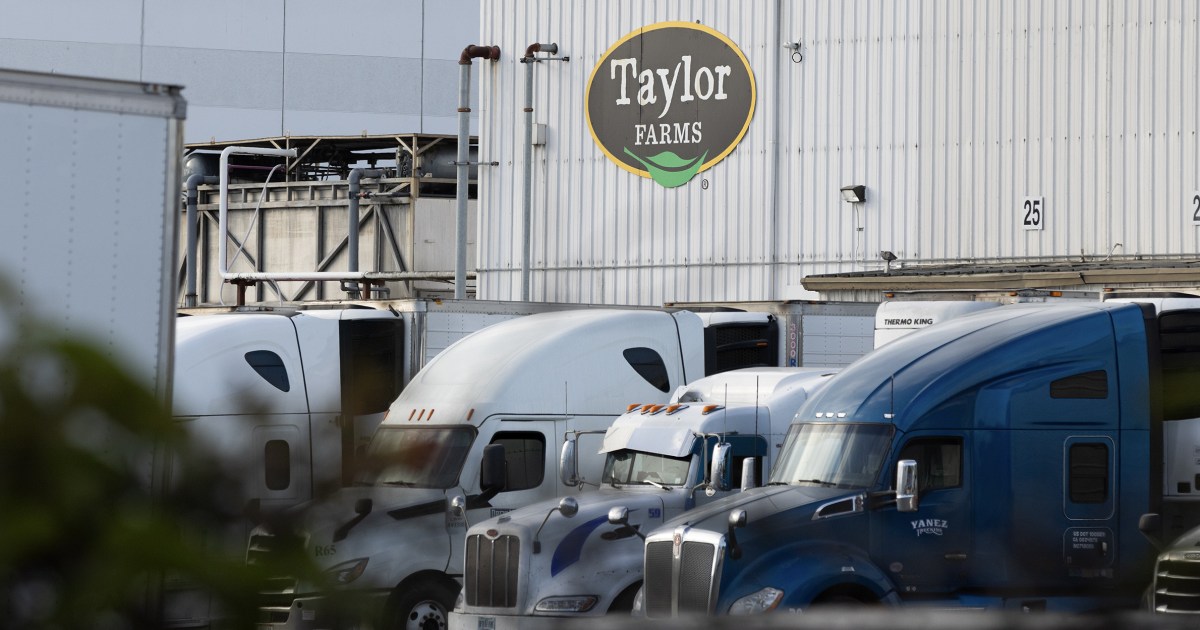
Federal health officials retracted a laboratory finding that linked Taylor Farms iceberg lettuce to a nationwide cyclosporiasis outbreak. Despite the correction, the company's voluntary recall of iceberg lettuce remains in effect.

Federal health officials retracted a laboratory finding on Sunday, July 19, 2026, that had previously linked a specific sample of shredded iceberg lettuce from Taylor Farms to a nationwide cyclosporiasis outbreak. The Food and Drug Administration (FDA) stated that a follow-up review of the sample, which was collected through targeted import surveillance, determined the result was a "false positive" caused by false amplification.
The retraction shifts the focus of the ongoing investigation, as the agency now reports that it has not identified a single positive product test result for Cyclospora cayetanensis since the outbreak began in May 2026. While the agency maintained that the correction does not change the core of its epidemiological investigation, the development has left public health officials without direct laboratory confirmation of the pathogen in the food supply, despite thousands of confirmed and suspected illnesses.
Related media


Outbreak Context and Epidemiology
The U.S. Centers for Disease Control and Prevention (CDC) and state health agencies have recorded more than 1,600 laboratory-confirmed cases of cyclosporiasis across 34 states since May 1, 2026, with over 5,100 additional cases currently under investigation. The illness, which causes severe watery diarrhea, fatigue, and abdominal cramping, has hit the Midwest particularly hard. Michigan and Ohio remain the most heavily impacted states, with Michigan serving as the apparent epicenter of the current cluster.
Investigators previously zeroed in on shredded iceberg lettuce supplied by Taylor Farms de México after thousands of patients reported consuming the product at Taco Bell locations in Indiana, Kentucky, Michigan, Ohio, and West Virginia. According to state health department data, including an analysis in Michigan, approximately 90 percent of interviewed patients reported eating the lettuce at those specific restaurants before falling ill.
Response and Recall Status
Despite the retraction of the positive lab test, Taylor Farms confirmed that its voluntary recall of iceberg lettuce sourced from central Mexico remains in effect. The company had previously suspended distribution of the implicated produce as a precautionary measure.
The recall covers products distributed between June 29 and July 16, 2026, in the following 27 states:
- Alabama, Arkansas, Connecticut, Florida, Georgia, Iowa, Illinois, Indiana, Kansas, Kentucky, Louisiana, Massachusetts, Maryland, Michigan, Missouri, Mississippi, North Carolina, New Hampshire, New Jersey, Ohio, Oklahoma, Pennsylvania, South Carolina, Tennessee, Texas, Virginia, and Wisconsin.
The company clarified that no other Taylor Farms products, including its branded salad kits, are part of the recall. Taco Bell has also confirmed the removal of all affected lettuce from its restaurants.
Political and Regulatory Scrutiny
The reversal has sparked renewed interest in the regulatory environment surrounding the produce industry. Federal Election Commission filings indicate that Taylor Fresh Foods, the parent company of Taylor Farms, contributed $1 million to the MAGA Inc. Super PAC in March 2025. This donation occurred shortly after the FDA announced a delay in the implementation of the Food Traceability Rule, a reform aimed at standardizing digital record-keeping for high-risk foods like leafy greens.
While industry critics suggest the timing of the donation warrants investigation, there is no evidence currently linking the contribution to the FDA's handling of the test results or the ongoing outbreak inspection. Experts such as Rutgers University food science department chair Donald W. Schaffner noted that testing for Cyclospora is notoriously difficult and prone to error. He suggested that while the false positive creates public confusion, the recall remains the appropriate safety measure given the strong epidemiological data.
What to Watch Next
- Investigation Progress: With no physical confirmation of the parasite in the lettuce, the FDA continues to work with state and local partners to determine if the contamination occurred in irrigation water or during growing processes in Mexico.
- Clinical Guidance: Health officials have advised physicians to prioritize testing for the parasite in patients presenting with prolonged gastrointestinal symptoms, as the illness is often excluded from standard stool panels.
- Public Safety: The CDC continues to emphasize that washing produce is unlikely to fully remove the parasite, though cooking food to 70°C (158°F) effectively destroys it. Frozen and canned produce remain considered safe.
For individuals who have purchased recalled products, companies advise either discarding the items or returning them to the point of purchase for a refund. Further updates on the investigation are expected as federal authorities continue their traceback efforts.
Archypedia is dedicated to independent, evidence-backed reporting. This briefing was synthesized from primary source reporting, corroborated across independent newsrooms, and verified against our Editorial Standards.
Transparency record
Evidence behind this report
This report synthesizes 10 distinct sources. Open the source ledger below to compare the underlying coverage.
- foodpoisoningbulletin.com
- giantswire.usatoday.com
- ibtimes.co.uk
- nbcnews.com
- usatoday.com
- yahoo.com
- nypost.com
- abcnews.com
- taylorfarms.com
- forbes.com
Prepared under the Archypedia Editorial Policy by the Mara Ionescu editorial desk profile. AI-assisted tools may support drafting and verification; public accountability remains with Archypedia. Report an error.