
A Meteor Fell on the USA – EADaily: Understanding the Massive Atmospheric Explosion Over New England
Residents across the Northeastern United States and parts of Canada were startled by a series of thunderous explosions and blinding flashes of light as a high-velocity space rock entered the Earth’s atmosphere. The event, which saw a meteor explode over Massachusetts, sent shockwaves through the region, triggering widespread reports of shaking buildings and sonic booms that could be heard hundreds of miles away. For those searching for the latest updates on the event, A meteor fell on the USA – EADaily serves as a focal point for understanding the scale and impact of this rare atmospheric phenomenon.
While the event caused significant alarm and a surge in emergency calls, the incident provides a vivid example of the constant interaction between Earth and the debris orbiting our solar system. The sheer speed of the object—estimated at approximately 75,000 miles per hour—transformed a relatively small piece of cosmic matter into a powerful kinetic weapon, resulting in an “airburst” that rattled windows from Delaware to Montreal.
The Anatomy of the Event: What Happened Over Massachusetts?
The event began when a meteoroid, a fragment of an asteroid or comet, collided with the Earth’s upper atmosphere at an extreme velocity. As the object descended, the friction between its surface and the dense gases of the atmosphere generated intense heat, creating a glowing trail of ionized gas known as a bolide. This brilliant streak of light was visible to thousands of observers across New England, appearing as a fireball that momentarily rivaled the brightness of the sun.
However, the visual spectacle was quickly followed by a physical one. As the meteor penetrated deeper into the atmosphere, the pressure building in front of the object became unsustainable. This led to a catastrophic structural failure, causing the meteor to explode mid-air. This process, known as an atmospheric airburst, released a massive amount of energy instantaneously, creating a powerful pressure wave—a sonic boom—that traveled outward in all directions.
The impact was felt most acutely in Massachusetts, where the explosion occurred at a relatively low altitude. Residents reported a sound akin to a heavy artillery blast or a sudden thunderclap, even under clear skies. The resulting vibrations were strong enough to shake residential homes and commercial buildings, leading many to initially mistake the event for a gas explosion or a terrestrial disaster.
Key Facts of the Atmospheric Entry
- Estimated Velocity: Approximately 75,000 mph.
- Epicenter: Massachusetts, USA.
- Observation Range: Sightings reported from Delaware in the south to Montreal, Quebec, in the north.
- Primary Effect: High-altitude airburst resulting in a powerful sonic boom.
- Physical Impact: Structural vibrations and window rattling across New England.
The Science of the Sonic Boom: Why Was It So Loud?
To understand why A meteor fell on the USA – EADaily reports emphasize the “booms,” one must look at the physics of supersonic travel. When an object moves faster than the speed of sound (approximately 767 mph at sea level), it pushes the air molecules in front of it into a compressed wave. Because the meteor was traveling at 75,000 mph—over 90 times the speed of sound—it created a massive “shock front.”
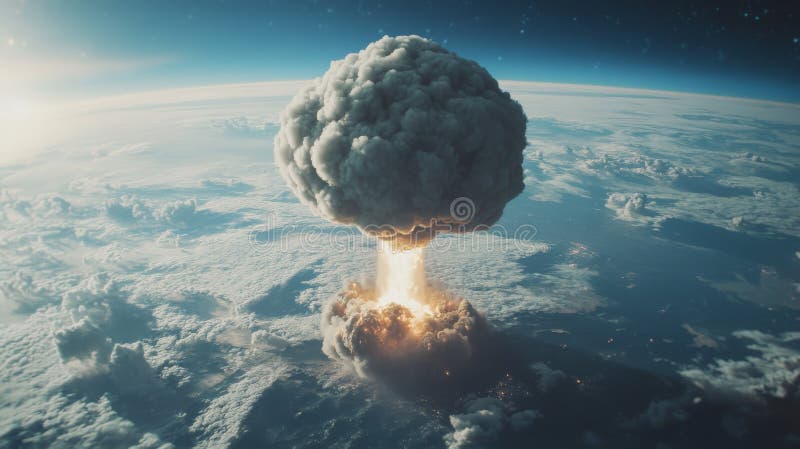
As the meteor disintegrated and exploded, this compressed air was suddenly released, expanding outward at supersonic speeds. When this pressure wave reaches the ground, it is perceived as a loud, sudden boom. The intensity of the sound depends on several factors:
- Altitude of Explosion: The lower the explosion occurs, the more intense the shockwave felt on the ground.
- Mass of the Object: A larger mass carries more kinetic energy, leading to a more powerful airburst.
- Angle of Entry: The steepness of the meteor’s path determines how quickly it hits the denser layers of the atmosphere.
“The phenomenon experienced over the Northeast is a classic example of a bolide airburst. The energy released is not from a chemical explosion, but from the rapid conversion of kinetic energy into heat and pressure as the object’s structural integrity fails under atmospheric stress.”
Regional Impact and Public Reaction
The geographic footprint of the event was remarkably wide. While the explosion was centered over Massachusetts, the visual and auditory evidence spanned several states and a national border. This suggests that the meteor entered the atmosphere at a shallow angle, allowing the light to be visible across a vast horizon and the sound to propagate over a large area.
Sightings and Reports by Region
In Delaware and the Mid-Atlantic states, observers reported a bright flash and a trailing light, though the sonic boom was less intense than in the north. As the object moved toward New England, the reports shifted from visual sightings to physical experiences. In Massachusetts, the epicenter, the event was described as a “shaking of the earth,” with many residents reporting that their homes vibrated violently.
Further north, in Montreal and surrounding areas of Quebec, the fireball was clearly visible, reminding residents that cosmic events do not adhere to political borders. The suddenness of the event led to a spike in social media activity and a flurry of calls to emergency services, as citizens sought to identify the source of the mysterious noise.
For a deeper look at how these events are monitored, you may find a related explainer on planetary defense systems useful in understanding how we track these objects before they enter the atmosphere.
Meteor vs. Meteorite: Did Anything Hit the Ground?
A common question following the report that A meteor fell on the USA – EADaily is whether any physical fragments were recovered. To answer this, it is important to distinguish between three different terms that are often used interchangeably:
- Meteoroid: A small rocky or metallic body traveling through outer space.
- Meteor: The streak of light produced when a meteoroid enters the atmosphere and burns up (the “shooting star”).
- Meteorite: The fragment of a meteoroid that survives the atmospheric entry and actually hits the Earth’s surface.
In the case of the Massachusetts event, the “explosion” indicates that the object underwent a catastrophic fragmentation. When a meteor explodes in the air, it is often pulverized into tiny grains of dust and small pebbles. While small meteorite fragments reached the ground, the energy of the airburst usually ensures that the bulk of the mass is vaporized or broken into pieces too small to be easily found without a dedicated search team.
| Term | Location | Primary Characteristic |
|---|---|---|
| Meteoroid | Space | Small rock/metal debris |
| Meteor | Atmosphere | Luminous streak / Fireball |
| Meteorite | Ground | Physical rock remnant |
Comparative Analysis: How This Event Ranks Against Others
To put the Massachusetts meteor into perspective, it is helpful to compare it to other well-documented airbursts. The most famous modern example is the 2013 Chelyabinsk event in Russia, where a larger meteor caused significant damage and injuries due to the shockwave breaking thousands of windows.
The New England event, while frightening, was significantly smaller in scale than Chelyabinsk. However, it serves as a potent reminder that “small” meteors—those a few meters in diameter—can still produce substantial sonic booms and physical vibrations. Most of these objects burn up completely, but those with a higher density (such as iron-nickel compositions) are more likely to survive longer and explode lower in the atmosphere, increasing the likelihood of a sonic boom.
Factors Influencing the “Danger Level” of a Meteor
- Composition: Stony meteors tend to explode higher up; iron meteors are more likely to reach the surface.
- Velocity: Higher speeds increase the kinetic energy ($frac{1}{2}mv^2$), leading to more violent airbursts.
- Size: An object the size of a car can cause a loud boom; an object the size of a building can level a city.
The Role of NASA and Planetary Defense
Events like the one reported in A meteor fell on the USA – EADaily highlight the importance of Near-Earth Object (NEO) tracking. NASA’s Center for Near-Earth Object Studies (CNEOS) and other international agencies constantly scan the skies for asteroids and comets that could potentially intersect with Earth’s orbit.
Most meteors, like the one over Massachusetts, are too small to be detected before they enter the atmosphere. They are essentially “stealth” objects that only become visible once they begin to burn. However, for larger objects that could pose a regional or global threat, scientists use radar and optical telescopes to map their trajectories years in advance.
The current strategy for planetary defense involves several theoretical and tested methods, including “kinetic impactors” (crashing a spacecraft into an asteroid to nudge its path), which was recently tested by NASA’s DART mission. While the Massachusetts meteor was a random, untrackable event, the broader infrastructure of planetary defense is designed to prevent much larger, more devastating impacts.
Common Misconceptions About Atmospheric Explosions
Whenever a meteor explodes over a populated area, several common myths and misconceptions tend to circulate. Clearing these up helps the public understand the nature of the event.
“It was a secret military weapon or a missile”
In the immediate aftermath of the sonic boom, rumors often surface regarding military tests or missile strikes. However, the visual evidence—a brilliant, slow-moving fireball—is inconsistent with missile technology, which typically moves faster but doesn’t produce the same luminous plasma trail as a meteor. Seismic data and satellite tracking can quickly confirm the extraterrestrial origin of such events.
“The explosion was caused by fire”
Many believe the meteor “catches fire” and explodes like a bomb. In reality, the explosion is caused by ram pressure. The air in front of the meteor is compressed so violently that it heats up and creates a high-pressure wall. When the internal pressure of the rock can no longer withstand the external pressure of the atmosphere, it shatters instantaneously. It is a mechanical failure, not a chemical explosion.
“Meteors always leave a huge crater”
As seen in this event, most meteors never reach the ground as a single piece. The “airburst” phenomenon means the energy is released in the atmosphere. Unless the object is massive and dense enough to survive the trip, there will be no crater—only a shockwave and perhaps a rain of tiny, pebble-sized meteorites.
For those interested in the geological aftermath of such events, a related guide on identifying meteorites can provide tips on what to look for in the field.
Frequently Asked Questions
Was the meteor over Massachusetts dangerous?
While the sonic boom caused alarm and some minor structural vibrations, there were no reports of widespread injuries or catastrophic damage. The danger in these events typically comes from broken glass caused by the shockwave rather than the meteor itself.
Why could the meteor be seen from Delaware to Montreal?
The visibility was due to the meteor’s high altitude and the brilliance of the bolide. Because the Earth is curved, an object exploding at a high altitude can be seen from hundreds of miles away, provided there is a clear line of sight.

How speedy was the meteor actually traveling?
Estimates suggest the object was moving at approximately 75,000 mph. This is a typical entry speed for meteoroids, which are often traveling at tens of thousands of miles per hour relative to Earth.
Will there be more meteors falling soon?
Small meteors enter Earth’s atmosphere every single day; most are the size of sand grains and go unnoticed. Larger events like the one reported by A meteor fell on the USA – EADaily are less common but happen regularly on a global scale.
What should I do if I find a rock I think is a meteorite?
If you find a heavy, dark, metallic-looking rock following a meteor event, avoid using magnets to “test” it aggressively, as some meteorites are magnetic but so are many Earth rocks. The best course of action is to contact a local university’s geology department or a natural history museum for professional verification.
Monitoring the Skies and Future Outlook
The event over the Northeastern United States serves as a powerful reminder of our place in a dynamic solar system. While the “booms” over Massachusetts were startling, they provide scientists with valuable data regarding the composition of near-Earth debris and the way our atmosphere protects the surface from smaller impacts.
As technology improves, our ability to detect smaller NEOs will grow, but for now, the occasional surprise visitor from space remains a part of the terrestrial experience. The transition from a silent streak of light to a window-shaking roar happens in a matter of seconds, illustrating the incredible energy involved in cosmic collisions. For those who witnessed the event, it was a rare glimpse into the violent processes that shaped the early Earth and continue to influence our planet today.
Monitoring agencies continue to analyze the trajectory and potential fragments of the Massachusetts meteor. While no immediate threat follows such an event, the data gathered helps refine the models used to predict future atmospheric entries and improves the overall safety and readiness of planetary defense initiatives.
