
Gartner IT Infrastructure, Operations & Cloud Strategies Conference 2026 Mumbai: Day 2 Highlights – Gartner
The second day of the Gartner IT Infrastructure, Operations & Cloud Strategies Conference 2026 Mumbai: Day 2 Highlights – Gartner underscored a pivotal shift in the global and regional approach to digital transformation. While the first day focused on the broad horizons of cloud migration, Day 2 dove deep into the pragmatic application of Artificial Intelligence (AI), the staggering growth of India’s cloud economy, and the critical realization that “bigger” is not always “better” when it comes to machine intelligence.
For IT leaders gathered in Mumbai, the narrative was clear: the era of experimental AI is ending, and the era of operational efficiency is beginning. The discussions moved beyond the novelty of Generative AI to the hard realities of infrastructure costs, energy consumption, and the strategic deployment of “right-sized” intelligence. As India positions itself as a global hub for cloud services and AI implementation, the insights from Day 2 provide a roadmap for organizations looking to balance aggressive growth with fiscal responsibility.
The Pragmatism Shift: Moving Beyond Frontier Intelligence
One of the most significant discussions of the day centered on the misconception that every business process requires the most powerful AI models available. In a standout session, perspectives from industry leaders, including representatives from OpenAI, challenged the prevailing “frontier-first” mentality. The core argument was that relying exclusively on frontier intelligence—the most advanced, largest-scale models—for every single workflow is not only inefficient but economically unsustainable.
The conference highlighted a growing trend toward Intelligence Tiering. This strategy involves categorizing business tasks based on the level of reasoning required. While a complex legal analysis or a high-level strategic simulation might require a frontier model, routine data entry, basic customer service queries, or internal documentation summaries are better handled by smaller, specialized models.
“The industry is realizing that frontier intelligence is a powerful tool, but it is not a universal solvent. For the vast majority of enterprise workflows, a smaller, fine-tuned model provides the same utility at a fraction of the latency, and cost.”
Small Language Models (SLMs) vs. Large Language Models (LLMs)
The discourse shifted toward the rise of Small Language Models (SLMs). Unlike their massive counterparts, SLMs are trained on curated, domain-specific datasets, making them faster to deploy and easier to govern. The benefits discussed during the sessions included:
- Reduced Latency: Faster response times for end-users in real-time applications.
- Lower Operational Costs: Significant reductions in GPU compute requirements and cloud consumption fees.
- Enhanced Privacy: The ability to run models locally or in private clouds, reducing the risk of data leakage to public frontier models.
- Domain Expertise: Higher accuracy in niche fields (such as Indian healthcare or regional banking) where general-purpose models often hallucinate.
India’s Cloud Surge: The Path to $17 Billion
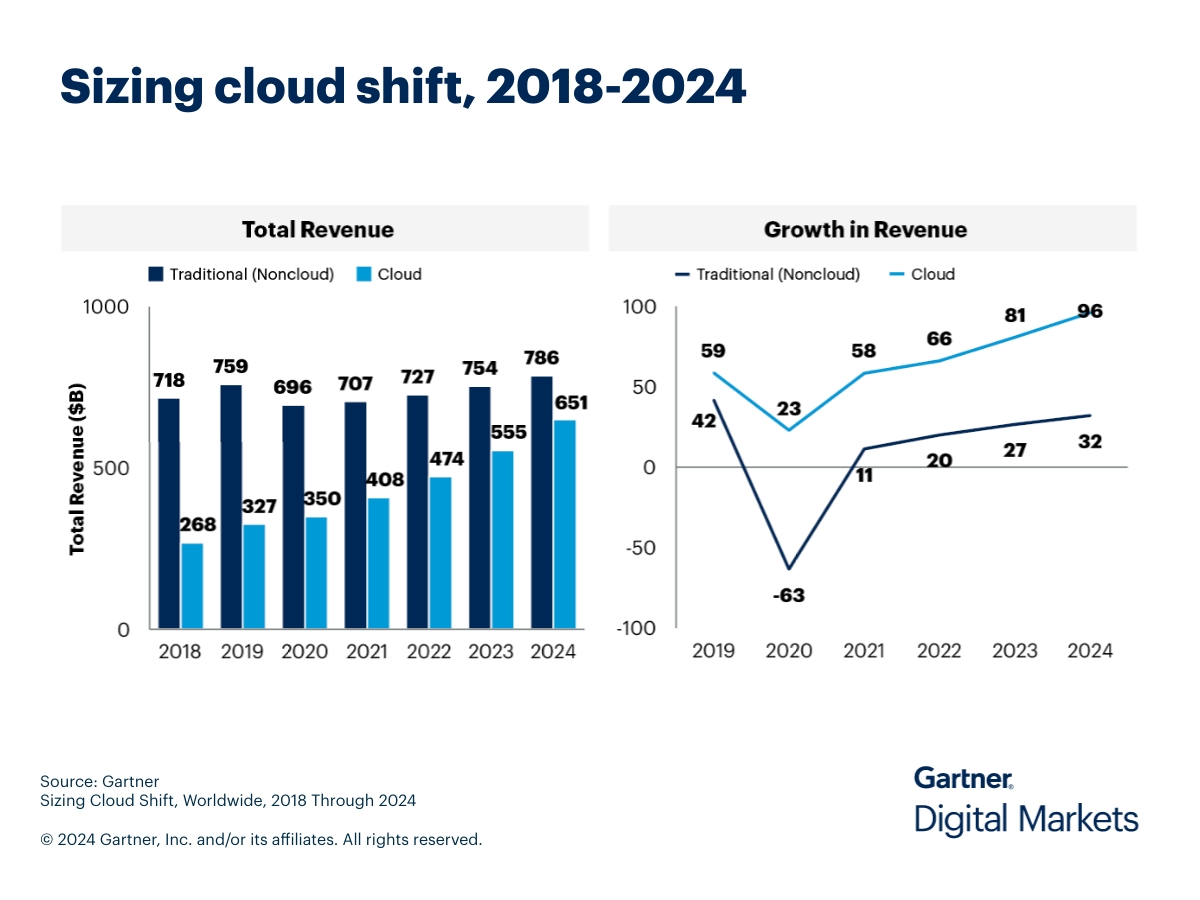
A major focal point of the Gartner IT Infrastructure, Operations & Cloud Strategies Conference 2026 Mumbai: Day 2 Highlights – Gartner was the explosive trajectory of India’s public cloud market. Reports presented during the event indicate that end-user public cloud spending in India is on track to surpass $17 billion by 2026.
This growth is not merely a result of general digitization but is being aggressively propelled by the AI gold rush. AI demands massive amounts of compute and storage, which in turn forces enterprises to migrate from legacy on-premise data centers to scalable cloud environments. This symbiotic relationship—where AI drives cloud adoption and cloud enables AI—is creating a virtuous cycle of investment across the subcontinent.
| Driver of Growth | Impact on Infrastructure | Strategic Outcome |
|---|---|---|
| Generative AI Adoption | Increased demand for High-Performance Computing (HPC) | Shift toward GPU-as-a-Service |
| Data Residency Laws | Expansion of local Cloud Regions (Mumbai, Delhi-NCR) | Sovereign Cloud adoption |
| Enterprise Modernization | Migration of monolithic apps to Microservices | Hybrid and Multi-cloud architectures |
| SME Digitization | Rise in SaaS and PaaS consumption | Democratization of high-end IT tools |
The “AI-Cloud” Feedback Loop
Experts noted that the Indian market is unique due to its scale and the diversity of its industry sectors. From the BFSI (Banking, Financial Services, and Insurance) sector implementing AI-driven fraud detection to the retail sector optimizing supply chains via cloud-native analytics, the demand is pervasive. However, this surge brings a new set of challenges, primarily around Cloud FinOps—the practice of bringing financial accountability to the variable spend model of the cloud.

With spending hitting record highs, the conference emphasized that IT operations (ITOps) must evolve into a strategic function that manages the “cost of intelligence.” This involves implementing strict tagging, automated scaling, and the use of spot instances to prevent “cloud bill shock” as AI workloads scale.
Operationalizing AI: From Proof of Concept to Production
A recurring theme throughout Day 2 was the “PoC Trap.” Many organizations have successfully launched AI Proof of Concepts (PoCs) but have struggled to move these into full-scale production. The gap, according to Gartner analysts, lies in the underlying infrastructure and operational maturity.
To bridge this gap, the conference outlined a framework for AI-Ready Infrastructure. This moves the conversation from the software (the model) to the plumbing (the data and compute).
Key Infrastructure Pillars for AI Scaling
- Data Fabric Integration: AI is only as good as the data it accesses. Organizations are encouraged to move away from data silos toward a unified data fabric that allows AI models to access real-time, clean, and governed data.
- Hybrid Cloud Orchestration: To balance cost and performance, the most successful firms are using a hybrid approach—keeping sensitive data on-premise while bursting heavy compute workloads to the public cloud.
- Energy-Efficient Computing: With the environmental impact of AI data centers becoming a boardroom concern, there was a strong emphasis on “Green IT.” This includes investing in liquid cooling technologies and selecting cloud providers with carbon-neutral commitments.
The transition to production also requires a change in personnel. The rise of LLMOps (Large Language Model Operations) was discussed as a necessary evolution of DevOps. LLMOps focuses on the lifecycle of the model: from data preparation and fine-tuning to monitoring for “model drift” (where the AI’s performance degrades over time) and ensuring ethical guardrails are in place.
Strategic Implications for IT Leaders in 2026
For the CIOs and CTOs in attendance, the Gartner IT Infrastructure, Operations & Cloud Strategies Conference 2026 Mumbai: Day 2 Highlights – Gartner served as a wake-up call to redefine their KPIs. The traditional metrics of “uptime” and “latency” are no longer sufficient. The new metrics of success are “Time to Value” and “Cost per Inference.”
The conference highlighted several strategic imperatives for the coming year:
1. The Pivot to Sovereign Cloud
Given India’s evolving regulatory landscape regarding data protection and privacy, there is a massive shift toward sovereign cloud solutions. These are cloud environments that ensure data is stored and processed within national borders and managed by entities subject to local laws. This is no longer optional for government agencies and financial institutions; it is a compliance necessity.
2. Rethinking the Talent Pipeline
There is a critical shortage of professionals who understand both the infrastructure (cloud/hardware) and the intelligence (AI/ML) layers. The consensus was that companies must invest in “upskilling” their existing IT operations teams rather than solely relying on expensive external hires. A related explainer on cloud talent gaps might provide further context on how to build these internal capabilities.
3. Governance Over Hype
The conference warned against the “FOMO” (Fear Of Missing Out) approach to AI. Instead of implementing AI because competitors are doing so, Gartner advised a “use-case first” approach. In other words identifying a specific business friction point and then selecting the least complex AI tool capable of solving it.
Common Misconceptions Debunked
During the interactive Q&A sessions, several industry myths were addressed and corrected:
- Myth: “To be an AI-driven company, we need to build our own LLM from scratch.”
Reality: For 99% of companies, building a foundation model is a waste of resources. The value lies in fine-tuning existing open-source or proprietary models using proprietary company data. - Myth: “Cloud migration is a one-time event.”
Reality: Cloud is a continuous evolutionary process. The “Lift and Shift” approach is dead; the “Refactor and Optimize” approach is the only way to achieve actual ROI. - Myth: “AI will replace the need for traditional IT operations.”
Reality: AI increases the complexity of operations. While it can automate routine tasks, it creates a greater need for high-level architects who can manage the interplay between AI, cloud, and security.
The Future of the Indian Digital Ecosystem
As the conference progressed, it became evident that India is not just adopting global trends but is beginning to set them. The intersection of a massive, young, tech-savvy population and a government pushing for a “Digital India” creates a unique laboratory for cloud and AI scaling.
The long-term implication is a shift toward Edge Intelligence. As 5G and 6G networks mature across India, the processing of AI will move from centralized cloud data centers to the “edge”—closer to the user. This will be critical for applications in autonomous logistics, smart city management, and remote healthcare in rural areas.
The synergy between public cloud spending and AI demand suggests that by 2027, the conversation will shift from “how to use the cloud” to “how to optimize a distributed intelligence network.” The foundations for this shift were clearly laid out during the second day of the Mumbai summit.
Frequently Asked Questions
What was the primary takeaway from the Gartner IT Infrastructure, Operations & Cloud Strategies Conference 2026 Mumbai Day 2?
The primary takeaway was the move toward “Pragmatic AI.” This involves moving away from the reliance on expensive, massive “frontier” models for every task and instead adopting a tiered intelligence strategy using Small Language Models (SLMs) and specialized AI to reduce costs and increase efficiency.

Why is India’s public cloud spending expected to exceed $17 billion by 2026?
The growth is driven by the massive compute and storage requirements of Generative AI, the modernization of legacy enterprise systems, and strict data residency laws that encourage the build-out of local cloud infrastructure.
What is “Intelligence Tiering” in the context of AI infrastructure?
Intelligence Tiering is a strategic approach where organizations assign different levels of AI models to different tasks. Complex reasoning tasks are sent to frontier models (high cost, high power), while routine tasks are handled by SLMs or traditional ML models (low cost, high speed).
How does LLMOps differ from traditional DevOps?
While DevOps focuses on the software development lifecycle (CI/CD), LLMOps specifically manages the lifecycle of Large Language Models. This includes data curation, model fine-tuning, monitoring for hallucinations or model drift, and managing the high-cost compute resources required for AI.
What is a Sovereign Cloud, and why is it important for Indian businesses?
A Sovereign Cloud is a cloud architecture that ensures all data is stored and processed within a specific country’s borders and governed by its laws. For Indian businesses, this is critical for compliance with data protection acts and ensuring national security over sensitive data.
The overarching theme of the event was a call for balance. As the digital landscape accelerates, the winners will not be those who adopt the most technology, but those who adopt the right technology with a clear understanding of the operational and financial costs. The Gartner IT Infrastructure, Operations & Cloud Strategies Conference 2026 Mumbai: Day 2 Highlights – Gartner provided the necessary blueprint for this balanced evolution, emphasizing that the path to the future is paved with strategic optimization, not just raw spending.
