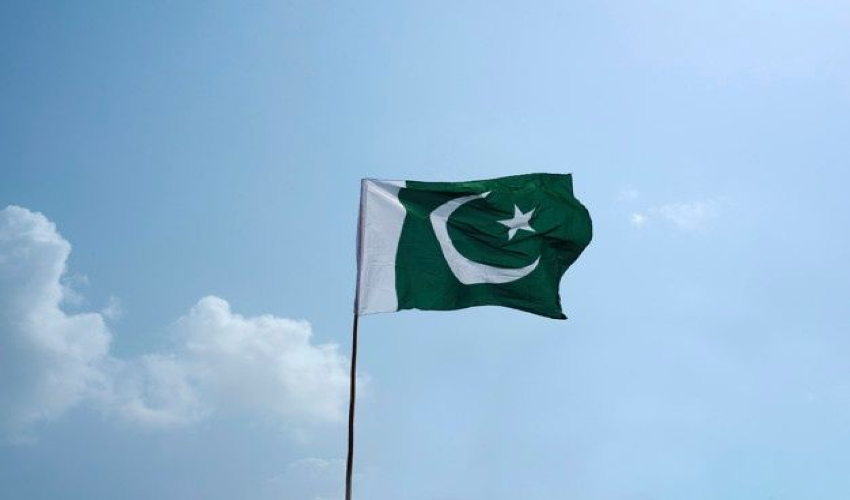
Pakistan and 11 Other Nations Condemn Israel’s Appointment of Envoy to Somaliland
In a rare display of international consensus, Pakistan joined 11 other countries in publicly condemning Israel’s recent decision to appoint its first ambassador to Somaliland, a move that has reignited tensions in the Horn of Africa. The coordinated statement, issued through diplomatic channels, underscores growing concern over actions perceived to undermine Somalia’s territorial integrity and challenge long-standing principles of sovereignty and non-interference in African affairs. While Israel frames the appointment as a step toward strengthening bilateral ties with a self-declared independent region, critics argue it risks destabilizing an already fragile region and sets a dangerous precedent for external interference in internal African conflicts.
The development has drawn sharp reactions not only from Somalia’s federal government but likewise from regional bodies and nations with historical ties to the area. Analysts warn that the move could complicate ongoing efforts to achieve national reconciliation in Somalia, where federal authorities continue to grapple with insurgencies, clan-based politics and humanitarian crises. As diplomatic fallout continues to unfold, the incident highlights the complex interplay between foreign policy ambitions and regional stability in one of the world’s most volatile geopolitical zones.
What Triggered the International Backlash?
The controversy began when Israel officially announced the appointment of its first ambassador to Somaliland, a self-declared republic that broke away from Somalia in 1991 but remains unrecognized by the United Nations and the African Union. Despite functioning with its own government, currency, and security forces, Somaliland’s status as an autonomous region within Somalia is upheld by international law and regional consensus.
Israel’s decision to elevate its diplomatic presence by sending a resident ambassador—rather than maintaining non-resident accreditation from Nairobi—was interpreted by many as a de facto recognition of Somaliland’s independence. This interpretation triggered immediate alarm in Mogadishu, where officials viewed the move as a direct challenge to Somalia’s sovereignty and territorial unity.
In response, Somalia’s Ministry of Foreign Affairs issued a strong protest, summoning the Israeli chargé d’affaires to convey its objection. The government reiterated its position that Somaliland is an inseparable part of Somali territory and warned that any action implying recognition of secessionist aspirations could jeopardize regional peace efforts.
What followed was a swift and unified diplomatic rebuke. Within days, Pakistan joined a coalition of 11 other nations—including Turkey, Saudi Arabia, the United Arab Emirates, Qatar, Malaysia, Indonesia, the Maldives, Djibouti, Algeria, Morocco, and Tunisia—in issuing statements condemning Israel’s appointment. While the exact wording varied, each country emphasized respect for Somalia’s territorial integrity, upheld the principle of non-interference in internal affairs, and called for dialogue to resolve disputes through peaceful, internationally sanctioned means.
Who Is Involved and What Are Their Positions?
The core actors in this diplomatic flashpoint include Israel, Somalia, Somaliland’s administration, and the group of nations that issued the joint condemnation. Each brings distinct historical, political, and strategic perspectives to the issue.
Israel has increasingly sought to expand its diplomatic and economic footprint across Africa, particularly in the Horn and North Africa regions. Officials in Jerusalem have framed engagement with Somaliland as part of a broader strategy to build partnerships based on innovation, technology exchange, and security cooperation. Israeli diplomats have pointed to Somaliland’s relative stability compared to south-central Somalia as a rationale for deeper engagement.
In contrast, Somalia’s federal government maintains that any foreign engagement with Somaliland must occur through Mogadishu, as the sole internationally recognized authority representing the Somali state. President Hassan Sheikh Mohamud’s administration has consistently opposed parallel diplomacy, arguing that it undermines national unity and encourages separatist tendencies.
Somaliland’s leadership, based in Hargeisa, welcomed Israel’s move as a validation of its decades-long quest for international recognition. Officials there argue that their region has demonstrated democratic governance, peaceful transitions of power, and effective governance—qualities they say deserve acknowledgment, even if formal sovereignty remains pending.
The condemning nations, many of which are members of the Organisation of Islamic Cooperation (OIC) or have significant Somali diaspora populations, framed their opposition around principles of international law and regional stability. Their statements avoided direct criticism of Israel’s right to engage with foreign governments but stressed that such engagement must not come at the expense of Somalia’s unity.
When and Where Did This Unfold?
The sequence of events began in early April 2024, when Israel’s Ministry of Foreign Affairs announced the appointment of former diplomat Noah Gal Gendler as its first resident ambassador to Somaliland. Gendler, who previously served in Israeli embassies in Ankara and Kampala, presented his credentials to Somaliland’s President Muse Bihi Abdi in a ceremony held in Hargeisa on April 10.
The announcement was met with immediate skepticism in Mogadishu. Somalia’s Foreign Ministry issued a statement on April 12, describing the appointment as “unilateral and provocative,” and warned that it could encourage other external actors to bypass federal authorities in their dealings with regional administrations.
By April 18, the first wave of condemnations emerged from Turkey and Qatar, both of which have historically supported Somalia’s territorial integrity in international forums. Over the following days, additional countries joined the chorus, culminating in a coordinated diplomatic stance by April 25. While no formal joint statement was issued, the timing and similarity of language suggested behind-the-scenes consultation among like-minded states.
The developments unfolded against a backdrop of heightened sensitivity in the Horn of Africa, where external powers—including the UAE, Egypt, Turkey, and Gulf states—have increasingly competed for influence through ports, military bases, and economic investments. Somalia’s strategic location along the Gulf of Aden and proximity to the Bab el-Mandeb Strait make it a focal point for global maritime security and trade interests.
Why Does This Matter? Context and Implications
At first glance, the appointment of a single ambassador might seem like a routine diplomatic gesture. However, in the context of Somalia’s fragile state-building process, the move carries significant symbolic and practical weight.
Somalia has struggled for over three decades to establish effective governance across its entire territory. While Somaliland has maintained relative peace and functional institutions since its declaration of independence, the rest of the country continues to face challenges from Islamist insurgencies like Al-Shabaab, clan-based militias, and periodic droughts that exacerbate food insecurity and displacement.
Any action that appears to validate separatist aspirations risks emboldening other regional administrations—such as Puntland, Jubaland, or South West State—to pursue greater autonomy or even independence, potentially unraveling the fragile federal system. Critics argue that Israel’s move, however well-intentioned, could be interpreted by other foreign powers as a green light to engage directly with subnational entities, thereby weakening Mogadishu’s authority.
the incident highlights the growing trend of middle powers using diplomacy as a tool of influence in Africa, often bypassing traditional multilateral channels. As global competition for access to African markets, resources, and strategic locations intensifies, the principle of non-interference is increasingly tested—not just by authoritarian regimes, but also by democracies seeking to expand their global reach.
There are also legal dimensions to consider. While international law does not prohibit states from engaging with unrecognized entities, such actions can be seen as inconsistent with the principle of territorial integrity enshrined in the UN Charter and the African Union’s Constitutive Act. The African Union has repeatedly affirmed that the borders of member states, as they existed at independence, should be respected—a position that includes Somalia’s pre-1991 boundaries.
From a humanitarian perspective, analysts warn that heightened political fragmentation could disrupt aid delivery and complicate efforts to address chronic vulnerabilities. Over 8 million Somalis currently require humanitarian assistance, and any deterioration in security or governance could worsen access to food, clean water, and healthcare in already underserved areas.
Reactions and Broader Impact
The condemnation by Pakistan and its allies was not merely symbolic. In Islamabad, officials emphasized that the stance reflects Pakistan’s long-standing support for Somalia’s sovereignty and its commitment to African unity. Pakistan has contributed troops to the African Union Transition Mission in Somalia (ATMIS) and has consistently advocated for Somali-led solutions to the country’s challenges.
Similarly, Saudi Arabia and the UAE—despite their own growing economic ties with Somaliland’s ports and free zones—chose to align with Mogadishu on this issue, signaling that strategic investments do not override principled positions on territorial integrity. Analysts noted that this balance reflects a pragmatic approach: engaging economically while upholding political norms that prevent fragmentation.
Israel, for its part, has defended the appointment as a non-controversial step in deepening relations with a partner that shares democratic values and security concerns. Israeli officials have pointed out that many countries maintain embassies in territories with contested status—such as Taipei, Kosovo, or Western Sahara—without implying full recognition of sovereignty.
However, legal experts caution that the analogy is imperfect. Unlike Kosovo, which has been recognized by over 100 UN member states, or Taiwan, which functions as a de facto state with widespread unofficial relations, Somaliland lacks broad international recognition. Engaging at the ambassadorial level without such consensus carries higher risk of being perceived as legitimizing secession.
The incident has also sparked debate within academic and policy circles about the ethics of “parallel diplomacy”—the practice of engaging with subnational or unrecognized entities while maintaining formal ties to the parent state. Some scholars argue that in cases of prolonged state fragility, such engagement can incentivize reform and governance improvements. Others warn that it risks undermining peace processes and encouraging external meddling in internal conflicts.
In the short term, the controversy has strained Israel’s relations with several Muslim-majority countries, potentially affecting future cooperation in areas like agriculture technology, water management, and cybersecurity—sectors where Israel has sought to expand its African footprint. In the long term, it may prompt Israel to adopt a more cautious approach in similar contexts, prioritizing coordination with federal governments before deepening subnational engagements.
Historical Precedents and Comparative Context
This is not the first time external engagement with Somaliland has drawn criticism from Mogadishu. In 2020, the UAE faced backlash after signing a port management deal with Berbera, Somaliland’s main maritime gateway, without explicit federal approval. Even though the agreement was later framed as a technical cooperation project, Somalia initially viewed it as an encroachment on its sovereign rights.
Similarly, in 2021, Ethiopia’s attempt to mediate between Somaliland and Puntland over disputed territories led to accusations that Addis Ababa was overstepping its role by treating regional administrations as equal negotiating partners. Mogadishu objected, insisting that any dialogue must occur under its auspices.
What makes the Israeli case distinct is the symbolic weight of appointing a resident ambassador—a move that goes beyond economic or security cooperation to imply a formal diplomatic relationship typically reserved for recognized states. This elevates the stakes and increases the likelihood of diplomatic repercussions.
Comparisons have also been drawn to Morocco’s engagement with Western Sahara, where several countries have opened consulates in Laayoune or Dakhla despite the territory’s unresolved status. However, unlike Somaliland, Western Sahara is classified as a non-self-governing territory under UN decolonization efforts, with a clear political process overseen by the UN. Somaliland’s situation, by contrast, stems from a unilateral declaration of independence not tied to a decolonization framework.
These nuances matter when assessing whether external actions constitute constructive engagement or interference. The line between the two often depends on intent, transparency, and alignment with the parent state’s foreign policy—factors that remain contested in this case.
Key Points to Understand the Situation
- Israel appointed its first resident ambassador to Somaliland in April 2024, marking a shift from non-resident accreditation based in Nairobi.
- Somalia views the move as a challenge to its sovereignty and territorial integrity, given that Somaliland is internationally considered an autonomous region within Somalia.
- Pakistan joined 11 other countries—mostly from the OIC and African/Muslim-majority blocs—in condemning the appointment, citing principles of non-interference and regional stability.
- The condemning nations emphasized that their opposition is not to engagement with Somaliland per se, but to actions that bypass Mogadishu and risk encouraging separatism.
- Israel defends the appointment as a natural progression of bilateral ties, citing Somaliland’s stability and shared interests in technology and security.
- The incident reflects broader trends of great and middle power competition in Africa, where diplomatic, economic, and military engagements increasingly intersect with fragile state dynamics.
- Observers warn that such moves could complicate national reconciliation in Somalia and set precedents for external actors to engage directly with subnational entities.
What Lies Ahead?
As of now, Somalia has not severed diplomatic ties with Israel, nor has it called for the expulsion of Israeli diplomats from Mogadishu. Instead, the focus remains on diplomatic persuasion and reinforcing the principle that all foreign engagement with Somali territories should occur through federal channels.
Israel, meanwhile, appears unlikely to recall its ambassador in the near term. Officials have indicated that the mission in Hargeisa will continue to focus on areas such as agricultural innovation, water resource management, and public health—sectors where Israel has offered technical assistance in other African contexts.
Regional bodies like the African Union and the Arab League have not issued formal statements on the matter, possibly preferring to let bilateral channels manage the fallout. However, behind-the-scenes diplomacy is likely underway, particularly through OIC forums where member states have expressed concern.
For Somalia’s federal government, the challenge lies in balancing firmness on sovereignty with pragmatism in attracting investment and international support. Mogadishu has increasingly sought to position itself as a gateway for trade and investment in the Horn, leveraging its ports and reform agenda to attract partners who respect its constitutional framework.
the episode serves as a reminder that in regions marked by historical fragmentation and external interest, even seemingly routine diplomatic gestures can carry profound implications. How nations navigate these complexities will shape not only Somalia’s future but also the evolving norms of international engagement in fragile states.
Frequently Asked Questions
- Why did Pakistan and other countries condemn Israel’s appointment of an ambassador to Somaliland?
They viewed the move as undermining Somalia’s territorial integrity and violating the principle of non-interference in internal affairs, fearing it could encourage separatism and destabilize regional efforts toward national unity.
- Is Somaliland officially recognized as an independent country?
No. Somaliland declared independence in 1991 but remains unrecognized by the United Nations, the African Union, and most countries. It’s considered an autonomous region within Somalia under international law.
- What is Israel’s justification for engaging with Somaliland at the ambassadorial level?
Israel argues that Somaliland has demonstrated stable governance, democratic practices, and effective institutions, making it a worthy partner for cooperation in technology, agriculture, and security—sectors where Israel has expertise to share.
- Could this incident affect Israel’s relations with other Muslim-majority countries?
Yes. The condemnation by several OIC members suggests potential strain on bilateral ties, particularly in areas like trade, technology transfer, and defense cooperation, where Israel has sought to expand its African partnerships.
- What does this imply for Somalia’s efforts to achieve national unity?
It complicates the situation by risking the perception that external powers can bypass Mogadishu to deal directly with regional administrations, which could weaken federal authority and encourage similar moves elsewhere in the country.
- Are there historical examples of similar diplomatic moves causing controversy?
Yes. Past engagements by the UAE and Ethiopia with Somaliland’s administration have drawn protests from Mogadishu, highlighting a recurring tension between foreign engagement and respect for Somalia’s sovereignty.
