Scotland's seabird populations have halved since the 1980s
A new federal rule prohibits the use of federal dollars for gender-affirming care for children, prompting some states to backfill funding to maintain access.

A.W. Is the parent of a transgender teenager, and for years, her family relied on a network of knowledgeable clinicians and a gender clinic to navigate her child's health care. But after her husband's company went out of business, the family lost their private health benefits and became dependent on Medicaid and food assistance. For a longtime Republican like A.W., the need for federal aid was unexpected, but essential.
The Trump administration has finalized a policy prohibiting the use of federal dollars to pay for gender-affirming care for children covered by Medicaid or the Children's Health Insurance Plan (CHIP). For families like A.W.'s, the announcement triggered immediate panic over how to maintain life-sustaining medical support.
Related YouTube video

The restricted population is relatively small. According to estimates from the health research organization KFF, there are approximately 130,000 transgender people under the age of 18 living in states where gender-affirming care remains legal. Many other states have already banned such care through state-level legislation.
The administration's justification for the ban centers on the quality of medical evidence. In a social media video, Dr. Mehmet Oz, the administrator of the Centers for Medicare and Medicaid Services (CMS), stated:
"When the harms of sex-rejecting procedures are so serious and the evidence is weak, the government cannot keep signing these checks."
Dr. Mehmet Oz, CMS Administrator, via NPR
Legal experts describe the move as an anomaly in federal health policy. Katie Keith, director of the Center for Health Policy and the Law at Georgetown, told NPR that she is not aware of any other instance where the federal government prohibited funds for a specific patient population based on a particular diagnosis, calling the rule unprecedented
and untested
.
Access to care now depends entirely on the geography of state budgets. While federal funding is blocked, youth can still receive care if their state chooses to "backfill" the withheld money. California, for example, has budgeted millions of dollars to maintain access via its Medi-Cal program, providing a reprieve for A.W. And similar families. However, Keith notes that this creates significant disruption for states forced to scramble for funding they previously did not have to provide.
Beyond formal policymaking, the administration has deployed a narrative strategy to pressure the medical community. Days after the rule was published, the administration released a report and a 12-minute documentary both titled Wolves in White Coats
. The documentary was narrated by HHS Assistant Secretary for Health Dr. Brian Christine.
The report features stories of youth who have de-transitioned and accuses hospitals and doctors of using fraudulent billing practices driven by greed. Notably, none of the report's named authors or contributors are government employees, and many have ties to anti-trans advocacy. Administration officials have already used the report to refer dozens of health care providers to the Justice Department and the HHS inspector general for investigation into billing practices.
Lindsey Dawson, director of LGBTQ Health Policy at KFF, suggests these actions operate on two levels: formal rules and a suite of language and media designed to stoke fear
among providers. Dawson observes that when hospitals roll back gender programs, they often cite administration policy and fear rather than changes in medical best practices.
The human cost of this instability extends beyond the clinic. A.W. Describes a life of constant calculation, where family travel depends on whether a layover occurs in a state that restricts bathroom access, or whether they can safely return to the U.S. After visiting Europe.
While legal advocacy groups like GLAD Law expect the rule to be challenged in court, they note the administration may favor the use of documentaries and social media over legal filings, as these tools do not require the same legal defense. Jennifer Levi of GLAD Law suggests the Justice Department may be stretched thin, with a small number of lawyers handling numerous cases and frequently seeking delays.
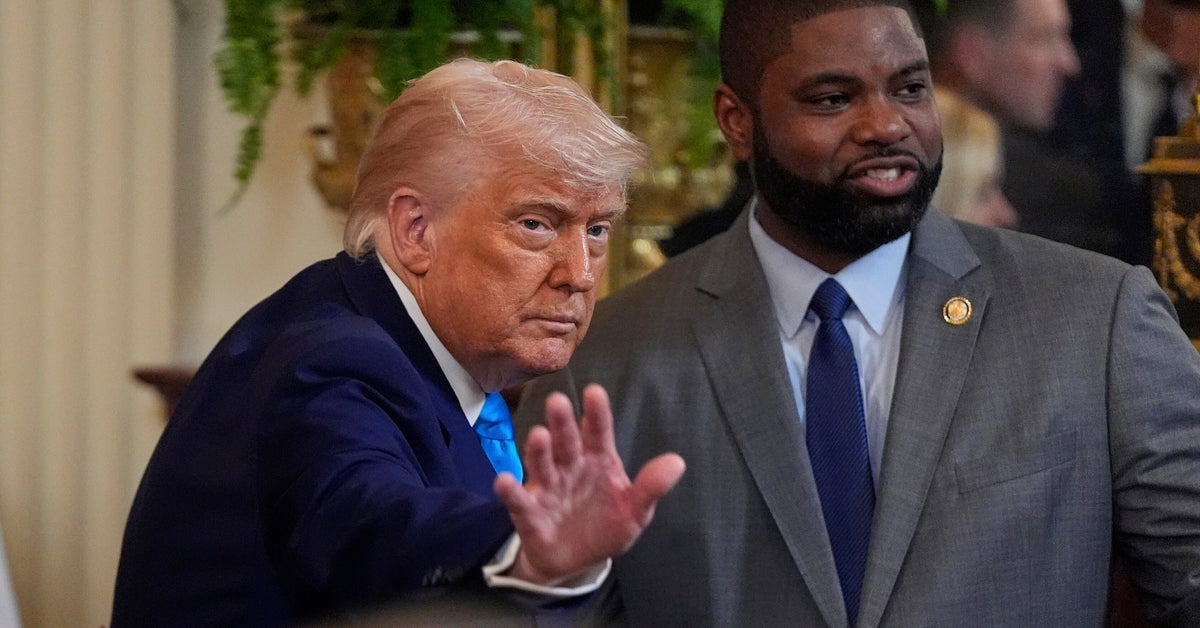
The timing and intent of the restriction were made explicit by the president himself. In a post on Truth Social on Tuesday, President Trump stated the rule was issued at his direction and told citizens:
"Please remember this when you are casting your vote in the Midterm Elections in November."
President Trump, via NPR
Federal Restrictions and State Responses
The rule was proposed in December before being finalized on Tuesday. While the administration blocks federal funds, the impact on the 130,000 eligible youth depends on state-level financial decisions. Because federal funding is withheld rather than the care itself being banned nationwide, states may choose to "backfill" the missing funds. According to NPR, California's Medi-Cal program has already budgeted millions of dollars to ensure continuity of care for families like A.W.'s.
However, this creates a fragmented system of access. Katie Keith of Georgetown told NPR that states lacking such budgets will face significant disruption as they scramble for funding they previously did not need to provide.
The administration is pairing these policy shifts with aggressive oversight. By citing the "Wolves in White Coats" report, officials have already referred numerous health care providers to the Justice Department and the HHS inspector general for investigations into fraudulent billing practices. This approach is part of a broader strategy that Lindsey Dawson of KFF describes as an effort to stoke fear within the provider community, leading some hospitals to end programs not due to medical best practices, but because of the administration's actions.
The immediate legal and political friction remains high. While GLAD Law expects court challenges, they note a pattern of the Justice Department seeking delays and utilizing a small number of lawyers across many cases. For the administration, the next step is the November Midterm Elections, which President Trump explicitly linked to the rule in a Truth Social post.
How significant is this development?
Contribute your assessment to the aggregated reader intelligence ledger.
Archypedia is dedicated to independent, evidence-backed reporting. This briefing was synthesized from primary source reporting, corroborated across independent newsrooms, and verified against our Editorial Standards.
Transparency record
Evidence behind this report
This report synthesizes 7 distinct sources. Open the source ledger below to compare the underlying coverage.
- nbcnews.com
- heraldscotland.com
- npr.org
- wyso.org
- pgatour.com
- huffpost.com
- familydestinationsguide.com
Prepared under the Archypedia Editorial Policy by the Lina Park editorial desk profile. AI-assisted tools may support drafting and verification; public accountability remains with Archypedia. Report an error.