CRISPR Enzyme Precisely Detects and Shreds DNA in Cancer Mutations Once Considered ‘Undruggable’ – Medical Xpress
Researchers at UC Berkeley and UCSF have engineered a CRISPR-Cas12a2 enzyme capable of detecting and destroying mutant cancer transcripts, according to reports from Medical Xpress and the Daily Cal. This technique targets mutations previously labeled “undruggable,” triggering selective cell death in cancer cells while sparing healthy tissue.
How does the CRISPR-Cas12a2 enzyme identify and destroy mutant cells?
The newly engineered CRISPR-Cas12a2 enzyme operates as a precision-guided molecular shredder. According to reports from Genetic Engineering and Biotechnology News, the system is designed to recognize specific genetic sequences that only exist in mutated cancer cells. Once the enzyme identifies a matching mutant transcript, it does not simply perform a single cut in the genetic code; it initiates a process that shreds the target DNA and RNA.
This mechanism differs significantly from the more common CRISPR-Cas9 system. While Cas9 is typically used to edit a gene by creating a double-strand break that the cell then repairs, Cas12a2 is utilized here to trigger cell death. According to CRISPR Medicine News, the enzyme targets mutant transcripts—the intermediate messages between DNA and protein—effectively cutting off the instructions the cancer cell needs to survive and proliferate.
The process follows a specific sequence of events:
- Detection: The enzyme is programmed with a guide RNA that matches a specific mutation found in the cancer cell.
- Binding: The Cas12a2 enzyme binds to the mutant transcript, ignoring healthy cells that lack the specific mutation.
- Shredding: Upon binding, the enzyme activates its cleavage capability, destroying the mutant transcripts and triggering a cascade that leads to selective cell death.
The ability to target the transcript rather than the genomic DNA allows for a more dynamic approach to treating mutations that are otherwise resistant to traditional pharmaceutical intervention.
Why were these cancer mutations previously considered ‘undruggable’?
In oncology, the term “undruggable” refers to proteins or mutations that lack a convenient “binding pocket.” Most traditional cancer drugs are small molecules designed to fit into a specific crevice of a protein, like a key in a lock, to block its activity. According to the Daily Cal, many cancer-driving mutations result in proteins that are smooth or lack these deep pockets, making it nearly impossible for a small-molecule drug to latch on and stop the protein’s function.
One of the most notorious examples of this is the KRAS mutation, which is common in pancreatic, colon, and lung cancers. For decades, KRAS was considered the gold standard of undruggable targets because its structure offered no easy way for drugs to bind. By shifting the target from the protein (the end product) to the mutant transcript (the blueprint), researchers at UC Berkeley and UCSF have bypassed the structural limitations of the protein entirely.
The following table compares the traditional “small molecule” approach with the CRISPR-Cas12a2 method:
| Feature | Traditional Small Molecule Drugs | CRISPR-Cas12a2 Enzyme |
|---|---|---|
| Target | Protein surface/binding pockets | Mutant DNA/RNA transcripts |
| Mechanism | Inhibition of protein function | Destruction of genetic instructions |
| Constraint | Requires a physical “pocket” to bind | Requires a unique genetic sequence |
| Outcome | Slows growth or blocks signals | Triggers selective cell death |
What role did cave bacteria play in this discovery?
The biological foundation for this breakthrough came from an unexpected source: cave-dwelling bacteria. As reported by Utah Public Radio, researchers discovered that certain bacteria found in cave environments possessed unique CRISPR systems that functioned differently than those found in common lab bacteria like Streptococcus pyogenes.
These cave bacteria evolved specialized enzymes to defend against viruses in extreme environments. The researchers identified that the Cas12a2 variant from these organisms provided a higher level of precision and a more aggressive “shredding” capability than previously known enzymes. By adapting this natural defense mechanism, the UC Berkeley and UCSF teams were able to repurpose a bacterial immune response into a tool for human cancer therapy.
This discovery underscores a growing trend in biotechnology where scientists mine “extremophiles”—organisms that live in extreme conditions—to find enzymes that can withstand the harsh environments of the human body or perform tasks with higher efficiency than standard biological tools.
Who is involved in the development of this technique?
The research is a collaborative effort between two of the world’s leading research institutions: the University of California, Berkeley (UC Berkeley) and the University of California, San Francisco (UCSF). According to the Daily Cal, these institutions combined their expertise in genomic engineering and clinical oncology to move the project from a theoretical bacterial discovery to a functional cancer-destroying tool.

The partnership allowed the teams to:
- Engineer the Enzyme: UC Berkeley researchers focused on the molecular architecture of the Cas12a2 enzyme to ensure it could be delivered into human cells.
- Validate Target Specificity: UCSF researchers tested the enzyme against various cancer cell lines to ensure it only killed cells with the target mutation.
- Optimize Delivery: The teams worked on methods to ensure the CRISPR machinery reaches the tumor site without being degraded by the immune system.
This collaboration represents a bridge between basic science (studying cave bacteria) and translational medicine (creating a cancer treatment).
What are the implications for the future of cancer treatment?
The ability to shred “undruggable” mutations suggests a shift toward highly personalized oncology. Because the CRISPR-Cas12a2 system is programmable, the guide RNA can be swapped out to target almost any known mutation. According to Medical Xpress, this means that if a patient’s tumor has a rare or unique mutation, researchers could potentially design a custom enzyme to target that specific sequence.
Short-term implications include the potential for new clinical trials targeting KRAS-mutant tumors and other “smooth” proteins that have resisted drug development. Long-term, this could lead to a “search-and-destroy” platform where the treatment is tailored to the genetic signature of an individual’s cancer, reducing the reliance on broad-spectrum chemotherapy that kills both healthy and cancerous cells.
However, several hurdles remain before this becomes a standard clinical practice:
- Delivery Systems: Getting the large Cas12a2 enzyme into every cancer cell in a large tumor is a significant challenge.
- Off-Target Effects: While the enzyme is precise, researchers must ensure it does not accidentally shred transcripts in healthy cells that might share a similar sequence.
- Immune Response: Since the enzyme is derived from bacteria, the human immune system may recognize it as a foreign invader and attack it before it can reach the tumor.
For those interested in how these delivery mechanisms work, a related explainer on lipid nanoparticles may provide further context on how CRISPR components are transported into cells.
Common misconceptions about CRISPR cancer therapies
There is often confusion between “gene editing” and “transcript targeting.” Many people believe that all CRISPR treatments involve permanently changing the patient’s DNA. In the case of the CRISPR-Cas12a2 research reported by Medical Xpress, the focus is often on the transcripts (the RNA copies of the DNA).
Misconception 1: This is a permanent genetic change.
While CRISPR can edit DNA, this specific application targets the mutant transcripts. This means the enzyme is attacking the “messages” the cell sends to make proteins, rather than rewriting the master blueprint in the nucleus. This can be a safer approach as it reduces the risk of permanent, unintended mutations in the genome.
Misconception 2: This will cure all cancers.
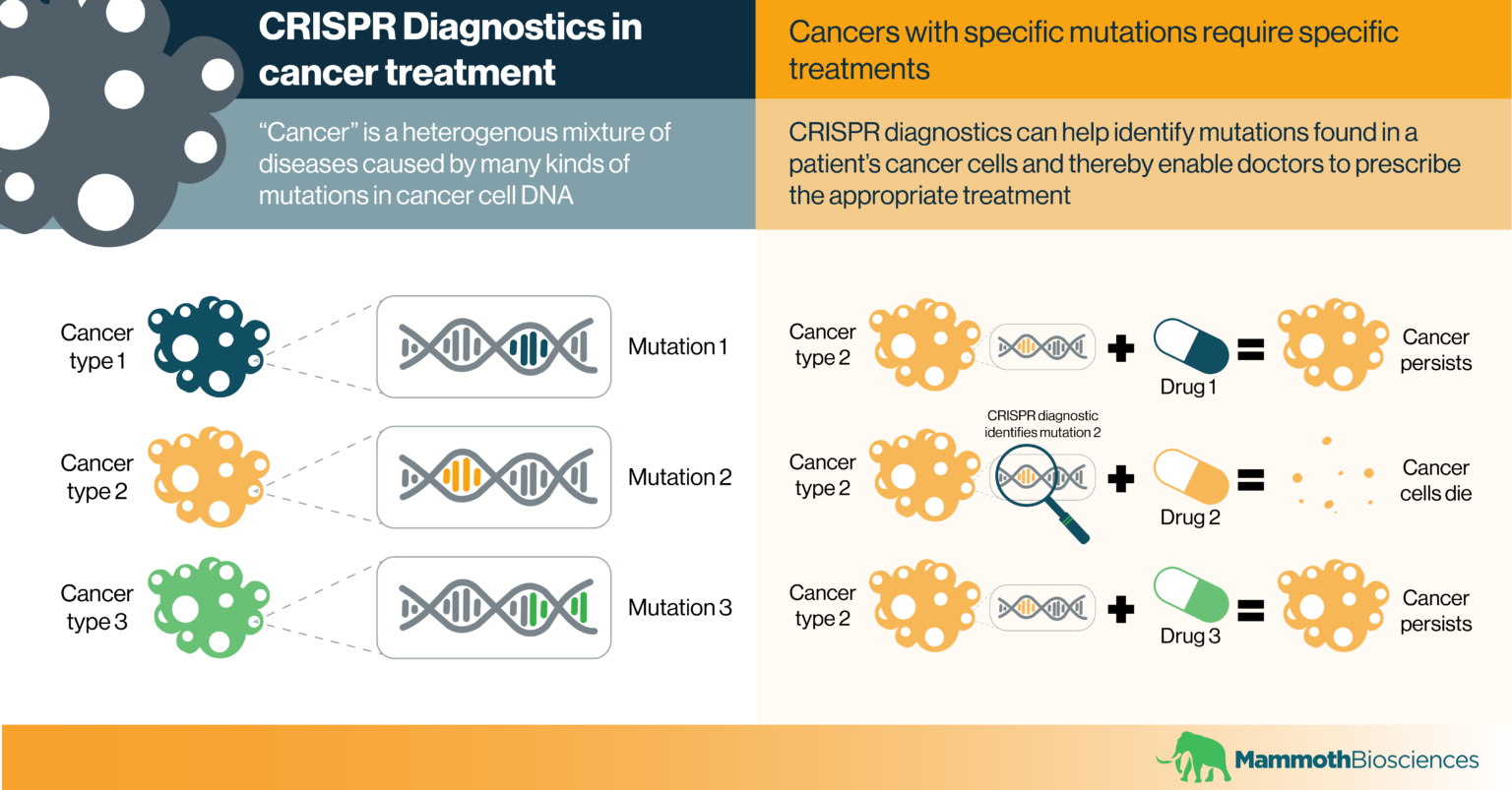
Cancer is not a single disease but a collection of hundreds of different mutations. While Cas12a2 can target “undruggable” mutations, it only works if the cancer has a specific, identifiable genetic marker. Cancers that are driven by epigenetic changes (how genes are turned on and off) rather than mutations may not be susceptible to this specific shredding technique.
Misconception 3: CRISPR is ready for immediate use in clinics.
Though the results in lab settings are promising, the transition from a petri dish to a human patient involves years of safety trials. The “shredding” activity that kills cancer cells must be strictly controlled to ensure it does not cause systemic inflammation or damage to vital organs.
Frequently Asked Questions
What exactly is an “undruggable” mutation?
An undruggable mutation is a genetic change that produces a protein without a clear binding site. Because most drugs need to “plug into” a protein to stop it from working, proteins without these holes or pockets cannot be easily targeted by traditional medicine. The CRISPR-Cas12a2 enzyme solves this by targeting the genetic transcript instead of the protein itself.
How is CRISPR-Cas12a2 different from CRISPR-Cas9?
Cas9 is primarily used as “molecular scissors” to cut DNA for editing. Cas12a2, especially in this cancer application, acts more like a “molecular shredder.” According to reports from CRISPR Medicine News, it targets mutant transcripts and triggers a more comprehensive destruction of the target, which is more effective for inducing cell death in tumors.

Where did the enzyme used in this research come from?
The enzyme was derived from bacteria found in caves. Researchers discovered that these extremophiles had evolved unique CRISPR systems that were more precise and potent than the versions typically used in laboratories, making them ideal for targeting cancer mutations.
Will this replace chemotherapy?
It is unlikely to replace chemotherapy entirely but may serve as a powerful supplement or alternative for specific types of cancer. While chemotherapy attacks all rapidly dividing cells, this CRISPR technique is designed to be selective, attacking only cells with the specific mutant signature.
What are the main risks of this technology?
The primary risks include “off-target effects,” where the enzyme might attack a healthy cell with a similar genetic sequence, and “immunogenicity,” where the patient’s immune system attacks the bacterial enzyme before it can destroy the cancer cells.
