Unitree shares surge nearly sixfold in Shanghai stock market debut
Unitree Robotics raised $900 million during its historic Shanghai debut as shares jumped nearly sixfold, contrasting sharply with growing U.S. restrictions and geopolitical fallout.

Against a backdrop of broader market declines on Wednesday, shares of Unitree Robotics surged nearly sixfold during their historic trading debut on the Shanghai Stock Exchange’s tech-focused STAR Market. The extraordinary first-day pop starkly contrasted with the deepening regulatory walls and commercial hurdles closing in on the company’s international operations.
Unitree's stock opened at 1,100 yuan, soaring well above its initial public offering price of 150.80 yuan per share. Throughout the morning trading session, gains stabilized near 500% as the shares traded at 883.87 yuan, raising approximately $900 million by distributing roughly 10% of the company's total shares. The blockbuster performance briefly propelled Unitree's market capitalization past $60 billion before settling near a $50 billion valuation, according to reporting by Blockonomi. The jump significantly outperformed the average first-day pop of 279% for new share listings in China for the year thus far, defying a 2% drop across Chinese benchmark indexes.
Related YouTube video

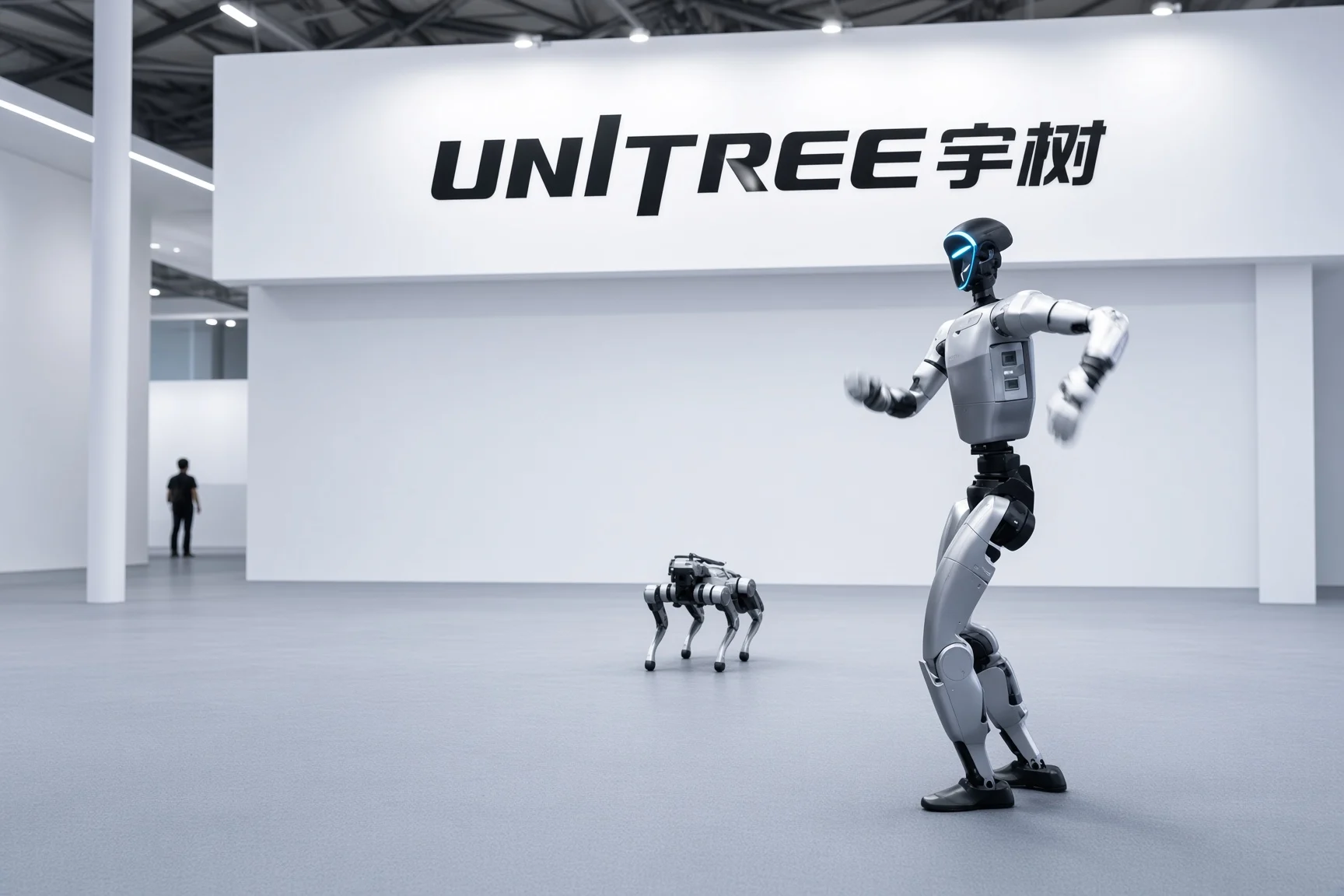
The frenzy on the Shanghai trading floor coincided with the opening of the World Robot Conference in Beijing, where hundreds of predominantly domestic firms gathered to showcase advancements that Beijing is banking on to offset labor shortfalls stemming from the country's demographic crisis. Amid this domestic policy push, Unitree stands out as a rare profitable entity in an industry where most firms are losing money, backed by influential domestic tech giants including Tencent, Alibaba, and DeepSeek.
Financial results show Unitree generated approximately $250 million in revenue during 2025, driven by sales of its humanoid models and acrobatic quadruped robot dogs like the G1 and the "Superman" model. However, market analysts note that a significant proportion of its customer base consists of research institutions and universities rather than widespread commercial deployment. Morningstar analyst Kangyuxiao Li observed that while the listing grants investors unprecedented access to a sector frontrunner, the true test remains whether these enterprises can secure consistent commercial profits.
The valuation surge also reflects intense geopolitical momentum, even as western markets pull away. Yan Kai, a venture capitalist and partner at Ivy Capital in Shanghai, noted that the company's price is dictated by political and economic considerations rather than traditional valuation models. This divergence was underscored by international fallout on the same trading day: Hong Kong-listed rival UBTech saw its shares slide 10.6%, while Germany's VDMA engineering association called on Europe to urgently establish resilient domestic supply chains for humanoid robotics.
International barriers have grown increasingly formidable. In July, the U.S. Federal Communications Commission implemented import bans on foreign-made humanoid and quadruped robots, including those from Unitree, citing national security considerations. Furthermore, the Pentagon added Unitree to a registry of Chinese military companies in June, designating it as a contributor to the Chinese defense industrial base. While the designation stops short of a full sanction, it bars the U.S. Military from utilizing the technology. International markets had previously contributed more than 40% of Unitree's total revenue, with U.S. Sales alone accounting for approximately 13% before the restrictions.
Additional scrutiny surrounds the technological lineage of Unitree's hardware. Former U.S. Defense technology officials and researchers reported that Unitree based designs for its most successful robot dogs on U.S. Military-funded innovations that had been published openly to stimulate academic progress. Founder Wang Xingxing, who established the firm in Hangzhou in 2016, retains about a fifth of the company, with his paper wealth surging past $12 billion.
Unitree's successful flotation establishes a crucial benchmark for the domestic pipeline. At least six competing Chinese humanoid robotics firms are preparing public offerings, with Deep Robotics and Leju Robotics pursuing mainland exchange listings, and Mech-Mind Robotics, X Square Robot, and AgiBot targeting Hong Kong.
The immediate commercial question facing Unitree and its incoming wave of mainland-listed peers is whether they can successfully transition from academic and research novelties to consistent, large-scale commercial implementation in the face of mounting western import restrictions.
Global Repercussions and the Industrial Race
The intense market enthusiasm in Shanghai rippled internationally on Wednesday, prompting immediate strategic anxiety across European engineering circles. According to reporting by Reuters, Germany's VDMA engineering association urged European leaders to elevate humanoid robotics to the top of the political agenda, warning that a global race for leadership has begun. Hartmut Rauen, Deputy Executive Director of the VDMA, emphasized that Germany and Europe must establish comprehensive value chains featuring domestic production of critical components. Meanwhile, global humanoid robot shipments nearly quadrupled in the first half of the year to 19,100 units, with Chinese manufacturers dominating the sector.
Market Milestones and Competitive Landscape
- Unitree raised approximately $904 million (6.1 billion yuan) by floating about 10% of its total shares, according to Blockonomi.
- Global humanoid robot shipments nearly quadrupled to 19,100 units in the first half of the year, as reported by the VDMA via Reuters.
- Hong Kong-listed rival UBTech suffered a 10.6% share price decline on the day of Unitree's debut, noted Blockonomi and Reuters.
- At least six competing Chinese humanoid robotics firms are preparing public offerings, with Deep Robotics and Leju Robotics pursuing mainland listings, and Mech-Mind Robotics, X Square Robot, and AgiBot targeting Hong Kong.
The next step for the sector involves watching how upcoming public offerings from competing domestic firms fare on mainland and Hong Kong exchanges, as Unitree's historic debut sets the benchmark for the broader industry pipeline.
How significant is this development?
Contribute your assessment to the aggregated reader intelligence ledger.
Archypedia is dedicated to independent, evidence-backed reporting. This briefing was synthesized from primary source reporting, corroborated across independent newsrooms, and verified against our Editorial Standards.
Transparency record
Evidence behind this report
This report synthesizes 4 distinct sources. Open the source ledger below to compare the underlying coverage.
Prepared under the Archypedia Editorial Policy by the Elena Voss editorial desk profile. AI-assisted tools may support drafting and verification; public accountability remains with Archypedia. Report an error.