Zomato introduces variable cash-on-delivery fee for food orders
Zomato has introduced a variable pay-on-delivery fee ranging from ₹5 to over ₹30 for cash orders, leaving digital payment methods entirely exempt.
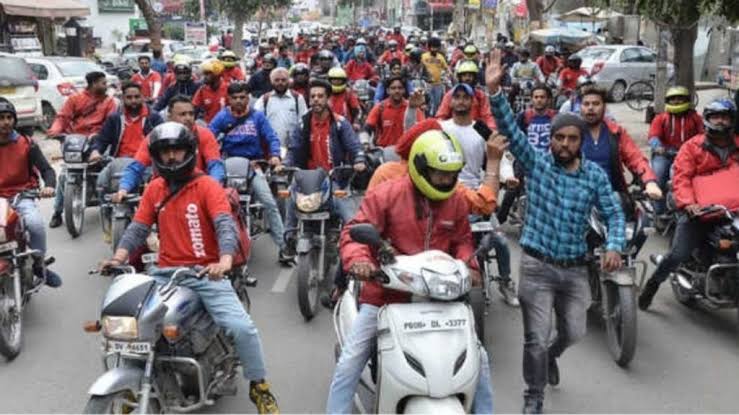
Food-delivery platform Zomato has quietly introduced a variable "Pay on Delivery Fee" ranging from ₹5 to over ₹30 on cash-on-delivery orders, establishing a new monetization layer that penalizes physical cash transactions while leaving digital payments entirely exempt. The new levy appears as a separate line item on the checkout screen whenever a customer selects the cash-on-delivery option, compounding existing financial layers that already include platform fees, restaurant packaging costs, delivery charges, and Goods and Services Tax (GST).
According to app checks, user screenshots, and reports from outlets such as Business Today, the extra charge is not a single nationwide flat rate but fluctuates based on the transaction. While base amounts commonly start at ₹5, user bills have recorded specific charges reaching ₹7, ₹20, and ₹21, with some calculations indicating a formula of roughly 2% of the total order value up to a maximum cap of ₹30.
Related YouTube video

Mechanics of the Itemized Bill
For households and frequent app users, the introduction of the cash-on-delivery fee further crowds an already detailed billing summary. In a bill documented by a user on X and reported by Business Today, an order featuring an item total of ₹850 accrued ₹51 in restaurant packaging charges, a platform fee of ₹14.99, ₹30 for a three-month Zomato Gold subscription, and ₹51.53 in GST. The addition of a ₹21 pay-on-delivery fee pushed the grand total to ₹1,018.52, resulting in a final payable amount of ₹1,019 after a cash round-off of ₹0.48, even as the delivery partner fee of ₹34 was waived.
The precise algorithm determining the variable charge remains undisclosed by the platform. Reporting from Trak highlights that it has not been officially established whether the fee scales strictly with order value, user history, geographic location, or other risk parameters. While some digital commentators suggest a structure capped at ₹30 based on a 2% proportion of order value, other regional reports from outlets like Samayam Tamil and Goodreturns Telugu note starting charges of ₹5 alongside fluctuating amounts up to ₹20. Zomato has not published an official formula or public confirmation detailing how the charge is calculated.
Financial Math and Revenue Projections
Although individual charges appear modest, the sheer scale of Zomato's daily transaction volume turns fractional fees into substantial corporate revenue. Across its food-delivery network, Zomato processes between 2.3 million and 2.5 million orders daily, according to figures analyzed by Samayam Tamil and Timesbull.
| Metric | Estimated Range |
|---|---|
| Daily Order Volume | 2.3 million – 2.5 million orders |
| Hypothetical Daily Revenue (at ₹5 per order) | ₹11.5 million – ₹12.5 million |
| Hypothetical Annual Revenue (at ₹5 per order) | ₹4.2 billion – ₹4.56 billion (approx. ₹456 crore) |
| Platform Fee History (2023 to present) | Introduced at ₹2, climbed to ₹10, ₹12.50, and ₹14.99 before GST |
While cash-on-delivery orders represent only a subset of total platform volume — meaning these theoretical maximums assume universal cash selection — the math demonstrates how minor friction on specific payment methods yields hundreds of crores annually. This strategy builds upon a pattern of escalating extra charges that began in 2023, when a modest ₹2 platform fee was first tested. Over subsequent years, as tracked by Business Today and Inc42, Zomato raised the platform fee sequentially through ₹10 and ₹12.50 tiers before landing at ₹14.99 per order before taxes.
Competitive Landscape and Industry Stakes
The implementation of the cash-on-delivery levy widens a strategic wedge between Zomato and its primary rival, Swiggy. While Zomato seeks to recover handling expenses, mitigate default and collection risks, and nudge consumers toward digital channels, Swiggy has not introduced a comparable fee for cash-on-delivery orders, according to concurrent reporting across multiple market summaries.
At the same time, the broader food-delivery and quick-commerce ecosystem is experiencing intensified competition. As detailed by Inc42 and Timesbull, challengers such as Flipkart with its Eat In pilot, Rapido with its zero-commission Ownly model, and venture-backed upstarts like Swish are actively expanding their market footprints.
Frequently Asked Questions
Who has to pay the new Zomato "Pay on Delivery Fee"?
The fee applies exclusively to customers who select cash-on-delivery when placing an order. Users who pay via digital methods, such as UPI, credit cards, debit cards, or net banking, are entirely exempt from the charge.
How much extra does cash on delivery cost on Zomato?
The charge is variable, with user bills showing amounts starting at ₹5 and reaching up to ₹20, ₹21, or ₹30 depending on the order value and parameters determined by the platform.
Are rival delivery platforms charging a similar cash fee?
No. According to source reports, major competitor Swiggy does not currently impose a separate fee for cash-on-delivery orders.
For consumers who rely on cash transactions due to personal preference or a lack of regular digital payment habits, the fee transforms a routine payment method into a distinct financial penalty. Whether cost-sensitive users will migrate toward digital wallets or shift their order volume to competitors depends on whether Swiggy will eventually follow suit with its own cash-on-delivery fee or use its current policy to capture cost-sensitive users.
Archypedia is dedicated to independent, evidence-backed reporting. This briefing was synthesized from primary source reporting, corroborated across independent newsrooms, and verified against our Editorial Standards.
Transparency record
Evidence behind this report
This report synthesizes 7 distinct sources. Open the source ledger below to compare the underlying coverage.
- inc42.com
- trak.in
- businesstoday.in
- tamil.samayam.com
- timesbull.com
- telugu.goodreturns.in
- biswabanglasangbad.com
Prepared under the Archypedia Editorial Policy by the Elena Voss editorial desk profile. AI-assisted tools may support drafting and verification; public accountability remains with Archypedia. Report an error.