Brent crude rises above $100 a barrel as Middle East conflict intensifies
Intensifying military clashes between the U.S. and Iran, alongside Houthi strikes on Saudi energy facilities, have throttled daily maritime oil throughput below 2 million barrels.

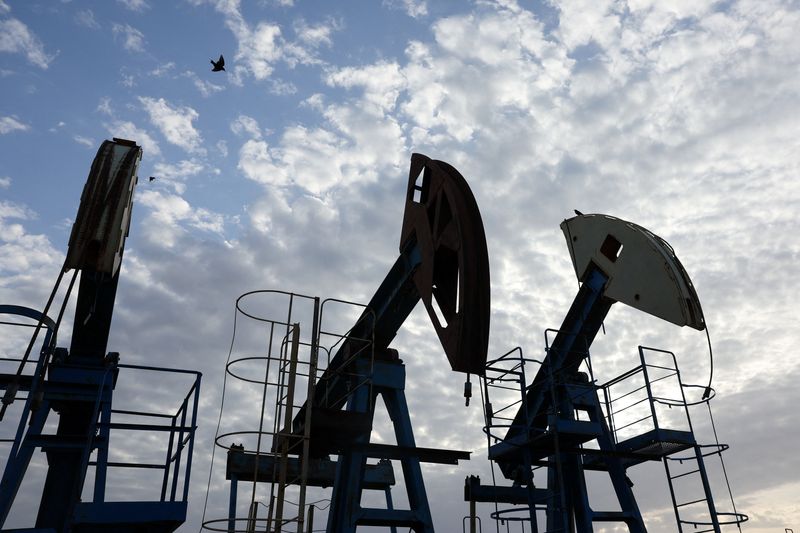
SINGAPORE/LONDON — Benchmark Brent crude oil futures pushed past $100 a barrel on Wednesday morning, hitting a more than six-week high and breaching the symbolic threshold for the first time since July 24 as intensifying military conflicts across the Middle East threatened critical energy supply routes, according to The Globe and Mail and HuffPost. By Wednesday, Brent crude futures were up $2.01, or 2.05%, at $99.93 a barrel by 0802 GMT after earlier touching $100.19, while U.S. West Texas Intermediate (WTI) crude gained $1.49, or 1.60%, to trade at $94.52 a barrel.
The latest market breach stems from a volatile escalation in the six-month-old conflict between the United States and Iran, alongside concurrent strikes between Saudi Arabia and Iran-backed Houthi rebels in Yemen. With key maritime corridors like the Strait of Hormuz severely curtailed and secondary routes under direct assault, the renewed physical disruptions have driven prices up by a quarter since early last month, reviving acute global inflation anxieties and forcing central banks to weigh renewed interest rate hikes, as reported by The Straits Times.
Related YouTube video



Physical Supply Bottlenecks and Maritime Chokepoints
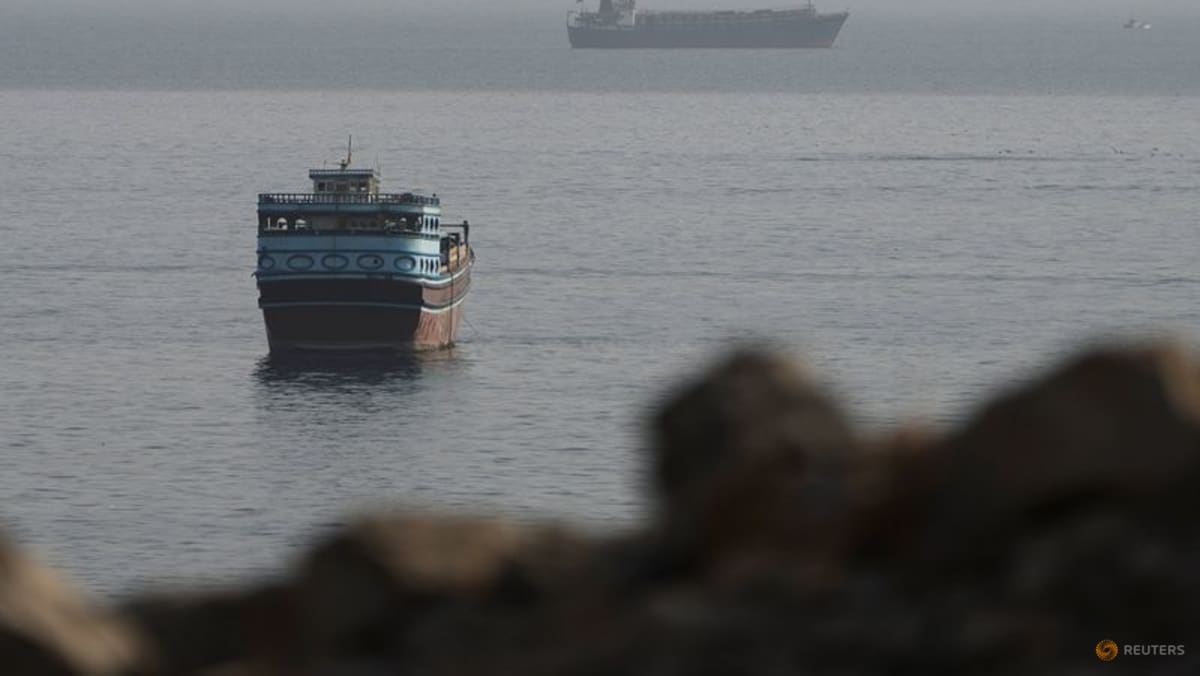
The energy market shock is anchored in severe physical contractions across vital Middle Eastern trade routes. The Strait of Hormuz, through which roughly a fifth of the world’s oil supply traditionally flowed, has been throttled by Tehran since the onset of the U.S.-Iran war on February 28. According to data cited by BloomingBit and The Globe and Mail from Rystad Energy Chief Economist Claudio Galimberti, daily throughput through Hormuz had briefly rebounded to between 8 million and 9 million barrels per day (bpd) in the week before an August 30 fighting resumption, but has since plunged below 2 million bpd.
Compounding the Hormuz bottleneck, secondary transit routes have come under direct fire. Saudi Arabia has attempted to bypass the strait by moving crude across the Arabian Peninsula via pipeline to its western Red Sea coast for export. However, Houthi rebels launched coordinated drone and missile strikes on September 8 against facilities operated by state oil company Aramco and across four southern Saudi cities — Abha, Khamis Mushait, Jazan, and Najran, leaving installations ablaze and injuring 73 people, as documented by BloomingBit. These attacks threaten the Bab el-Mandeb Strait, a vital chokepoint handling about 5% of global oil shipments.
| Energy Metric / Indicator | Current Level / Status | Previous Context |
|---|---|---|
| Brent Crude Futures | Surged past $100/barrel (intraday high $100.19) | First time above $100 since July 24; up 25% since early last month |
| U.S. WTI Crude | Trading around $93.03 to $94.73 a barrel | Substantially higher than pre-war baselines |
| Strait of Hormuz Flow | Fallen below 2 million barrels per day | Stood at 8 million to 9 million bpd before August 30 |
| U.S. Retail Gasoline | $4.22 a gallon (as of Wednesday) | Highest level since early June |
| Global Supply Outlook | IEA projected fall of 4.3 million bpd this year | Reflects ongoing structural deficits despite non-OPEC output increases |
Military Escalations and Divergent Market Forecasts
The physical disruptions are fueled by rapidly escalating military engagements. Following Iranian attacks on a U.S. Navy warship, the U.S. Military reported destroying five Iranian crude oil tankers and sinking one. Iran’s Islamic Revolutionary Guard Corps (IRGC) responded with heavy missile attacks targeting U.S. Destroyers, bases, and a base in Jordan, where state news agency Petra reported that air defense forces intercepted 20 ballistic missiles. Furthermore, Tehran designated a maritime blockade zone in the Strait of Hormuz, threatening energy installations and warning oil tankers off Kuwait and Bahrain to abandon their vessels, according to The Straits Times and NBC News.
These developments have triggered starkly conflicting viewpoints between financial institutions and political figures. While the White House has maintained assertions of an imminent deal, and President Donald Trump claimed on social media that oil prices would drop precipitously, potentially to $2 a gallon, upon winning the war, Wall Street analysts view the crisis through a much darker structural lens. As detailed by BloomingBit and The Globe and Mail, major investment banks have upgraded their fourth-quarter forecasts. Bank of America projected Brent trading between $95 and $120 a barrel through year-end if lower-level supply-constraining clashes persist. Goldman Sachs raised its year-end Brent estimate by $5 to $120 should vessel attacks intensify, while HSBC lead energy analyst Kim Fustier noted that fears of prolonged supply shortages are now fully reflected in market pricing.
"I think the market is trying to treat this rise in energy prices as a one-off. It’s not. This is structural. It’s not going away, and it’s part of what I would argue as a security premium. And it’s only going to get bigger,"
Jeffrey Currie, co-chairman at Abaxx Markets, via The Globe and Mail
Capital Economics senior climate and commodities economist Hamad Hussain echoed these cautions, emphasizing that market participants are actively pricing in a prolonged conflict and monitoring whether attacks on oil tankers will throttle ship-to-ship transfers in the Gulf of Oman, which have historically served as a critical buffer for global supplies.
Frequently Asked Questions
Why did Brent crude cross the $100 threshold now?
The breach was driven by a combination of new U.S.-Iran military engagements in the Gulf, including the destruction of Iranian tankers and retaliatory missile fire, and Houthi rebel drone and missile strikes that set Saudi Arabian energy facilities ablaze, threatening both the Strait of Hormuz and Red Sea shipping lanes.
How are major financial institutions altering their oil price forecasts?
Global banks such as Goldman Sachs, Bank of America, and HSBC have upgraded their fourth-quarter oil price projections. While some institutions peg expected trading ranges between $95 and $120 a barrel, other market analysts warn that structural security premiums could push prices as high as $150.
What impact is the oil surge having on everyday consumers and central banks?
U.S. Retail gasoline prices climbed to $4.22 a gallon, adding financial squeeze to households and businesses. The renewed energy inflation is also ratcheting up pressure on central banks, with analysts watching upcoming European Central Bank policy decisions and the U.S. Consumer price index release to determine whether the Federal Reserve will be forced to hike interest rates.
Downstream economic repercussions are rippling rapidly through global markets. In the United States, retail gasoline prices climbed to $4.22 a gallon on Wednesday, marking the highest level since early June and posing immediate political sensitivity ahead of midterm elections, as reported by NBC News. European natural gas prices similarly rose for a fourth consecutive trading day following the latest U.S. Strikes.
The broader macroeconomic strain is directly challenging central bank monetary policies. FOREX.com market analyst Fawad Razaqzada observed that the combination of resilient U.S. Employment and renewed energy-driven inflation sends distinctly hawkish signals to policymakers. Investors are growing increasingly anxious that a sustained rally in energy costs will reverse hard-fought inflation progress, leaving the Federal Reserve with little choice but to consider raising borrowing costs. All eyes now turn to the imminent policy decisions by the European Central Bank and the pivotal release of the U.S. Consumer price index, which will dictate whether monetary authorities respond to the energy shock with further tightening.
Archypedia is dedicated to independent, evidence-backed reporting. This briefing was synthesized from primary source reporting, corroborated across independent newsrooms, and verified against our Editorial Standards.
Transparency record
Evidence behind this report
This report synthesizes 8 distinct sources. Open the source ledger below to compare the underlying coverage.
- nbcnews.com
- theglobeandmail.com
- huffpost.com
- finance.yahoo.com
- en.bloomingbit.io
- ca.finance.yahoo.com
- moneycontrol.com
- straitstimes.com
Prepared under the Archypedia Editorial Policy by the Elena Voss editorial desk profile. AI-assisted tools may support drafting and verification; public accountability remains with Archypedia. Report an error.