Ukrainian drone strikes damage Wildberries warehouse in Moscow Oblast
Ukrainian drone strikes damage Wildberries warehouse in Moscow Oblast
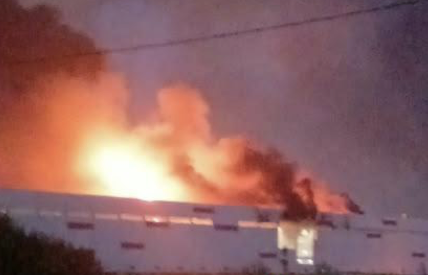
Explosions lit the sky over suburban Moscow on Sunday, 16 August 2026, as a record-shattering wave of Ukrainian drones penetrated what defense analysts describe as the densest air-defense network in Russia. The sprawling logistics hubs sustaining the Russian consumer and military economies bore the brunt of the assault, even as a concurrent Russian aerial bombardment hammered civilian centers across Ukraine and a stray projectile breached NATO airspace over Romania.
The overnight exchanges marked a steep escalation in the cross-border drone and missile campaign. In Moscow Oblast, a strike ignited a massive fire at the primary distribution center operated by Wildberries, Russia's largest online retailer, in the village of Koledino, according to provisional accounts from Reuters. Moscow Oblast Governor Andrei Vorobyov described the offensive as one of the most massive aerial attacks against the region in recent memory, confirming that an 83-year-old man was killed when a drone struck a private home.
Related YouTube video

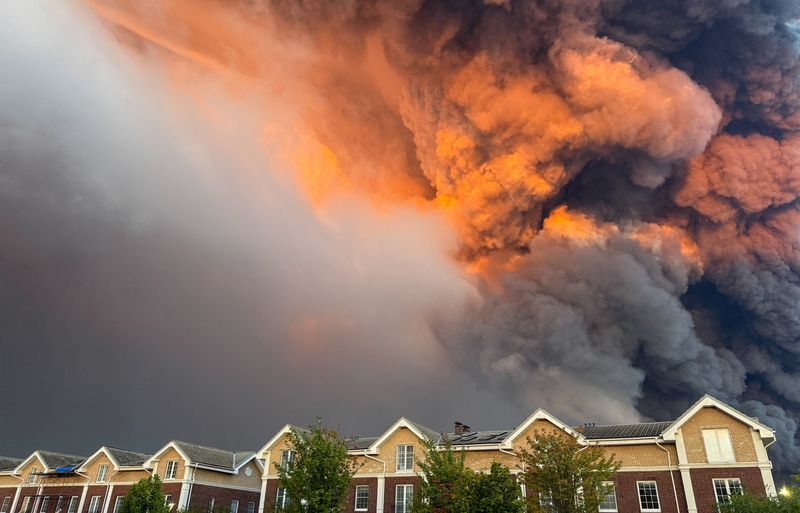
Additional strikes hit the Severnoye Domodedovo production and logistics complex near one of the capital's main airports, while Ukraine's Defense Ministry asserted that seven of the company's ten largest distribution centers have now been taken out of operation. Kyiv has systematically targeted the retail giant over its commercial listings of military equipment — including drone components and body armor — and its financial contributions to the state budget through its sanctioned banking arm.
The scale of the nocturnal barrage drew wildly divergent assessments from opposing capitals. Russia's Defense Ministry claimed that its air defenses intercepted 822 Ukrainian drones overnight across multiple regions. Moscow Mayor Sergei Sobyanin asserted that 600 unmanned aerial vehicles were headed toward the capital region alone, with 201 destroyed specifically over Moscow Oblast. Local governors reported heavy saturation elsewhere, including Rostov Oblast, where Governor Yuri Slyusar stated that 150 incoming threats were downed across three cities and nine districts, resulting in five reported deaths.
Ukrainian military leadership countered that the long-range strikes were precision operations aimed at crippling infrastructure directly tied to the front lines. The General Staff confirmed that strikes in Rostov Oblast targeted Kombinat Kamensky, a state-owned facility producing solid rocket fuel for Uragan, Smerch, and Tornado-S multiple-launch rocket systems. President Volodymyr Zelenskyy separately confirmed that domestically produced Flamingo missiles had stitched the Savasleyka military airbase, which stores MiG-31 fighter jets capable of launching Kinzhal ballistic missiles, as well as a key Roscosmos space enterprise facility, the Progress Center, in Samara Oblast.
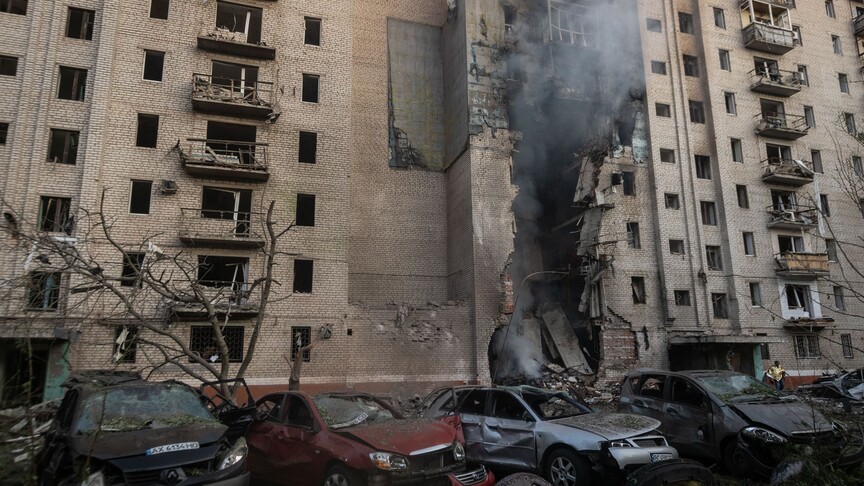
Those industrial detonations unfolded against a backdrop of devastating Russian bombardments targeting Ukrainian population centers and port facilities. In the city of Marhanets within Dnipropetrovsk Oblast, a multi-story residential building was struck, killing a three-month-old baby and injuring 11 others, according to regional governor Oleksandr Hanzha. In Kryvyi Rih, a missile and drone strike killed a woman and wounded six people, while authorities in Kyiv reported ballistic missile attacks that sparked fires and injured at least three residents in the Obolonskyi and Holosiivskyi districts. Odesa Governor Oleh Kiper reported extensive infrastructural damage at a shoe factory and non-working enterprise grounds following nighttime strikes, while Zaporizhzhia Governor Ivan Fedorov confirmed five injuries after shopping centers and industrial sites were hit.
Defense and foreign policy analyst Pavel Felgenhauer told Al Jazeera that the direct targeting of both capital cities signals an intensification of the conflict, noting that Ukrainian operators successfully bypassed the formidable air defenses surrounding greater Moscow. Civilian suffering across the war's footprint has climbed sharply, with United Nations monitors noting that casualties inside Ukraine reached their highest monthly level since the 2022 invasion this July.
The aerial melee also spilled directly into allied European airspace. Romania's Ministry of National Defence reported that surveillance systems detected an aerial target crossing over from neighboring Moldova. A Spanish F-18 fighter jet operating on a NATO air policing mission intercepted and shot down the drone. NATO military headquarters spokesman Martin O’Donnell stated that while details remain under investigation, the downed vehicle appears to be Russian, underscoring the persistent spillover risks facing the alliance's eastern flank.
Emergency response teams remain deployed across affected industrial sites and residential neighborhoods in both countries as local authorities continue tallying structural damage and verifying the final casualty figures from one of the largest sustained aerial exchanges of the war.
Escalating Industrial Toll and Regional Impact
The assault extended well beyond the capital region, drawing statements from regional administrators and state agencies detailing concurrent strikes across several Russian oblasts. According to reports cited by the Turkish state agency Anadolu Agency from Samara Governor Vyacheslav Fedorishchev and Samara Mayor Ivan Noskov, localized damage was sustained at an unspecified industrial facility, with medical assistance dispatched to those injured. Ukrainian President Volodymyr Zelenskyy further specified via X, formerly known as Twitter, that the targeted site in Samara was the Progress Center, a key enterprise within the Russian space agency Roscosmos involved in electronics production. Zelenskyy also reported confirmation of damage inflicted on an oil facility in Ust-Luga within Leningrad Oblast, details that contrasted with the Russian Defense Ministry's figures maintaining that air defenses neutralized hundreds of incoming vehicles across dozens of regions and the Black Sea, Sea of Azov, and Crimea.
- Wildberries warehouse (Koledino, Moscow Oblast): Struck and ignited by Ukrainian forces, according to Moscow Oblast Governor Andrei Vorobyov and provisional accounts from Reuters.
- Kombinat Kamensky (Rostov Oblast): Targeted by Ukraine's General Staff for producing solid rocket fuel for multiple-launch rocket systems.
- Progress Center (Samara Oblast): Hit by Flamingo missiles, according to President Volodymyr Zelenskyy and Samara local officials cited by Anadolu Agency.
- Severnoye Domodedovo complex (Moscow Oblast): Set ablaze near one of Moscow's main airports, as reported by monitoring channel Exilenova Plus and regional officials.
Meanwhile, emergency response teams remain deployed across the impacted logistics hubs and industrial zones to assess structural stability and verify final casualty figures. As local authorities and military commands process the scale of the cross-border bombardments, the next step involves completing damage assessments across the damaged distribution centers and repairing critical municipal infrastructure before normal operations can resume.
How significant is this development?
Contribute your assessment to the aggregated reader intelligence ledger.
Archypedia is dedicated to independent, evidence-backed reporting. This briefing was synthesized from primary source reporting, corroborated across independent newsrooms, and verified against our Editorial Standards.
Transparency record
Evidence behind this report
This report synthesizes 4 distinct sources. Open the source ledger below to compare the underlying coverage.
Prepared under the Archypedia Editorial Policy by the Samir Haddad editorial desk profile. AI-assisted tools may support drafting and verification; public accountability remains with Archypedia. Report an error.