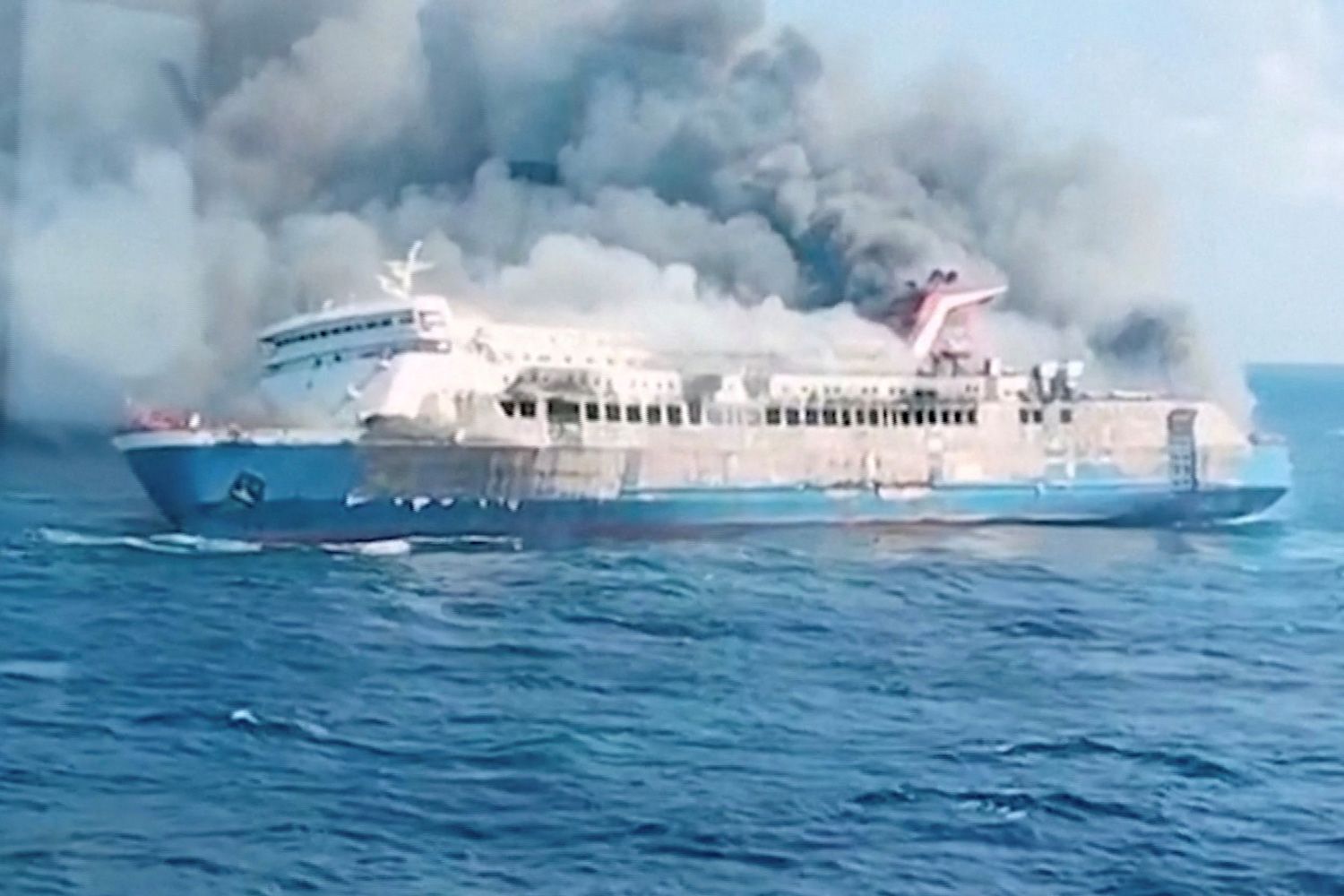
Six dead, 130 missing after Indonesian ferry capsizes in Java Sea
The 119-meter ferry carrying 243 people overturned in severe swells, prompting an urgent search operation by naval vessels and commercial tugs.

Floating upside down in the choppy, gray expanse of the Java Sea, the Japanese-built hull of the Virgo Transport 8 became the grim focal point of an escalating maritime search on Sunday, September 13, 2026. As a joint task force battled 2.5-meter swells, families packed Trisakti Port in Banjarmasin, anxiously watching a rescue agency whiteboard update the fluctuating roster of survivors and the dead.
The ferry, carrying a manifest of 243 people, lost contact with its operator at approximately 2 a.m. Local time while navigating an overnight crossing from Surabaya on Java to Banjarmasin on Borneo. While official tallies shifted throughout the day as commercial tugs and naval vessels pulled survivors from the water, the disaster laid bare the persistent vulnerabilities plaguing domestic transit across the Indonesian archipelago.
Related YouTube video


A Routine Crossing Interrupted in the Dark
The Virgo Transport 8 departed Surabaya at 10:33 a.m. Saturday on what is ordinarily a steady voyage connecting Indonesia's most populous island to the coal- and palm-oil-producing provinces of Kalimantan. The 119-meter vessel, built in Japan in 1987 and acquired by PT Virgo Karya Shipping the prior year, was carrying 213 passengers, 30 crew members, and 89 vehicles, according to manifest figures cited by Basarnas.
According to the Banjarmasin Search and Rescue Office, the captain reported encountering waves reaching up to 3 meters before issuing a distress transmission indicating the ship was listing. Contact was severed shortly afterward. Authorities learned of the emergency roughly two hours later, placing the vessel's last known position approximately 148 kilometers, or 80 to 81 nautical miles, short of its destination.
| Metric / Detail | Official Recorded Figure |
|---|---|
| Total Persons on Manifest | 243 (213 passengers, 30 crew) |
| Confirmed Survivors Rescued | 107 to 108 |
| Confirmed Fatalities | 6 |
| Unaccounted / Missing | 129 to 130 |
| Vessel Specifications | 119 meters long, built in Japan in 1987 |
| Cargo Load | 89 vehicles |
Conflicting Accounts of the Hull's State
As rescue vessels converged on the coordinates, a significant disagreement emerged between government ministries regarding the physical condition of the ship. Transport Minister Dudy Purwagandhi stated at a news conference that helicopter surveillance confirmed the vessel had overturned but remained afloat.
This description contrasted with earlier statements from search agency officials who described the vessel as having sunk."From the information we received, based on helicopter surveillance... the ship capsized but has not sunk. As of 3:00 pm it had not sunk yet, but it was capsized"
Dudy Purwagandhi, Transport Minister, via The Financial Express
The distinction carried profound operational consequences for the joint task force of 280 personnel comprising Basarnas, the Indonesian Navy, maritime police, port authorities, and the navigation district. Purwagandhi emphasized that a capsized hull remaining on the surface can trap vital air pockets for trapped occupants while providing a fixed geographical anchor for divers and search craft. By contrast, a ship settled on the seabed forces rescue teams to rely entirely on drift models and current calculations.
Early rescue efforts relied heavily on commercial traffic operating in the area when the disaster unfolded. I Putu Sudayana, head of the Banjarmasin Search and Rescue Office, noted that passing commercial ships and tugboats reached the scene ahead of state rescue craft. The tugboat Mahau 9 evacuated 16 people—including one individual pronounced dead—while a second tug took on 38 survivors and the tanker Aida accommodated 49.
Anxious Hours at Trisakti Port
At Trisakti Port in Banjarmasin, families gathered around a makeshift command center where a Basarnas officer continually updated casualty figures on a whiteboard. Paramedics and ambulances stood by as survivors arrived on rescue ships, receiving immediate medical triage.
The human toll was acutely felt by relatives such as Jenah, who waited for word of her older brother traveling alone, and Bunga, who experienced a moment of intense relief after discovering her uncle's name checked off among the rescued. Other families circulated frantic text messages sent by passengers overnight, asking whether the violent swells battering the hull were normal for maritime travel across the region.
The catastrophe highlights systemic safety challenges across Indonesia, where maritime transport serves as an economic lifeline across more than 17,000 islands. Sunday's incident marks the fourth major passenger ferry emergency since July. On August 2, the Mutiara Sentosa 2 caught fire off Madura Island with 271 people and 181 vehicles aboard, resulting in at least five deaths and days of missing-person searches. Ten days later, the Putri Yasmin burned in the Lombok Strait, killing a passenger and forcing the evacuation of 172 people. Those prior disasters triggered government scrutiny over consistent enforcement regarding manifest accuracy, vehicle loading limits, life-jacket provisions, and weather-dependent sailing restrictions.
Frequently Asked Questions
What caused the Virgo Transport 8 to capsize?
According to Transport Minister Dudy Purwagandhi, the exact cause remains undetermined and will be formally investigated by the National Transportation Safety Committee (KNKT). Officials noted that the vessel encountered severe weather with wave heights reaching 2.5 to 3 meters.
How many people were on board the ferry?
The ship's manifest recorded 243 occupants, consisting of 213 passengers and 30 crew members. Authorities have repeatedly noted that actual passenger counts on domestic Indonesian ferry routes frequently differ from official manifests.
As daylight fades over the Java Sea, swells continue to exceed 2 meters, posing severe operational risks to smaller Basarnas watercraft and restricting active search sectors to larger vessels and aircraft. The National Transportation Safety Committee announced it will investigate whether the ferry should have been permitted to depart Surabaya, whether cargo loading limits were respected, and why distress notifications were delayed, leaving the joint task force to face the open question of whether the tally of 130 missing individuals will rise or fall.
Archypedia is dedicated to independent, evidence-backed reporting. This briefing was synthesized from primary source reporting, corroborated across independent newsrooms, and verified against our Editorial Standards.
Transparency record
Evidence behind this report
This report synthesizes 7 distinct sources. Open the source ledger below to compare the underlying coverage.
- hngn.com
- jp.ibtimes.com
- today.thefinancialexpress.com.bd
- aljazeera.com
- gulfnews.com
- reflector.com
- hindustantimes.com
Prepared under the Archypedia Editorial Policy by the Samir Haddad editorial desk profile. AI-assisted tools may support drafting and verification; public accountability remains with Archypedia. Report an error.