Spain reports 57 dead as migrants retreat from Ceuta border rush
Tens of thousands of migrants stormed the Spanish territory of Ceuta, leading to fatalities and threats from Italy to suspend Spain from the Schengen Area.

The charred remains of a bus and seven cars litter the approach to the border gates of Ceuta, wreckage from clashes as Moroccan police in riot gear deployed tear gas and water cannons to repel crowds. On the Spanish side of the fence, the scene has shifted to one of exhaustion; several hundred migrants have been seen slipping back into Morocco through border posts and gaps in the perimeter. Many, including a young man from Tangier, told reporters they are returning because they cannot find food or shelter within the enclave.
The retreat follows a surge that began Thursday morning, and saw tens of thousands of people from Morocco and sub-Saharan Africa storm the Spanish territory. A representative of the Spanish government in Ceuta reported that 57 bodies had been recovered on the Spanish side, noting some drowned and others were crushed while climbing the breakwater that supports the border fence. Conversely, Juan Jesus Vivas, head of Ceuta's local government, stated that 34 people had died.
Related YouTube video

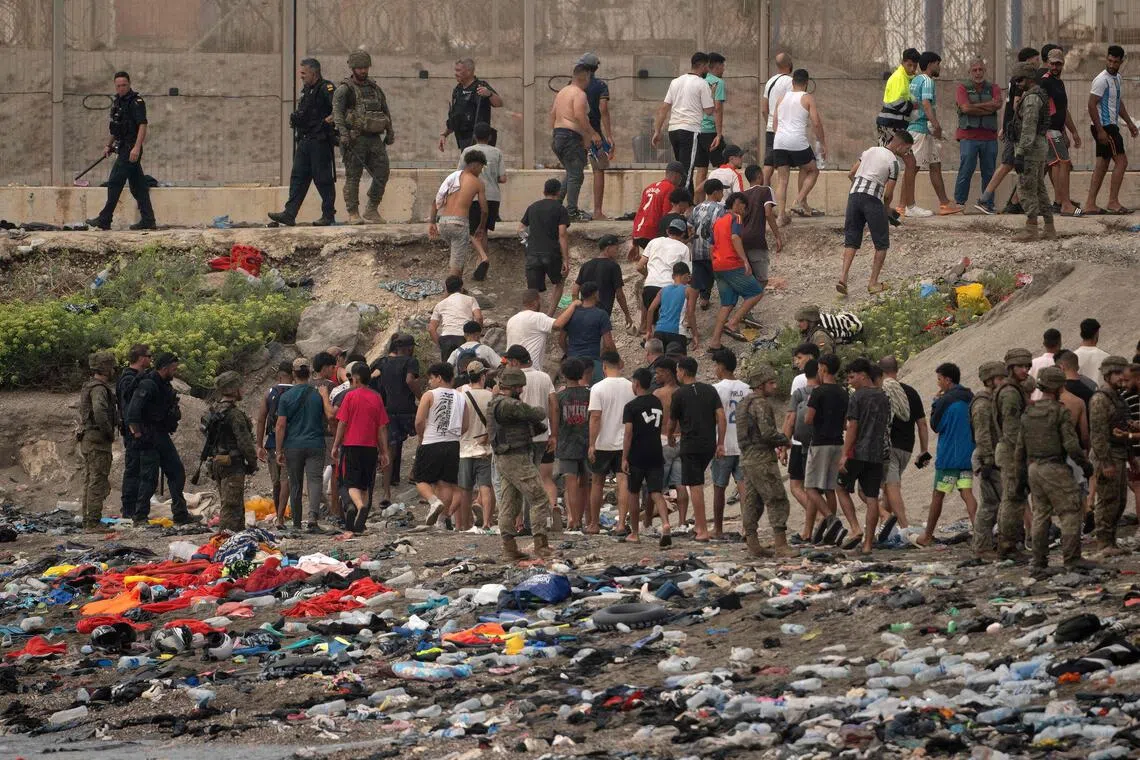
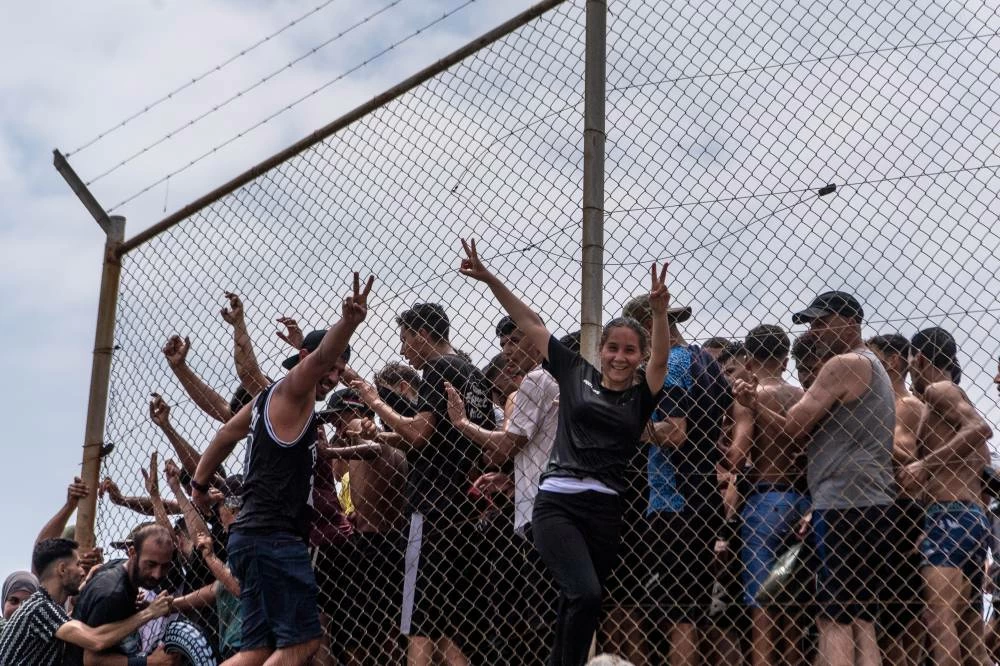
While Spain's Interior Ministry reported around 50,000 crossings, Vivas estimated the number was as high as 60,000—more than half the population of Ceuta. The ministry estimated that between 25,000 and 37,500 of those migrants have already turned back voluntarily.
Spain has recently offered a mass amnesty to hundreds of thousands of unauthorized migrants, arguing that immigrants strengthen its fast-growing economy. This approach stands in stark contrast to a broader European trend of tightening borders.
The fallout has manifested in immediate security and diplomatic threats:
- France: Interior Minister Laurent Nunez issued instructions to
immediately step up checks at the Spanish border
. - Italy: Prime Minister Giorgia Meloni stated Italy was prepared to use
extraordinary measures
, including the suspension of Spain from the Schengen Area's open-border scheme. Foreign Minister Antonio Tajani explicitly claimed Spain's amnesty policy hadencouraged human trafficking
, prompting Spain to summon the Italian ambassador. - United States: The State Department issued a rare direct accusation, blaming the Spanish government for
deliberate efforts to enable and facilitate mass illegal migration into Europe
.
The U.S. Response was mirrored by President Donald Trump, who used the crisis to frame a domestic political warning. Speaking via Fox News, Trump stated, That's going to be us in three years if the wrong side gets in,
referring to the next U.S. Presidential election.
Internally, the Spanish government is facing criticism over security failures. The AUGC, a police association representing the Guardia Civil, posted on X that there were too few officers stationed at the fence on Thursday to stop the rush. Furthermore, Territorial Policy Minister Angel Victor Torres suggested the surge may have been influenced by a July ruling from Spain's Supreme Court. That ruling determined that migrants intercepted at sea while attempting to reach Ceuta or Melilla cannot be summarily rejected at the border, although experts maintain this does not prevent eventual expulsion.
Prime Minister Pedro Sanchez traveled to Ceuta on Friday, where he was met with insults from protesters. Sanchez characterized the mass crossing as a violation of Spain's territorial sovereignty
and announced that authorities are speeding up the repatriation of illegal entrants with the cooperation of Morocco.
While some migrants in the Moroccan town of Fnideq began leaving on Friday, others have continued to move along the coast, attempting to find routes around the fence or preparing to swim. Spain and Morocco are currently working to reinforce the border fence to prevent further mass crossings.
Diplomatic Fractures and Global Reactions
The surge triggered a wave of responses from international leaders, some offering support while others used the crisis to challenge Spain's legal framework. British Prime Minister Andy Burnham described the situation as concerning
and confirmed his government contacted Madrid to provide support and understand the implications. Similarly, German Chancellor Friedrich Merz stated he welcomed Spain's intention to prevent illegal migrants from reaching the European mainland, noting that the German government remained in contact with Spanish authorities.
However, the crisis provided political ammunition for right-wing figures globally. In Germany, Alternative for Germany (AfD) co-leader Alice Weidel claimed via X that Ceuta was left in ruins overnight
, arguing that Germany is likely the destination for most of these migrants. Czech Prime Minister Andrej Babis attributed the surge to Spain's policy of granting legal status to hundreds of thousands of migrants. In the United States, Vice President J.D. Vance characterized the images of the crossing as a reminder of the consequences of mass migration
and the result of radical left-wing globalist policies
. White House Deputy Chief of Staff Stephen Miller further framed the event as a warning, claiming Democrats would see homes trampled and stolen by invaders
.
The operational scale of the rush was unprecedented for the autonomous cities of Ceuta and Melilla, which both house approximately 85,000 people according to Emirates 247. While the Spanish government's representative noted that casualties may have occurred on the Moroccan side, the Spanish Department of National Security briefly posted an estimate of over 49,000 illegal crossings within 24 hours before deleting the statement.
The immediate priority for the Spanish government is now the expedited repatriation of those who entered illegally. Territorial Policy Minister Angel Victor Torres told a local radio station that while the government would respect migrants' rights and court rulings, they would proceed to return the entrants.
Archypedia is dedicated to independent, evidence-backed reporting. This briefing was synthesized from primary source reporting, corroborated across independent newsrooms, and verified against our Editorial Standards.
Transparency record
Evidence behind this report
This report synthesizes 5 distinct sources. Open the source ledger below to compare the underlying coverage.
Prepared under the Archypedia Editorial Policy by the Samir Haddad editorial desk profile. AI-assisted tools may support drafting and verification; public accountability remains with Archypedia. Report an error.