Russian attacks kill four in Ukraine ahead of US envoys' visit
The aerial campaign targeted industrial sites and airports, defying a unilateral pledge by President Zelenskyy to halt airstrikes during the American delegation's visit.

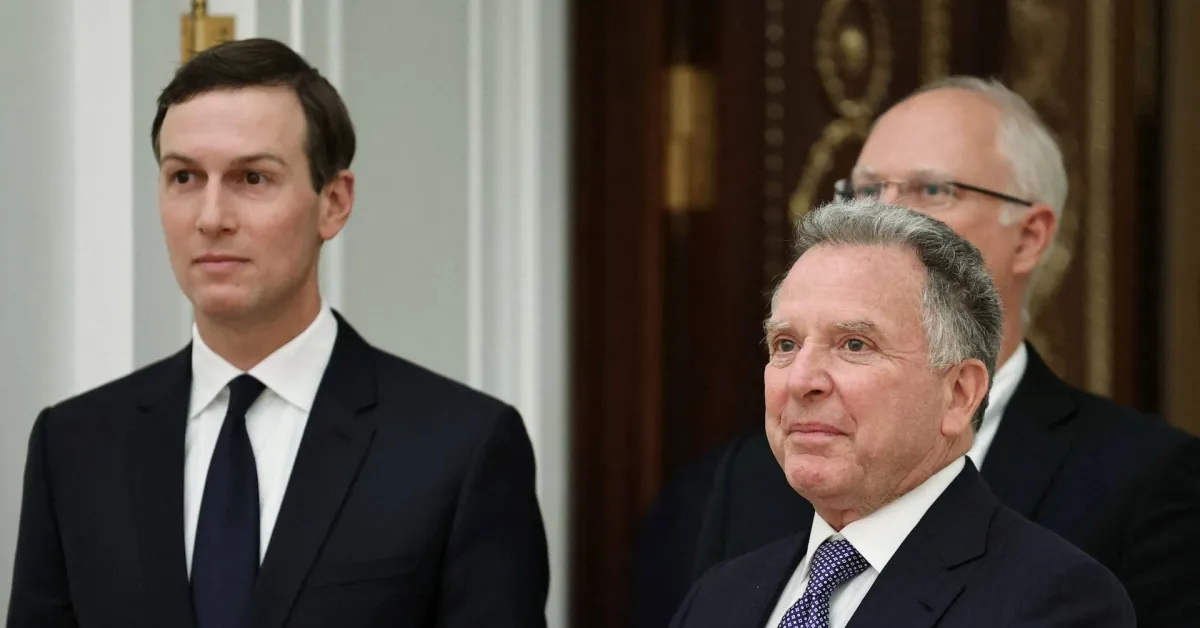
Steve Witkoff and Jared Kushner arrived in Moscow on Saturday to attempt to revive stalled peace negotiations. That same night, Russian missiles struck an industrial facility in Ukraine's Dnipropetrovsk region, killing a locksmith, an electrician, a plumber, and a machinist while they were working their shift.
The timing of the strikes follows a unilateral pledge by Ukrainian President Volodymyr Zelenskyy to halt Ukrainian airstrikes during the envoys' visit to ensure safe passage for the American delegation. Despite this offer, Russia launched a massive aerial campaign involving 167 drones and ballistic missiles, targeting critical transport hubs and industrial sites.
Related YouTube video

Civilian Deaths and Industrial Targets
The overnight attacks centered heavily on the southern Dnipropetrovsk region. According to Oleksandr Hanzha, head of the local military administration, four employees at an industrial facility were killed and five others wounded. Hanzha described the victims as people of peaceful professions
who were simply performing their jobs when they were killed. In the region's Nikopol district, a separate attack wounded a 62-year-old man and damaged an apartment building and several private homes.
The nature of these targets is a point of direct contradiction between the combatants. While Ukrainian officials highlight the civilian nature of the facility, the Russian Ministry of Defence stated it targeted two metallurgical plants that serve as major suppliers of metal products for Ukraine’s military production
.
Beyond Dnipropetrovsk, the strikes reached into the Kyiv and Mykolaiv regions. In Boryspil, a strike sparked a fire that partially destroyed a nine-story residential building, wounding two people according to regional military administration head Tymur Tkachenko. In the Mykolaiv region, drones repeatedly hit a shopping center, damaging retail premises and wounding a 17-year-old girl and a 72-year-old man. State emergency services reported that crews were forced to withdraw several times due to the threat of subsequent strikes.
The Mechanics of the Aerial Campaign
Ukraine's Air Force reported a high-volume assault involving ballistic missiles launched from Russia's Voronezh and Rostov regions. The drone component of the attack was particularly diverse, consisting of Geran, decoy, and Shahed-type aircraft. A significant portion of these—approximately half—were fast-flying, jet-powered drones, a recent addition to Russian tactics.
| Metric | Russian Offensive (Overnight) | Ukrainian Response/Counter-strike |
|---|---|---|
| Drones Deployed | 167 | 53 shot down by Russia |
| Drones Intercepted | 128 (by Ukraine) | N/A |
| Casualties (Reported) | 4-5 killed, multiple wounded | 3 wounded in Belgorod |
| Key Targets | Airports, metallurgical plants, residential/retail | Border region of Belgorod |
The air war has intensified as ground forces remain deadlocked. Both sides have struggled to achieve meaningful breakthroughs along the 775-mile (1,250-kilometer) front line, shifting the weight of the conflict toward long-range attrition.
Diplomatic Timing and US Priorities
The arrival of Steve Witkoff and Jared Kushner in Moscow, where they were met by Russian envoy Kirill Dmitriev, represents the first such visit since January when they met Vladimir Putin. The duo is scheduled to travel to Kyiv on Sunday, marking their first visit to the Ukrainian capital.
This push for peace comes during a period of diminished American momentum. According to Npr, Washington's efforts to end the fighting have lost steam over the last six months because US attention has been redirected toward its war with Iran.
The diplomatic effort was further complicated by the timing of the strikes on Kyiv and Boryspil international airports. President Zelenskyy explicitly linked these attacks to the logistical preparations for the US visit, stating the strikes were a reaction to the discussions and preparations for the possibility of the U.S. side using an aircraft to travel to Ukraine
.
This escalation followed a Friday strike on the headquarters of the SBU, Ukraine's Security Service, which Russia views as a hub for deep-strike operations targeting its own oil refineries and e-commerce centers.
The failure of Moscow to reciprocate Zelenskyy's offer of a temporary ceasefire in the air has led to a shift in Ukrainian policy. Zelenskyy warned that while there will be no threats to diplomacy
, Ukraine will adjust
its operations regarding Russian airspace next week in response to the airport attacks, noting that the airspace has already become dangerous due to Ukrainian drones and missiles.
Chronology of Escalation and Diplomatic Movement
The current diplomatic push follows a specific sequence of military and political events. On Friday, a Russian drone struck the headquarters of the SBU, Ukraine's Security Service, an agency Russia claims facilitates deep-strike operations against its oil refineries and e-commerce hubs. This occurred just as President Zelenskyy offered to freeze Ukrainian airstrikes to ensure the safe arrival of the American delegation.
The transition from Moscow to Kyiv follows a strict timeline provided by the U.S. President's team. Steve Witkoff and Jared Kushner arrived in Moscow on Saturday, where they were met by Russian envoy Kirill Dmitriev. According to Russian state news agency Tass, this is their first visit to the city since January, when they met with Vladimir Putin.
The contrast in military objectives remains stark. While Ukraine targets Russian military facilities and economic hubs to make civilians feel the war's consequences, Russia has focused on critical infrastructure. According to Npr and Arab News, the Kremlin has recently expanded its bombardments into daylight hours, exploiting a shortage of Ukrainian air defense systems.
The failure of Moscow to reciprocate the ceasefire offer has triggered a change in Ukrainian strategy. Zelenskyy stated that while diplomacy will not be threatened, Ukraine will adjust its operations regarding Russian airspace next week. He noted that the airspace is already dangerous due to the presence of Ukrainian missiles and drones, marking this adjustment as the next step in the region's aerial conflict.
Archypedia is dedicated to independent, evidence-backed reporting. This briefing was synthesized from primary source reporting, corroborated across independent newsrooms, and verified against our Editorial Standards.
Transparency record
Evidence behind this report
This report synthesizes 4 distinct sources. Open the source ledger below to compare the underlying coverage.
Prepared under the Archypedia Editorial Policy by the Samir Haddad editorial desk profile. AI-assisted tools may support drafting and verification; public accountability remains with Archypedia. Report an error.