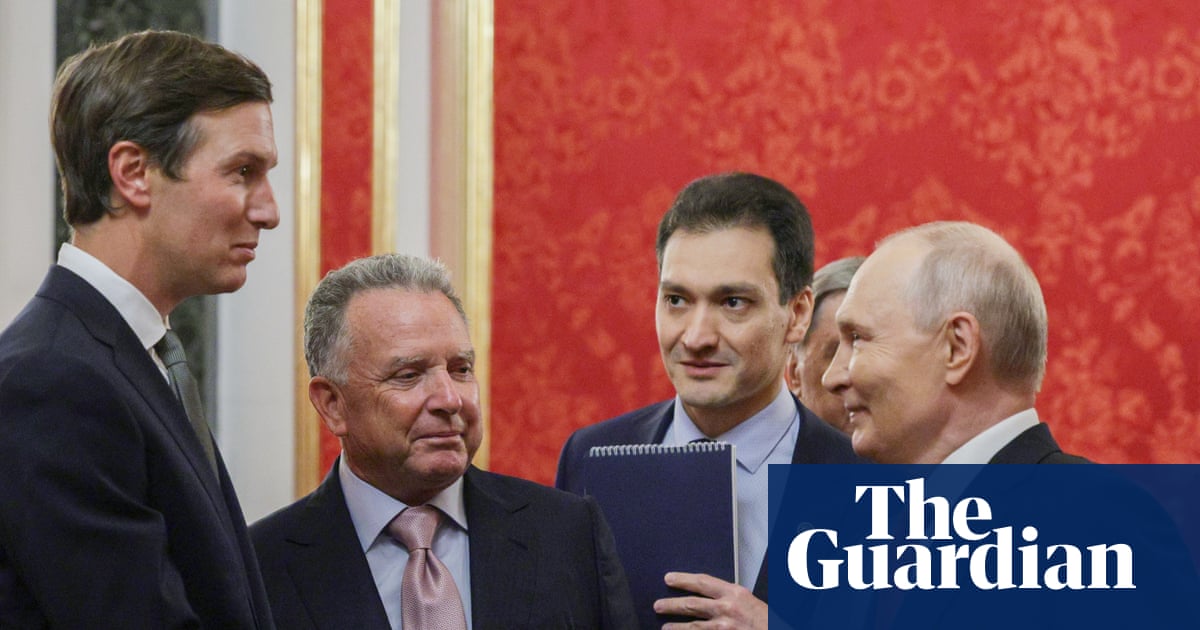
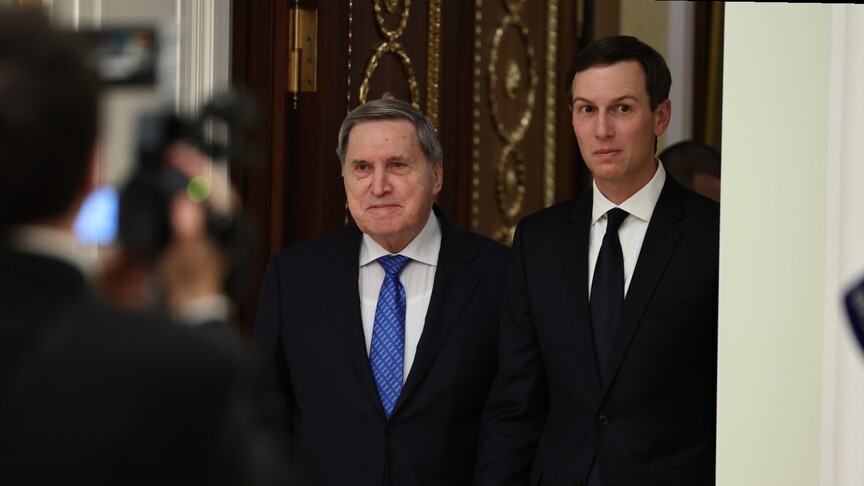
US envoys Witkoff and Kushner head to Kyiv after Kremlin talks with Putin
The diplomatic mission follows a three-hour meeting in the Kremlin where Vladimir Putin insisted that any settlement must account for Russian military advances.

While Russian President Vladimir Putin and US envoys Steve Witkoff and Jared Kushner described their three-hour Kremlin meeting on September 5, 2026, as extremely frank and trusting
, the diplomatic atmosphere stood in stark contrast to the reality on the ground. As the envoys concluded their talks and prepared for their first-ever visit to Kyiv, air-raid sirens continued to sound across the Ukrainian capital, and Russian forces carried out strikes in western Ukraine.
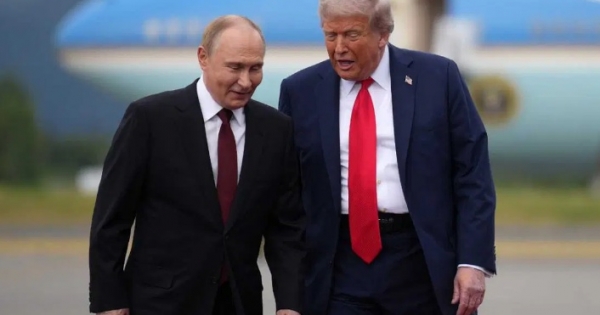
The visit represents a renewed push by President Donald Trump to broker an end to a war that has entered its fifth year. The stakes are immediate: the envoys are carrying a specific, undisclosed peace proposal to Ukrainian leadership, while the Kremlin remains firm that any settlement must account for realities on the ground
.
Related YouTube video


The Kremlin Meeting: Economics and 'Root Causes'
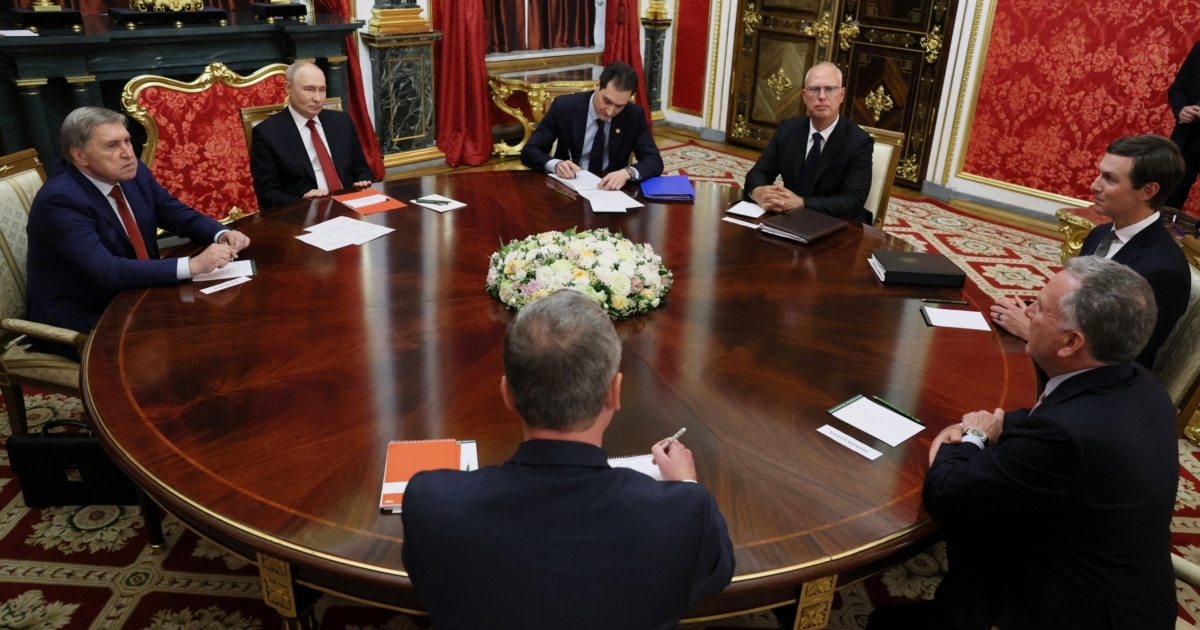
The negotiations in Moscow began near 8 p.m. On September 5, following a day in which Putin marked Moscow’s City Day and opened a new subway line. The session, held behind closed doors at Putin's official residence, lasted until approximately 11 p.m. According to Kremlin foreign policy aide Yuri Ushakov, the discussions were not limited to the Ukrainian crisis but included economic issues and potential major, mutually beneficial Russian-American projects
discussed in considerable detail
.
Putin opened the dialogue by describing the situation as not a simple one
and asked the envoys to convey his best wishes to President Trump. While the tone was warm — with Witkoff telling Putin that memories of these meetings would be right at the top
of his stories upon retirement — the Russian leader did not signal a willingness to compromise on military objectives. According to people close to the Kremlin, Moscow believes it holds the military edge and is consequently toughening its demands.
Ushakov noted that the Russian side emphasized the army's tangible advances in the combat zone
and insisted that any resolution must address the root causes
of the conflict. RFE/RL reports that this terminology typically refers to Moscow's demands for the disarmament of the Ukrainian military and an end to Ukraine's aspirations for NATO membership.
The 72-Hour Capital Truce
To enable the envoys' transition from Moscow to Kyiv, the two warring capitals agreed to a highly localized ceasefire. This agreement does not cover the entire front line but specifically targets the two seats of power.
| City | Action | Duration | Source of Order |
|---|---|---|---|
| Kyiv | Halt of airstrikes | Sept 6–8 | Vladimir Putin (via Dmitry Peskov) |
| Moscow | Refrain from strikes | Sept 5–8 | Volodymyr Zelenskyy |
The ceasefire is precarious. President Volodymyr Zelenskyy reported that Russian forces targeted the Boryspil and Zhulyany international airports overnight on September 4-5. Zelenskyy characterized these strikes as a reaction to the possibility of the US delegation using aircraft to travel to Ukraine. Despite the agreement, air-raid sirens remained active in Kyiv on Saturday afternoon, and an attack in Khmelnyskyi injured four people.
The logistics of the trip remain an unresolved security concern. Ukraine's airspace has been closed to civilian flights since February 2022, and most foreign dignitaries arrive by train. While Putin pledged to do everything that depends on us
to ensure the mediators' safety, the visit comes just days after a Russian drone hit the headquarters of the SBU, the agency responsible for securing such high-profile visits.
Divergent Perspectives on the Peace Push
The sequencing of the diplomatic mission, visiting Moscow before Kyiv, has drawn criticism from European allies. Jovita Neliupšienė, the EU’s ambassador to Washington, questioned this order, stating that diplomacy should prioritize talking first to allies. She asserted that Moscow hasn’t changed its war aims
and maintained that the priority remains providing Ukraine with the means to defend itself.
This European skepticism contrasts with the optimism expressed by some analysts. Alexey Gromyko of the Russian Academy of Sciences suggested the visit could provide fresh impetus
to reach mutually acceptable terms, provided Washington engages on an ongoing basis. Similarly, Sam Charap of Rand Corp. Described the visit as timely, given that the current escalation is spiraling rapidly
.
Ukraine enters these talks from a position of reported material strain. Kyiv has stated it is struggling to intercept Russian ballistic missiles due to a shortage of interceptor missiles. In response, Ukraine has shifted its strategy to target Russian economic infrastructure, specifically oil facilities, to undermine the Kremlin's war effort.
The White House has stated that the envoys discussed substantive plans for next steps
with Putin and are seeking equally productive meetings in Kyiv. The success of this mission hinges on whether the proposal brought by Witkoff and Kushner can reconcile Putin's demand for control over eastern Ukraine, including the Donetsk region, with Zelenskyy's search for realistic options
to end the war.
The diplomatic outcome now depends on the results of the envoys' first-ever visit to Kyiv and whether the substantive plans mentioned by the White House will be announced in the coming weeks.
Archypedia is dedicated to independent, evidence-backed reporting. This briefing was synthesized from primary source reporting, corroborated across independent newsrooms, and verified against our Editorial Standards.
Transparency record
Evidence behind this report
This report synthesizes 6 distinct sources. Open the source ledger below to compare the underlying coverage.
Prepared under the Archypedia Editorial Policy by the Samir Haddad editorial desk profile. AI-assisted tools may support drafting and verification; public accountability remains with Archypedia. Report an error.