Rubio, Lavrov hold Ukraine talks on ASEAN sidelines in Manila
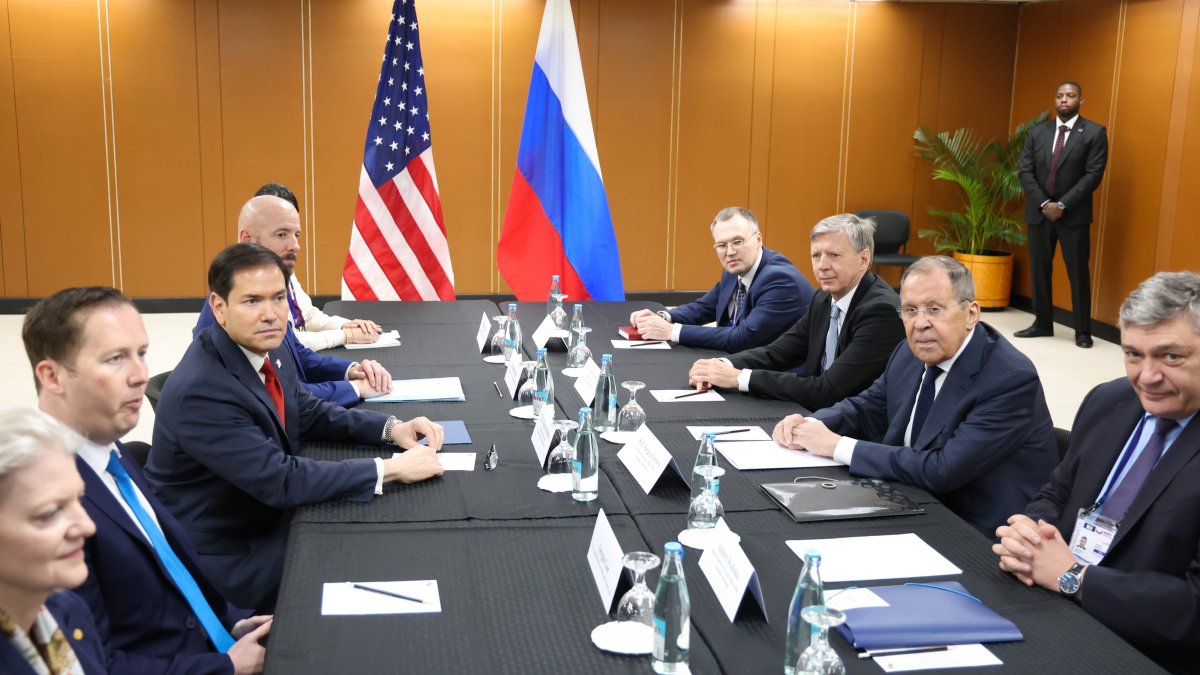
U.S. Secretary of State Marco Rubio and Russian Foreign Minister Sergey Lavrov held bilateral talks on the sidelines of the ASEAN summit in Manila. The discussion focused on the war in Ukraine, diplomatic missions, and space agency cooperation.

United States Secretary of State Marco Rubio and Russian Foreign Minister Sergey Lavrov met for bilateral discussions in Manila on Thursday. The meeting, which took place on the sidelines of the annual Association of Southeast Asian Nations (ASEAN) Foreign Ministers' Meeting, marks a renewed attempt by Washington to engage with Moscow regarding the ongoing war in Ukraine. The talks lasted for just under an hour, according to reports from the ASEAN Regional Forum.
The dialogue occurs as the global diplomatic agenda has shifted heavily toward the Middle East. Secretary Rubio acknowledged prior to the meeting that American diplomatic efforts regarding Ukraine had slowed as attention became occupied by the conflict involving Iran. During the sessions in the Philippines, officials discussed the broader state of U.S.-Russia relations, the functioning of diplomatic missions, and cooperation between NASA and Russia’s Roscosmos space agency. Regarding the war in Ukraine, the U.S. State Department issued a brief statement confirming that the two leaders addressed the need to end the Russia-Ukraine war
.
Related media
Moscow’s perspective on the meeting emphasized continued friction over military support for Kyiv. According to the Russian Foreign Ministry, Lavrov reiterated that ongoing Western arms deliveries were unacceptable
. The ministry further criticized European nations for maintaining a policy aimed at the strategic defeat
of Russia. Despite these objections, the Russian side stated that Lavrov reaffirmed a commitment to a political and diplomatic resolution, referencing previous proposals agreed upon during a summit between President Donald Trump and President Vladimir Putin in Alaska.
The discussions in Manila coincide with a period of heightened activity in the Ukraine conflict. Ukrainian President Volodymyr Zelenskyy confirmed on Thursday that he had communicated with U.S. Envoys regarding the potential for reinvigorating diplomacy. Simultaneously, the conflict has seen a rise in the civilian toll. Local authorities in Russia and Russian-annexed Crimea reported several fatalities on Thursday following drone strikes, including an incident in the Voronezh region where a child was killed.
Beyond the conflict in Europe, the ASEAN summit has been dominated by the deteriorating security environment in the Middle East and the South China Sea. Security concerns are acute for the 11-nation ASEAN bloc, which relies heavily on oil imports from the Middle East. The ongoing blockade of the Strait of Hormuz has exacerbated global inflation concerns. Secretary Rubio noted that while the United States desires a diplomatic solution in the Middle East, the current situation remains stalled.
The atmosphere at the summit is further strained by territorial disputes. On the same day as the Rubio-Lavrov talks, the Philippine coast guard reported the use of water cannons by Chinese vessels against a government fisheries vessel near the Scarborough Shoal. This followed a previous altercation earlier in the week. Beijing, which claims the vast majority of the South China Sea, rejected international arbitration rulings from 2016 regarding these claims. While Secretary Rubio held talks with Chinese Foreign Minister Wang Yi earlier in the week, Beijing launched live-fire military drills in the Taiwan Strait on Thursday, following the conclusion of those discussions.
Key Issues at the ASEAN Regional Forum
- Ukraine-Russia Conflict: Focus on restarting diplomatic pathways and the cessation of Western arms supplies.
- Middle East Turmoil: Concerns over oil supply security, the Strait of Hormuz, and ongoing military exchanges involving Iran and the U.S.
- South China Sea Tensions: Repeated confrontations between Chinese and Philippine vessels near disputed features like the Scarborough Shoal.
- Taiwan Strait: Commencement of live-fire Chinese military drills in the wake of high-level diplomatic meetings.
As the summit concludes, the international community remains focused on whether the engagement between Rubio and Lavrov will lead to concrete steps toward de-escalation. While the U.S. Remains open to re-engaging with Moscow on shared areas of interest, the immediate future of the conflict in Ukraine appears to be tied to both the fluctuating nature of U.S.-Russia relations and the intensifying localized combat operations reported in the Russian border regions. The regional security environment will continue to be impacted by the ongoing maneuvers in the South China Sea and the outcome of the latest military activities near the Taiwan Strait.
Archypedia is dedicated to independent, evidence-backed reporting. This briefing was synthesized from primary source reporting, corroborated across independent newsrooms, and verified against our Editorial Standards.
Transparency record
Evidence behind this report
This report synthesizes 4 distinct sources. Open the source ledger below to compare the underlying coverage.
Prepared under the Archypedia Editorial Policy by the Samir Haddad editorial desk profile. AI-assisted tools may support drafting and verification; public accountability remains with Archypedia. Report an error.