Putin and Zelensky agree to pause strikes on Kyiv and Moscow as U.S. envoys visit
Putin and Zelensky agree to pause strikes on Kyiv and Moscow as U.S. envoys visit
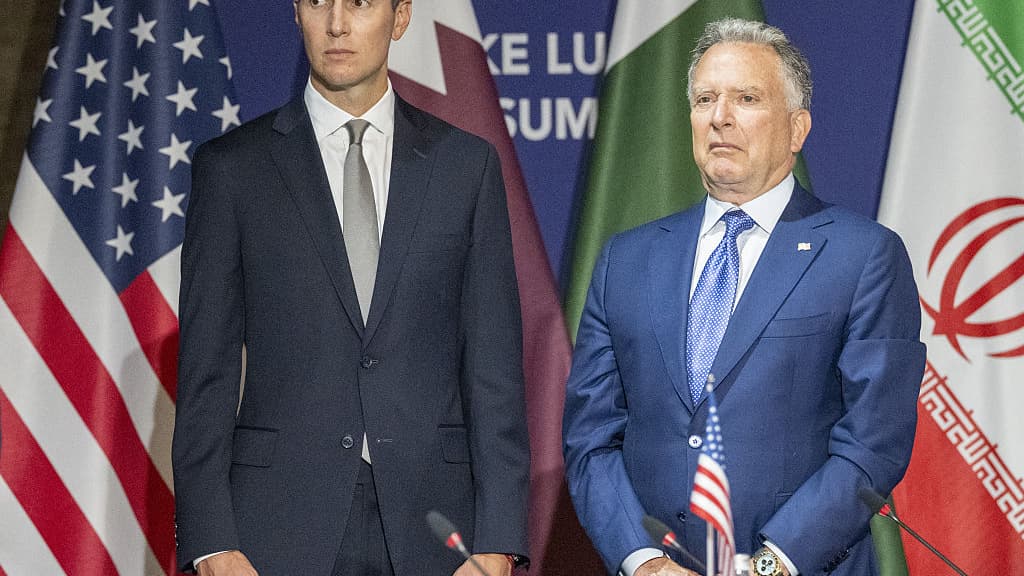
Russian envoy Kirill Dmitriev greeted U.S. Envoys Steve Witkoff and Jared Kushner at the Moscow airport on Saturday with photos captioned Welcome to Moscow Peacemakers
. The reception stood in sharp contrast to the hours preceding it, during which Russian forces launched ballistic missiles and 167 attack drones — roughly half of them jet-powered — at Ukraine, specifically targeting Kyiv and Boryspil international airports.
The arrivals of the Trump administration envoys triggered a temporary cessation of hostilities in the capitals of both warring nations. Russian President Vladimir Putin ordered a 72-hour pause in strikes on Kyiv starting at midnight on September 6, while Ukrainian President Volodymyr Zelensky agreed to refrain from striking Moscow through Monday. The pause serves as a window for Witkoff and Kushner to hold talks aimed at reviving a peace process that has remained largely dormant for six months.
Related YouTube video
The Mechanics of a Tactical Pause
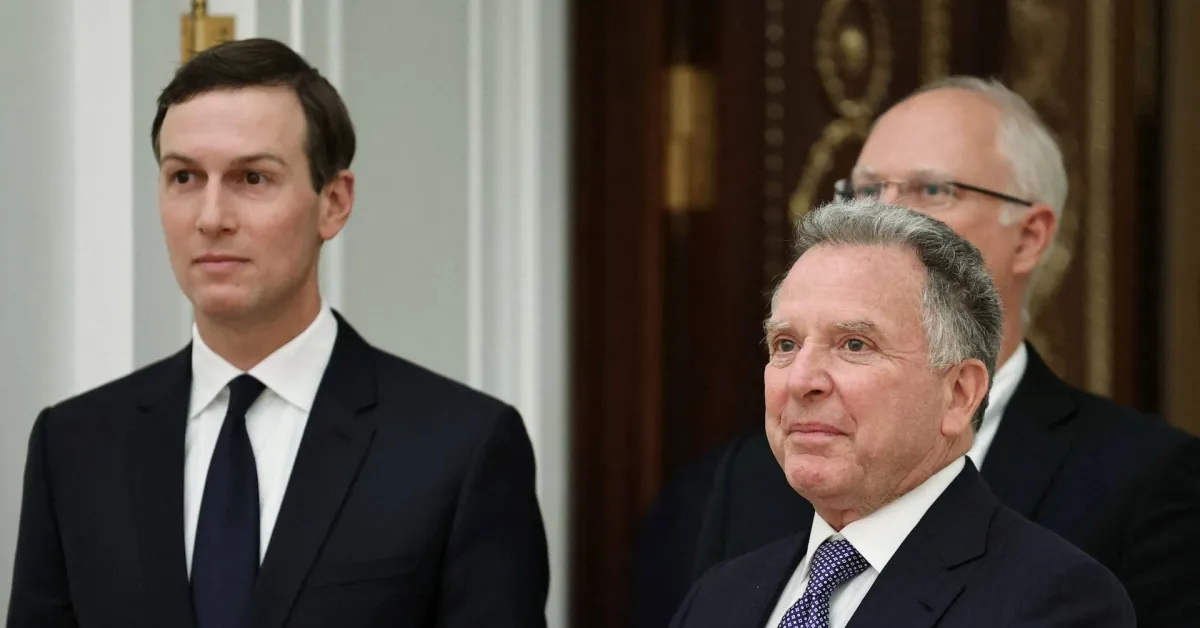
The agreement to halt strikes on the respective capitals is a specific, narrow arrangement rather than a general ceasefire. According to presidential spokesperson Dmitry Peskov, who spoke to the Tass news agency, Putin's order to stop strikes on Kyiv for three days was tied directly to the envoys' planned visit to the Ukrainian capital on Sunday. Zelensky confirmed he spoke with the U.S. Delegation Saturday afternoon after their arrival in Moscow and expressed readiness for substantive conversation
.
The fragile nature of this pause is evident in the timing of recent attacks. Zelensky stated on social media that the overnight strikes on Kyiv and Boryspil airports were a direct reaction
to preparations for the U.S. Delegation to travel to Ukraine by aircraft. While the capitals may see a lull, the broader conflict continues to inflict civilian casualties. In the Dnipropetrovsk region, local military administration head Oleksandr Hanzha reported that five employees at an industrial facility, including a locksmith, an electrician, a plumber, and a machinist, were killed by Russian missiles.
Russia's Ministry of Defense characterized these strikes as targeting metallurgical plants that serve as major suppliers of metal products for Ukraine’s military production
.
Diplomatic Baggage and Shifting Priorities
The mission of Witkoff and Kushner, both real estate developers, comes after a period of American distraction. According to Time, Washington's push for peace lost momentum in February when the U.S. And Jerusalem launched joint strikes on Iran, killing Ayatollah Ali Khamenei and igniting an ongoing war. This shift in priority left the Ukraine mediation stalled for half a year.
The envoys' current efforts are burdened by a history of failed summits and interpersonal volatility. In August 2025, a meeting between Trump and Putin in Anchorage, Alaska, ended without a ceasefire agreement. A subsequent planned summit in Budapest in October 2025 was canceled by Trump after Russia indicated its hard-line stance had not changed.
Furthermore, the relationship between Trump and Zelensky has been unstable. In February 2025, Oval Office discussions collapsed after Trump accused Zelensky of being ungrateful
for U.S. Aid. While Trump recently claimed at a NATO summit that the two have developed a good relationship
, the history of these frictions remains a factor in the current negotiations.
| Diplomatic Event | Date/Period | Outcome/Status |
|---|---|---|
| Oval Office Talks (Trump-Zelensky) | February 2025 | Collapsed over aid and security assurance disputes |
| Anchorage Summit (Trump-Putin) | August 2025 | Unsuccessful; no ceasefire agreement |
| Budapest Summit (Planned) | October 2025 | Canceled by Trump due to Russian hard-line stance |
| Last Moscow Visit (Witkoff-Kushner) | January 2026 | Met with Putin in the Kremlin |
| Current Moscow/Kyiv Mission | September 2026 | Ongoing; accompanied by limited strike pause |
The Intensified Air War
The diplomatic effort occurs against a backdrop of rapidly evolving aerial capabilities. As ground troops struggle to advance along a 775-mile (1,250-kilometer) front line, the war has shifted into the sky. Russia has increasingly deployed jet-powered drones, which have made air-raid sirens a constant in Kyiv. On Friday, a Russian drone successfully hit the headquarters of the SBU, the Ukrainian Security Service, which is centrally involved in deep-strike operations inside Russia.
Ukraine has responded by showcasing its ability to strike targets up to 1,500 miles beyond the border. These long-range operations have targeted oil refineries, military facilities, and e-commerce hubs. Specifically, in August, Ukraine struck warehouses of the online retailer Wildberries, claiming the logistics sites were being used to support Russian military efforts.
The scale of the recent overnight engagement highlights the intensity of the conflict just before the pause:
- Russia: Launched 167 attack drones (including Shahed, Geran, and decoys) and ballistic missiles from Rostov and Voronezh.
- Ukraine: Shot down or suppressed 128 drones; meanwhile, Russia reported shooting down 53 Ukrainian drones.
The human cost extends beyond the capital cities. In the southern Mykolaiv region, drones repeatedly hit a shopping center, wounding a 17-year-old girl and a 72-year-old man. Emergency crews reported being forced to withdraw multiple times due to the threat of follow-up strikes.
Conflicting Narratives on the Peace Proposal
There is a fundamental disagreement between Washington and Moscow regarding the nature of the current visit. President Trump told reporters in the Oval Office on Friday that Witkoff and Kushner are bringing a proposal to end the war
, praising the two as great negotiators
.
The Kremlin has explicitly denied this. Dmitry Peskov told Tass that while the envoys would meet Putin on Saturday, there was no talk of new ideas
to end the conflict. This discrepancy suggests a gap between the U.S. Administration's public framing of the mission and the Kremlin's willingness to engage with new terms.
The diplomatic movement was preceded by a "semi-routine" but unannounced trip to Moscow last week by CIA Director John Ratcliffe, who met with Russian intelligence counterparts. The details of that meeting remain undisclosed.
Despite the current pause, the situation remains volatile. Zelensky warned on Saturday that because of the Russian strikes on airports, Ukraine will adjust our operation accordingly regarding Russian airspace
starting next week, noting that the region has become dangerous due to Ukrainian missiles and drones.
Archypedia is dedicated to independent, evidence-backed reporting. This briefing was synthesized from primary source reporting, corroborated across independent newsrooms, and verified against our Editorial Standards.
Transparency record
Evidence behind this report
This report synthesizes 6 distinct sources. Open the source ledger below to compare the underlying coverage.
Prepared under the Archypedia Editorial Policy by the Samir Haddad editorial desk profile. AI-assisted tools may support drafting and verification; public accountability remains with Archypedia. Report an error.