Israeli Airstrikes in Southern Lebanon Kill Four Despite US Deal
Israeli warplanes pounded multiple communities across the Nabatieh district, killing four people and wounding 20 after an alleged Hezbollah drone launch.
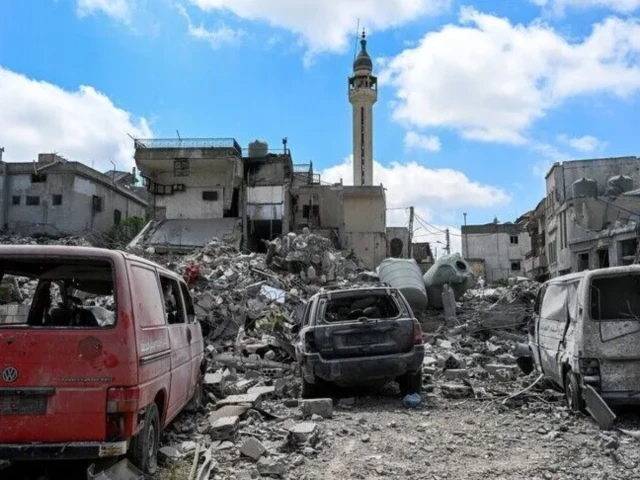
A United States-brokered diplomatic arrangement cracked apart on Sunday, September 6, 2026, as a wave of Israeli airstrikes pounded southern Lebanon, leaving at least four people dead and 20 others wounded. The morning bombardment shattered months of relative quiet along the border, unfolding just hours after an alleged cross-border drone launch by Hezbollah prompted the Israeli military to retaliate against what Tel Aviv designates as a self-declared security zone.
The resulting casualties and structural destructions span multiple communities in the Nabatieh district, exposing the fragile mechanics of a regional accord that has struggled to contain low-level skirmishes and ground maneuvers. While Lebanese health authorities and state media detailed a mounting toll on civilians and local infrastructure, military planners in Israel maintained that the air raids were a direct operational necessity following drone activity directed at occupying troops.
Related YouTube video
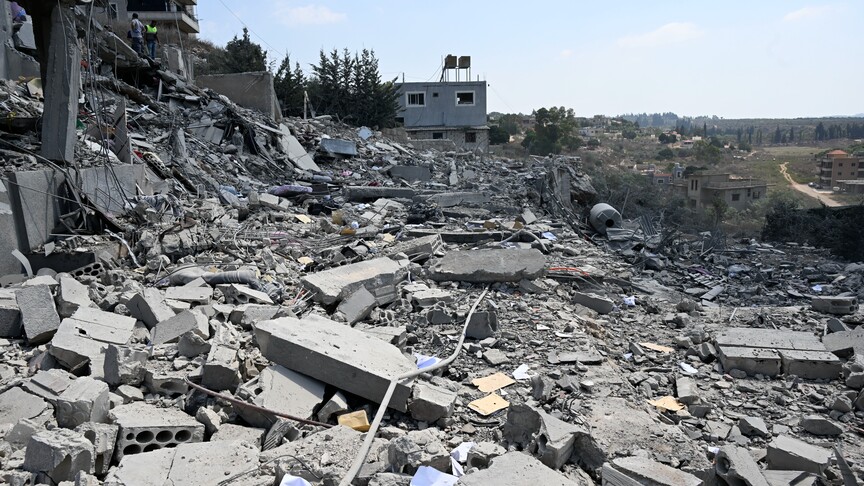


Casualties and Destruction Across Southern Localities
According to figures released by the Lebanese Health Ministry’s Emergency Operations Center, Sunday's provisional death toll included two individuals killed in Nabatieh al-Fawqa and two women killed in nearby Arab Salim, as reported by The Express Tribune. Emergency teams rushed 20 wounded individuals to regional hospitals, a figure that includes multiple women and at least three children spanning multiple strike sites.
Lebanon’s state-run National News Agency (NNA) documented severe structural damage across the targeted zones. In Arab Salim, warplanes completely leveled a residential home following an initial evacuation warning. In the town of Kfar Remman, four women were wounded when strikes hit the property of Ali Moallem, the former mayor, located near the local industrial sector. Additional bombs struck Nabatieh city, damaging a historical building, state finance and agriculture offices, alongside neighborhood cafes and shops. Furthermore, reporting from The Associated Press noted that a strike in Nabatieh al-Fawqa flattened part of the Ghandour hospital, a facility that state media confirmed had been out of service for years.
| Location | Casualties and Damage Reported |
|---|---|
| Nabatieh al-Fawqa | Two people killed, two injured; part of the vacant Ghandour hospital destroyed. |
| Arab Salim | Two women killed, six people (including two girls) injured; residential homes completely leveled. |
| Kfar Remman (Kfar Rumman) | Four women wounded; strike hit near the industrial area, targeting the home of former mayor Ali Moallem. |
| Al-Rahibat Neighborhood (Nabatieh) | Eight people injured, including a woman and a child; historical buildings and government offices damaged. |
Competing Stakeholder Perspectives and Rationale
The Israel Defense Forces presented a sharply divergent account of the morning events, asserting that the airstrikes served as a direct countermeasure. According to military briefings covered by Yahoo News, Hezbollah fighters launched two drones toward Israeli soldiers operating roughly 10 kilometers deep inside Lebanon. Troops successfully intercepted one of the incoming drones, and no military personnel sustained injuries.
Before executing the primary wave, the Israeli military issued a localized evacuation warning instructing residents near a designated Hezbollah facility in Arab Salim to evacuate, though no prior notices were broadcast for the other hit locations. While Bluewin noted Israeli media claims suggesting the demolished hospital structure had been misused as a base, Lebanese state reports emphasized the civilian and historical nature of the targeted urban fabric.
Framework Collapse and Broader Humanitarian Toll
Sunday’s escalation underscores the steady erosion of the June 26 US-sponsored framework agreement. That accord was designed to implement a phased Israeli withdrawal from Lebanese border lands in exchange for the deployment of regular Lebanese army units. Instead, Israeli forces have maintained physical occupation across historical zones and newer sectors seized during recent fighting, consolidating control over strategic ground such as the Ali al-Taher ridge near Nabatieh.
The ongoing violence continues to compound a massive humanitarian crisis that escalated significantly after March 2. Lebanese authorities calculate that intensive airstrikes and ground incursions have claimed 4,358 lives, injured 12,359 individuals, and forced over one million people from their homes. Amid these friction points, the International Committee of the Red Cross recently facilitated the repatriation of five detainees transferred back to Lebanon by Israel, highlighting the grinding, piecemeal nature of diplomatic channels.
Direct political talks between Israeli and Lebanese representatives are anticipated to resume later this month following initial post-hostility contacts, though international mediators have yet to publish a formal calendar or venue for the upcoming sessions.
Strategic Ground Shifts and Military Preparedness Exercises
The intensifying cross-border exchanges coincide with broader tactical redeployments across southern Lebanon, where Israeli forces have recently established operational control over the strategic Ali al-Taher ridge near Nabatieh, according to reporting by Yahoo News and The Associated Press. Concurrently, across the border on Sunday, September 6, 2026, Israel Defense Forces Chief of Staff Eyal Zamir initiated a surprise military drill designed to test command readiness for a sudden, multi-front crisis scenario, as detailed by The Times of India. This unannounced exercise summoned senior headquarters and standby forces to evaluate rapid-response protocols amidst escalating friction points spanning the region.
As international mediators work to schedule further diplomatic engagements following the collapse of the initial post-hostility framework, direct political talks between Israeli and Lebanese representatives represent the next step for the fragile diplomatic track anticipated to resume later this month.
Archypedia is dedicated to independent, evidence-backed reporting. This briefing was synthesized from primary source reporting, corroborated across independent newsrooms, and verified against our Editorial Standards.
Transparency record
Evidence behind this report
This report synthesizes 7 distinct sources. Open the source ledger below to compare the underlying coverage.
- timesofindia.indiatimes.com
- tribune.com.pk
- aa.com.tr
- sg.news.yahoo.com
- bluewin.ch
- turkiyetoday.com
- click2houston.com
Prepared under the Archypedia Editorial Policy by the Samir Haddad editorial desk profile. AI-assisted tools may support drafting and verification; public accountability remains with Archypedia. Report an error.