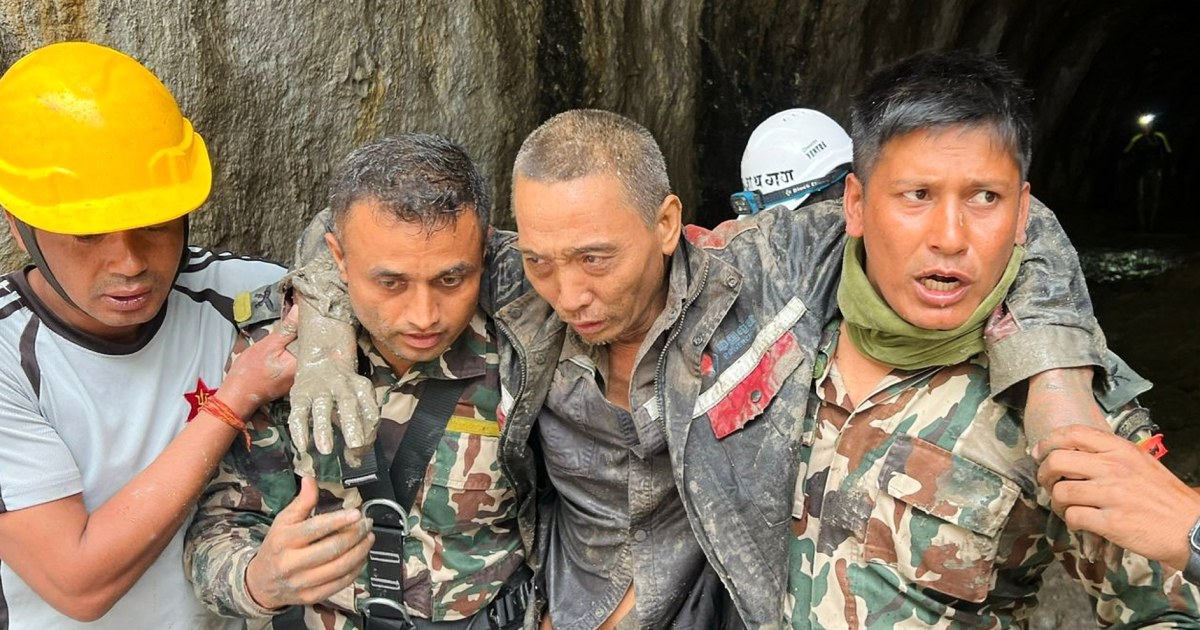
Colombia earthquake death toll rises to 265, with nearly 500 people still missing
Emergency crews race to find survivors beneath collapsed structures in western Colombia following a 7.4-magnitude earthquake that has triggered 130 aftershocks and displaced tens of thousands.
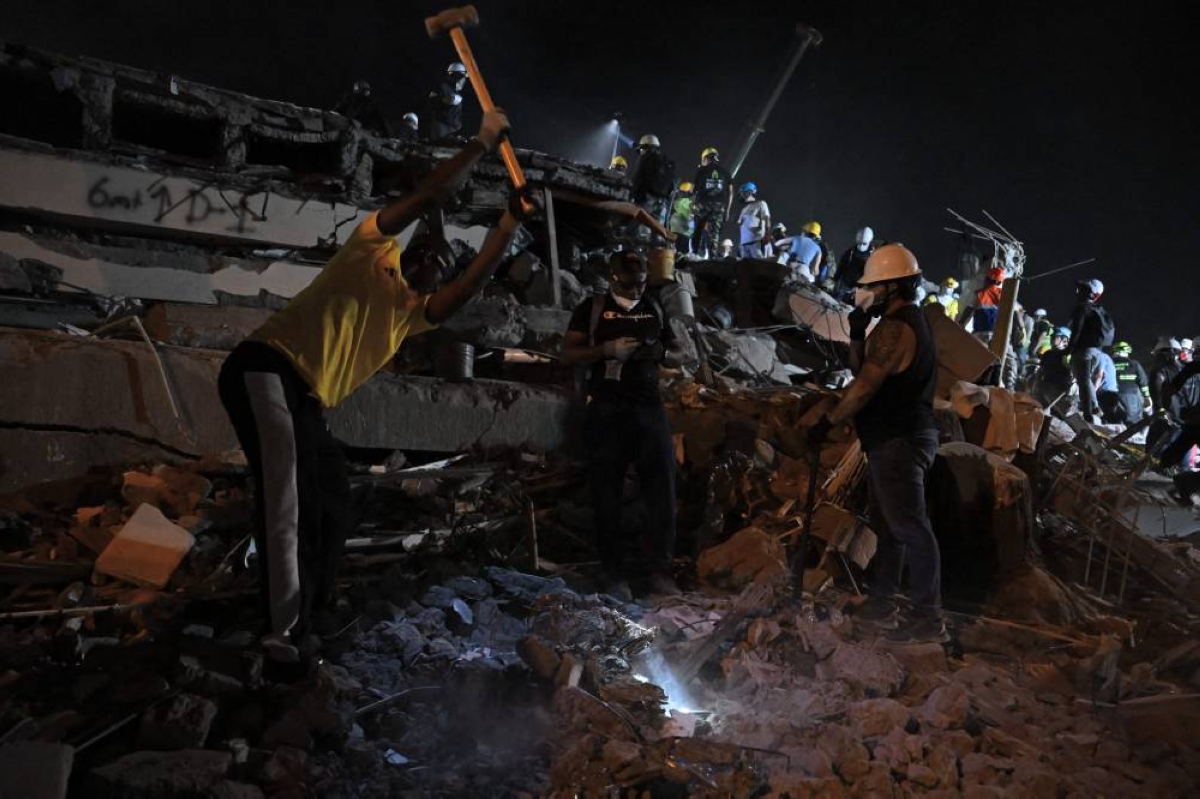
Search and rescue units pressed through urban hubs under a ticking timeline on Wednesday, pulling survivors from pulverized concrete amid desperate applause, while a heavy silence shrouded the remote jungle communities of Chocó. The disaster unfolded when a 7.4-magnitude earthquake struck western Colombia at 7:34 a.m. Local time on Monday, according to data from the US Geological Survey reported by Agencia Anadolu and other outlets. Originating at a depth of 107 kilometers, the tremor had its epicenter approximately 5 kilometers east of San José del Palmar, a municipality sitting 1,288 meters above sea level in the Chocó Department with a population of around 4,800. Described by officials as the strongest earthquake to hit the country in decades, the seismic event buckled roads, crushed cars, and triggered widespread structural failures across the western region.
Colombian President Abelardo de la Espriella announced Wednesday that the national death toll had risen to 265, with approximately 3,500 people injured and 496 individuals officially listed as missing, according to figures cited by Gulf Times and Agencia Anadolu. Concurrently, the Institute of Legal Medicine reported receiving 202 bodies from Chocó, Caldas, Risaralda, and Valle del Cauca as of Wednesday morning, of which 121 had been identified, including five children, as noted by The City Paper Bogotá. A separate consolidated assessment by the mayors' association, Asocapitales, recorded 188 deaths, 1,677 injuries, and 243 completely collapsed structures across cities including Cali, Pereira, Quibdó, and Manizales. Civilian-run volunteer platforms, however, report a starkly different scale of uncertainty, listing nearly 4,200 individuals still being sought by relatives according to Yahoo and Bluewin.
Related YouTube video
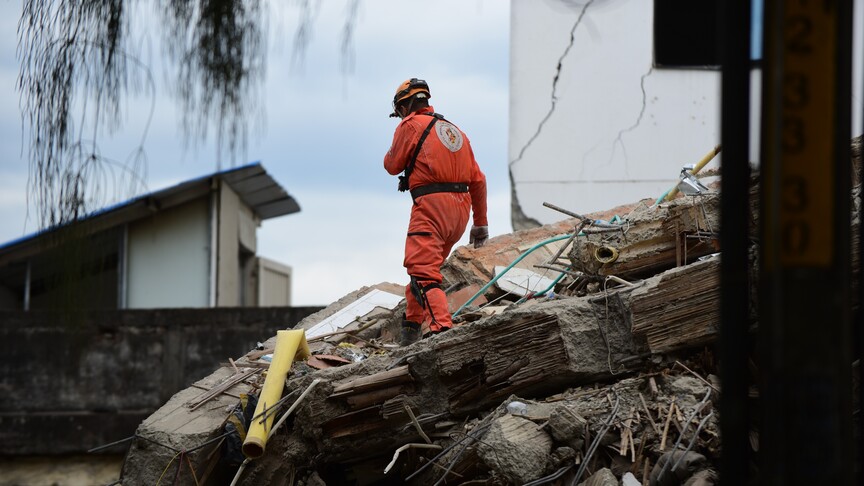


In Cali and Pereira, search operations have combined acute grief with dramatic moments of survival. Social media footage captured the rescue of an infant from a collapsed building in Cali on Monday, while in Pereira, firefighters and medical personnel spent 12 hours freeing 32-year-old Daniela Largo from the debris by carving a small opening to stabilize her arm with intravenous fluids before carrying her to an ambulance as reported by CBS News. Craig De Meillon, a search-and-rescue volunteer from Miami, Florida, described the emotional release of these moments:
"It was kind of like a football moment, when everyone is like shaking hands, like, 'Yes, yes!'"
Craig De Meillon, Search-and-rescue volunteer, via CBS News
Such delicate extraction efforts require hundreds of onlookers and volunteers to maintain absolute silence in bustling urban streets so that rescue units and sniffing canines can detect the faintest sounds of life. These fragile operations face continuous disruption from subsequent seismic activity. The Colombian Geological Survey has recorded 130 aftershocks, including a magnitude 5.0 tremor that struck near San José del Palmar shortly after the initial event. Rodrigo León Loya, a seismologist and geosciences professor at the University of the Andes, noted to CBS News that while the probability of another earthquake of similar magnitude in the exact same spot is low, ongoing seismic activity remains a constant hazard given Colombia's active fault lines.
The aftershocks and structural instability have left tens of thousands of residents displaced. Across the coffee-growing region, authorities converted sports arenas, schools, and other public buildings into shelters, while families slept in public parks in Cali and Pereira out of fear that aftershocks would topple their already damaged homes. Edith Penagos, a 48-year-old staying in a white tent in a Pereira park with her teenage son, told CBS News:
"We have the most important things: a roof over our heads, food, water and, in my case, medical care."
Edith Penagos, Displaced resident, via CBS News
While urban areas grapple with visible devastation, the humanitarian situation in the rural northwest remains largely obscured. In Chocó, the disaster collided with decades of deep poverty, forced displacement, and ongoing civil conflict involving armed groups. Giovanni Rizzo, Colombia director for the Norwegian Refugee Council, warned via CBS News that the earthquake compounds an already severe humanitarian crisis in the region. Because cell service was lost and many affected communities are accessible only by river, the true scale of the catastrophe in Chocó's jungle terrain remains unknown.
Nevertheless, pre-existing humanitarian networks established around the 2016 peace accord have enabled aid workers already stationed in Chocó to pivot swiftly to disaster relief, according to María José Torres, the U.N. Resident coordinator in Colombia, as reported by CBS News. On the national level, President de la Espriella declared an economic state of emergency and established an emergency reconstruction fund to rebuild hospitals, schools, and homes, alongside a national disaster situation declaration under Decree 1172 to streamline institutional coordination across departments including Antioquia, Caldas, Cauca, Chocó, Quindío, Cundinamarca, Risaralda, Huila, Valle del Cauca, Tolima, Putumayo, and Norte de Santander. The decree also mandated three days of national mourning, with flags flying at half-mast on public buildings and diplomatic missions abroad.
Disaster Response Overview
- Casualties and Missing: President de la Espriella confirmed 265 deaths, 3,500 injuries, and 496 missing persons, while unofficial platforms track nearly 4,200 missing individuals.
- Seismic Activity: The Colombian Geological Survey documented 130 aftershocks following the initial 7.4-magnitude tremor.
- International Aid: The United States deployed technical urban search-and-rescue teams from Fairfax County, Virginia, and Los Angeles County, California, alongside a financial aid pledge exceeding $15 million, while Mexico dispatched military aircraft carrying 19.5 tons of nonperishable food.
As international assistance reaches the country and emergency crews transition from frantic excavation toward long-term reconstruction, the immediate test remains whether rescue teams can reach trapped survivors before the final hours of the critical response window close across the affected departments.
How significant is this development?
Contribute your assessment to the aggregated reader intelligence ledger.
Archypedia is dedicated to independent, evidence-backed reporting. This briefing was synthesized from primary source reporting, corroborated across independent newsrooms, and verified against our Editorial Standards.
Transparency record
Evidence behind this report
This report synthesizes 7 distinct sources. Open the source ledger below to compare the underlying coverage.
Prepared under the Archypedia Editorial Policy by the Samir Haddad editorial desk profile. AI-assisted tools may support drafting and verification; public accountability remains with Archypedia. Report an error.