Tens of thousands protest across Germany after far-right AfD wins Saxony-Anhalt
Mass demonstrations erupted in 20 cities following the AfD's electoral surge in Saxony-Anhalt, triggering a national debate over the legal thresholds for banning the party.
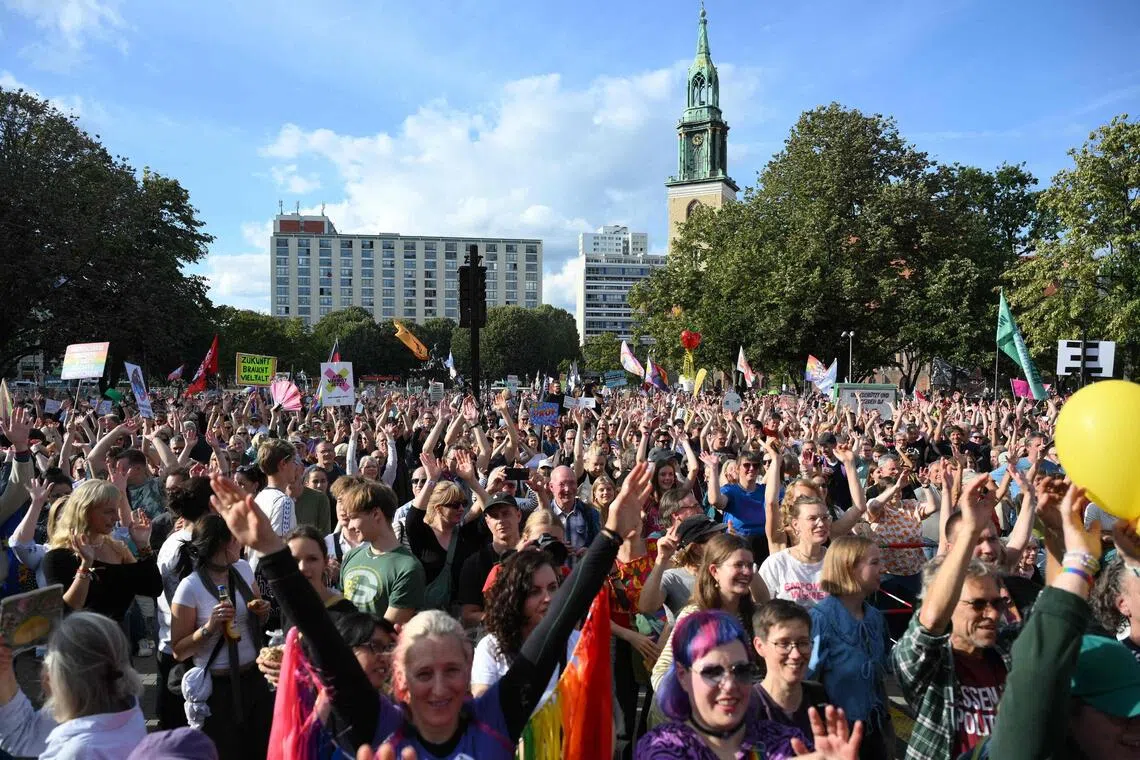
BERLIN — The Alternative for Germany (AfD) has secured nearly 44% of the vote in the eastern state of Saxony-Anhalt, placing the far-right party three seats short of an absolute majority and bringing it closer than ever to governing a German state since World War II. On September 12, this electoral surge triggered a national backlash, with approximately 150,000 people marching across 20 cities to demand the party be banned from the political system.
While the party has already begun talks with other groups and MPs to form a state government in Saxony-Anhalt, demonstrators in hubs like Berlin, Hamburg, and Munich have shifted their focus from mere opposition to legal erasure, waving signs that read Ban the AfD now
and Democracy needs no alternatives
.
Related YouTube video


The Saxony-Anhalt Landslide
The election on September 6 has left the AfD as the dominant political force in Saxony-Anhalt. By capturing nearly 44% of the vote, the anti-immigration and Russia-friendly party has fundamentally altered the regional power balance, leaving the center-right CDU with only 17% of the vote. Despite falling three seats short of an absolute majority, the party is actively seeking to establish the first extreme-right state government in the post-war era.
This victory has galvanized opposition. Christoph Bautz, head of the campaign group Campact, stated that a broad cross-section of civil society
is protesting specifically to prevent the enemies of the constitution
in Saxony-Anhalt from securing government power.
Nationwide Mobilization and the PRÜF Initiative
The demonstrations on September 12 were not spontaneous but were largely coordinated by the PRÜF initiative (meaning "proof" or "check"). This group organizes rallies on the second Saturday of every month in state capitals, demanding that the Federal Constitutional Court review any party that domestic intelligence has flagged as extremist.
The protests saw significant turnout in several major urban centers, though police and organizers often differed on the exact numbers in the capital.
| City | Estimated Participants | Source of Estimate |
|---|---|---|
| Hamburg | 25,000 | Organizers |
| Berlin | 18,000 to 32,000 | Police (18k) / Organizers (32k) |
| Dusseldorf | 20,000 | Police and Organizers |
| Munich | 12,000 | Police |
| Mainz | 2,000 | Police |
| Saarbrücken | 1,500 | Police |
| Magdeburg | 1,100 | Police |
In Berlin, the protests converged on the city's town hall, the Rotes Rathaus, as part of a "star-shaped demonstration" against the normalization of right-wing politics. Simultaneously, the AfD held its own counter-demonstration in the capital, featuring Kristin Brinker, the party's lead candidate for the upcoming regional elections in Berlin.
The Legal Architecture of a Party Ban
The process is not triggered by street protests or intelligence reports alone, but requires a formal political petition.
According to reports from Yahoo News and Bluewin, only three entities have the standing to apply for a ban to the Federal Constitutional Court:
- The Bundestag (lower house of parliament)
- The Bundesrat (upper house of parliament)
- The federal government
The court then holds the sole authority to decide if a ban is warranted. Hendrik Wüst, the Minister President of North Rhine-Westphalia, has proposed a joint federal-state working group to investigate whether a ban can be pursued. However, Chancellor Friedrich Merz of the CDU has expressed skepticism regarding this approach.
The debate is further complicated by the AfD's fragmented legal status. While the party as a whole is monitored by the domestic intelligence agency as a suspected
extremist organization, its state branches in Thuringia and Saxony-Anhalt have already been classified as confirmed
far-right extremist.
Frequently Asked Questions
Can the German government ban the AfD immediately?
No. A ban cannot be enacted by the government alone; it requires a petition from the federal government, the Bundestag, or the Bundesrat, followed by a ruling from the Federal Constitutional Court.
What is the difference between 'suspected' and 'confirmed' extremist status?
The domestic intelligence agency monitors the national AfD as a "suspected" extremist organization, but it has officially classified specific state branches, such as those in Saxony-Anhalt and Thuringia, as "confirmed" far-right extremist.
How close did the AfD come to an absolute majority in Saxony-Anhalt?
The party won nearly 44% of the vote, falling just three seats short of an absolute majority in the state parliament.
The AfD intends to leverage its Saxony-Anhalt momentum in the upcoming regional elections in Berlin, where Kristin Brinker will lead the party's bid for power.
Regional Tensions and Counter-Mobilization
The friction between the AfD's electoral momentum and the national backlash manifested physically in Berlin on September 12. While anti-extremism marches converged on the Rotes Rathaus, the AfD conducted a counter-demonstration in the capital. This event served as a platform for Kristin Brinker, the party's lead candidate for the regional elections in Berlin, which are scheduled for the following weekend.
The scale of the opposition across different cities reveals a varied level of mobilization. While Hamburg and Dusseldorf saw massive turnouts, the "PRÜF" series of rallies — which occur on the second Saturday of every month, showed smaller but coordinated clusters in regional capitals.
According to Bluewin, these marches were described as "colorful" efforts to send a clear message against the far right. This civil unrest is tied to a deeper historical anxiety, as the Strait Times reports that the AfD's rise has unnerved those who believe Germany maintains a special responsibility to atone for its Nazi past.
Administrative Hurdles to a Ban
Despite the public pressure, the mechanism to remove the party from the political landscape remains restrictive. The proposal by North Rhine-Westphalia state premier Hendrik Wüst to establish a joint federal-state working group is an attempt to navigate these hurdles, though it lacks universal political consensus.
The current legal tension exists between the AfD's official status and its electoral success. While the Office for the Protection of the Constitution monitors the national party as a suspected extremist organization, the party's branches in Saxony-Anhalt and Thuringia have already been classified as confirmed far-right extremist. This distinction is central to the demands of the PRÜF initiative, which insists the Federal Constitutional Court review parties with such classifications.
For the AfD, the next step is to translate its Saxony-Anhalt landslide into further gains during the upcoming regional elections in Berlin.
Archypedia is dedicated to independent, evidence-backed reporting. This briefing was synthesized from primary source reporting, corroborated across independent newsrooms, and verified against our Editorial Standards.
Transparency record
Evidence behind this report
This report synthesizes 5 distinct sources. Open the source ledger below to compare the underlying coverage.
Prepared under the Archypedia Editorial Policy by the Samir Haddad editorial desk profile. AI-assisted tools may support drafting and verification; public accountability remains with Archypedia. Report an error.