AfD wins record 44.4% of vote in Saxony-Anhalt state election
Despite doubling its 2021 vote share, the AfD faces a governing gap as mainstream parties refuse to form a coalition with the organization.
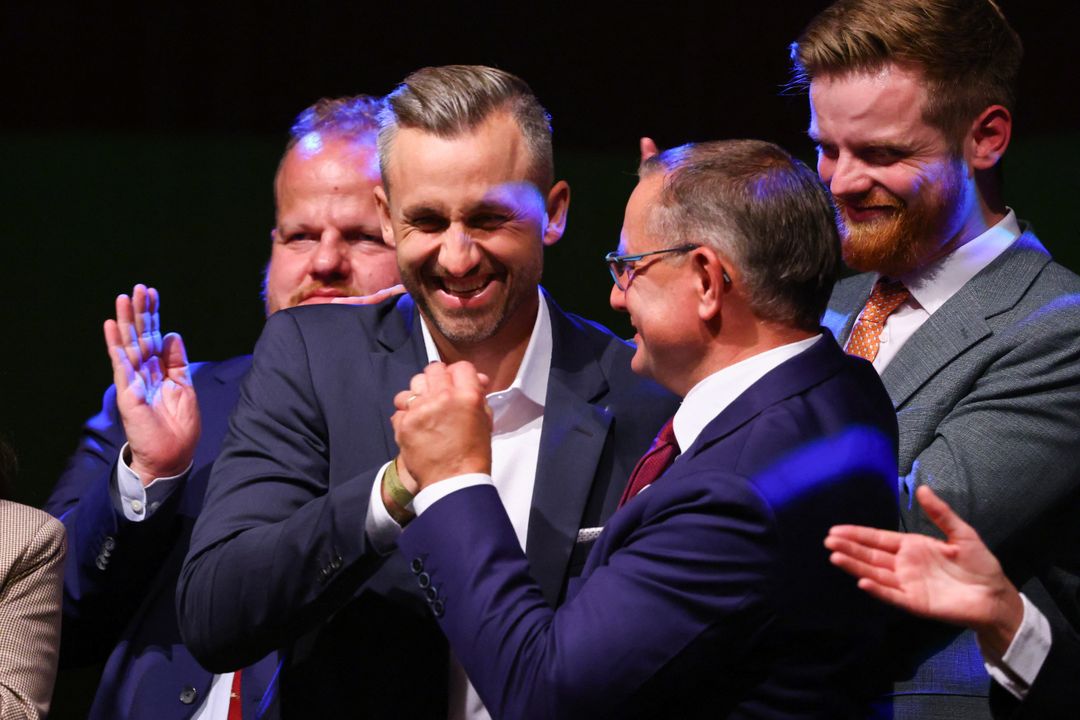
Ulrich Siegmund appears in campaign videos with a radiant smile, a meticulously coiffed side parting, and a flawlessly ironed white polo shirt. In his hometown of Tangermünde, he greets supporters with hugs and rides a Simson bike — a symbol of East German nostalgia — to the polling booths. This affable, professionalized persona masks a platform championing a deportation offensive
and a history that includes a November 2023 meeting in Potsdam where participants discussed remigration
, the forced resettlement of immigrants.
The contrast between the man and the mandate peaked on Sunday, as the Alternative for Germany (AfD) secured a record 44.4% of the vote in the Saxony-Anhalt state election. While this is the strongest electoral performance for the party in the state's history, the victory has not yet translated into power. The AfD remains trapped behind a political firewall
, as established parties refuse to enter a coalition with a group classified as a confirmed right-wing extremist organization by Saxony-Anhalt's state domestic intelligence agency.
Related YouTube video


The Mathematics of Deadlock
The AfD's victory is historically significant in scale but precarious in function. While the party achieved its goal of becoming the strongest force in the state parliament, projections indicate it failed to secure the absolute majority it sought to bypass the need for coalition partners.
Under the current system, winning the largest share of the vote does not grant automatic control of the state government. To govern, a party must command a majority of seats in the legislature. With the CDU and other parties upholding the firewall
, a refusal to collaborate with the far right, the AfD faces the prospect of being the largest party in a parliament where it cannot form a government.
| Party | Projected Vote Share (ARD) | 2021 Result (AfD Only) |
|---|---|---|
| AfD | 44.0% – 44.5% | 20.8% |
| CDU | 17.8% – 18.5% | Not provided |
| Die Linke | ~9.5% | Not provided |
| SPD | ~8% | Not provided |
| BSW | 5.0% – 5.1% | Not provided |
This deadlock was echoed in the reactions of party leaders. AfD leader Alice Weidel told public broadcaster ZDF that the result provided a very clear mandate to govern
and warned that the CDU will never again win an election
if it maintains its firewall. Conversely, CDU Secretary General Franziska Hoppermann rejected any retreat from the policy, stating
"We do not work with extremists — and above all not with the far right"
Franziska Hoppermann, CDU Secretary General, via Trtworld
The Professionalized Face of Radicalism
The engine of this growth is 35-year-old Ulrich Siegmund. Born in 1990, the year of German reunification, Siegmund’s path to power was non-traditional; he worked as a waiter and construction worker before apprenticing as an export merchant and studying Psychology and Business Administration via a distance learning university in Hamburg. He later launched a perfume business.
Siegmund's rise coincided with the Coronavirus pandemic, when his social media criticism of lockdowns earned him hundreds of thousands of followers. He has since professionalized the party's image, using meticulously produced videos to project positivity and community. This image is so potent that he has turned criticism into a marketing tool, autographing copies of Der Spiegel magazine after it labeled him the most dangerous man in Germany
via Jen.
His personal brand has not been dampened by scandals, including reports that his father received more than 7,500 euros per month as a parliamentary assistant to a party colleague. Siegmund dismissed the criticism, arguing the party must rely on people it trusts.
Policy Clashes and Economic Risks
While Siegmund often frames his platform as common sense
, the practical application of his agenda would represent a sharp departure from current German state administration. His specific regional priorities include:
- Migration: A
deportation offensive
targeting undocumented migrants and the removal of incentives for those whoexploit
the social system. - Education: Permitting homeschooling, barring schools from raising rainbow flags, requiring the German flag be flown, and altering history curricula to reduce the emphasis on Hitler's Third Reich.
- Demographics: Implementing
baby bonuses
for families and attempting to lure back German expatriates to replace migrant workers.
The German Economic Institute has warned that such immigration policies would be ruinous
for Saxony-Anhalt, which relies heavily on foreign-born workers, particularly in the health sector, according to Al Jazeera.
Beyond the economy, security officials have raised alarms regarding the AfD's ties to Russia. Thuringia state interior minister Georg Maier told the Handelsblatt daily newspaper that the Kremlin views the AfD as the most important instrument for destabilizing Germany under Vladimir Putin. There are fears that an AfD-led state security apparatus could leak sensitive intelligence to Moscow.
Drivers of Discontent
The record 80% voter turnout, a massive increase from 60.3% in 2021, suggests the election was treated as a referendum on the established order. According to Infratest dimap, voters were driven by declining confidence in traditional parties, social security, the economy, and migration. Additionally, a new wave of inflation linked to the war in Iran intensified public frustration.
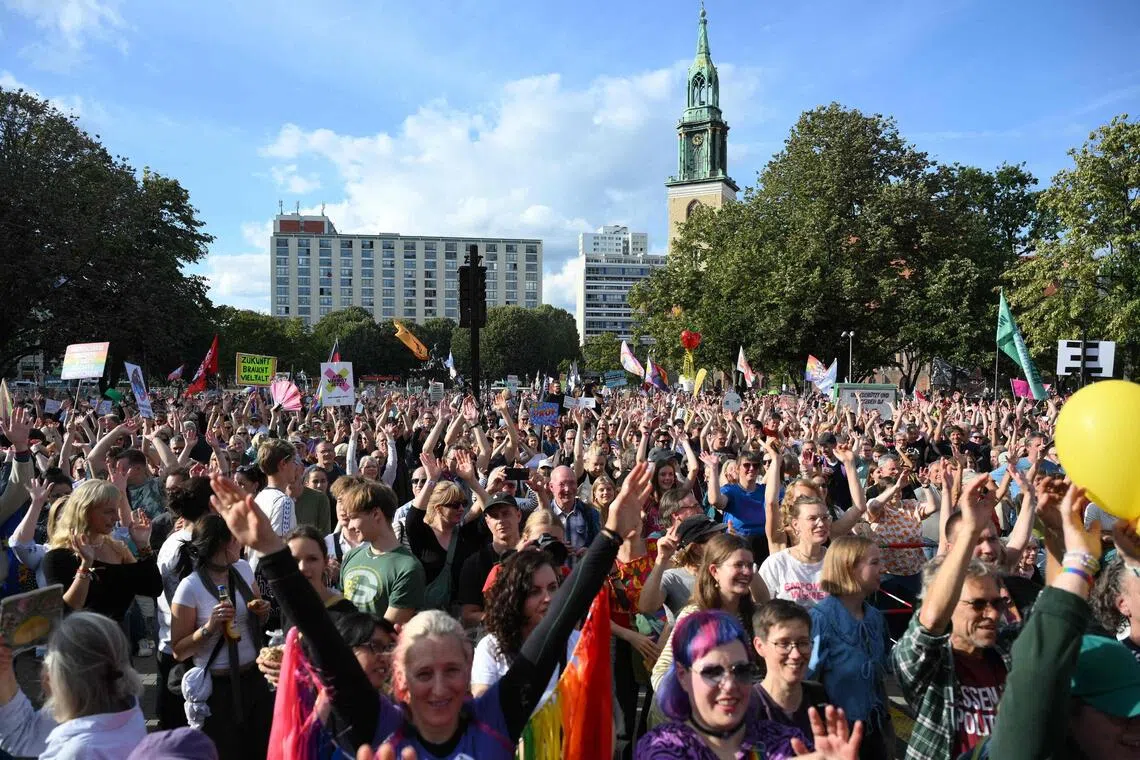
This sentiment has manifested in starkly different ways across the country. While AfD supporters celebrated in Tangermünde, thousands marched in Berlin, Frankfurt, and Mainz. In Berlin, a Defend Democracy! – Ban the AfD Now!
march moved through the government district, with police expecting 5,000 people to gather at the Brandenburg Gate on Monday evening.
The outcome now rests on the ability of the remaining parties to form a viable alternative. Incumbent governor Sven Schulze has ruled out working with the AfD, but he faces the difficult task of assembling a multi-party minority coalition, potentially requiring support from the Left Party, to keep the AfD out of power despite their first-place finish.
Archypedia is dedicated to independent, evidence-backed reporting. This briefing was synthesized from primary source reporting, corroborated across independent newsrooms, and verified against our Editorial Standards.
Transparency record
Evidence behind this report
This report synthesizes 6 distinct sources. Open the source ledger below to compare the underlying coverage.
Prepared under the Archypedia Editorial Policy by the Samir Haddad editorial desk profile. AI-assisted tools may support drafting and verification; public accountability remains with Archypedia. Report an error.