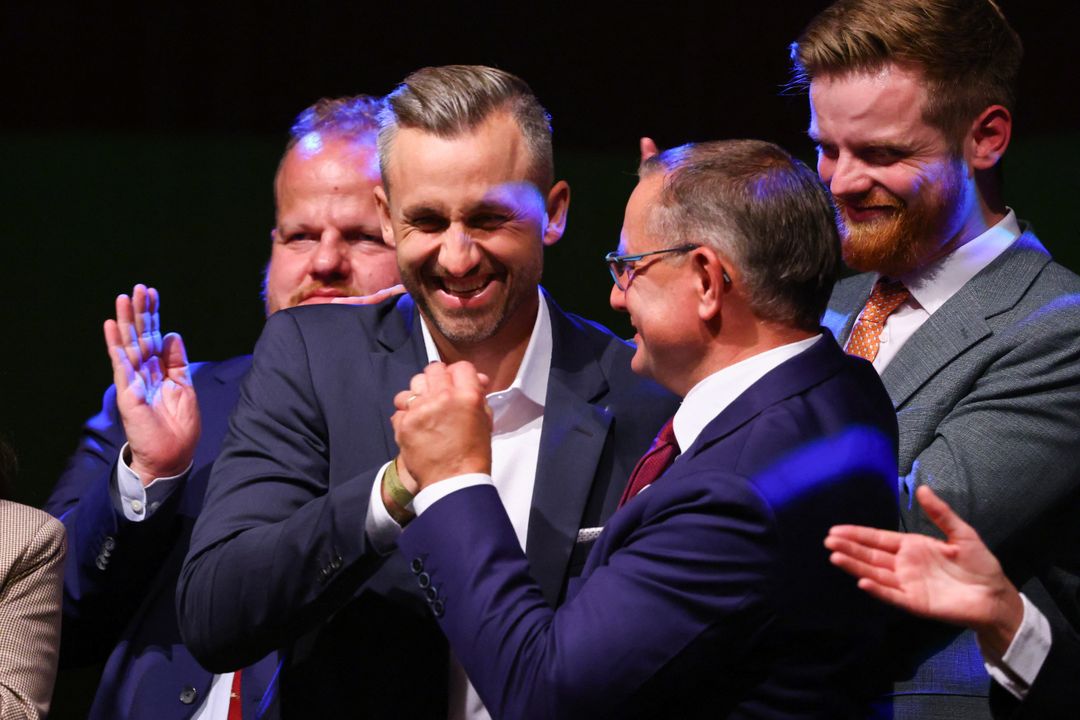
Saxony-Anhalt voters weigh historic AfD state leadership bid
With the far-right party leading polls by a wide margin, Sunday's high-stakes election in Saxony-Anhalt could break a foundational post-war political barrier.
Voters in Saxony-Anhalt head to the polls on Sunday in a high-stakes election that could shatter a foundational political barrier in post-war Germany. The far-right Alternative for Germany stands on the threshold of capturing its first-ever state government, fueled by surging poll numbers, widespread societal polarization, and intense regional mobilization, according to reporting by the World Socialist Web Site and Vijesti.
The convergence of final weekend rallies, civil society light projections on historical architecture, and the opening of ballots on Sunday morning highlights a deep societal fracture. While mainstream democratic parties have steadfastly refused to form coalitions with the far right, the party's surging momentum threatens to rewrite the political landscape of the region, as detailed by Vijesti and UK Yahoo News.
Related YouTube video

Polling Metrics and the Mathematics of Government Formation
Final opinion surveys show the Alternative for Germany attracting between 41 and 43 percent of the vote in Saxony-Anhalt, placing it approximately 20 points ahead of Chancellor Friedrich Merz’s Christian Democratic Union, which polls at roughly 23 percent according to analysis published by Vijesti and cited by The Local.
This unprecedented electoral strength brings the party within striking distance of capturing the state government. However, the path to power depends heavily on parliamentary mathematics. Because all mainstream democratic parties refuse to cooperate with the far-right formation, and no smaller party expected to enter the regional parliament has offered formal support, an AfD-led administration can theoretically materialize only if the party wins an absolute majority of seats, as outlined by UK Yahoo News and Vijesti.
Complicating matters further, the standard five-percent electoral threshold designed to prevent fragmentation could leave smaller factions — including the Social Democrats, the Greens, the Free Democrats, and the left-nationalist BSW — outside the state legislature if they fail to clear the bar. Vijesti notes that if multiple smaller entities miss the threshold, the AfD's roughly 40 percent vote share could easily translate into an absolute majority of parliamentary seats.
| Political Force | Estimated Polling Support |
|---|---|
| Alternative for Germany (AfD) | 41% – 43% |
| Christian Democratic Union (CDU) | 23% (Vijesti estimate) |
Competing Stakeholder Perspectives and Platform Proposals
The state-level platform championed by the party's 35-year-old lead candidate, Ulrich Siegmund, has drawn sharp warnings from civil society and human rights advocates. As detailed by The Local and Vijesti, Siegmund's proposals include a large-scale deportation offensive, sweeping restrictions on migration, cuts to democracy-promotion funding, the banning of rainbow flags on school buildings, a moratorium on wind energy expansion, the establishment of voluntary citizen patrols, and the abolition of public service broadcasting.
Critics, including outgoing German President Frank-Walter Steinmeier, have decried these positions. Speaking at a community festival in Bonn reported by UK Yahoo News, Steinmeier warned against the rise of nationalist isolationism.
"Ethnic-based thinking and nationalist isolationism are simply not the answer to the challenges of the 21st century. You cannot build a future on hatred and incitement."
Frank-Walter Steinmeier, German President, via UK Yahoo News
Conversely, the World Socialist Web Site argues that the rise of the far right is symptomatic of deeper structural failures. According to WSWS, decades of austerity, real wage stagnation, and social inequality, exacerbated by post-reunification deindustrialization under the Treuhand and subsequent federal reform packages, have left deep economic scars, particularly in eastern Germany where poverty rates reach 24.1 percent.
Cultural Mobilizations and Free Speech Controversies
The election has triggered fierce debates over cultural expression and public speech across Germany. On the eve of the vote, a civil society alliance known as "More Than Divides Us", funded by donations and backed by prominent actors such as Sandra Hüller and Christian Friedel, projected a massive slogan onto the Magdeburg cathedral and the state parliament building, as reported by Yahoo News.
"What we love, we will not give up. True patriotism is not the AfD,"
The projected message read, marking the culmination of a campaign that used bus tours and posters to encourage the support of democratic parties, according to Yahoo News. Concurrently, trade unions and civil society organizations organized 12 registered demonstrations and a democracy festival in Magdeburg, alongside rallies in Halle, bringing thousands of protesters into the streets according to UK Yahoo News.
The tension has also spilled over into the entertainment sector. The Local reported on a controversy involving the synth-pop band Alphaville, who were dropped from the lineup of the Glücksgefühle Festival at Hockenheimring after promoters sought guarantees that the musicians would not voice political criticisms of the far right on stage. Frontman Marian Gold described the demand as a gag order, prompting widespread criticism from fellow artists before the promoter later conceded that handling the situation was a mistake, per The Local.
Future Ramifications and Upcoming Electoral Tests
The implications of the Saxony-Anhalt vote extend far beyond regional borders. With the AfD polling at approximately 28 percent nationwide, the party is positioned to perform strongly in upcoming state contests in Mecklenburg-Western Pomerania and Berlin, according to Vijesti.
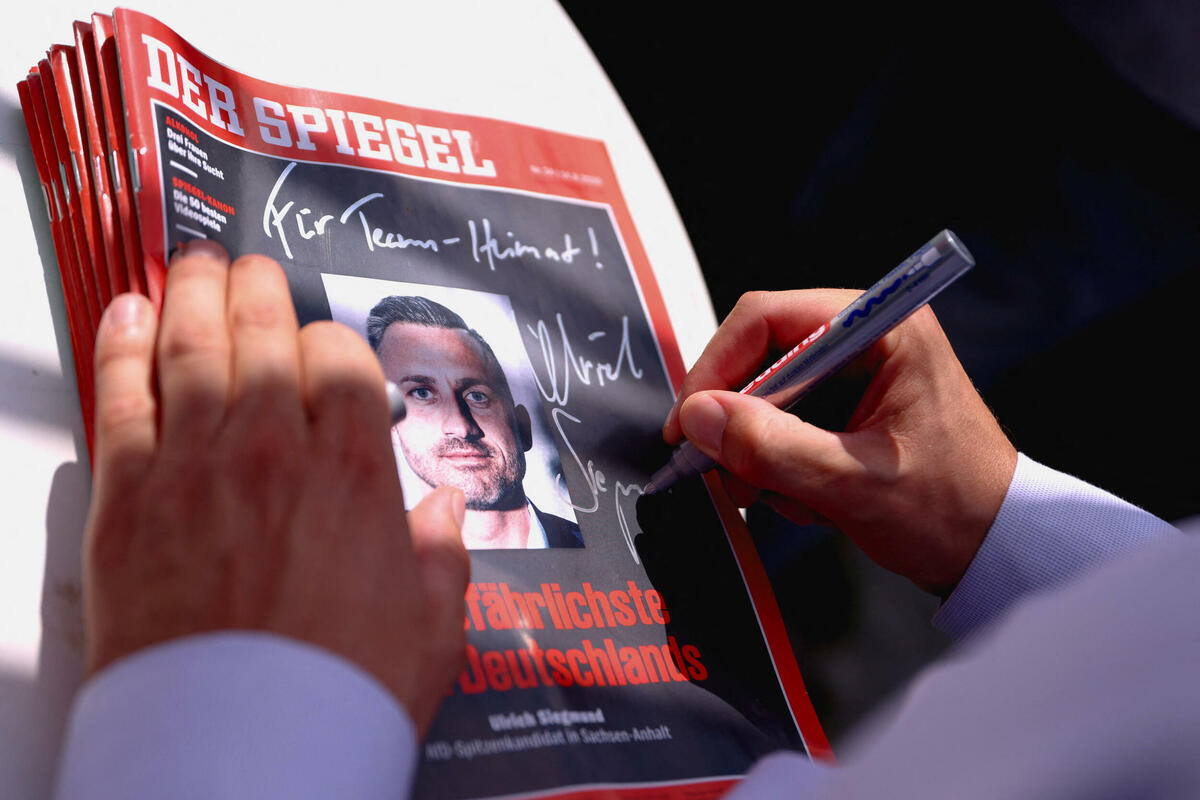
State security services in Saxony-Anhalt and four other states have classified the regional AfD branch as a confirmed right-wing extremist organization, as reported by Yahoo News. Yet, as commentators note, aggressive media branding, such as a recent cover of Der Spiegel portraying Siegmund as a criminal suspect, has frequently backfired by serving as organic campaign material for the party's base, per Vijesti and The Local.
Polling stations officially open at 8 a.m. And close at 6 p.m. On Sunday, with public broadcasters ARD and ZDF scheduled to release exit-poll projections immediately as voting concludes, according to The Local.
As polling stations close, the immediate test will center on whether smaller parties clear the five-percent electoral threshold and whether exit-poll projections from ARD and ZDF confirm an absolute majority for the AfD or force an unprecedented parliamentary stalemate among mainstream democratic parties, as outlined by The Local and Vijesti.
Archypedia is dedicated to independent, evidence-backed reporting. This briefing was synthesized from primary source reporting, corroborated across independent newsrooms, and verified against our Editorial Standards.
Transparency record
Evidence behind this report
This report synthesizes 5 distinct sources. Open the source ledger below to compare the underlying coverage.
Prepared under the Archypedia Editorial Policy by the Samir Haddad editorial desk profile. AI-assisted tools may support drafting and verification; public accountability remains with Archypedia. Report an error.