Warty Birch Caterpillars Detect Predatory Ladybeetles Through Leaf Vibrations – geneonline.com: A Breakthrough in Insect Sensory Biology
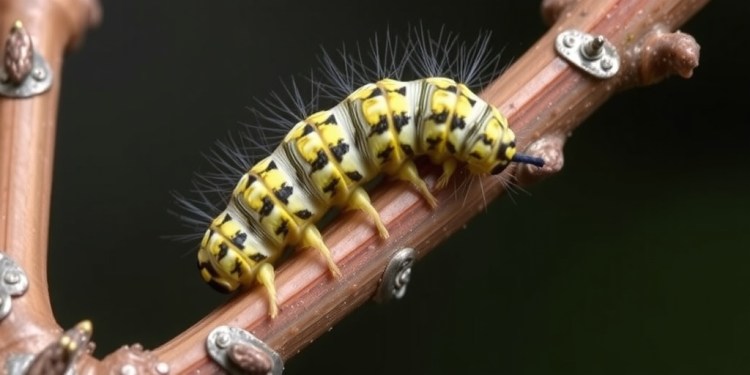
In the quiet, microscopic theater of a birch forest, a high-stakes game of survival unfolds every second. For the warty birch caterpillar, the environment is a minefield of predators, the most persistent of which is the predatory ladybeetle. While many assume that insects rely primarily on sight or scent to avoid danger, recent biological insights have revealed a far more sophisticated system of early warning. Research into how Warty Birch Caterpillars Detect Predatory Ladybeetles Through Leaf Vibrations – geneonline.com highlights a remarkable evolutionary adaptation: the ability to “hear” the footsteps of a predator through the very surface they inhabit.
This discovery shifts our understanding of predator-prey dynamics, suggesting that the physical architecture of a leaf serves not just as food and shelter, but as a high-fidelity communication channel. By sensing substrate-borne vibrations, these caterpillars can distinguish between the harmless rustle of wind and the rhythmic, purposeful stride of a hunting ladybeetle, allowing them to initiate escape responses long before the predator is within visual range.
The Mechanics of Substrate-Borne Vibration Sensing
To understand how warty birch caterpillars survive, one must first understand the physics of the leaf. A leaf is not a static object; it is a complex organic membrane capable of conducting mechanical waves. When a ladybeetle moves across a leaf, its legs create minute displacements in the plant tissue. These displacements travel as waves—specifically, substrate-borne vibrations—across the leaf’s surface.
The warty birch caterpillar possesses specialized mechanoreceptors, often located in the legs and the ventral side of the body, which act as biological seismographs. These organs are tuned to specific frequencies. While a breeze might create a broad, chaotic spectrum of vibration, the movement of a ladybeetle produces a distinct, repetitive pattern. The caterpillar’s nervous system is primed to recognize this specific “signature,” triggering an immediate behavioral shift.
“The ability to decode mechanical signals from the environment allows a prey species to effectively expand its sensory perimeter, transforming the entire plant into a giant antenna for danger.”
Distinguishing Signal from Noise
One of the most impressive aspects of this sensory capability is the caterpillar’s ability to filter out “noise.” In a natural forest setting, leaves are constantly vibrating due to wind, rain, and the movement of other non-predatory insects. The warty birch caterpillar employs a process of temporal and spectral filtering:
- Frequency Analysis: The caterpillar ignores low-frequency oscillations caused by wind but reacts to the mid-to-high frequency pulses characteristic of ladybeetle locomotion.
- Pattern Recognition: The rhythmic nature of a walking predator is distinct from the erratic vibrations of a falling droplet of water.
- Amplitude Thresholds: The system is sensitive enough to detect a predator several centimeters away, providing a critical window for escape.
The Evolutionary Arms Race: Ladybeetles vs. Caterpillars
The relationship between the warty birch caterpillar and the ladybeetle is a classic example of an evolutionary arms race. As the caterpillars developed more acute vibration-sensing capabilities, the predatory pressure forced ladybeetles to adapt their own hunting strategies. This biological conflict has led to a series of sophisticated adaptations on both sides.
Predatory Stealth and Strategy
Ladybeetles are not passive hunters. To counter the caterpillar’s “seismic” awareness, some predatory species have evolved movements that minimize their vibrational footprint. By altering the timing of their strides or distributing their weight differently, they attempt to blend into the background noise of the forest. However, the warty birch caterpillar’s sensitivity remains a formidable defense, often forcing the beetle to rely on ambush tactics or chemical lures.
The Caterpillar’s Defensive Response
Once the vibration of a ladybeetle is detected, the warty birch caterpillar does not simply freeze. Depending on the proximity and intensity of the signal, it employs several tiered responses:
- Alert State: The caterpillar stops feeding and becomes hyper-vigilant, reducing its own movement to better sense the predator’s location.
- Active Avoidance: The caterpillar moves away from the source of the vibration, often heading toward the thicker stem of the leaf where vibrations may be dampened or harder for the beetle to navigate.
- Extreme Evasion: In cases of imminent danger, the caterpillar may drop from the leaf entirely, using a silk thread to plummet to the forest floor, effectively removing itself from the predator’s path.
| Sensory Mode | Detection Range | Reliability | Main Limitation |
|---|---|---|---|
| Visual | Short (Line of Sight) | High (Immediate) | Blocked by foliage/camouflaged predators |
| Chemical (Scent) | Medium (Wind Dependent) | Moderate | Slow propagation; directionally vague |
| Vibrational | Medium (Substrate Dependent) | Very High | Limited to connected physical surfaces |
Broader Ecological Implications of Vibrational Communication
The discovery that Warty Birch Caterpillars Detect Predatory Ladybeetles Through Leaf Vibrations – geneonline.com is not an isolated curiosity; it opens a window into the broader world of “bio-acoustics” and substrate-borne communication. Many insects, spiders, and even some plants utilize mechanical waves to convey information.
The “Internet of Leaves”
Ecologists are beginning to view the forest canopy as a complex network of information highways. When a caterpillar detects a ladybeetle and reacts, it may inadvertently signal the predator to other prey or, conversely, alert other caterpillars in the vicinity. This creates a ripple effect of information that influences the distribution of species across a single tree.

this research suggests that anthropogenic noise—such as vibrations from machinery or urban infrastructure—could potentially interfere with the survival mechanisms of these insects. If “seismic noise” masks the vibrations of predators, caterpillar populations could either crash due to increased predation or surge, leading to the over-defoliation of birch forests.
Comparison with Other Species
While the warty birch caterpillar is a prime example, other species use similar mechanisms:
- Spiders: Use web vibrations to distinguish between a trapped fly and a predatory wasp.
- Ants: Use stridulation (rubbing body parts together) to send distress signals through the soil.
- Leafhoppers: Communicate mating calls through the stems of plants to avoid attracting airborne predators.
From Nature to Tech: The Potential for Biomimicry
The precision with which warty birch caterpillars filter noise from signal has caught the attention of the technology sector. Engineers and roboticists are increasingly looking toward “biomimicry”—the design of materials and systems modeled on biological entities—to solve human problems.
Next-Generation Seismic Sensors
Current human-made seismic sensors are often bulky and struggle with “signal-to-noise” ratios in urban environments. By studying the mechanoreceptors of the warty birch caterpillar, researchers can develop Micro-Electro-Mechanical Systems (MEMS) that are far more efficient at detecting specific patterns within a chaotic vibrational environment.
Potential applications include:
- Structural Health Monitoring: Sensors that can detect the specific “vibrational signature” of a microscopic crack forming in a bridge or airplane wing, ignoring the general noise of traffic or wind.
- Border and Perimeter Security: Low-power sensors buried in the ground that can distinguish between the footsteps of an animal and a human intruder.
- Industrial Predictive Maintenance: Machines that “feel” the early onset of bearing failure by detecting specific frequency shifts, similar to how a caterpillar feels a beetle.
For more on how nature inspires engineering, you might find a related explainer on biomimetic robotics useful.
Addressing Common Misconceptions
When discussing insect behavior, several oversimplifications often arise. It is key to clarify the nuances of how these caterpillars actually function to avoid a superficial understanding of the science.
Misconception 1: “Caterpillars have ears.”
Caterpillars do not have ears in the way mammals do. They do not perceive sound waves traveling through the air. Instead, they sense mechanical displacement. They are not “hearing” the ladybeetle; they are feeling the physical deformation of the leaf surface. This is a critical distinction in biological physics.
Misconception 2: “They only react when the predator touches them.”
Early biological theories suggested that prey insects only reacted upon physical contact. The research regarding warty birch caterpillars proves that detection happens at a distance. The “warning zone” extends several centimeters, providing a vital buffer that increases the probability of survival.
Misconception 3: “All caterpillars use this method.”
Not all larvae are equipped with the same level of sensitivity. Some rely more heavily on chemical camouflage or toxicity to deter predators. The warty birch caterpillar’s reliance on vibrations is a specific evolutionary path tailored to its environment and its primary predators.

The Future of Entomological Research
The study of how Warty Birch Caterpillars Detect Predatory Ladybeetles Through Leaf Vibrations – geneonline.com is just the beginning. Future research is likely to dive deeper into the genetic markers that allow for the development of these specialized mechanoreceptors. Scientists are asking: can these traits be “switched on” or “off” based on the density of predators in the environment? Is there a learning component where caterpillars become more sensitive after a near-miss encounter?
the intersection of AI and bio-acoustics is providing new tools for researchers. By using machine learning to analyze the vibrational patterns produced by various insects, scientists can now “translate” the mechanical conversations happening on leaves and stems, potentially uncovering an entire hidden language of the forest.
Key Takeaways for the Reader
- Advanced Sensing: Warty birch caterpillars use substrate-borne vibrations to detect ladybeetles from a distance.
- Pattern Filtering: They can distinguish between the “noise” of wind and the “signal” of a predator’s footsteps.
- Survival Strategy: Detection leads to tiered responses, from alertness to dropping off the leaf entirely.
- Tech Application: This biological mechanism is a blueprint for improving human seismic and structural sensors.
- Eco-Balance: These interactions maintain the delicate balance of birch forest populations.
Frequently Asked Questions
How do warty birch caterpillars actually “feel” the vibrations?
They use specialized sensory organs called mechanoreceptors located primarily on their underside and legs. These organs detect the physical stretching and compressing of the leaf surface as a predator moves across it.
Can ladybeetles “hide” their vibrations?
Yes, to some extent. Evolution has pushed some predators to develop “stealthier” movement patterns to avoid detection, though the caterpillars’ sensitivity often keeps them one step ahead.
Does this mean caterpillars are sensitive to human touch?
Absolutely. A human finger touching a leaf creates a massive vibrational disturbance compared to a ladybeetle, which is why many caterpillars react violently or drop from the leaf when a person approaches.
Is this behavior found in other birch-dwelling insects?
While many insects use vibrational sensing, the specific tuning to ladybeetle frequencies is a specialized adaptation of the warty birch caterpillar to its most common predator.
Could environmental pollution affect this ability?
Potentially. Chemical pollutants that change the stiffness or elasticity of leaf tissue could alter how vibrations travel, potentially making the caterpillars “deaf” to their predators or making them over-sensitive to harmless noise.
As we continue to peel back the layers of insect cognition and sensory perception, it becomes clear that the “simple” life of a caterpillar is governed by a complex array of data inputs. The ability to detect a ladybeetle through the subtle shivers of a birch leaf is a testament to the precision of natural selection. By viewing the world through the lens of these tiny organisms, we not only gain a deeper appreciation for biodiversity but also unlock new possibilities for human technological advancement in sensing and signal processing.
