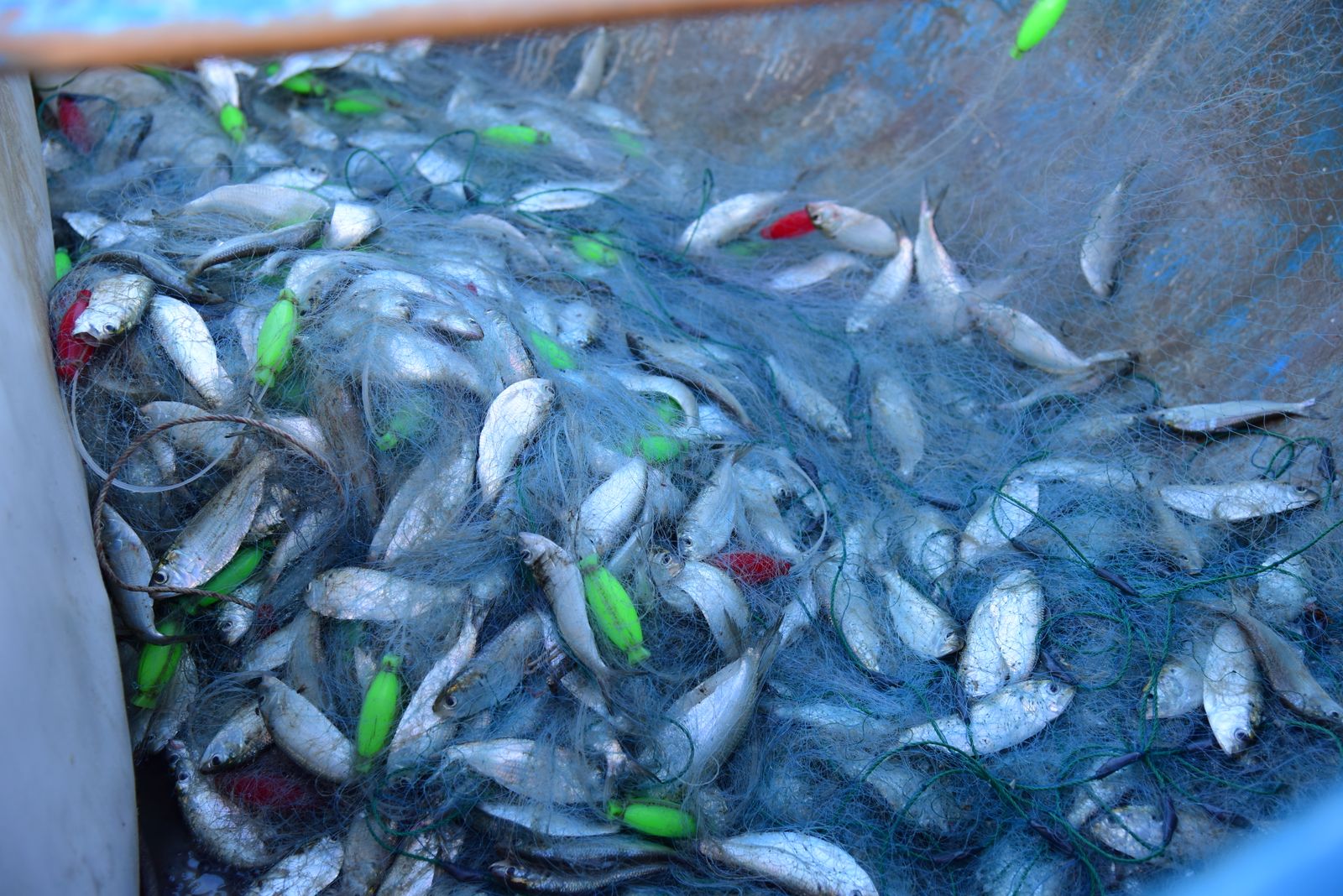
In December 1938 a Museum Curator Sifting Through a Fisherman’s Catch in a South African Port Lifted Out a Heavy Blue Fish That Science Had Known Only from Fossils and Presumed Extinct Since the Age of the Dinosaurs
In December 1938, museum curator Marjorie Courtenay-Latimer identified a live coelacanth in a fisherman’s haul at a South African port. The species, which the scientific community had presumed extinct for 66 million years since the Cretaceous period, represents one of the most significant zoological rediscoveries in history, according to records from the East London Museum.
How the 1938 Discovery in South Africa Challenged Paleontology
The event occurred in the port of East London, South Africa, when a local fisherman brought a strange, heavy blue fish to the attention of Marjorie Courtenay-Latimer, the curator of the East London Museum. According to museum archives, the specimen was part of a larger catch of sharks and rays. Courtenay-Latimer recognized that the fish possessed characteristics unlike any known living species, specifically its thick, limb-like fins.
This discovery was an anomaly because the coelacanth was known to science only through the fossil record. Paleontologists had categorized the group as extinct since the end of the Mesozoic era. The sudden appearance of a living specimen suggested that an entire lineage of “lobe-finned” fish had survived in the deep ocean, undetected by modern biology for millions of years.
The fish, later named Latimeria chalumnae in honor of the curator, provided the first physical evidence that the fossil record could have significant gaps. This event introduced the concept of a “Lazarus taxon”—a species that disappears from the fossil record only to reappear much later in the living world.
“The discovery of the coelacanth is perhaps the greatest zoological discovery of the 20th century, bridging the gap between the prehistoric past and the modern ocean.” — Historical analysis of the East London Museum findings.
The Identification Process: From East London to J.L.B. Smith
Marjorie Courtenay-Latimer did not immediately know the fish was a coelacanth, but she recognized its uniqueness. She contacted Dr. J.L.B. Smith, a professor of ichthyology at Rhodes University in Grahamstown. According to Smith’s own records, he was initially skeptical but became convinced of the fish’s identity after examining the specimen’s anatomy.
The identification relied on several distinct morphological features:
- Lobe-fins: Unlike the ray-fins of most modern fish, the coelacanth possesses fleshy, paired fins that move in a pattern similar to a walking motion.
- The Notochord: The fish lacks a true bony vertebral column, possessing instead a persistent notochord, a primitive structural feature found in early chordates.
- The Intracranial Joint: A hinge in the skull that allows the fish to lift the upper part of its head, enhancing its ability to open its mouth wide for prey.
Smith spent the following decade searching for more specimens to prove the species still existed in the wild. This pursuit led to the 1952 discovery of a population in the Comoros Islands, confirming that the 1938 find was not an isolated fluke but evidence of a surviving population.
Why the Coelacanth is Considered an Evolutionary Link
The significance of the coelacanth extends beyond the shock of its rediscovery. Scientists view the lobe-finned fish as a critical piece of the puzzle regarding how vertebrates transitioned from water to land. According to evolutionary biology texts, the structure of the coelacanth’s fins is homologous to the limbs of tetrapods (four-limbed vertebrates).
While the coelacanth is not the direct ancestor of land animals, it belongs to the Sarcopterygii class. This group shares a common ancestor with the lungfish and the first amphibians. The presence of a skeletal structure within the fin—including bones that correspond to the humerus, radius, and ulna—demonstrates a biological blueprint that eventually allowed animals to support their weight on land.
Key Anatomical Comparisons
| Feature | Ray-Finned Fish (Actinopterygii) | Coelacanth (Sarcopterygii) | Early Tetrapods |
|---|---|---|---|
| Fin Structure | Thin membranes supported by bony rays | Fleshy lobes with internal skeletal support | True limbs with digits |
| Skeletal Support | No internal bone in fin | Bony elements similar to limbs | Robust bone structure for land movement |
| Skull Anatomy | Generally rigid | Possesses intracranial joint | Modified for land-based respiration/feeding |
The Mystery of Survival: How a “Living Fossil” Stayed Hidden
The question of how a large, blue fish could remain unknown to science for 66 million years is answered by its habitat. Coelacanths are deep-water specialists. According to marine biology research, they typically reside in volcanic caves and steep slopes at depths between 100 and 700 meters.
Their environment provides several advantages for avoiding detection:
- Depth: They live below the range of traditional coastal fishing nets used in the early 20th century.
- Low Metabolism: Their slow movement and energy-efficient biology allow them to survive in cold, low-oxygen environments.
- Specialized Diet: They hunt in the dark, using an electro-receptive organ in their snout to find prey, meaning they do not venture into shallow, well-lit waters where they would be easily spotted.
The 1938 specimen was an outlier—a fish that had drifted into shallower waters, allowing it to be caught in a fisherman’s net. This suggests that the species did not “return” from extinction but simply existed in a niche that humans had not yet explored.
Correcting the “Living Fossil” Misconception
The term “living fossil” is frequently applied to the coelacanth, but biologists argue this is an oversimplification. While the coelacanth’s general body plan has remained similar to its fossil ancestors, it has not remained frozen in time. According to genetic sequencing and morphological studies, the species has continued to evolve, albeit at a slower rate than many other vertebrates.
The “living fossil” label suggests a lack of change, but the coelacanth has adapted specifically to the deep-sea environment. Its physiological changes, such as the development of the rostral organ for electroreception, are modern adaptations. The stability of its form is a result of “stabilizing selection,” where the environment remains constant enough that major structural changes are not advantageous.
Related explainer on the concept of Lazarus taxa in paleontology may provide further context on other species that have “returned” from extinction.
Impact on Modern Marine Science and Conservation
The rediscovery of the coelacanth shifted the way scientists approach the fossil record. It proved that the absence of evidence is not evidence of absence. This realization has encouraged deep-sea exploration and the search for other presumed-extinct species in the unexplored depths of the ocean.
Today, the coelacanth is protected under international law. Because they have extremely slow reproductive cycles—with some estimates suggesting a gestation period of up to five years—they are highly vulnerable to overfishing and habitat destruction. Conservation efforts now focus on protecting the seamounts and caves in the Comoros Islands and Indonesia, where a second species, Latimeria menadoensis, was discovered in 1997.
Timeline of Coelacanth Rediscovery and Study
- Pre-1938: Coelacanths known only through fossils dating back to the Devonian period.
- December 1938: Marjorie Courtenay-Latimer finds the first living specimen in East London, South Africa.
- 1939: J.L.B. Smith formally identifies the specimen as a coelacanth.
- 1952: The first intentional capture of a live coelacanth occurs in the Comoros Islands.
- 1997: A second species of coelacanth is discovered in Indonesia.
- Present: Genetic mapping reveals the slow evolutionary rate and deep-sea adaptations of the species.
Frequently Asked Questions
Is the coelacanth actually a dinosaur?
No. The coelacanth is a fish, not a dinosaur. However, it existed during the time of the dinosaurs and was previously thought to have gone extinct at the same time as the non-avian dinosaurs, approximately 66 million years ago.
Why was it called a “living fossil”?
The term was used because the living fish closely resembled fossils from millions of years ago. While it has evolved, its basic anatomical structure has remained remarkably stable compared to other fish lineages.
Where can coelacanths be found today?
Living populations are found in the deep waters off the coast of East Africa, specifically around the Comoros Islands, and in the waters of Indonesia.
How does a coelacanth swim?
Coelacanths use their lobe-fins in a synchronized, alternating motion that mimics the walking gait of a land animal, allowing them to maneuver precisely in deep-sea currents.
Who was Marjorie Courtenay-Latimer?
She was the curator of the East London Museum in South Africa who first recognized the importance of the blue fish caught in December 1938 and ensured it was preserved for scientific study.
The legacy of the 1938 find continues to influence marine biology, reminding researchers that the Earth’s oceans still hold secrets that can rewrite the history of life on land. The transition from a fisherman’s catch to a global scientific sensation underscores the importance of curiosity and the preservation of biological specimens.
