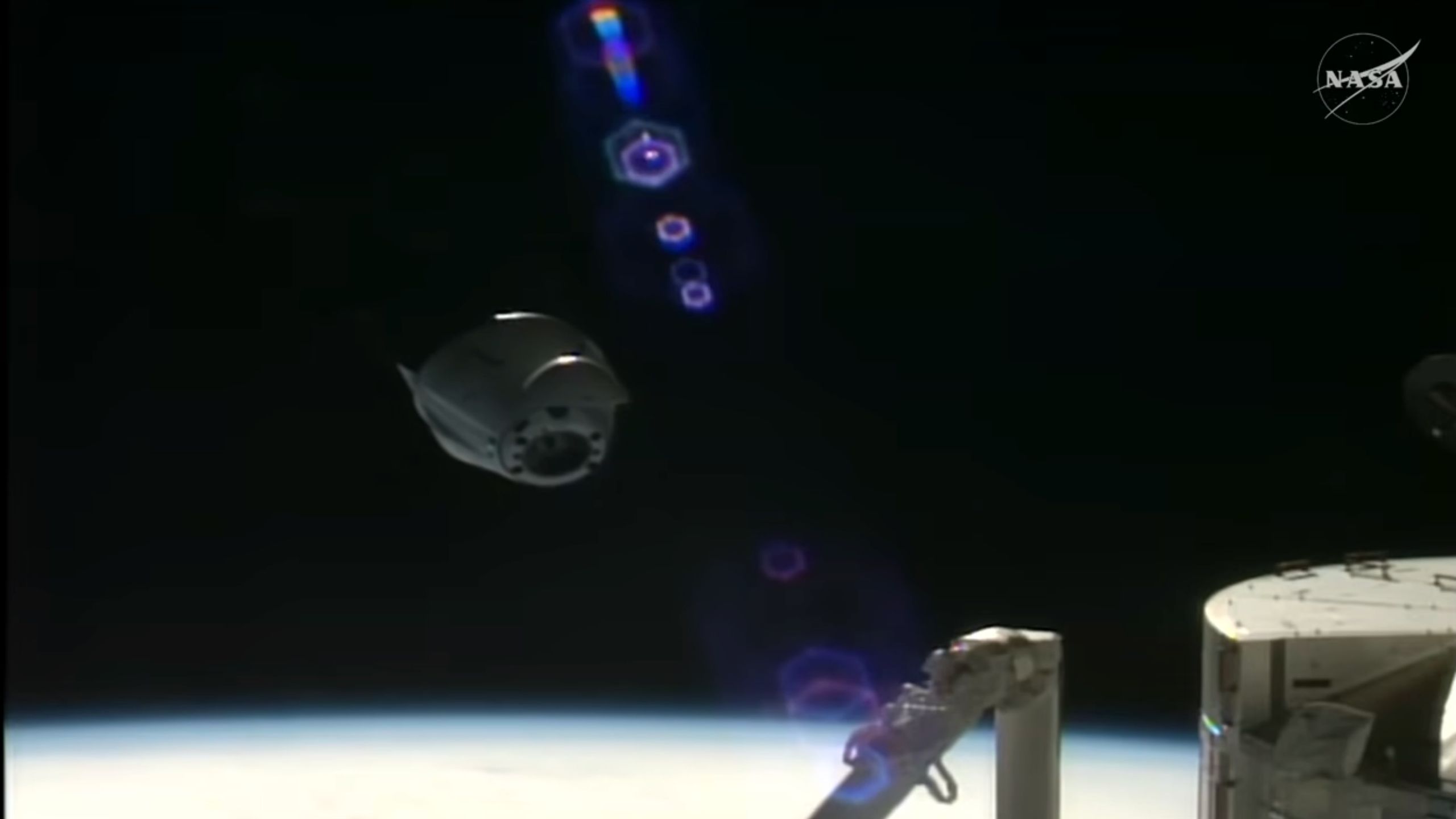
Home again! SpaceX Dragon cargo capsule splashes down off California coast – Space
A SpaceX Dragon cargo capsule successfully splashed down off the California coast, marking the completion of the CRS-34 resupply mission. According to NASA and Phys.org, the capsule returned to Earth carrying bioprinted tissue and cancer treatment research conducted aboard the International Space Station (ISS). The recovery marks the end of a mission that began with a launch from Florida.
What was inside the SpaceX CRS-34 Dragon capsule?
The Dragon capsule returned to Earth carrying a diverse array of scientific samples and hardware. According to reports from Tech Times, a primary focus of the return cargo included bioprinted tissue and specific research related to cancer treatments. These experiments utilize the unique environment of the International Space Station to achieve results that are often impossible under the influence of Earth’s gravity.
Phys.org reports that the CRS-34 vehicle was “packed with space station science,” indicating that the capsule served as a critical transport for biological samples that required timely return to terrestrial laboratories. The return of these samples allows researchers to analyze how cellular structures and pharmaceutical compounds behave after prolonged exposure to microgravity.
The bioprinting research is particularly significant. In microgravity, scientists can print complex 3D biological structures without the need for the scaffolding typically required on Earth to prevent the tissue from collapsing under its own weight. This process allows for the creation of more accurate models of human organs and tissues, which NASA and its partners use to study disease progression and test new drug therapies.
- Bioprinted Tissue: 3D-printed biological structures created in microgravity to better mimic human organs.
- Cancer Research: Studies on tumor growth and treatment efficacy in a weightless environment.
- Station Science: Various biological and physical samples collected during the mission’s stay at the ISS.
How did the Dragon cargo capsule return from the ISS?
The return process began with the Dragon capsule’s departure from the International Space Station. According to NASA, the vehicle undocked from the station to begin its journey back to Earth. This phase involves a series of precise engine burns to exit the station’s orbit and set a trajectory toward the Pacific Ocean.
Once the capsule reached the correct entry corridor, it hit the Earth’s atmosphere at high speeds. The vehicle’s heat shield protected the cargo and the structure of the capsule from the extreme temperatures generated by atmospheric friction. As the capsule slowed down, a sequence of parachutes deployed to further reduce its velocity, ensuring a controlled descent.
The final stage was the splashdown off the coast of California. This location is a standard recovery zone for SpaceX cargo missions, allowing recovery teams to quickly locate and retrieve the capsule using specialized ships. According to Florida Today, the journey home followed a successful launch and docking sequence that began in Florida, completing the full loop of the resupply mission.
The recovery process involves securing the capsule in the water and hoisting it onto a recovery vessel. Once on board, technicians carefully unload the science experiments to maintain the integrity of the biological samples, some of which may require strict temperature controls or immediate transport to specialized facilities.
Why does NASA prioritize bioprinting and cancer research in space?
The decision to conduct cancer and bioprinting research aboard the ISS is driven by the physical differences between Earth and space. According to Tech Times, the absence of strong gravity allows for a more natural growth pattern for cells. On Earth, gravity forces cells to flatten or clump, which can distort the results of medical research.
In the microgravity of the ISS, cells can grow in three dimensions more freely. This allows scientists to create “organoids”—miniature versions of organs—that more closely resemble the actual architecture of human tissue. These organoids are used to test how cancer cells respond to different chemotherapy drugs, providing data that can lead to more effective, personalized treatment plans for patients on Earth.
NASA’s partnership with SpaceX through the Commercial Resupply Services (CRS) program ensures that these high-value experiments can be sent to and returned from the station regularly. The CRS-34 mission is part of a larger strategy to turn the ISS into a floating laboratory that accelerates medical breakthroughs. By removing the variable of gravity, researchers can isolate the biological mechanisms of disease more effectively.
The return of the CRS-34 capsule highlights the importance of the “return trip” in space science. While sending supplies up is critical, the ability to bring biological samples back to Earth is where the most significant medical data is gathered.
The timeline of the SpaceX CRS-34 mission
The CRS-34 mission followed a structured sequence of events, moving from the launch pad in Florida to the waters off California. The following table outlines the primary phases of the mission based on reports from NASA, Florida Today, and Phys.org.

| Mission Phase | Location/Event | Key Objective |
|---|---|---|
| Launch | Florida | Transport supplies and science experiments to the ISS. |
| Docking | International Space Station | Transfer cargo to crew and begin microgravity experiments. |
| Departure | ISS Orbit | Undock and begin the deorbit sequence. |
| Reentry | Earth’s Atmosphere | Utilize heat shield to survive atmospheric friction. |
| Splashdown | California Coast | Safe recovery of the capsule and scientific cargo. |
The mission began with a launch from Florida, as noted by Florida Today. After the Dragon capsule docked with the ISS, the crew spent several days or weeks transferring supplies and conducting the bioprinting and cancer research mentioned by Tech Times. The mission concluded with the carefully timed departure and subsequent splashdown in the Pacific.
The role of the Commercial Resupply Services (CRS) program
The CRS-34 mission is a component of NASA’s broader Commercial Resupply Services program. This program represents a shift in how the U.S. government handles space logistics. Instead of owning and operating every vehicle, NASA contracts private companies like SpaceX to provide transportation for cargo and crew.
This model reduces costs and encourages innovation in spacecraft design. The Dragon capsule is uniquely capable among current cargo vehicles because it can return significant amounts of cargo to Earth. Other cargo vehicles, such as the Russian Progress, are designed to burn up in the atmosphere upon reentry. The ability to bring science back—as seen in the CRS-34 mission—makes the Dragon indispensable for biological and medical research.
The logistics of the CRS program involve a complex coordination between SpaceX’s launch facilities in Florida, the mission control centers, and the recovery teams stationed off the coast of California. Each mission serves as a test of the reliability of the Dragon hardware and the precision of the reentry trajectories.
For more information on how these partnerships work, readers may find a related explainer on commercial space contracts useful to understand the economic shift in orbital logistics.
Common misconceptions about space cargo returns
A frequent misunderstanding regarding cargo missions is that the capsule simply “falls” back to Earth. In reality, the process is a highly controlled aerodynamic maneuver. According to NASA, the capsule must hit the atmosphere at a very specific angle. If the angle is too steep, the capsule will experience excessive G-forces and heat; if it is too shallow, it could bounce off the atmosphere back into space.
Another misconception is that the “splashdown” is the most dangerous part of the journey. While the impact with the water requires careful management, the most critical phase is the reentry period. The heat shield must withstand temperatures that would melt most metals, protecting the bioprinted tissues and cancer research samples inside. If the heat shield fails, the scientific data is lost instantly.
Finally, some believe that these missions only carry “food and water.” While resupply missions do provide essential life support, the CRS-34 mission proves that the primary value of these flights is often the scientific data. The “cargo” is not just supplies going up, but knowledge coming down.
Comparing the impact of microgravity on medical research
To understand why the cargo on CRS-34 is valuable, it helps to contrast how research is conducted on Earth versus the ISS. On Earth, the 3D printing of organs is limited by the “sagging” effect of gravity. To prevent this, scientists use hydrogels or synthetic scaffolds to hold the cells in place. However, these scaffolds can interfere with the natural growth of the tissue and can be difficult to remove without damaging the sample.
In the microgravity environment used during the CRS-34 mission, these scaffolds are largely unnecessary. Cells can be positioned in 3D space and allowed to form connections naturally. This results in tissue that is structurally more similar to what is found in the human body. When these samples return to Earth via the Dragon capsule, they provide a “blueprint” that researchers can use to improve bioprinting techniques on the ground.
Similarly, cancer research in space allows for the study of “cell signaling” without the interference of gravity-induced stress. This provides a clearer picture of how cancer cells communicate and migrate, which is essential for developing drugs that can stop metastasis—the spread of cancer to other parts of the body.
Recovery operations and post-splashdown logistics
Once the Dragon capsule splashes down off the California coast, a race against time begins. According to Phys.org, the science samples are the priority. Many of the biological experiments, including the bioprinted tissues, are sensitive to temperature changes and vibration.
The recovery team uses a specialized crane to lift the capsule from the water onto the deck of a recovery ship. Once secured, a team of scientists and technicians enters the capsule to retrieve the cargo containers. These containers are often kept in “cold stowage” to prevent the samples from degrading during the transition from the vacuum of space to the humid air of the Pacific coast.
From the recovery ship, the samples are transported via secure logistics chains to NASA research centers or university laboratories. The speed of this transfer is critical; any delay could jeopardize months of research conducted on the ISS. The success of the CRS-34 recovery ensures that the data gathered in orbit can be translated into actionable medical research on Earth.
For those interested in the technical side of recovery, a detailed guide on spacecraft recovery procedures provides further context on the equipment used during these operations.
Frequently Asked Questions
What is the SpaceX CRS-34 mission?
CRS-34 is a Commercial Resupply Services mission conducted by SpaceX for NASA. Its purpose was to deliver supplies to the International Space Station and return scientific research, including bioprinted tissues and cancer studies, back to Earth.
Where exactly did the Dragon capsule land?
The capsule splashed down in the Pacific Ocean off the coast of California, where it was recovered by a specialized SpaceX and NASA retrieval team.
Why is bioprinting done in space?
Bioprinting is performed in microgravity because it allows biological tissues to be printed in 3D without collapsing under their own weight, removing the need for artificial scaffolds used on Earth.
How does the capsule survive reentry?
The Dragon capsule uses a high-performance heat shield that protects the interior from the extreme heat generated by atmospheric friction during its descent from orbit.
Who manages the recovery of the cargo?
The recovery is a joint effort between SpaceX, which provides the vehicle and recovery ships, and NASA, which manages the scientific cargo and the overall mission objectives.
The completion of the CRS-34 mission underscores the continuing utility of the International Space Station as a hub for medical innovation. By leveraging the capabilities of the SpaceX Dragon, NASA continues to bridge the gap between orbital experimentation and terrestrial medical application, turning the void of space into a tool for saving lives on Earth.
