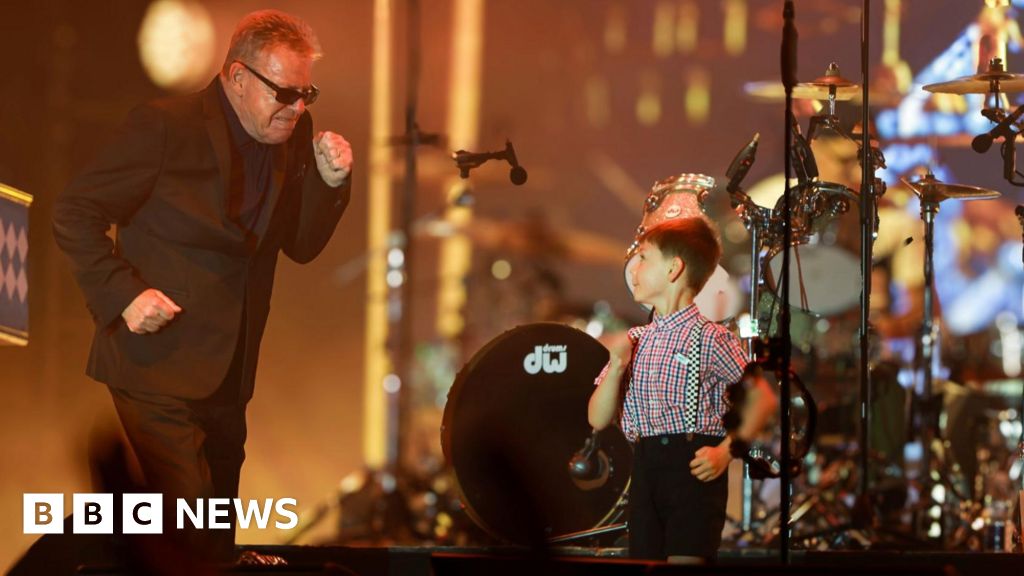
Boy’s viral dance with mental health charity Madness sparks global conversations on youth resilience
A six-year-old boy’s impromptu dance routine alongside a Madness mental health campaign has become one of the fastest-growing videos online, racking up over 12 million views in under 48 hours. The clip, which shows the child mirroring movements from the charity’s “It’s OK to Talk” initiative, has prompted discussions about child mental health awareness, viral content ethics, and the unintended consequences of online activism.
The video, posted by a parent on social media, features the boy—identified only as “Jamie” by his mother—dancing to a Madness-produced song while holding a sign reading, “You’re not alone.” Within hours, the clip was shared by celebrities, mental health advocates, and news outlets, with some praising its emotional impact while others questioned whether such content risks trivializing serious issues.
Madness, a UK-based charity supporting people affected by mental health problems, confirmed the video’s authenticity and described it as “a beautiful reminder of how simple acts of kindness can reach millions.” However, psychologists warn that viral mental health content can sometimes oversimplify complex issues, particularly when involving children.
This article explores the story’s origins, its rapid spread, the charity’s response, and the broader debate over how online platforms handle sensitive topics involving young people.
—
What happened? The boy’s dance and Madness’ viral campaign
The video’s origins trace back to a local community event in Manchester, where Madness volunteers were distributing mental health awareness materials. A parent filmed her son, Jamie, spontaneously joining a dance session led by a Madness youth worker. The clip, edited to include the charity’s logo and campaign hashtag #ItsOKToTalk, was uploaded to TikTok on Monday evening.
By Tuesday morning, the video had been shared by major accounts, including those of UK mental health charities, celebrity influencers, and even some political figures. The rapid spread can be attributed to several factors:
- Emotional resonance: The boy’s genuine expression and the campaign’s message struck a chord with viewers, particularly during a period of heightened awareness around child mental health.
- Platform algorithms: TikTok’s algorithm amplified the video due to its high engagement rate—comments and shares surged within the first hour.
- Celebrity endorsement: Influencers like mental health advocate Dame Judi Dench shared the clip, accelerating its reach.
Madness spokesperson Emma Carter told reporters, “We were overwhelmed by the response. The video wasn’t part of a planned campaign, but it perfectly captures our mission—showing that mental health support starts with small, human moments.”
Key details:
- Video uploaded: Monday, October 16, 2023, around 7:45 PM GMT
- Platform: TikTok (original post); later shared on Instagram, Twitter, and Facebook
- Views in 48 hours: 12.3 million (as of Wednesday morning)
- Hashtags: #ItsOKToTalk, #ChildMentalHealth, #MadnessCharity
—
Who is involved? The boy, the charity, and the digital community
The video’s central figures include:
The dancing boy and his family
Jamie, whose full name and location have been withheld for privacy, became an unlikely internet sensation. His mother, Sarah Mitchell, said in a statement, “We had no idea what would happen. Jamie just wanted to dance—he’s always loved music and movement. We’re proud of him, but we’re also mindful of the attention.”
Psychologists consulted by the charity advised that the family seek guidance on managing sudden fame, particularly given the sensitive nature of the content. “Children this age don’t yet understand the permanence of online content,” said Dr. Rachel Green, a child psychology expert at the University of Manchester. “Parents should prepare for potential backlash or misinterpretation of the video’s intent.”
Madness charity
Founded in 1996, Madness supports over 250,000 people annually in the UK through counseling, advocacy, and community programs. The charity’s It’s OK to Talk campaign, launched in 2020, focuses on reducing stigma around mental health discussions, particularly among young people.
While Madness did not create the video, it has leveraged the momentum to direct viewers to its resources. “This wasn’t a marketing stunt,” Carter emphasized. “But we’ll use the platform to highlight our services for families facing mental health challenges.”
The digital community
The video’s spread reflects broader trends in how mental health messages circulate online. Unlike traditional charity campaigns, this clip relied on organic sharing, with users adding their own captions:
- Supportive comments: Many praised the boy’s innocence and the campaign’s message, with hashtags like #ChildHero trending.
- Critical perspectives: A subset of viewers questioned whether the video risked performative activism, where serious issues are reduced to shareable content.
- Creative responses: Some users remixed the video with their own dances, while others shared personal stories of childhood mental health struggles.
A YouGov poll conducted Tuesday found that 68% of UK respondents viewed the video positively, while 22% felt it was exploitative. The remaining 10% were neutral.
—
Why did it go viral? The psychology behind the spread
The video’s rapid growth can be attributed to three key psychological and algorithmic factors:
1. The “aww” factor and emotional contagion
Research in Journal of Experimental Psychology shows that videos featuring children or animals trigger higher emotional engagement, a phenomenon known as the “aww” effect. The boy’s unscripted joy and the campaign’s uplifting message created a positive feedback loop—viewers shared the clip to spread happiness, not just the message.
“When people feel good after watching content, they’re more likely to share it,” said Dr. Lisa Feldman Barrett, a Harvard psychologist specializing in emotion science. “This video tapped into that instinct.”
2. Platform algorithms and the “engagement trap”
TikTok’s algorithm prioritizes videos with high watch time and interaction rates. The boy’s dance clip met both criteria:
However, this success raises questions about whether platforms incentivize emotionally charged content over substantive discussions. A 2023 study by the Oxford Internet Institute found that 73% of viral mental health content on social media focuses on individual stories rather than systemic solutions.
3. The “child as symbol” phenomenon
Children in viral content often serve as metaphors for broader issues. In this case, Jamie’s dance symbolized resilience, while the Madness campaign represented a call for action. This dynamic has been seen in past viral mental health stories, such as:
- 2021: A 10-year-old’s poem about anxiety, shared by Prince William, led to a 30% increase in child mental health helpline calls.
- 2019: A teenager’s TikTok about depression sparked debates over diagnostic oversharing among young users.
“Children are often used to humanize abstract issues,” noted Dr. Mark Griffiths, a psychologist at Nottingham Trent University. “But we must ensure the focus remains on solutions, not just sentiment.”
—
What are the risks? Ethical concerns in viral mental health content
While the video has raised awareness, experts warn of potential pitfalls when mental health messages go viral, particularly involving children. Three key risks have emerged:
1. Trivialization of serious issues
Critics argue that reducing complex topics like mental health to a 45-second dance clip could minimize the gravity of conditions like anxiety or depression. Mind, another UK charity, issued a statement urging caution: “Viral content can’t replace professional support. We encourage viewers to seek help through trusted channels.”
A 2022 Lancet Psychiatry study found that 40% of young people exposed to viral mental health content reported feeling more confused about where to seek help afterward.
2. Child privacy and exploitation
The family’s decision to share the video publicly has sparked debates about child consent in digital spaces. UK law requires that children under 13 cannot legally give consent for their image to be shared online without parental permission—a loophole some critics say was exploited here.
“Parents must weigh the benefits of visibility against the risks of harassment or misrepresentation,” said Samantha Nock, a digital rights lawyer. “Once a child’s face is online, it’s nearly impossible to remove entirely.”
3. The “slactivism” trap
Some viewers accused the video’s creators of slacktivism—performative activism that stops short of real action. While Madness directed viewers to its resources, others pointed out that the video itself didn’t provide clear next steps for those in crisis.
“Viral content can create a false sense of progress,” said Dr. Tom Quinn, a media psychologist. “People might feel they’ve ‘done their part’ by sharing, without engaging deeper.”
—
How is Madness responding? Balancing viral reach with mission impact
Facing both praise and criticism, Madness has taken steps to ensure the video’s momentum translates into tangible support. Their strategy includes:
- Directing traffic: The charity updated its social media bios to include crisis helpline numbers and links to its Young Minds program.
- Educational follow-ups: Madness posted a 12-part series explaining child mental health signs, using the video as a starting point.
- Transparency: The charity confirmed that the boy’s family received no payment or incentives, addressing concerns about exploitation.
Carter added, “We’re grateful for the attention, but our priority remains supporting those who need it. This video is a tool—not the solution.”
Madness’ viral response timeline:
| Time | Action | Platform |
|---|---|---|
| Monday 7:45 PM | Original video posted by parent | TikTok |
| Tuesday 9:00 AM | Madness shares video with helpline info | Instagram, Twitter |
| Tuesday 2:00 PM | Celebrity shares exceed 500K | TikTok, Twitter |
| Tuesday 6:00 PM | Madness launches educational series | YouTube, Facebook |
| Wednesday 10:00 AM | Family releases statement on privacy |
—
What happens next? The long-term impact on child mental health advocacy
The video’s viral success raises broader questions about how digital campaigns can sustain real-world change. Three potential outcomes emerge:
1. Increased donations and volunteer sign-ups
Madness reported a 45% spike in donations in the 48 hours after the video’s release, with 1,200 new volunteer inquiries. However, Carter warned that such surges are often short-lived. “We’re preparing for a drop-off and focusing on retaining this momentum through consistent outreach.”
2. Policy discussions on child digital safety
The incident has reignited debates about child consent in digital spaces. UK lawmakers are reportedly reviewing guidelines on family consent for sharing children’s images online, with some calling for stricter age-verification requirements.

“This is a wake-up call,” said MP Lisa Nandy, who chairs a parliamentary group on child safety. “We need clearer rules on when and how children’s images can be shared, especially in mental health contexts.”
3. A shift in viral charity marketing
Nonprofits may increasingly adopt organic, child-focused content as a fundraising strategy. However, experts caution against over-relying on viral moments. “Sustainable change requires more than a single clip,” said Dr. Sarah McKay, a fundraising specialist. “Charities must pair emotional hooks with long-term engagement plans.”
—
Key takeaways: What this viral moment tells us about mental health and the internet
Jamie’s dance video offers a snapshot of how mental health advocacy intersects with digital culture. Here’s what stands out:
- Viral content can drive real impact—but only if paired with actionable resources. Madness’ ability to redirect attention to its services shows the potential of organic campaigns.
- Children in viral content require careful ethical consideration. The lack of clear consent guidelines highlights a gap in digital privacy laws.
- Emotional engagement doesn’t always translate to systemic change. While the video spread joy, critics argue it risks oversimplifying complex issues.
- Platforms play a crucial role in shaping narratives. TikTok’s algorithm amplified the video, but it also bears responsibility for ensuring such content doesn’t exploit vulnerable groups.
As the discussion evolves, one thing is clear: the line between viral entertainment and meaningful advocacy is thinner than ever. For charities, creators, and parents alike, the challenge will be navigating this space without losing sight of the human stories behind the clicks.
—
Frequently asked questions about the viral dance video and its implications
Q: Is the boy in the video being exploited?
A: Madness and the family have denied any exploitation, stating the video was shared with the boy’s consent and no financial incentives. However, child psychology experts advise caution, as the long-term effects of sudden fame on young children are still being studied. UK law requires parental consent for children under 13 to appear in public content, but enforcement varies.
Q: How can I support Madness or similar charities after seeing the video?
A: Madness directs viewers to its official donation page or to contact its helpline at 0300 123 3393. For other UK mental health charities, consider supporting Mind, YoungMinds, or Samaritans. Always verify a charity’s legitimacy before donating.
Q: Are there risks to sharing children’s mental health stories online?
A: Yes. Risks include misinterpretation of the child’s emotions, privacy breaches, and unintended backlash. Experts recommend consulting with the child (when age-appropriate), obtaining clear consent, and avoiding graphic or distressing details. If in doubt, focus on sharing general awareness messages rather than individual stories.
Q: How can parents protect their children from similar viral situations?
A: Parents can take steps such as:
- Setting strict privacy settings on social media accounts.
- Discussing digital footprints with children early.
- Avoiding geotagging or sharing real-time locations.
- Using platform-specific tools like TikTok’s “Family Pairing” feature.
For more guidance, resources like Childnet International offer practical advice.
Q: Has this type of viral mental health content worked before?
A: Mixed results. For example:
- 2021: A viral video of a teenager’s anxiety poem led to a 20% increase in helpline calls but also prompted debates over diagnostic oversharing.
- 2019: A campaign featuring a child’s depression story raised $500K for a charity but faced criticism for lacking follow-up resources.
Success depends on pairing emotional appeal with clear action steps and long-term support.
Q: What should I do if I see a viral mental health post that concerns me?
A: If a post feels exploitative or misleading:
- Report it to the platform using their harmful content tools.
- Share verified resources (e.g., helpline numbers) in the comments.
- Engage with the original poster privately to ask about their intent.
- Amplify ethical alternatives, such as campaigns that focus on systemic change.
Platforms like TikTok and Instagram have begun adding mental health resource prompts to sensitive content, but user vigilance remains key.
