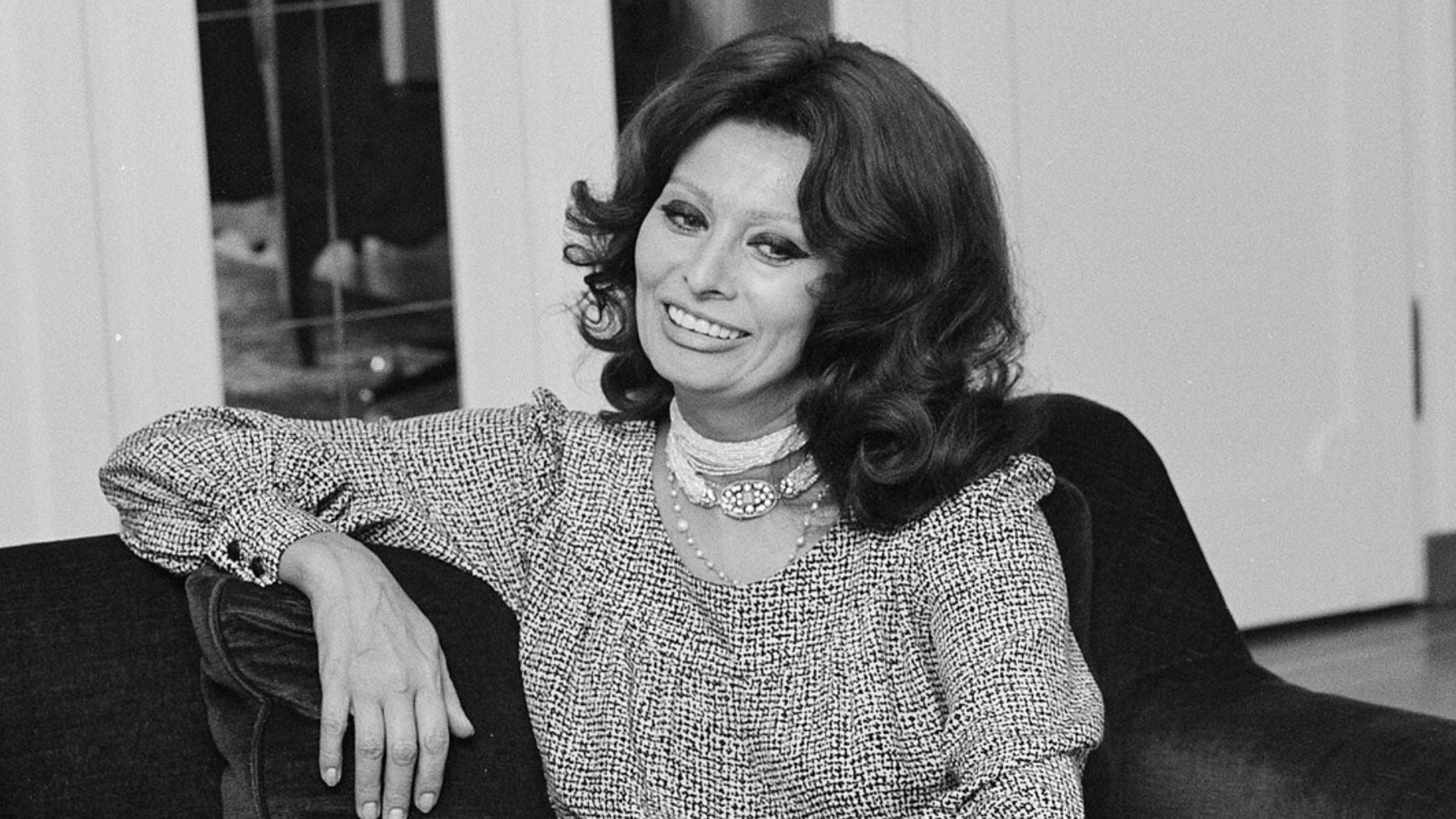
Sophia Loren, the 89-year-old Italian icon whose career has spanned seven decades, has rejected the idea that aging diminishes her relevance in Hollywood or her connection to audiences.
In an interview with local media, Loren dismissed the notion that her age affects her work, stating bluntly, “La vida sigue y no hay un momento en el que piensa…”—a phrase that roughly translates to, “Life goes on, and there’s no moment when I think…”
The remark underscores a defiant stance against ageism in an industry that has long grappled with how to portray older performers. Loren, who began her acting career at 16 and became a global star in films like Two Women (1961) and Yesterday, Today and Tomorrow (1963), has consistently refused to fade into retirement. Her latest comments arrive as she remains active in film and television, proving that her career is far from over.
Why Loren’s Comments Matter in an Age-Obsessed Industry
Loren’s refusal to engage with the “over-the-hill” narrative is particularly notable in an era where Hollywood often sidelines actors past a certain age. While stars like Meryl Streep and Helen Mirren have similarly challenged ageist tropes, Loren’s blunt dismissal of the topic carries extra weight—she’s been a cultural symbol for generations, from her Oscar-winning performance in The Graduate (1967) to her recent roles in The Comfort of Strangers (2016) and The Life Ahead (2016).
Her comments also come as discussions about representation in Hollywood grow louder. Recent studies, including one from the Annenberg Inclusion Initiative, have highlighted how older women are frequently underrepresented in leading roles, with many studios opting for younger casts. Loren’s career, however, defies that trend—she has maintained a steady presence in both European and American cinema, proving that talent and charisma are not bound by age.
A Career That Refuses to Retire
Loren’s trajectory is a masterclass in longevity. After her breakthrough in the 1950s, she became the first actress to win an Oscar for a non-English language film (Two Women), a feat that cemented her as a bridge between European and American cinema. Even as she entered her 70s and 80s, she continued to take on challenging roles, including a dramatic turn in Paolo Sorrentino’s The Young Lady (2015).

Her latest projects, though less frequent, still draw critical acclaim. In 2022, she appeared in House of Gucci, where her performance as the matriarch of the Gucci family added depth to the biopic. The role was a reminder that Loren’s ability to command the screen remains undiminished, regardless of her age.
How Fans and Critics Respond
Loren’s unapologetic approach to aging has resonated with fans and fellow actors alike. On social media, many have praised her for setting an example in an industry that often prioritizes youth. One tweet from a film critic read: “Sophia Loren doesn’t just defy ageism—she makes it look ridiculous. A masterclass in grace under pressure.”
Critics, too, have long admired her ability to evolve with the times. In a 2020 interview with The Guardian, film historian Mark Kermode called her “the ultimate proof that talent is timeless.” Loren’s latest comments, while brief, reinforce that message—she’s not just enduring in Hollywood; she’s still shaping it.
What’s Next for the Icon?
While Loren hasn’t announced any immediate projects, her history suggests she will continue working as long as she chooses. In past interviews, she has expressed a desire to keep acting, saying she feels no different at 89 than she did at 16. With no signs of slowing down, it’s likely that audiences will see her on screen for years to come.
For now, her message is clear: age is just a number, and in her world, the show isn’t over yet.
