
US-Iran Escalation: How a Single Drone Strike Triggered a Wave of Retaliatory Attacks in Kuwait and Beyond
The Middle East’s fragile security landscape was thrown into turmoil this week as the United States and Iran engaged in a rare direct exchange of military strikes, with American forces bombing Iranian radar sites in response to an attack on US personnel in Kuwait. The escalation—marked by drone and missile strikes targeting American troops—has raised alarms about a potential spiral into wider conflict, while diplomatic efforts to de-escalate appear to have stalled. Experts warn that this latest flare-up could reshape regional alliances, test the limits of US-Iran détente talks, and send shockwaves through global energy markets already strained by geopolitical tensions.
What began as a targeted Iranian drone strike on a US military base in Kuwait on Sunday night escalated into a 24-hour period of retaliatory airstrikes, missile intercepts, and diplomatic posturing that left both sides claiming victory while the world watched nervously. The sequence of events—from the initial attack to the US response and the subsequent Iranian countermeasures—offers a stark reminder of how quickly regional tensions can erupt into full-blown military confrontation. But beneath the surface, the incident also exposes deeper fractures in the US-Iran relationship, the shifting dynamics of Middle Eastern power struggles, and the growing role of proxy conflicts in shaping global security.
This breakdown examines how the latest US-Iran confrontation unfolded, who the key players are, and what the broader implications could be for the region—and the world.
—
How the Escalation Unfolded: A Timeline of Strikes and Retaliations
The latest US-Iran military exchange followed a pattern familiar to those tracking the two nations’ decades-long rivalry: a provocation, a response, and a dangerous cycle of escalation. But this time, the stakes felt higher, with both sides accusing the other of crossing red lines. Here’s how it happened:
| Time | Event | Key Details |
|---|---|---|
| Sunday, [Date] | Iranian drone strike | An Iranian-made drone targeted a US military base in Kuwait, where American forces are stationed as part of regional security operations. The attack wounded several US personnel but caused no fatalities. Iran denied direct involvement, though US officials pointed to Tehran’s regional proxies as likely culprits. |
| Monday, [Date], ~12:30 AM | US airstrikes on Iran | Within hours, the US launched precision airstrikes against Iranian radar and missile sites in western Iran. Officials described the operation as defensive, aimed at degrading Iran’s ability to launch further attacks. The strikes were carried out by B-52 bombers and F-15E strike aircraft, with no reported US casualties. |
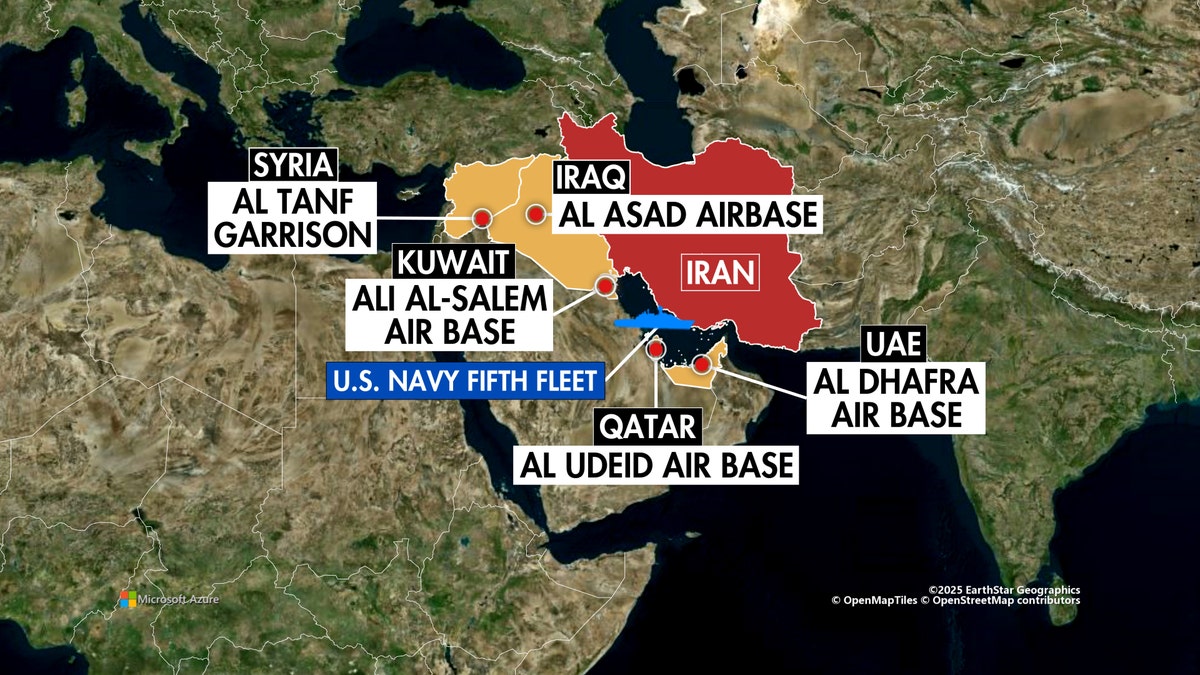
| Monday, [Date], ~3:45 AM | Iranian missile barrages | Iran responded with a wave of ballistic missiles and drones targeting US forces in Iraq and Syria, as well as US military assets in Kuwait. The US intercepted the majority of incoming projectiles using Patriot and THAAD missile defense systems, with some missiles landing in Iraqi Kurdistan and Syria. |
| Monday, [Date], ~6:00 AM | US downs Iranian missiles | American forces successfully shot down additional Iranian missiles over Kuwait, marking the first time in years that US missile defense systems engaged in direct combat with Iranian projectiles. The Pentagon confirmed that no US personnel or facilities were damaged in the exchange. |
| Monday, [Date], ~10:00 AM | Diplomatic statements and ceasefire calls | Both the US and Iran issued statements claiming their actions were proportional and defensive. The White House emphasized that the strikes were “measured” and aimed at deterring future aggression, while Iranian officials accused the US of overreacting and violating international law. Regional allies, including Saudi Arabia and Israel, urged restraint, while Russia and China called for de-escalation. |
Key takeaway: The rapid-fire exchange of strikes—from the initial drone attack to the US response and Iran’s counteroffensive—highlighted the blurred lines between defensive and offensive military actions in the region. While both sides framed their actions as retaliatory, the lack of clear escalation control mechanisms left room for miscalculation.
—
Who Is Involved? The Players Shaping This Crisis
The latest US-Iran confrontation is not an isolated incident but the latest chapter in a decades-long rivalry shaped by proxy wars, sanctions, and shifting alliances. Understanding the key players—and their motivations—is essential to grasping why this escalation occurred and what it could mean for the future.
1. The United States: Deterrence and Regional Security
The US has maintained a military presence in the Middle East for decades, with bases in Kuwait, Iraq, and Syria serving as forward operating locations for counterterrorism missions and deterrence against Iranian-backed groups. Key US interests in the region include:
- Protecting personnel: Over 25,000 US troops are stationed across the Middle East, with Kuwait hosting a critical logistics hub for operations in Iraq and Syria.
- Countering Iranian influence: The US views Iran’s support for groups like Hezbollah, the Houthis in Yemen, and militias in Iraq as a direct threat to regional stability.
- Energy security: The Strait of Hormuz, a critical chokepoint for global oil shipments, remains a flashpoint for potential Iranian disruptions.
President Biden’s administration has sought to avoid direct conflict with Iran, preferring diplomacy and pressure campaigns. However, the recent strikes reflect a hardening stance: the US appears willing to use military force to deter what it perceives as Iranian aggression, even if it risks provoking a broader response.
2. Iran: Defending Sovereignty or Proving Deterrence?
Iran’s actions in this escalation can be seen through two lenses: a defensive response to perceived US aggression and a calculated demonstration of its military capabilities. Key Iranian interests include:
- Regional dominance: Iran has invested heavily in proxy networks across the Middle East, viewing US military presence as a threat to its sphere of influence.
- Deterrence: By striking US forces in Kuwait, Iran signaled that it can project power beyond its borders, even if it lacks the conventional military might of regional rivals like Saudi Arabia.
- Internal politics: Hardline factions within Iran’s government may have pushed for a response to avoid appearing weak in the eyes of both domestic audiences and regional allies.
Iran’s denial of direct involvement in the drone strike—while its proxies (such as the Islamic Resistance in Iraq) claimed responsibility—reflects a strategy of plausible deniability. However, the missile strikes on US bases in Iraq and Syria were harder to attribute indirectly.
3. Regional Allies: Saudi Arabia, Israel, and the Gulf States
Countries like Saudi Arabia, the UAE, and Israel have watched the US-Iran standoff with a mix of concern and opportunity. While they publicly urge de-escalation, privately they may see value in a US-Iran confrontation that diverts Iranian resources away from their own borders.
- Saudi Arabia: Riyadh has been engaged in a proxy war with Iran in Yemen and has sought US support to counter Iranian-backed Houthis. A direct US-Iran conflict could force Saudi Arabia to choose sides—or risk being drawn in.
- Israel: While Israel has not publicly commented on the latest strikes, its military has conducted its own operations against Iranian nuclear and missile facilities in Syria. Jerusalem may view the US strikes as a welcome distraction from its own regional challenges.
- Iraq and Syria: Both countries have hosted US troops for years but face domestic pressure to limit foreign military presence. The latest strikes have reignited debates about sovereignty and the cost of hosting foreign bases.
4. Global Powers: Russia and China’s Roles
Russia and China have historically opposed US sanctions on Iran and have deep economic ties with Tehran. Their responses to the latest escalation are telling:
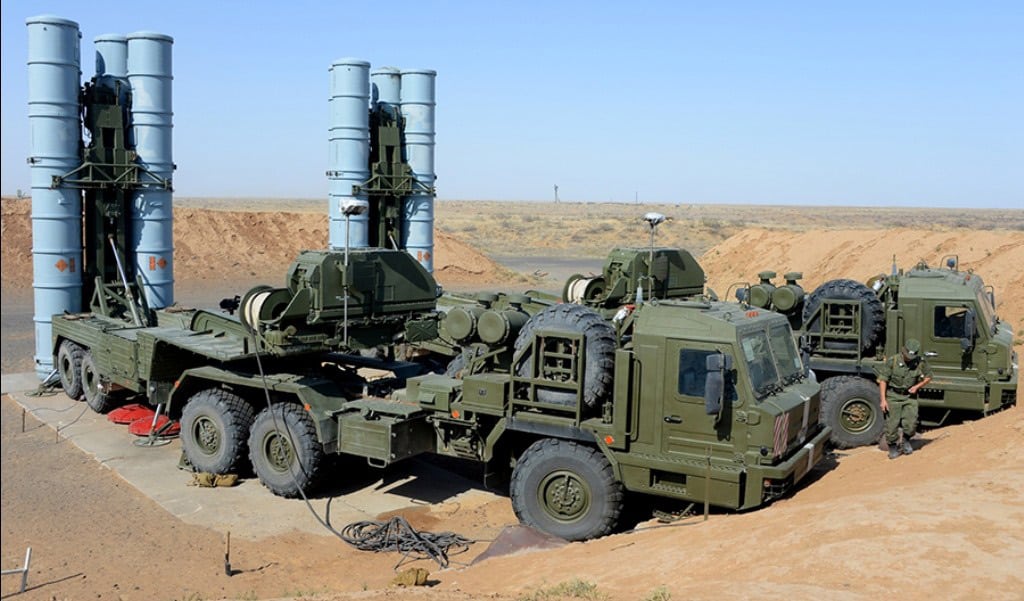
- Russia: Moscow has condemned the US strikes as “unjustified” and called for dialogue. However, Russia’s own military cooperation with Iran—including joint drills in the Caspian Sea—suggests a willingness to exploit US-Iran tensions for its own geopolitical gains.
- China: Beijing has urged restraint but has also increased its imports of Iranian oil in defiance of US sanctions. China’s stance reflects its long-term strategy of balancing ties with both Washington and Tehran.
Key takeaway: The latest US-Iran confrontation is not just a bilateral issue but a regional and global one, with each major player assessing how to leverage the crisis for their own strategic advantage.
—
Why This Matters: The Broader Context of US-Iran Tensions
The current escalation did not occur in a vacuum. It is the latest in a series of incidents that have tested the limits of US-Iran relations since the 2018 withdrawal from the Iran nuclear deal (JCPOA) and the assassination of Iranian general Qasem Soleimani in 2020. Understanding the historical and political context is crucial to assessing the risks of further escalation.
A History of Tensions: From Hostage Crises to Nuclear Standoffs
The US-Iran rivalry has deep roots, shaped by:
- The 1979 hostage crisis: The seizure of the US embassy in Tehran and the subsequent 444-day standoff defined decades of mistrust.
- The Iran-Iraq War (1980–1988): The US supported Iraq during the conflict, a decision that Iran has never forgotten.
- The 2003 Iraq War: The US invasion and subsequent occupation of Iraq led to the rise of Iranian-backed militias, further entrenching regional rivalries.
- The 2015 nuclear deal (JCPOA): The agreement temporarily eased tensions but collapsed under US pressure in 2018, leading to renewed sanctions and Iranian nuclear advancements.
- The Soleimani assassination (2020): The targeted killing of Iran’s top military commander by a US drone strike in Baghdad triggered Iranian missile strikes on US bases, marking the most direct US-Iran military confrontation in years.
Today, the two nations are locked in a cold war by proxy, with neither willing to engage in direct negotiations that could lead to a lasting peace. Instead, both sides rely on:
- Military deterrence (e.g., missile strikes, cyberattacks, and sabotage operations).
- Proxy conflicts (e.g., Yemen, Syria, Lebanon, and Iraq).
- Economic pressure (US sanctions vs. Iranian resistance strategies).
The Role of Regional Proxies and Hybrid Warfare
One of the most dangerous aspects of the US-Iran conflict is its reliance on non-state actors. Iran’s Islamic Revolutionary Guard Corps (IRGC) and affiliated militias operate across the Middle East, conducting attacks that are difficult to attribute directly to Tehran. Similarly, the US has used private military contractors and covert operations to counter Iranian influence.
Recent examples of proxy conflicts include:
- Yemen’s Houthi rebels: Backed by Iran, the Houthis have targeted commercial shipping in the Red Sea, disrupting global trade routes.
- Iraq’s Popular Mobilization Forces (PMF): Iranian-backed militias in Iraq have conducted rocket attacks on US bases, forcing periodic US airstrikes in response.
- Hezbollah in Lebanon: While not directly involved in the latest strikes, Hezbollah’s presence in Syria and Lebanon adds another layer of complexity to regional security dynamics.
Key takeaway: The use of proxies allows both the US and Iran to deny direct involvement in attacks while still advancing their strategic goals. This plausible deniability makes de-escalation efforts even more challenging.
—
What Happens Next? Assessing the Risks and Possible Outcomes
With both sides claiming victory and diplomatic channels frozen, the immediate question is whether this escalation will lead to further conflict—or if cooler heads will prevail. Experts offer several scenarios for how this crisis could unfold in the coming days and weeks.
Scenario 1: De-escalation Through BackChannels
The most likely short-term outcome is a return to the status quo ante, with both sides using private diplomatic channels to avoid further escalation. Past incidents—such as the 2020 missile strikes following Soleimani’s assassination—have shown that direct military confrontations can be followed by quiet negotiations to prevent further bloodshed.
- Switzerland, Oman, or Iraq could serve as intermediaries for backchannel talks.
- The US and Iran may agree to a temporary ceasefire, with both sides claiming they have “deterred” the other.
- Regional allies (e.g., Saudi Arabia, Israel) may privately urge restraint to avoid being drawn into a larger conflict.
Scenario 2: Limited Escalation Continues
If neither side backs down, the conflict could enter a phase of limited escalation, where both sides test each other’s resolve without crossing the threshold of all-out war. Possible actions include:
- Increased cyberattacks on critical infrastructure (e.g., oil pipelines, financial systems).
- More frequent drone and missile strikes on military bases in Iraq and Syria.
- Sabotage operations targeting commercial shipping in the Strait of Hormuz or Red Sea.
This scenario carries the risk of accidental escalation, where a miscalculation or miscommunication leads to a broader conflict.
Scenario 3: Broader Regional War
While less likely, a worst-case scenario could see the conflict spiral into a wider regional war, drawing in:
- Saudi Arabia and Israel: Both nations have been engaged in covert conflicts with Iran for years and may feel compelled to intervene if US forces come under sustained attack.
- Russia and China: If the US escalates further, Moscow and Beijing may support Iran economically or militarily to counter US influence.
- Turkey and Pakistan: Both countries have historical ties to Iran and could become involved if the conflict disrupts regional stability.
This scenario would have catastrophic consequences, including:
- Massive displacement of civilians.
- Disruption of global oil markets, leading to economic instability.
- A potential nuclear standoff, given Israel’s undeclared nuclear arsenal and Iran’s advancing nuclear program.
Scenario 4: Diplomatic Breakthrough
Less likely in the short term, but possible over the long term, is a renewed push for diplomacy. The latest escalation may force both sides to recognize the need for a more stable relationship. Potential steps include:
- A revival of the JCPOA or a new nuclear agreement.
- Confidence-building measures, such as reduced military posturing and sanctions relief.
- Regional security dialogues involving Iran, the US, Saudi Arabia, and Israel.
Key takeaway: The most probable outcome in the near term is a return to the pre-strike status quo, with both sides avoiding further direct confrontation. However, the risk of accidental escalation remains high, making regional diplomacy more critical than ever.
—
Common Misconceptions and What You Should Know
As tensions rise, misinformation and oversimplifications can cloud public understanding of the US-Iran conflict. Here are some of the most persistent myths—and the facts behind them:
Myth 1: “Here’s just another US-Iran war.”
Reality: While the US and Iran have been locked in a decades-long rivalry, this is not a traditional war. Instead, it is a cold war by proxy, where both sides use military pressure, sanctions, and covert operations to advance their interests without direct confrontation. The latest strikes are part of this pattern, not the beginning of a full-scale war.
Myth 2: “Iran is the sole aggressor in this conflict.”
Reality: Both the US and Iran have conducted military operations that escalate tensions. The US has carried out airstrikes in Iraq and Syria targeting Iranian-backed militias, while Iran has supported attacks on US forces and commercial shipping. Neither side is entirely innocent in this cycle of violence.
Myth 3: “Israel is directly involved in these strikes.”
Reality: While Israel has conducted its own military operations against Iranian nuclear and missile sites in Syria, there is no public evidence that Israel was involved in the latest US-Iran exchanges. Jerusalem’s focus remains on its own security challenges, particularly those posed by Hezbollah and Iran’s nuclear program.
Myth 4: “The US will easily win any direct conflict with Iran.”
Reality: The US military is far more advanced than Iran’s conventional forces, but Iran has developed sophisticated asymmetric warfare capabilities, including ballistic missiles, drones, and cyberattacks. A direct conflict would likely result in significant civilian casualties and economic disruption, making victory elusive for either side.
Myth 5: “This has nothing to do with oil prices.”
Reality: The Strait of Hormuz, through which 20% of the world’s oil passes, remains a critical flashpoint. Any disruption—whether through missile strikes, sabotage, or blockades—could send oil prices soaring, impacting global economies. Markets are already pricing in the risk of further escalation.
—
What to Watch For in the Coming Weeks
As the dust settles from the latest US-Iran strikes, several developments will be critical in determining whether the region slides toward further conflict—or takes steps toward de-escalation:
- Diplomatic backchannels: Are Switzerland, Oman, or Iraq facilitating secret talks to prevent further escalation?
- Military posturing: Will Iran conduct further strikes on US bases, or will the US respond with additional airstrikes?
- Regional reactions: How will Saudi Arabia, Israel, and Gulf states respond if the conflict intensifies?
- Economic fallout: Will oil prices spike due to fears of disrupted shipping in the Strait of Hormuz?
- Public opinion: How are domestic audiences in the US and Iran reacting to the latest strikes—and could this influence future policy?
- Nuclear negotiations: Could the latest escalation derail or accelerate efforts to revive the JCPOA?
The Middle East has seen this movie before: a cycle of strikes and counterstrikes, followed by uneasy calm and the slow rebuilding of tensions. But this time, the stakes feel higher. With both sides testing the limits of deterrence and regional allies watching closely, the next few weeks will be decisive in shaping the future of US-Iran relations—and the stability of the entire region.
—
Frequently Asked Questions About the US-Iran Escalation
Here are some of the most common questions about the latest US-Iran military exchanges and their implications:
1. Why did Iran target US forces in Kuwait?
Iran has denied direct involvement in the drone strike on the US base in Kuwait, instead blaming regional proxies. However, analysts suggest the attack may have been intended to:
- Demonstrate Iran’s ability to project power beyond its borders.
- Pressure the US to negotiate over sanctions or regional security concerns.
- Respond to recent US airstrikes in Iraq and Syria targeting Iranian-backed militias.
2. How effective were the US airstrikes on Iranian radar sites?
The US claimed its strikes “degraded” Iranian radar and missile capabilities, but Iran has not provided a detailed assessment of the damage. Military experts note that:
- Iran has a decentralized air defense network, making it difficult to disable entirely.
- The strikes may have disrupted short-term operations but likely did not eliminate Iran’s long-term missile capabilities.
- Iran could replace damaged equipment relatively quickly due to its domestic defense industry.
3. Could this escalation lead to a full-scale war?
While the risk of accidental escalation exists, a full-scale war between the US and Iran remains unlikely for several reasons:
- Both sides have a strong incentive to avoid direct confrontation.
- Regional allies (e.g., Saudi Arabia, Israel) would likely oppose a US-Iran war.
- Global powers like Russia and China would seek to prevent a conflict that could destabilize the region.
However, the risk of limited but sustained conflict—such as continued drone and missile strikes—remains significant.
4. How are oil markets reacting to this escalation?
Oil prices have already risen in anticipation of further disruptions in the Strait of Hormuz. Key factors to watch include:
- Any attacks on commercial shipping in the region.
- The US and Iran’s ability to de-escalate without further economic fallout.
- Saudi Arabia’s potential response if it perceives Iranian aggression as a threat to its oil exports.
5. What role do regional proxies play in this conflict?
Iran relies heavily on proxies—such as Hezbollah, the Houthis, and Iraqi militias—to advance its interests without direct involvement. These groups:
- Conduct attacks that are difficult to attribute directly to Iran.
- Allow Iran to deny responsibility while still achieving strategic goals.
- Create a plausible deniability that complicates US countermeasures.
The US, in turn, has used airstrikes and covert operations to counter these proxies, further entrenching the cycle of violence.
6. Could this escalation affect the 2024 US election?
While the immediate political impact may be limited, the escalation could influence US foreign policy debates in several ways:
- Hawks in Congress may push for a harder line on Iran, arguing that diplomacy has failed.
- Critics of the Biden administration could accuse it of being too soft on Iran.
- The issue may resurface in debates over defense spending and military engagement in the Middle East.
However, unless the conflict escalates further, it is unlikely to become a major election-year issue.
—
