Tokyo Metropolitan University researchers use bubbles to improve inkjet printing
By dispersing ultra-fine bubbles into ink, researchers can control the drying behavior of droplets to mitigate the coffee ring effect without chemical additives.
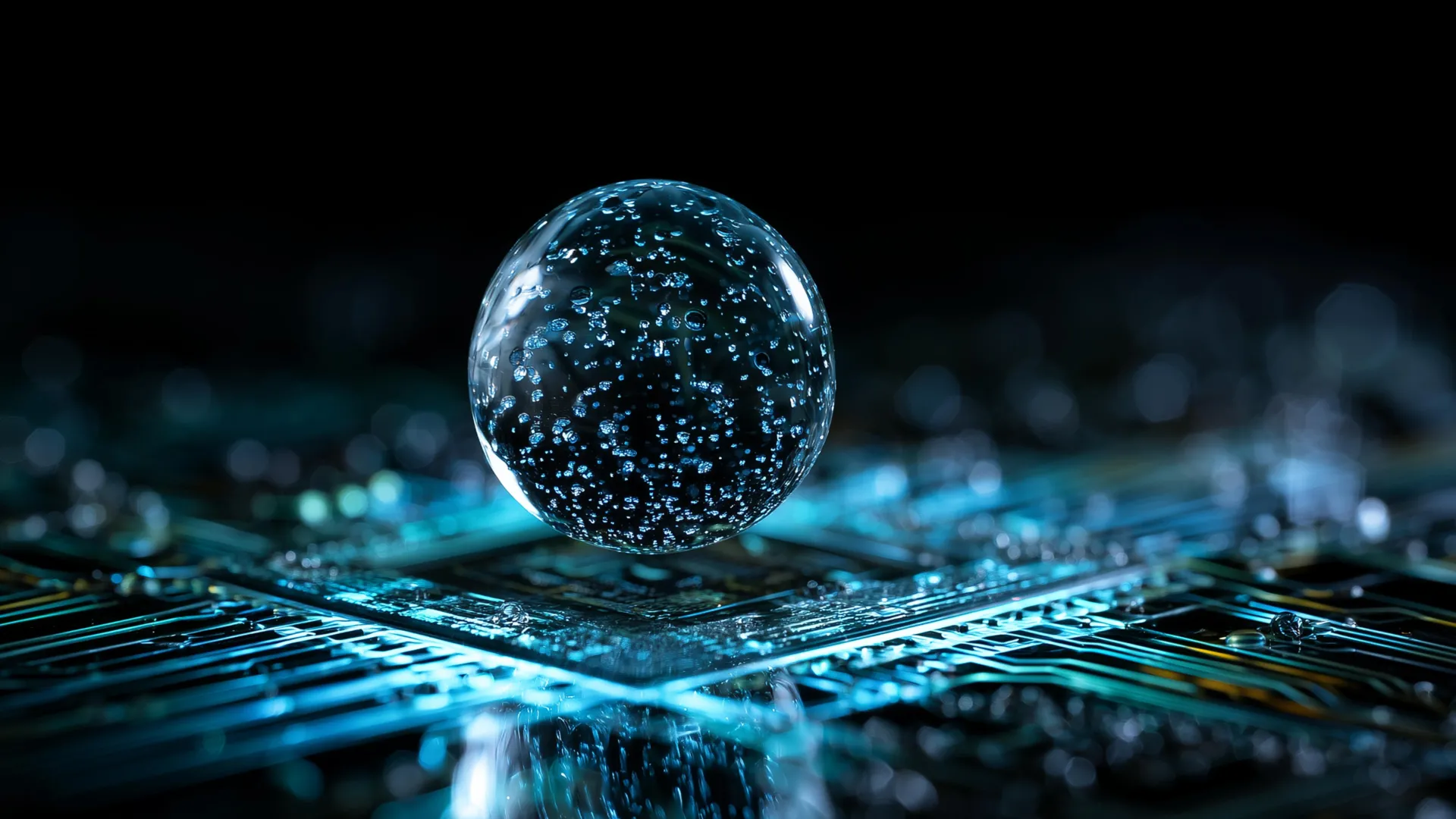
Researchers at Tokyo Metropolitan University have demonstrated a method to refine the precision of inkjet printing by utilizing ultra-fine bubbles, a development that could transform the fabrication of micro-scale electronic devices. The team, led by Professor Arata Kaneko, has successfully shown that dispersing nanoscale bubbles throughout ink can dictate the arrangement of particles within a printed droplet, offering a cleaner alternative to conventional chemical additives.
Inkjet technology has evolved beyond traditional document printing into an essential manufacturing process for microelectronics and microelectromechanical systems (MEMS). These applications require high-precision deposition of intricate circuit patterns. A persistent challenge in this field is the coffee ring
effect, where solid materials suspended in ink migrate to the outer edge of a droplet as it evaporates, resulting in uneven coatings. While industry standards typically address this issue by adding surfactants or other chemicals to modify surface tension, these additives often remain on the substrate after the liquid dries. Such residues can interfere with the electrical properties and performance of sensitive materials like graphene and molybdenum dioxide.
Related media


Bubbles as structural controllers
By replacing chemical additives with ultra-fine bubbles, the researchers have found a way to manipulate the drying behavior of 1 nanoliter droplets deposited on silicon substrates. By passing a mixture of silica nanoparticles and water through an ultra-fine bubble generator, the team created bubble-laden suspensions to test the impact of bubble concentration on final deposit patterns. The concentration of bubbles within the ink directly determines the final result:
- Zero bubbles: Produces the standard, uneven
coffee ring
effect. - Moderate bubble concentration: Facilitates a more uniform coating across the substrate.
- High bubble concentration: Results in particles accumulating primarily at the center of the droplet.
The research emphasizes that these bubbles alter the suspension’s surface tension and wetting properties without impacting the intrinsic characteristics of the nanoparticles themselves, such as their electrical charge. Because the bubbles vanish entirely once the droplet dries, they leave behind no chemical residue, ensuring the printed components remain in a pristine state.
Context and broader applications
The manipulation of droplet and bubble dynamics remains a critical area of focus in modern engineering. While current commercial systems, such as those employing Canon's FINE print head technology, have made significant strides in ejection accuracy and droplet size, the focus has historically been on mechanical and thermal stability. Canon, for instance, utilizes high-precision semiconductor fabrication technologies to integrate thousands of nozzles into single units, focusing on ejection volume consistency and resistance to airflow disturbances.
Other academic and industrial investigations have examined the role of air bubbles in print heads, often viewing them as a variable to be controlled to prevent print quality degradation. For instance, studies analyzing the piezoelectric inkjet process have utilized numerical models to observe how trapped air bubbles within a nozzle channel can affect droplet ejection. However, the Tokyo Metropolitan University approach reverses this dynamic by deliberately introducing controlled quantities of ultra-fine bubbles into the fluid itself to serve a functional purpose.
The implications for sensor technology are particularly noteworthy. The sensitivity of gas sensors relies on the specific shape and structure of the printed deposit. The ability to control this structure without introducing foreign chemical agents could lead to higher-performance electronics, including more responsive gas sensors and cleaner conductive circuits.
Research support
The research was supported by JSPS KAKENHI Grant Numbers JP22H01377 and JP25K01136, along with a JKA Promotion Fund under Grant Number 2024M-394.
Archypedia is dedicated to independent, evidence-backed reporting. This briefing was synthesized from primary source reporting, corroborated across independent newsrooms, and verified against our Editorial Standards.
Transparency record
Evidence behind this report
This report synthesizes 7 distinct sources. Open the source ledger below to compare the underlying coverage.
- eurekalert.org
- sciencedaily.com
- miragenews.com
- brightsurf.com
- pmc.ncbi.nlm.nih.gov
- link.springer.com
- global.canon
Prepared under the Archypedia Editorial Policy by the Niko Vale editorial desk profile. AI-assisted tools may support drafting and verification; public accountability remains with Archypedia. Report an error.