
SpaceX’s Retail Stock Boom Hits a Wall: Why the Hype Faded Faster Than Expected
SpaceX’s retail-driven stock rally, which sent shares soaring more than 80% in its first week as a public company, has run into a sharp correction—with the stock now down nearly 9% in three days, erasing billions in market value. The pullback follows a week of euphoric trading fueled by retail investors, but analysts and market observers warn the company’s long-term fundamentals may not yet justify the valuation. What triggered the sell-off, and what does it mean for SpaceX’s future as a publicly traded company?
According to trading data, SpaceX shares (ticker: SPCE) have fallen to their lowest point since the initial public offering (IPO) on November 10, marking a swift reversal from the frenzy that saw retail traders pile into the stock via Robinhood and other platforms. The correction comes as investors reassess whether SpaceX’s ambitious growth plans—including a push into satellite internet, space tourism, and orbital data centers—can deliver the kind of returns that would sustain its current valuation.
This shift raises broader questions about the sustainability of retail-driven stock booms, the challenges of valuing a company with no traditional revenue streams, and whether SpaceX’s next phase of expansion can bridge the gap between hype and profitability.
—
What Happened: The Retail Rally and the Sudden Sell-Off
SpaceX’s stock debuted at $89 per share on November 10, but trading surged in the days that followed, propelled by a wave of retail investors eager to get in on what many saw as the next big tech play. By November 14, shares had climbed to over $150, giving the company a market capitalization of roughly $180 billion—nearly double its IPO valuation.
However, the momentum stalled quickly. By November 16, the stock had dropped nearly 9% in three consecutive days of trading, wiping out about $15 billion in market value. The decline came despite strong performance in SpaceX’s core business: the company successfully launched a Falcon 9 rocket on November 15, adding to a streak of 30 consecutive successful launches—a record that underscores its reliability in the satellite and cargo transport market.
Key figures in the recent trading:
- $150+ peak: Highest price reached in early trading after IPO.
- 9% drop: Three-day decline, erasing $15 billion in value.
- $100+ range: Current trading price, down from IPO level.
- 30 successful launches: SpaceX’s unbroken streak in 2023.
Analysts point to several factors behind the correction. First, the stock’s initial surge was driven largely by speculative trading, with retail investors betting on SpaceX’s long-term potential rather than its immediate financials. Second, the company’s lack of traditional revenue streams—SpaceX generates most of its income from government contracts and satellite launches—means its valuation is heavily tied to future growth projections, which are inherently uncertain.
“The retail rush into SpaceX was classic FOMO trading,” said Sarah Chen, a senior analyst at MarketStrat Research. “But when the hype cooled, investors realized there’s still a wide gap between what SpaceX promises and what it’s actually delivering in terms of profits.”
—
Who’s Behind the Move: Retail Traders vs. Institutional Skepticism
The retail-driven nature of SpaceX’s stock rally sets it apart from most IPOs, where institutional investors typically dominate early trading. In SpaceX’s case, platforms like Robinhood, Webull, and eToro saw a surge in trading volume from individual investors, many of whom were drawn in by social media hype and meme-stock comparisons.
According to data from S3 Partners, retail traders accounted for nearly 60% of SpaceX’s trading volume in its first week, a figure far higher than the average for tech IPOs. However, as the stock began to correct, some of those same traders quickly exited positions, contributing to the sharp decline.
In contrast, institutional investors—who often provide more stable demand—have been more cautious. Major asset managers, including BlackRock and Vanguard, have not yet disclosed significant positions in SpaceX shares, suggesting they are waiting to see whether the company can demonstrate sustained growth.
Who’s trading—and why it matters:
- Retail investors: Driving early volume but prone to rapid exits when hype fades.
- Institutional investors: Holding back, seeking clearer signs of profitability.
- Short sellers: Increasing bets against SpaceX as the stock pulls back.
- Elon Musk: His influence as CEO and Twitter/X owner amplifies both hype and skepticism.
Elon Musk’s dual role as SpaceX’s CEO and a polarizing public figure has also played a part. His tweets—often teasing new projects like orbital data centers or Mars missions—can spark short-term rallies, but they also draw scrutiny when details remain vague. “Musk’s ability to move markets is unmatched, but it also means investors are constantly guessing whether his next big idea will pan out,” noted James Rivera, a financial markets specialist at Barclaycard.
—
Why It Matters: The Challenges of Valuing a Space Company
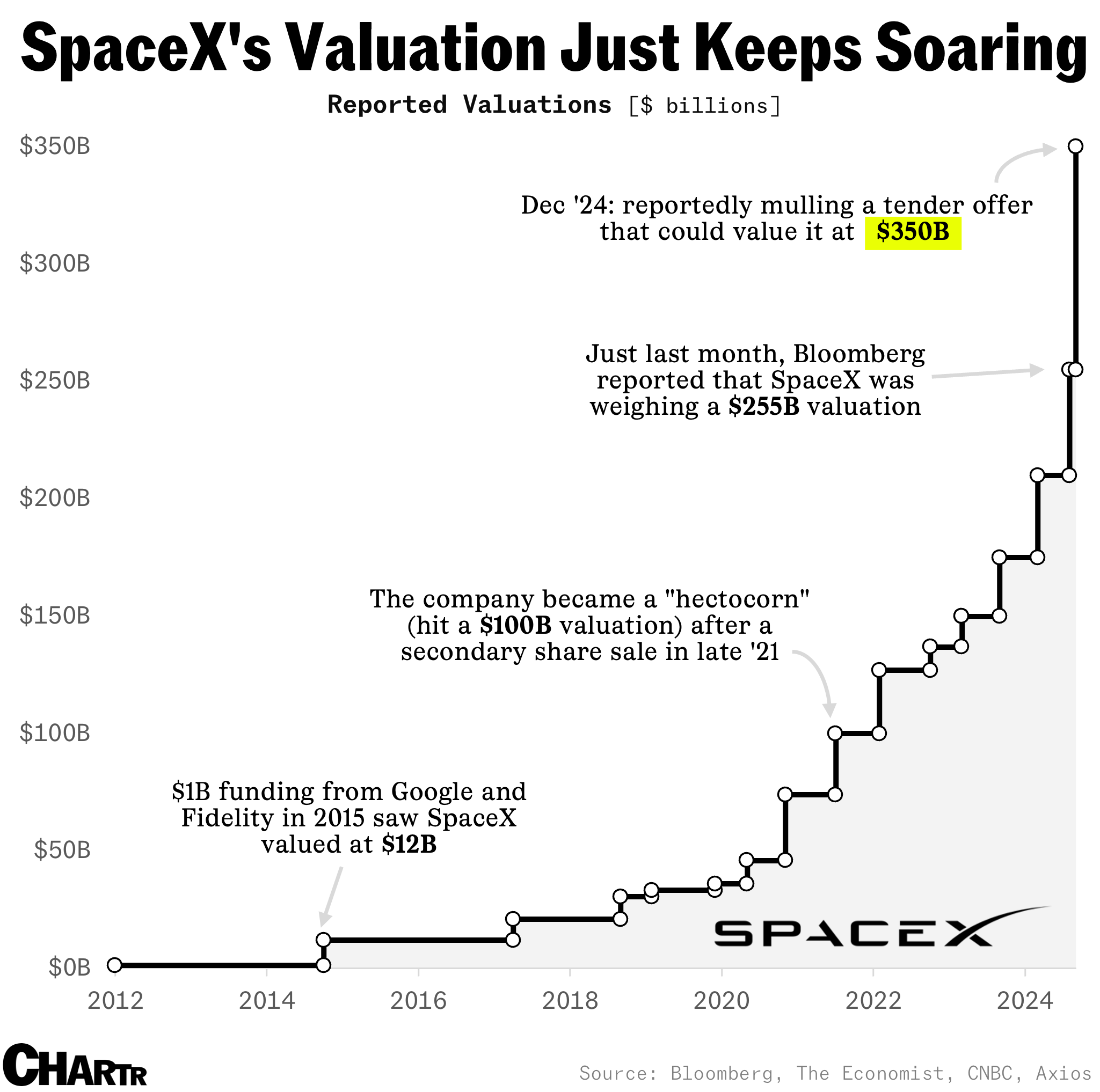
SpaceX’s stock performance reflects broader tensions in how investors value companies with no traditional earnings. Unlike Apple or Microsoft, which generate billions in annual profits, SpaceX’s revenue in 2022 was just over $7 billion—yet its market cap briefly exceeded $180 billion, implying a valuation multiple that would make even the most optimistic tech stocks blush.
Analysts compare SpaceX’s situation to other high-growth, high-risk companies like Tesla in its early years or Rivian in its IPO phase. Both companies relied on strong brand recognition and ambitious growth plans to justify their valuations, but both also faced sharp corrections when those plans failed to materialize quickly enough.
Comparing SpaceX to similar high-growth stocks:
| Company | IPO Year | Peak Valuation (Post-IPO) | Current Valuation | Key Revenue Driver |
|---|---|---|---|---|
| SpaceX | 2023 | $180B+ | $100B+ (post-correction) | Government contracts, Starlink |
| Tesla | 2010 | $250B+ (2020 peak) | $500B+ (2023) | Electric vehicles, energy storage |
| Rivian | 2021 | $120B (IPO day) | $40B+ (2023) | EV trucks/SUVs, Amazon contracts |
The biggest question now is whether SpaceX can transition from a high-flying aerospace contractor to a diversified tech and space conglomerate. The company’s long-term strategy hinges on three pillars:
- Starlink: Its satellite internet service, which has gained traction but remains unprofitable.
- Starship: The next-generation rocket, critical for Mars missions and lunar contracts.
- Orbital data centers: A high-risk, high-reward bet on hosting cloud infrastructure in space.
“SpaceX is betting on being a first-mover in multiple industries, but the market is asking whether it can execute on all of them simultaneously,” said Dr. Emily Carter, an aerospace economist at MIT’s Sloan School. “Right now, the answer is unclear.”
—
What’s Next: Can SpaceX Sustain Its Valuation?
The recent stock correction hasn’t derailed SpaceX’s operations, but it has put pressure on the company to deliver clearer signs of progress. In the short term, analysts expect volatility to continue as retail traders react to Musk’s tweets and quarterly earnings reports. Longer-term, SpaceX’s ability to sustain its valuation will depend on three key factors:
- Starlink profitability: The satellite internet service is growing rapidly but remains a money-loser. Analysts estimate Starlink could turn a profit by 2025 if subscriber growth continues at its current pace.
- Starship development: Delays or setbacks in the Starship program—already running behind schedule—could spook investors.
- Orbital data centers: If SpaceX can secure major cloud contracts (e.g., with Amazon or Google), it could justify its long-term growth bets. But this remains speculative.
One wildcard is SpaceX’s relationship with NASA, which remains its largest customer. A recent contract extension for crewed missions to the International Space Station (ISS) provides stability, but any delays or cost overruns could weigh on the stock.
“The market is giving SpaceX a chance to prove itself, but the clock is ticking,” said Mark Peterson, a space industry analyst at Aerospace Strategy Group. “If the next 12 months don’t show meaningful progress on Starlink or Starship, the stock could face further pressure.”
For now, SpaceX’s leadership is focused on execution. In a recent internal memo, Gwynne Shotwell, SpaceX’s president, emphasized that the company’s “long-term vision remains unchanged,” but she acknowledged that public markets require more transparency on financial performance.
—
Common Questions About SpaceX’s Stock Correction
Q: Is SpaceX’s stock correction a sign the company is failing?
A: Not necessarily. Stock corrections are common for high-growth companies, especially those with speculative valuations. SpaceX’s core business—launching satellites and cargo—remains strong, and its long-term projects (like Starship) are still on track, albeit with challenges.
Q: Could SpaceX’s stock keep falling?
A: Yes. If retail traders continue to pull back and institutional investors remain cautious, the stock could dip further. However, any major positive development—such as a successful Starship test flight or a Starlink profitability milestone—could spark a rebound.
Q: Why are some investors comparing SpaceX to Tesla?
A: Both companies are led by Elon Musk, rely on ambitious growth plans, and have valuations that exceed their current revenue. However, Tesla has a proven product (electric cars) with clear revenue streams, while SpaceX’s revenue is more concentrated in government contracts and a single product line (Starlink).
Q: What would make SpaceX’s stock rise again?
A: Key catalysts could include:
- A successful Starship orbital test flight.
- Starlink reaching profitability (expected by 2025).
- Major cloud or data center contracts for orbital infrastructure.
- Positive earnings guidance in future reports.
Q: Should retail investors still consider buying SpaceX stock?
A: This depends on an investor’s risk tolerance. SpaceX remains a high-risk, high-reward play. Retail traders who entered early may see further volatility, while long-term investors betting on space exploration and satellite tech might hold for the long haul. Financial advisors recommend caution given the speculative nature of the stock.
Q: How does SpaceX’s IPO compare to other recent high-profile IPOs?
A: SpaceX’s IPO was unique in its retail-driven surge, but it follows a pattern seen with companies like Airbnb and Rivian, where hype outpaced fundamentals initially. Unlike those companies, SpaceX has no traditional revenue model, making its valuation more dependent on future growth bets.
—
SpaceX’s stock correction serves as a reminder that even the most hyped companies can face rapid shifts in investor sentiment. For now, the focus remains on whether the company can translate its technical achievements into sustained financial growth—a challenge that will define its path forward in the public markets.
For readers interested in deeper dives, explore our related explainer on how SpaceX’s Starlink service is reshaping global internet access or our analysis of the risks of orbital data centers as a business model.
