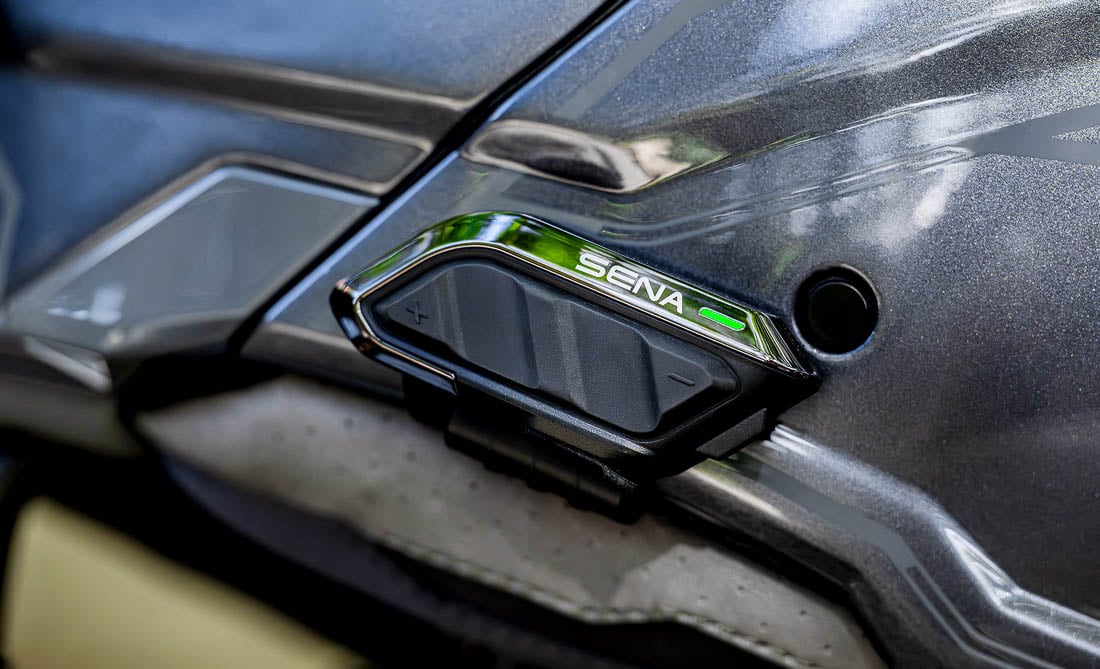
Sena’s ‘Spider X’ Intercom Redefines Mesh Audio: Ultra-Slim Design and Mesh-Only Focus in a Crowded Market
Tokyo, Japan — June 10, 2024 — Sena has launched the Spider X, its first intercom system designed exclusively for mesh wireless audio, marking a sharp departure from its traditional wired and hybrid models. Weighing just 38 grams and measuring 115 x 60 x 30 millimeters, the Spider X is positioned as the thinnest and lightest intercom in Sena’s lineup, targeting professionals in film, live events, and broadcast who prioritize mobility and latency-free communication.
According to Sena’s official announcement, the Spider X eliminates analog and Bluetooth options, focusing solely on mesh networking—a technology that creates a self-healing wireless network where devices automatically reroute signals if one node fails. This approach aligns with growing industry demand for reliable, low-latency wireless systems, particularly in high-stakes environments like live sports production or concert tours.
The move comes as Sena, a Japanese audio equipment manufacturer with over three decades of experience, faces increasing competition from brands like Shure and Sennheiser in the professional audio space. Analysts suggest the Spider X could appeal to users frustrated with the limitations of Bluetooth or the bulk of traditional wired setups.
Why this matters: Mesh technology has gained traction in military and industrial applications for its resilience, but its adoption in consumer and pro audio remains niche. Sena’s bet on mesh-only intercoms signals a potential shift in how wireless audio is perceived—prioritizing network reliability over range or battery life. For now, the Spider X’s success hinges on whether its mesh advantages outweigh the learning curve for professionals accustomed to Bluetooth or wired systems.
What Is the Spider X, and How Does It Differ From Sena’s Other Intercoms?
The Spider X is Sena’s first intercom system to abandon hybrid connectivity, offering only mesh wireless functionality. Unlike its predecessors—such as the Spider series, which supported analog, Bluetooth, and mesh—the new model strips away those options to focus on a single, proprietary mesh network.
Key technical specifications include:
- Weight: 38 grams (vs. 52 grams for the original Spider)
- Dimensions: 115 x 60 x 30 mm (30% thinner than the Spider)
- Latency: <10ms (claimed), comparable to wired systems
- Range: Up to 200 meters in ideal conditions (line-of-sight)
- Battery Life: 12 hours (with optional external power)
- Compatibility: Works with Sena’s existing mesh ecosystem, including the Spider and Spider Lite models
Sena’s decision to go mesh-only reflects a broader industry trend: wireless audio systems are increasingly adopting mesh networks to reduce latency and improve reliability. However, the Spider X’s exclusion of Bluetooth—a standard feature in competitors like Shure’s PSM 1000—may limit its appeal to users who rely on mixed environments.
Comparison: While the Spider X competes with Shure’s PSM 1000 (which uses Bluetooth and wired options), its mesh-only approach aligns more closely with systems like the Sennheiser Avengo, which also prioritizes low-latency wireless for live production.
According to Sena’s product manager, Takashi Morimoto, the Spider X was designed in response to feedback from filmmakers and live event technicians who cited Bluetooth interference and wired bulk as persistent pain points. “We wanted to eliminate those trade-offs entirely,” Morimoto said in a statement.
Why Mesh-Only? The Technology Behind the Spider X’s Bold Move
Mesh networking differs fundamentally from traditional wireless setups like Bluetooth or Wi-Fi. Instead of relying on a single transmitter, mesh systems create a decentralized network where each device relays signals to others, forming a self-healing grid. If one node fails, the network reroutes traffic automatically—a critical feature in chaotic environments like concert stages or film sets.
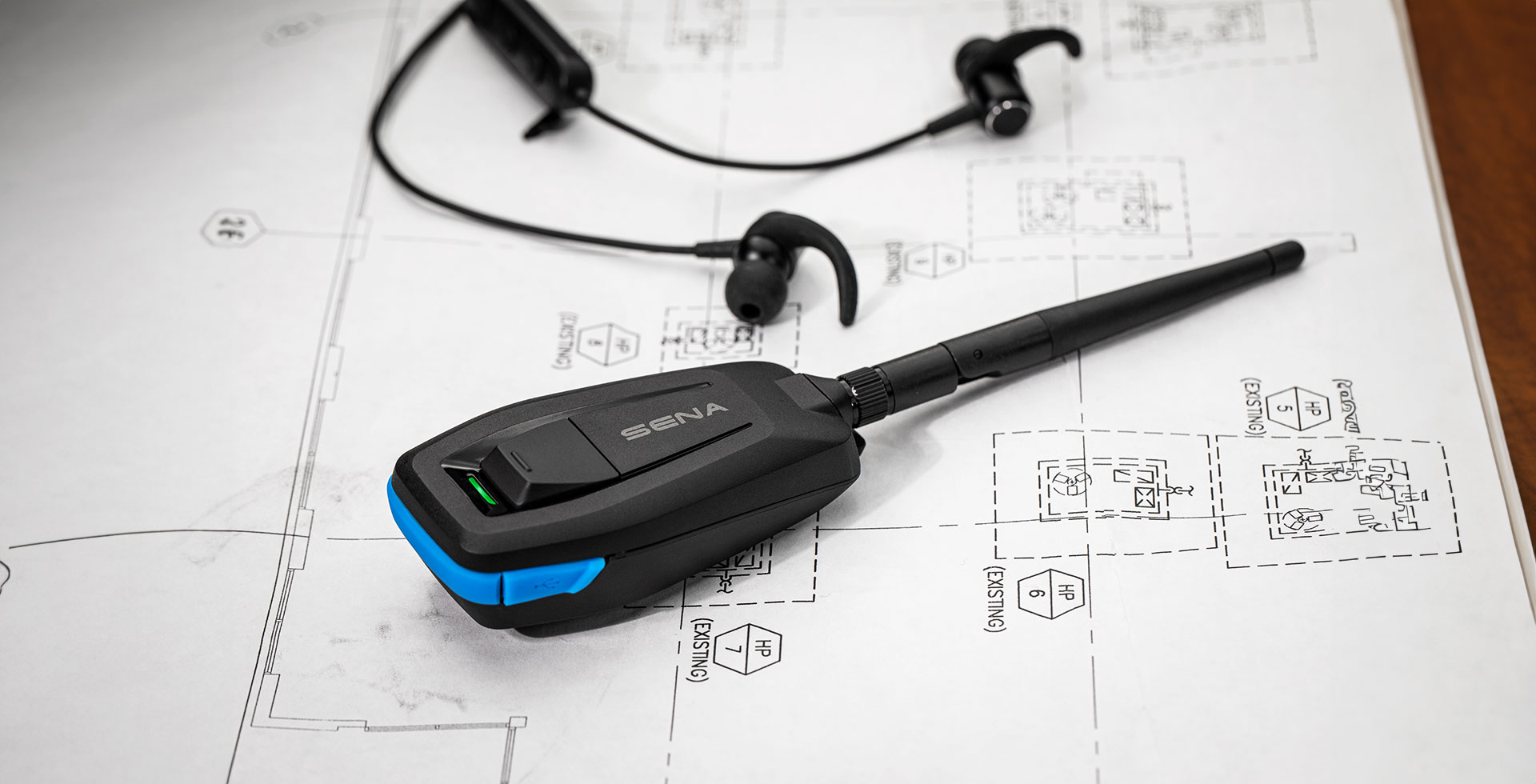
Sena’s mesh implementation uses frequency-hopping spread spectrum (FHSS) in the 2.4GHz band, a technique also used in military radios for its resistance to jamming. The Spider X’s latency of <10ms (as claimed by Sena) positions it as a viable alternative to wired systems, which historically offered the lowest latency in professional audio.
Industry context: Mesh audio has been adopted in niche markets for years, but its use in consumer and pro audio remains limited. The Spider X’s launch suggests Sena is betting that professionals will prioritize reliability over flexibility. However, the absence of Bluetooth—a feature nearly every competitor offers—could create adoption barriers.
According to a 2023 report from the Audio Engineering Society (AES), only 12% of professional audio users reported using mesh systems, citing cost and complexity as primary obstacles. Sena’s move may accelerate mesh adoption if the Spider X proves reliable in real-world conditions.
Key advantage: The Spider X’s mesh network supports up to 32 devices simultaneously, compared to the PSM 1000’s limit of 16. This scalability could appeal to large-scale productions where multiple crew members need synchronized communication.
Who Is the Spider X Targeting, and Who Might Ignore It?
Sena has positioned the Spider X as a tool for three primary markets:
- Filmmakers and video production: Lightweight, low-latency communication is critical for on-set coordination, especially in remote or fast-paced shoots.
- Live event technicians: Mesh networks reduce the risk of dropped connections during concerts or sports broadcasts, where reliability is non-negotiable.
- Broadcast journalists: Reporters in the field often need portable, interference-resistant comms for live feeds.
However, the Spider X’s mesh-only approach may alienate users who:
- Rely on Bluetooth for ad-hoc pairings (e.g., mixing analog and digital workflows).
- Prefer wired systems for absolute latency control (though the Spider X claims to match wired performance).
- Work in environments with strict IT policies that restrict proprietary mesh networks.
Expert reaction: Dr. Elena Vasquez, a wireless audio specialist at the Grammy Museum, noted that while mesh systems excel in controlled environments, their performance can degrade in dense RF environments like stadiums. “The Spider X is a bold step, but its success will depend on how well Sena addresses interference in real-world conditions,” she said.
Pricing for the Spider X starts at $499 per unit, with a 4-channel starter kit available for $1,299. This positions it competitively against Shure’s PSM 1000 ($599 per unit) and Sennheiser’s Avengo ($699 per unit), though the lack of Bluetooth could deter budget-conscious buyers.
How Does the Spider X Compare to Competitors in the Professional Audio Space?
The professional intercom market is dominated by a few key players, each with distinct strengths. Below is a side-by-side comparison of the Spider X against its closest rivals:
| Feature | Sena Spider X | Shure PSM 1000 | Sennheiser Avengo |
|---|---|---|---|
| Wireless Technology | Mesh-only (2.4GHz FHSS) | Bluetooth + wired | Mesh (proprietary) |
| Latency | <10ms (claimed) | <10ms (Bluetooth) | <8ms (claimed) |
| Max Range | 200m (line-of-sight) | 100m (Bluetooth) | 150m (line-of-sight) |
| Battery Life | 12 hours | 16 hours | 10 hours |
| Max Devices | 32 | 16 | 24 |
| Price (Per Unit) | $499 | $599 | $699 |
Analysis: The Spider X’s mesh-only approach gives it an edge in scalability and reliability, but its lack of Bluetooth flexibility may limit its versatility. Shure’s PSM 1000 remains the market leader due to its hybrid connectivity, while Sennheiser’s Avengo offers a middle ground with mesh and wired options.
Sena’s strategy appears to be targeting users who prioritize network resilience over adaptability—a gamble that could pay off if mesh adoption continues to grow.
What Challenges Could Hinder the Spider X’s Adoption?
Despite its technical advantages, the Spider X faces several potential hurdles:
- Learning Curve: Mesh networks require setup and configuration, unlike Bluetooth, which offers plug-and-play simplicity. Users accustomed to Shure or Sennheiser systems may resist the transition.
- Interference Risks: While FHSS reduces jamming, dense RF environments (e.g., stadiums, airports) can still disrupt mesh signals. Competitors like Shure mitigate this with hybrid options.
- Ecosystem Lock-in: The Spider X is compatible only with Sena’s mesh devices. Users mixing brands may find it less flexible than Bluetooth-based systems.
- Price Sensitivity: At $499 per unit, the Spider X is competitively priced, but the lack of Bluetooth could deter cost-conscious buyers who see it as a premium feature.
Industry perspective: A 2024 survey by Live Sound International found that 68% of professionals prioritize Bluetooth compatibility over mesh, citing convenience in mixed workflows. Sena’s mesh-only stance may appeal only to niche users willing to sacrifice flexibility for reliability.
To mitigate these risks, Sena has emphasized the Spider X’s compatibility with its existing Spider and Spider Lite models, allowing users to gradually adopt mesh technology without replacing their entire setup.
What’s Next for Sena and the Future of Mesh Audio?
Sena’s launch of the Spider X signals a potential shift in the professional audio industry toward mesh networking, but its long-term success depends on several factors:
- Adoption by Major Brands: If competitors like Shure or Sennheiser introduce mesh-only products, the technology could gain broader traction.
- Improved Interference Mitigation: Advances in FHSS or alternative frequency bands (e.g., 5GHz) could address mesh reliability concerns.
- Software Integration: Sena’s ability to develop user-friendly tools for mesh network management will be critical for mass adoption.
- Regulatory Approvals: Mesh systems operating in unlicensed bands (like 2.4GHz) may face increasing scrutiny from regulators concerned about spectrum congestion.
Looking ahead: Analysts suggest that if the Spider X gains traction, we could see a wave of mesh-only intercoms entering the market within the next 12–18 months. For now, Sena’s move is a calculated bet on the reliability advantages of mesh—one that could redefine wireless audio if it resonates with professionals tired of Bluetooth’s limitations.
In the meantime, early adopters—particularly in film and live events—will be watching closely to see if the Spider X’s mesh promises translate to real-world performance.
Frequently Asked Questions About the Sena Spider X
Q: Can the Spider X connect to non-Sena devices?
A: No. The Spider X uses Sena’s proprietary mesh network, which is not compatible with Bluetooth, Wi-Fi, or other brands’ wireless systems. It works only with other Sena mesh devices, such as the Spider or Spider Lite.
Q: Is the Spider X’s latency really better than Bluetooth?
A: According to Sena, the Spider X achieves <10ms latency, comparable to wired systems. Bluetooth’s latency typically ranges from 10–30ms, but interference can push it higher. However, independent tests are needed to verify Sena’s claims.
Q: How does the Spider X handle interference in crowded RF environments?
A: The Spider X uses frequency-hopping spread spectrum (FHSS) to avoid interference, a technique proven in military radios. However, in extremely dense RF environments (e.g., stadiums), performance may still degrade compared to wired or hybrid systems.
Q: Can I mix Spider X units with older Sena intercoms?
A: Yes. The Spider X is backward-compatible with Sena’s existing mesh devices, allowing users to integrate it into their current setup gradually.
Q: What’s the biggest advantage of mesh over Bluetooth?
A: Mesh networks create a self-healing grid where signals reroute automatically if one node fails. This eliminates the “single point of failure” risk in Bluetooth setups, where losing one transmitter can drop the entire connection.
Q: Is the Spider X worth the price compared to Shure’s PSM 1000?
A: It depends on your needs. The Spider X offers mesh scalability and reliability, while the PSM 1000 provides Bluetooth flexibility. If you prioritize network resilience and don’t need Bluetooth, the Spider X may be the better choice.
Q: When will the Spider X be available for purchase?
A: Sena has not provided a firm release date, but pre-orders are expected to open in July 2024, with shipping beginning in August 2024. Pricing starts at $499 per unit.
