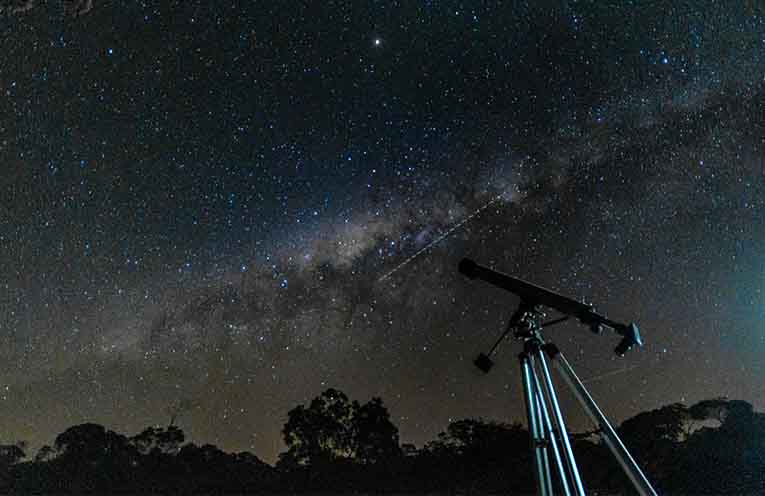
Stargazing: Smartphone Astronomy – Dungog Shire News Of The Area and the Digital Cosmic Revolution
For generations, the act of stargazing required a significant investment in heavy equipment, a deep knowledge of celestial coordinates, and a willingness to spend hours in the cold with a bulky telescope. However, a quiet revolution is occurring in the pockets of enthusiasts across the globe, and nowhere is this more evident than in regions like the Dungog Shire. The intersection of rural, dark-sky environments and cutting-edge mobile technology has transformed the night sky from a distant mystery into an interactive, accessible map. Stargazing: smartphone astronomy – Dungog Shire News Of The Area highlights a growing trend where the democratization of technology is allowing residents and visitors to engage with the cosmos using nothing more than a handheld device.
This shift isn’t merely about convenience; This proves about a fundamental change in how humans interact with the universe. By leveraging augmented reality (AR), high-sensitivity CMOS sensors, and sophisticated computational photography, the modern smartphone has become a gateway to the stars. In areas away from the oppressive “light domes” of major metropolitan hubs, the clarity of the atmosphere combined with mobile software is creating a new wave of “citizen astronomers.”
The Synergy of Dark Skies and Mobile Technology
To understand why smartphone astronomy is flourishing in regions like the Dungog Shire, one must first understand the concept of light pollution. In cities, the artificial glow of streetlights and billboards washes out all but the brightest stars, a phenomenon known as “skyglow.” In contrast, rural landscapes offer a window into the deep sky, where the Milky Way is visible to the naked eye.
The “Bortle Scale” is the standard measure used by astronomers to quantify the darkness of the night sky, ranging from Class 1 (an exceptionally dark site) to Class 9 (inner-city skies). While urban dwellers struggle in Class 8 or 9 environments, those in the Dungog region often benefit from much lower Bortle ratings. This natural advantage makes the area a prime laboratory for testing the capabilities of smartphone astronomy.
When a high-end smartphone is placed in a truly dark environment, the hardware can finally perform at its peak. The lack of competing light allows the camera’s sensor to capture photons from distant nebulae and galaxies that would be invisible in a city. This synergy between geography and technology is what is driving the current surge in local interest in celestial observation.
| Feature | Traditional Telescope Setup | Smartphone Astronomy Setup |
|---|---|---|
| Portability | Low (Heavy tripods, lenses, tubes) | High (Fits in a pocket) |
| Learning Curve | Steep (Requires manual alignment) | Low (Intuitive AR interfaces) |
| Cost of Entry | High ($500 – $5,000+) | Low (Device usually already owned) |
| Identification | Manual (Star charts/atlases) | Instant (Real-time AR overlays) |
| Capture Method | Optical/Film or DSLR | Computational Photography/AI |
How Smartphones “See” the Universe: The Tech Explained
Many skeptics wonder how a tiny lens the size of a pea can capture images of the cosmos. The answer lies not in the size of the glass, but in the power of the processor. Modern smartphones utilize computational photography, a process where the device takes multiple images at different exposures and merges them into a single, high-quality frame.
The Role of Night Mode and Long Exposure
The primary challenge of astronomy is the lack of light. To compensate, smartphones use “Night Mode,” which keeps the shutter open for several seconds. During this time, the sensor collects as much light as possible. However, because the Earth rotates, long exposures can lead to “star trailing,” where stars appear as streaks rather than points. Advanced software now compensates for this by taking a series of shorter exposures and “stacking” them, aligning the stars perfectly while canceling out digital noise.
CMOS Sensors and Pixel Binning
Modern mobile sensors use a technique called pixel binning. This involves combining four or more adjacent pixels into one “super-pixel.” By doing this, the sensor increases its light-gathering area, which is crucial for detecting the faint glow of a distant star cluster. When combined with the dark skies of the Dungog Shire, these sensors can produce images that would have been impossible for consumer electronics just a decade ago.
“The smartphone has effectively removed the barrier to entry for astronomy. We are moving from an era of ‘looking through a tube’ to an era of ‘exploring through a screen,’ where the data is layered directly over the visual experience.”
Essential Tools for the Modern Smartphone Astronomer
To fully engage in stargazing: smartphone astronomy – Dungog Shire News Of The Area, users need more than just a camera. The ecosystem of astronomy apps has evolved into three distinct categories: identification, tracking, and capture.
1. Augmented Reality (AR) Sky Maps
AR apps are perhaps the most transformative tool for beginners. By using the phone’s gyroscope, accelerometer, and GPS, these apps overlay a map of the constellations directly onto the camera view. As the user points their phone toward the sky, the app identifies stars, planets, and satellites in real-time. This eliminates the need to memorize complex star charts.
2. Celestial Event Trackers
Astronomy is all about timing. Apps that track the lunar cycle, planetary alignments, and meteor showers are essential. These tools notify users when the International Space Station (ISS) is passing overhead or when a particular planet is at “opposition” (its closest point to Earth), ensuring that no major event is missed.
3. Astrophotography Processing Apps
While the native camera app is great, professional-grade results require manual control. Apps that allow for RAW image capture are vital. RAW files preserve all the data captured by the sensor without the phone’s automatic compression, allowing the user to adjust the white balance, exposure, and contrast in post-production to make the Milky Way truly pop.
- Key Tip: Always turn off your flash and use a timer to avoid camera shake when triggering the shutter.
- Pro Tip: Look for apps that support “Star Stacking” to reduce graininess in your deep-space photos.
A Practical Guide to Capturing the Night Sky in Rural Areas
For those looking to explore the skies of the Dungog Shire, simply pointing and shooting is rarely enough. To move from a blurry photo to a breathtaking celestial landscape, follow these technical steps:

Step 1: Stability is Non-Negotiable
Even the slightest vibration can ruin a long-exposure shot. A tripod is the most important accessory for smartphone astronomy. If a tripod isn’t available, leaning the phone against a rock or a fence post is a necessary alternative. The goal is absolute stillness for the duration of the exposure.
Step 2: Manual Settings (Pro Mode)
Switch your camera to “Pro” or “Manual” mode to control the following:
- ISO: Set this between 800 and 3200. Higher ISO increases sensitivity but adds “noise” (grain). Find the balance where the stars are visible but the image remains clean.
- Shutter Speed: Aim for 15 to 30 seconds. If you go longer, the rotation of the Earth will cause the stars to blur.
- Focus: Set the focus to “Infinity” ($infty$). Auto-focus often struggles in the dark and may try to focus on a nearby tree instead of the stars.
Step 3: Finding the Right Target
Don’t just shoot straight up. Use your AR apps to find the “Galactic Center” of the Milky Way, which is typically most visible during the winter months in the Southern Hemisphere. Incorporating a foreground element—such as a silhouette of a local landmark or a lone tree—adds depth and scale to the photograph.
For more information on how to prepare for outdoor excursions, you might find a related explainer on nocturnal safety and gear helpful.
Addressing Common Misconceptions
As smartphone astronomy grows in popularity, several myths have emerged that can frustrate beginners. It is important to separate marketing hype from scientific reality.
“Digital Zoom Can See Galaxies”
One of the biggest misconceptions is that the “100x Space Zoom” found on some flagship phones can see distant galaxies in detail. In reality, this is mostly digital interpolation (cropping and enlarging). While it can make a bright planet like Jupiter look larger, it cannot replace the light-gathering power of a physical lens. To see true detail, one must rely on the sensor’s native resolution and long exposures.
“You Need an Expensive Phone to Start”
While the latest flagship devices have better sensors, the logic of smartphone astronomy applies to almost any device from the last five years. The most important factors are a dark location and a steady mount. A mid-range phone on a tripod in the Dungog Shire will produce a far better image than a $1,200 phone held by hand in a city center.
The Wider Impact: Citizen Science and Community
The rise of stargazing: smartphone astronomy – Dungog Shire News Of The Area extends beyond a simple hobby. It is fostering a new connection between communities and their environment. When people realize the beauty of the sky above them, they become more invested in preserving it.
Combatting Light Pollution
There is a growing movement toward “Dark Sky Advocacy.” By documenting the night sky via smartphones, residents are creating a visual record of their natural heritage. This often leads to community discussions about “smart lighting”—using shielded LED fixtures that direct light downward rather than upward, reducing skyglow without compromising safety.
The Educational Bridge
For students, smartphone astronomy turns the outdoors into a classroom. Instead of looking at a static image of Orion in a textbook, a student can point their phone at the sky and see the constellation in real-time, layered with mythological stories and astronomical data. This interactive learning approach increases engagement with STEM (Science, Technology, Engineering, and Mathematics) subjects.
some apps allow users to contribute their sightings to global databases, helping professional astronomers track transient events like supernovae or satellite debris. This turns the casual stargazer into a contributor to global scientific knowledge.
Frequently Asked Questions
What is the best time of year for smartphone stargazing in the Dungog area?
While stars are visible year-round, the winter months (June through August) are generally best. The air is often crisper and clearer, and the center of the Milky Way is more prominently positioned in the Southern Hemisphere’s sky.
Do I need a special lens attachment for my smartphone?
Not necessarily. While wide-angle lens attachments can help capture more of the horizon, the built-in wide-angle lens on most modern phones is sufficient for breathtaking astrophotography. The most important “attachment” is a sturdy tripod.
Can I take photos of the moon with my phone?
Yes, but the moon requires very different settings than the stars. Because the moon is so bright, you should lower your ISO (to 100 or 200) and use a very fast shutter speed to avoid “blowing out” the image (making it look like a glowing white ball).
How do I stop my phone from overheating during long exposures?
In most cases, the phone will not overheat. However, in extreme temperatures, the battery may drain faster. Keeping the phone in a case that doesn’t trap too much heat and ensuring your battery is fully charged before heading out to a dark site is recommended.
Which apps are most recommended for beginners?
Look for apps that offer a combination of a star map, a celestial calendar, and a manual camera interface. Popular choices often include those that utilize AR to label constellations and provide notifications for upcoming meteor showers.
As technology continues to evolve, the boundary between professional astronomy and amateur exploration will continue to blur. The ability to capture the majesty of the universe from a rural vantage point in the Dungog Shire is a testament to how far we have come. By combining the timeless beauty of the night sky with the power of the smartphone, we are not just taking photos; we are rediscovering our place in the cosmos.
For those interested in further enhancing their outdoor experience, a guide to local nature preserves may provide the perfect locations for your next stargazing session.
