
Mercedes-Benz’s Smart brand is reviving its compact electric vehicle lineup with a successor to the Smart fortwo, set to return after a production pause in 2024. The new model, revealed in staged glimpses across China, Italy, and Brazil, will feature a 300-kilometer (186-mile) real-world range—a significant leap from earlier electric iterations—and a battery system more akin to those in larger EVs, according to multiple reports.
Key Points
- A new Smart two-seater is entering production with a 300 km range, targeting urban mobility.
- The vehicle will use a larger battery pack than previous models, improving efficiency and performance.
- Design details, including the cockpit, have been previewed in Italy, while market-specific reveals have occurred in China and Brazil.
- The model was discontinued in 2024 but is being reintroduced with updated electric powertrain technology.
Why This Matters: A Shift Toward Urban Electric Mobility
The Smart brand’s return to electric production marks a strategic pivot for Mercedes-Benz, which has increasingly focused on compact, city-friendly EVs to compete in Europe’s booming urban mobility market. The 300 km range—a figure cited by multiple outlets, including InsideEVs Brasil and Notícias ao Minuto—positions the vehicle as a viable alternative to Tesla’s Model 3 and Renault’s Zoe, both of which dominate the subcompact electric segment. Unlike previous Smart EVs, which relied on smaller batteries, the new model will adopt a larger battery architecture, a detail confirmed by Razão Automóvel, suggesting better efficiency and faster charging capabilities.
This shift also reflects broader industry trends: automakers are scaling up battery sizes even for small vehicles to meet consumer demands for longer ranges without sacrificing urban maneuverability. The Smart fortwo’s successor, for instance, will likely use a battery system similar to those found in the Mercedes EQA, a mid-size SUV, according to MotorMais. That choice could help offset production costs while improving resale value—a critical factor in Europe’s used-EV market.
How the New Smart EV Compares to Its Predecessor
The original Smart fortwo electric, produced until 2024, offered a range of around 150–180 km depending on the model, limiting its appeal beyond city limits. The new iteration’s 300 km range—nearly double that of its predecessor—addresses a key pain point for urban drivers who frequently travel outside city centers. Jornal Económico noted that the range figure aligns with regulatory targets for 2025, suggesting the vehicle may qualify for incentives in markets like Portugal and Germany.
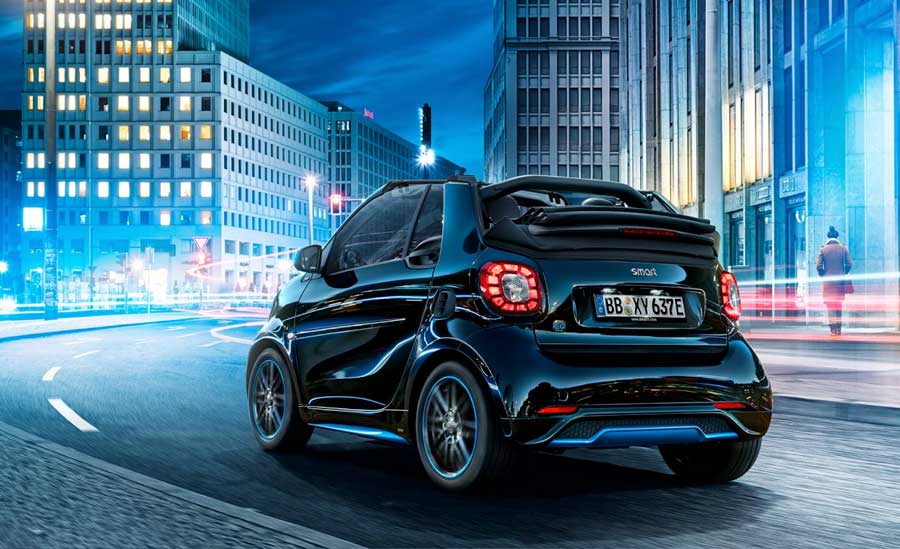
Beyond range, the new Smart EV will feature a redesigned cockpit, as previewed in Italy, with digital interfaces and connectivity options likely to include over-the-air updates—a standard now expected in electric vehicles. The vehicle’s exterior design, first revealed in China, emphasizes aerodynamics and a lower ground clearance, traits that could improve efficiency and handling in tight urban spaces.
Market Timing and Global Rollout
The staggered reveals—from China’s exterior preview to Italy’s cockpit details and Brazil’s range confirmation—suggest a phased global launch. China, where Smart has historically struggled with sales, may serve as an early test market given its growing EV adoption rates. Italy and Brazil, meanwhile, represent key regions for compact cars, with Brazil’s market particularly sensitive to battery range due to its mix of urban and highway driving.
While no official launch date has been announced, industry sources suggest production could begin in late 2025, with deliveries targeting early 2026. The timing coincides with Mercedes-Benz’s broader push to electrify its lineup by 2030, including the phasing out of internal combustion engines in Europe by 2035—a deadline that will force automakers to accelerate EV development.
What This Means for Competitors and Consumers
For competitors like BYD, Tesla, and Renault, the Smart EV’s return signals a renewed focus on the subcompact segment, where margins are tighter but demand remains steady. The vehicle’s 300 km range and larger battery could pressure rivals to either match those specs or justify their own offerings on cost or brand appeal.

For consumers, the new Smart EV offers a compelling trade-off: a familiar, nimble urban car with the range and technology expected in larger EVs. Early adopters in Europe may benefit from regulatory incentives, while those in Brazil could see the vehicle as a more practical alternative to gas-powered compacts. The larger battery also hints at future-proofing—should charging infrastructure improve, the vehicle’s range could become even more attractive.
One open question remains: pricing. Previous Smart EVs started around $25,000, but the larger battery and updated tech could push the new model closer to $30,000–$35,000, aligning it with Tesla’s Model 2 and Renault’s Twingo Electric. If Mercedes-Benz positions it as a premium urban EV, it may appeal to buyers willing to pay for brand heritage and build quality.
What’s Next: Production and Regulatory Hurdles
With no official production timeline, the next concrete step will likely be a formal announcement from Mercedes-Benz, expected in the second half of 2025. Regulatory hurdles—particularly in Europe, where EV incentives are tied to battery size and emissions standards—could influence the final specifications. If the vehicle meets the WLTP range (a European testing standard), it may qualify for higher subsidies in markets like France and the Netherlands.
For now, the Smart EV’s revival hinges on three factors: whether the 300 km range holds up in real-world conditions, how competitors respond, and whether Mercedes-Benz can balance cost with the premium positioning of the brand. The stakes are high—success could revive Smart’s relevance in a crowded EV market, while failure risks leaving it as a niche player.
