
UAE astronauts train in New Mexico desert for Artemis Moon missions—what’s next for the Gulf’s space ambitions
Dubai, UAE — Two Emirati astronauts are undergoing rigorous training in the high-altitude deserts of New Mexico as part of a NASA-led program preparing them for future lunar missions under the Artemis initiative. The six-week session at the International Space Innovation Center (ISIC) marks the UAE’s deepest involvement yet in crewed Moon exploration, with officials describing it as a “critical stepping stone” toward sending an astronaut to the lunar surface by 2030.
According to the Mohammed bin Rashid Space Centre (MBRSC), the astronauts—selected from a pool of 4,000 applicants—are mastering survival techniques, geology fieldwork, and emergency protocols in environments mimicking the Moon’s harsh terrain. Their training includes simulated lunar EVAs (extravehicular activities) and high-altitude operations at over 2,500 meters, where oxygen levels drop to 70% of sea level. “This isn’t just about preparing for a Moon walk,” said a senior MBRSC official. “It’s about proving the UAE can operate independently in deep-space missions.”
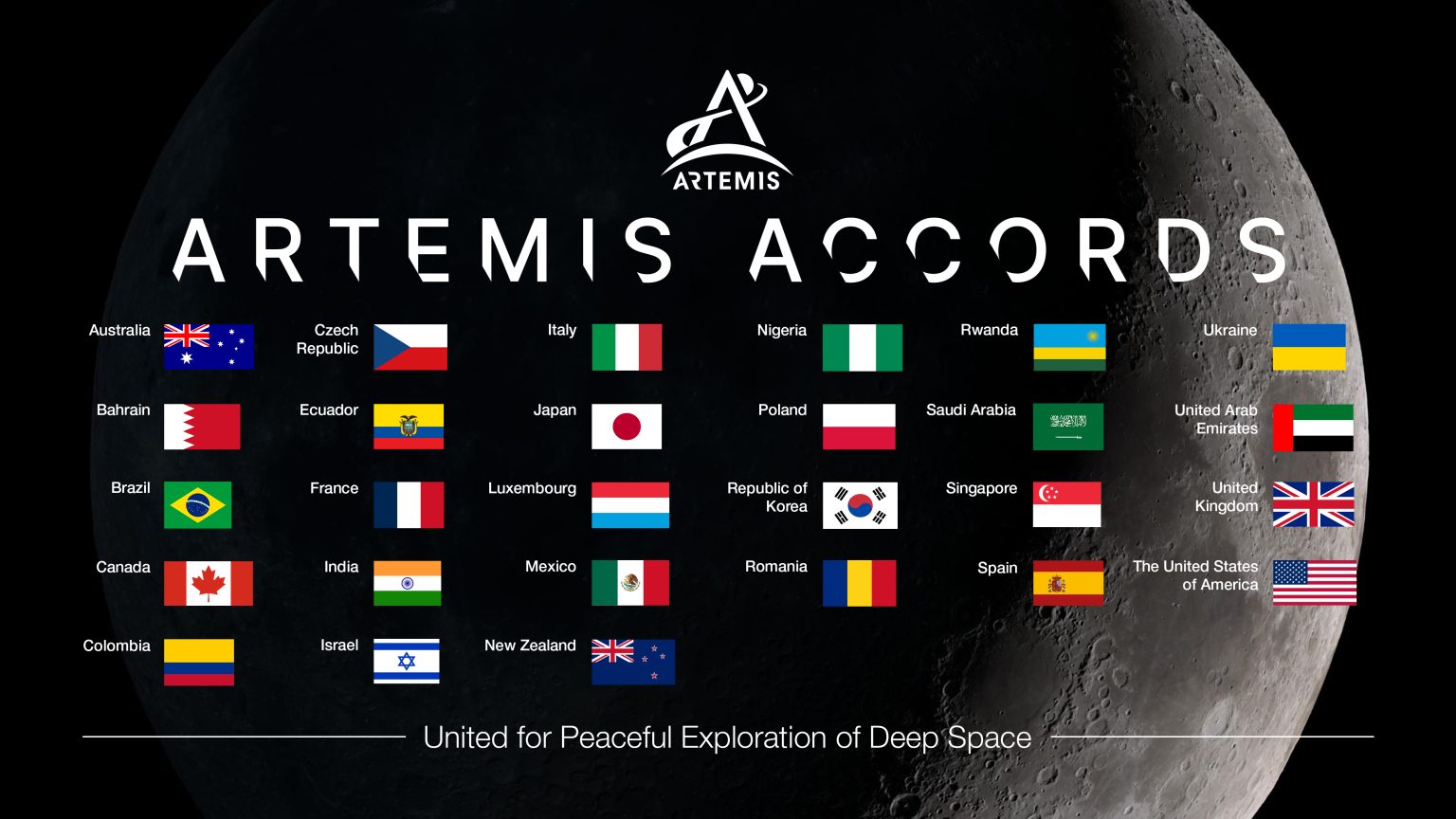
Meanwhile, NASA’s Artemis Accords—signed by the UAE in 2020—have accelerated the country’s space ambitions, with the New Mexico training serving as a direct pipeline to the Artemis II and III missions. The UAE’s participation reflects a broader shift in global space cooperation, where Middle Eastern nations are increasingly leveraging partnerships with the U.S. and other spacefaring entities to bypass traditional barriers in astronautics.
Who are the UAE astronauts, and what does their New Mexico training entail?
The two astronauts—whose identities remain under wraps for security reasons—were chosen from a competitive selection process launched in 2021. Both hold advanced degrees in engineering or life sciences, with one specializing in robotics and the other in biomedical research. Their training in New Mexico builds on the UAE’s first astronaut program, which sent Hazzaa Al Mansoori to the International Space Station (ISS) in 2019.
At the ISIC facility, the astronauts are undergoing:
- High-altitude survival drills: Operating in low-oxygen conditions to simulate lunar surface challenges.
- Geological fieldwork: Identifying rock samples and terrain features using tools modeled after those used in Apollo-era Moon missions.
- Emergency response training: Practicing evacuation protocols in remote, high-desert conditions.
- Team coordination exercises: Working alongside international astronauts and NASA personnel to refine mission protocols.
According to NASA’s Artemis program updates, the UAE’s inclusion in this phase aligns with the agency’s goal of fostering “diverse and inclusive” space exploration. “The UAE isn’t just an observer in this process—they’re active participants in shaping how future lunar missions will operate,” said a NASA spokesperson.
Key point: The New Mexico training is the first time UAE astronauts have engaged in simulated lunar surface operations, a critical step before potential Artemis II or III assignments.
Why New Mexico? The science behind choosing this training ground
The high-altitude deserts of southern New Mexico—particularly the White Sands Missile Range and nearby areas—were selected for their resemblance to the Moon’s surface. The region’s:
- Elevations exceeding 2,500 meters: Mimics the reduced atmospheric pressure astronauts will face on the Moon.
- Volcanic rock formations: Provide a geological analog to lunar basalt, helping astronauts practice sample collection.
- Remote, isolated terrain: Tests communication delays and self-sufficiency in environments with no immediate rescue options.
Dr. Sarah Al Amiri, the UAE’s Minister of State for Advanced Technology and chair of the UAE Space Agency, highlighted the strategic choice in a recent interview. “We needed a location that could push our astronauts beyond their comfort zones,” she said. “The Moon isn’t just a destination—it’s an extreme environment, and New Mexico gives us the closest Earth-based approximation.”
Historically, similar high-altitude training has been used by NASA for Apollo astronauts and, more recently, by China’s lunar program. However, the UAE’s program stands out for its emphasis on international collaboration, with NASA providing direct oversight and access to Artemis mission data.
Comparison: While China’s astronauts train in Tibet’s high-altitude regions, the UAE’s New Mexico program integrates real-time Artemis mission protocols, giving Emirati astronauts a direct path to lunar assignments.
How does this training fit into the UAE’s broader space strategy?
The New Mexico training is part of a three-phase plan outlined by the UAE Space Agency to position the country as a leader in space exploration by 2030:
- Phase 1 (2017–2021): Launching the first Arab astronaut to the ISS (Hazzaa Al Mansoori) and establishing the MBRSC as a regional hub.
- Phase 2 (2022–2025): Expanding astronaut corps, developing satellite technology for lunar missions, and securing Artemis Accords partnerships.
- Phase 3 (2026–2030): Targeting a crewed lunar mission, with potential contributions to Artemis base construction and in-situ resource utilization (ISRU) research.
Analysts note that the UAE’s approach differs from traditional space powers by:
- Focusing on commercial and scientific collaboration rather than state-led competition.
- Prioritizing diverse astronaut profiles, including women and engineers from non-traditional backgrounds.
- Leveraging private-sector partnerships, such as the MBRSC’s ties with Lockheed Martin and Northrop Grumman for Artemis hardware.
“The UAE isn’t just sending astronauts to the Moon—they’re building an ecosystem,” said Space Foundation’s 2023 Global Space Report. “Their New Mexico training is about proving they can operate at the highest levels of international space cooperation.”
Why it matters: The UAE’s lunar ambitions are tied to its economic diversification strategy, with space technology seen as a key driver of innovation in sectors like AI, robotics, and advanced materials.
What are the challenges—and what could go wrong?
Despite the progress, experts identify several hurdles the UAE must overcome:
“The biggest risk isn’t technical—it’s political.”
— Dr. Emily Crawford, space policy analyst at the Secure World Foundation
Key challenges include:
- Scheduling conflicts: Artemis missions face delays (e.g., Artemis II pushed to 2025), which could impact the UAE’s timeline for lunar assignments.
- Radiation exposure: Long-duration lunar missions require advanced shielding, an area where the UAE is still developing expertise.
- International competition: China’s accelerated lunar program and Russia’s potential return to the Moon could divert resources from Artemis partners.
- Public perception: Maintaining domestic support for a program with no immediate economic return requires consistent high-profile achievements.
Additionally, the UAE’s reliance on U.S. infrastructure—such as the New Mexico training facilities—raises questions about long-term autonomy. While NASA’s Artemis Accords emphasize shared use of facilities, some analysts warn that geopolitical shifts could limit access.
Case study: India’s Chandrayaan-3 mission demonstrated that even successful lunar landers face unpredictable delays. The UAE’s program must account for similar uncertainties.
What happens if the UAE astronauts succeed—and what’s the endgame?
If the New Mexico training leads to a successful Artemis assignment, the UAE could achieve several firsts:

- First Arab astronaut on the Moon, following Hazzaa Al Mansoori’s ISS mission.
- First Gulf nation to contribute to a lunar base, potentially through Artemis’s planned Base Camp infrastructure.
- First non-traditional space power to operate independently in deep space, reducing reliance on Western or Russian systems.
Beyond symbolism, a lunar mission would:
- Accelerate the UAE’s space technology exports, including satellite components and remote-sensing tools.
- Boost STEM education in the region, with universities like NYU Abu Dhabi expanding space-related curricula.
- Position the UAE as a mediator in space diplomacy, particularly in the Middle East and Africa.
According to a 2023 Dubai Future Accelerators report, the economic impact of a successful lunar program could exceed $10 billion over a decade, driven by new industries like space tourism, mining, and energy.
Long-term vision: Officials have hinted at ambitions beyond Artemis, including potential missions to Mars in the 2040s. “The Moon is our proving ground,” said a senior UAE Space Agency official. “But our ultimate goal is to become a multi-planetary civilization.”
FAQ: Key questions about the UAE’s Moon training and space ambitions
Q: How many UAE astronauts are currently training in New Mexico?
A: Two astronauts are undergoing the six-week program at the International Space Innovation Center (ISIC). Their identities are being kept confidential for security reasons.
Q: Will the UAE astronauts walk on the Moon?
A: While not guaranteed, officials have stated their goal is to have an Emirati astronaut on the lunar surface by 2030, likely as part of an Artemis mission.
Q: How does this training differ from what other countries do?
A: Unlike China’s high-altitude training in Tibet—which focuses on self-sufficiency—the UAE’s New Mexico program is deeply integrated with NASA’s Artemis protocols, giving astronauts direct access to mission-critical systems.
Q: What technology is the UAE developing for lunar missions?
A: The UAE is collaborating with partners like Lockheed Martin on lunar rovers and habitat modules, while its MBRSC is testing 3D-printed construction techniques for potential Moon bases.
Q: Could the UAE launch its own Moon mission without NASA?
A: While theoretically possible, current plans rely on Artemis partnerships. The UAE lacks the heavy-lift rockets (like SpaceX’s Starship or NASA’s SLS) needed for independent lunar missions.
Q: How is the UAE funding this program?
A: Funding comes from the UAE government’s $5.4 billion space sector investment plan, with additional support from private-sector partnerships and international collaborations.
Q: What’s the timeline for a UAE astronaut reaching the Moon?
A: The earliest realistic window is 2029–2030, contingent on Artemis mission schedules and astronaut performance in training.
The UAE’s astronauts in New Mexico are more than just trainees—they’re the vanguard of a nation rapidly transitioning from oil-dependent economy to a spacefaring power. Their success in the desert could determine whether the Gulf becomes a permanent fixture in the next era of lunar exploration. With Artemis missions looming and global competition intensifying, the next few years will reveal whether the UAE’s bold bets on space pay off—or if the high-altitude deserts of New Mexico remain its highest achievement.
For now, the focus remains on the training: one simulated lunar step at a time.
