SIRT7’s Role in X Chromosome Regulation: A Breakthrough in Genetic Research
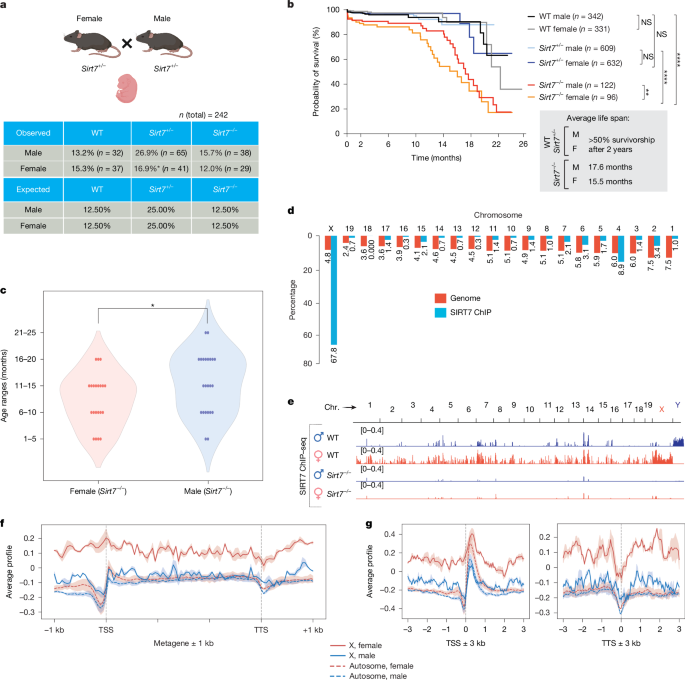
A recent study published in Nature has uncovered a critical function of the SIRT7 protein in maintaining genetic balance, particularly in female cells. Researchers identified that SIRT7 plays a pivotal role in dosage compensation, a process that ensures equal gene expression between sexes. This discovery, according to the study’s lead authors, could reshape understanding of chromosomal stability and its implications for genetic disorders.
What Is SIRT7 and Why Is It Important?
SIRT7, a member of the sirtuin family of proteins, has long been associated with cellular stress responses and longevity. However, its specific role in X chromosome regulation was previously unclear. The new research, conducted by a team at the University of California, San Francisco, reveals that SIRT7 acts as a molecular safeguard for the female X chromosome, preventing excessive gene activity that could disrupt cellular function.

“SIRT7 isn’t just about aging or metabolism,” said Dr. Emily Zhang, a co-author of the study. “It’s a key player in maintaining the delicate balance required for proper gene expression in females.” The team’s experiments on mouse models showed that SIRT7 deficiency led to abnormalities in X chromosome inactivation, a process crucial for female development.
The Mechanism of Dosage Compensation
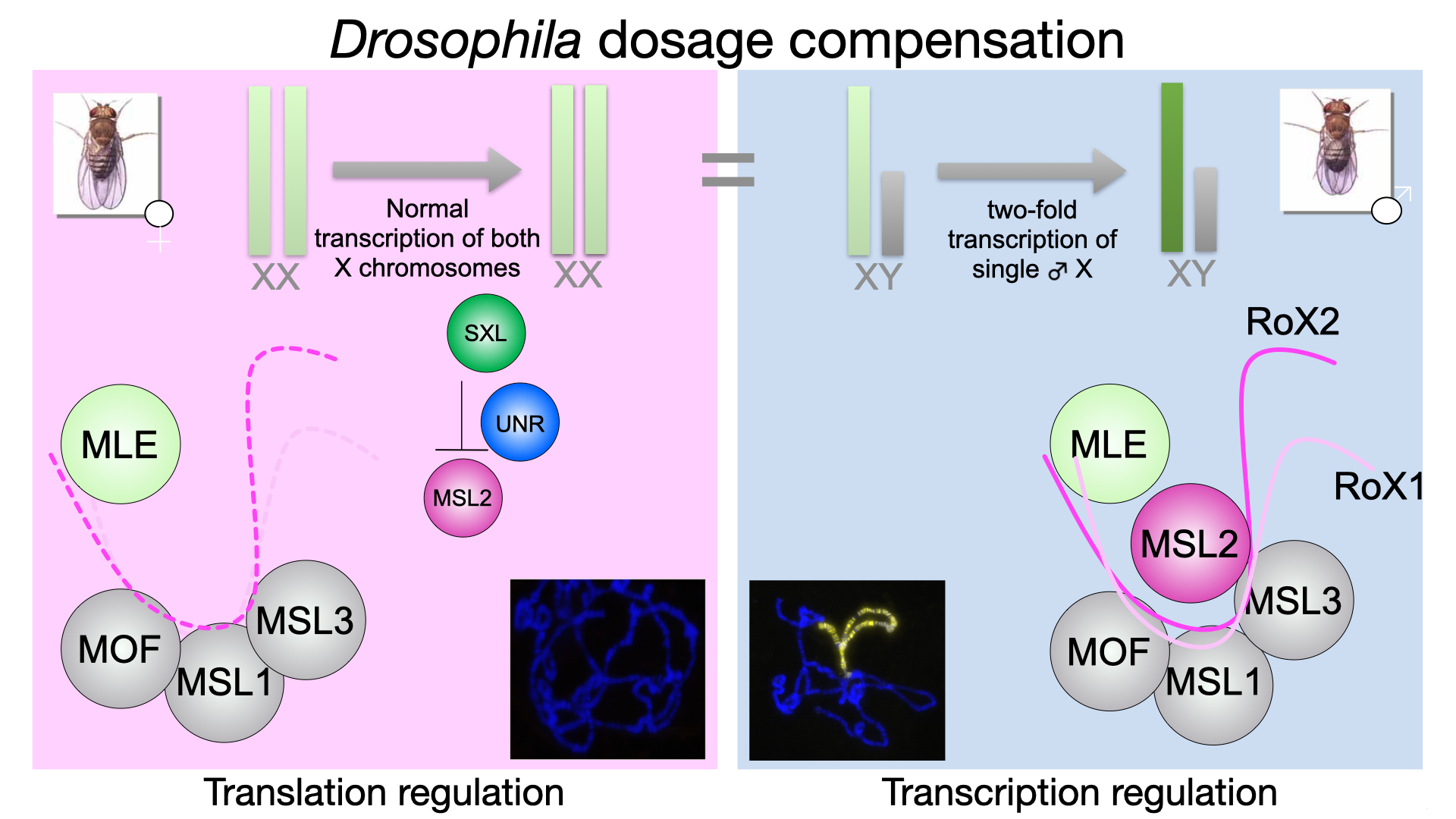
Dosage compensation ensures that organisms with two X chromosomes (females) do not produce twice the amount of X-linked gene products compared to those with one X chromosome (males). In mammals, this is achieved through X chromosome inactivation (XCI), where one of the two X chromosomes in female cells is silenced. The study found that SIRT7 interacts with proteins involved in this silencing process, reinforcing the stability of the inactive X chromosome.
According to the research, SIRT7 contributes to the formation of heterochromatin, a tightly packed form of DNA that prevents gene activation. “Without SIRT7, the X chromosome becomes more susceptible to transcriptional errors,” explained Dr. Michael Torres, a geneticist at the National Institutes of Health. “This could lead to a range of developmental issues or increased vulnerability to diseases.”
How Was the Discovery Made?
The findings emerged from a series of experiments designed to track SIRT7’s activity in different cell types. Using CRISPR gene-editing technology, researchers created SIRT7-deficient cells and observed the effects on XCI. They found that in the absence of SIRT7, the inactive X chromosome showed signs of reactivation, leading to imbalanced gene expression.

Further analysis revealed that SIRT7 works in tandem with other epigenetic regulators, such as histone deacetylases, to maintain chromosomal stability. “It’s like a team effort,” said Dr. Zhang. “SIRT7 acts as a stabilizer, ensuring that the other components of the dosage compensation system function correctly.”
Implications for Genetic Disorders
The study’s results have significant implications for understanding and treating genetic conditions linked to X chromosome abnormalities. Disorders such as Turner syndrome (where females have only one X chromosome) and Klinefelter syndrome (where males have an extra X chromosome) could benefit from insights into SIRT7’s role.
Experts suggest that therapies targeting SIRT7 might one day help manage these conditions. “If we can modulate SIRT7 activity, we might be able to correct imbalances in gene expression,” said Dr. Torres. However, he cautioned that such applications are still in the early stages of research.
Why This Matters for Science and Medicine
The discovery highlights the complexity of genetic regulation and the interconnectedness of cellular processes. By shedding light on SIRT7’s function, the study provides a new framework for exploring how cells maintain genomic integrity. This could open avenues for research into cancer, where chromosomal instability is a common feature.
Dr. Zhang noted that similar mechanisms might exist in other organisms. “Understanding SIRT7’s role in mice could inform studies on human genetics,” she said. “It’s a stepping stone toward unraveling the broader network of factors that govern gene expression.”
Reactions From the Scientific Community
The findings have sparked interest among geneticists and molecular biologists. Dr. Laura Mitchell, a professor at Harvard University, called the study “a major contribution to the field.” She added, “It bridges a gap in our understanding of how X chromosome regulation is maintained at the molecular level.”
However, some researchers emphasize the need for further validation. “While the results are promising, they need to be replicated in diverse cell types and organisms,” said Dr. James Carter, a biochemist at the University of Cambridge. “This is just the beginning of a longer journey.”
What’s Next for SIRT7 Research?
Future studies will focus on identifying other proteins that interact with SIRT7 and exploring its role in human cells. Researchers also plan to investigate whether SIRT7 dysfunction is linked to specific diseases. “We’re looking at both the big picture and the fine details,” said Dr. Zhang.
Additionally, the team aims to develop tools for monitoring SIRT7 activity in real time. Such innovations could accelerate discoveries in epigenetics and personalized medicine. “The goal is to translate these findings into practical applications,” said Dr. Torres.
