
Scientists remove the extra chromosome that causes Down Syndrome: A Breakthrough in Genetic Engineering
Researchers have successfully eliminated the third copy of chromosome 21 in human pluripotent stem cells, according to reporting by Tech Explorist. This procedure targets the biological root of Down Syndrome, known as Trisomy 21, by reducing the chromosomal count from 47 back to the typical 46. While the work occurred in a laboratory setting rather than in a living patient, the ability to remove an entire chromosome marks a significant shift in genetic research.
How did researchers remove the extra chromosome 21?
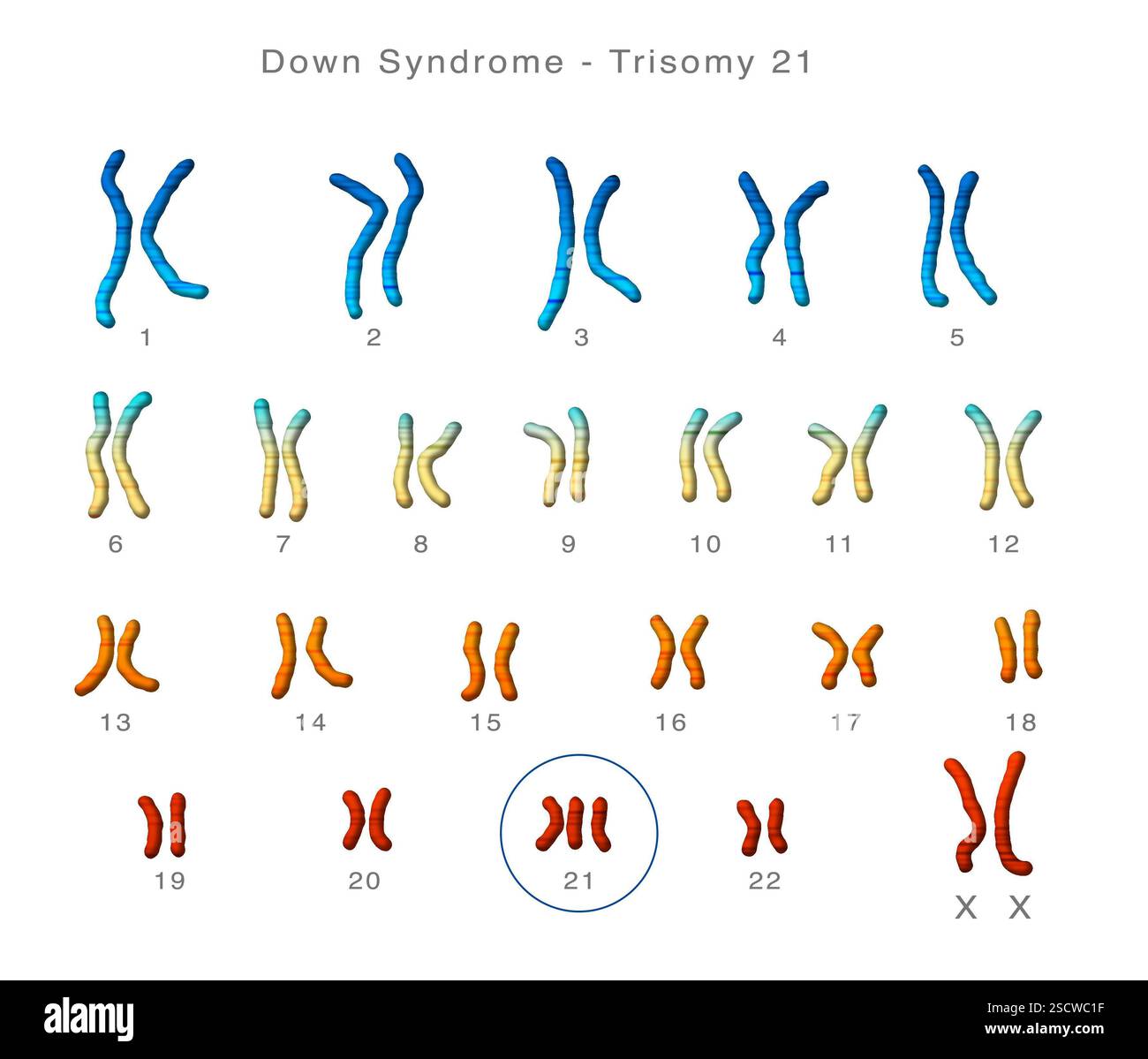
The process involved the use of human pluripotent stem cells, which are unique because they can differentiate into almost any cell type in the human body. In individuals with Down Syndrome, every cell typically contains three copies of chromosome 21 instead of the standard two. This extra genetic material leads to an overexpression of specific proteins, which disrupts normal development and physiological function.
According to the report, scientists utilized advanced genetic tools to identify and isolate the redundant chromosome. Unlike traditional gene editing, which typically targets a small mutation or a single “typo” in the DNA sequence, this method required the removal of a massive structural component of the cell’s nucleus. The researchers targeted the extra chromosome 21, effectively “clearing” the genetic surplus to restore a diploid state—the condition of having two sets of chromosomes.
Key technical milestones in this process include:
- Cell Line Selection: Utilizing stem cells derived from individuals with Trisomy 21.
- Targeted Elimination: Employing molecular mechanisms to trigger the degradation or expulsion of the third chromosome 21.
- Verification: Using karyotyping and genetic sequencing to confirm that the resulting cells contained exactly two copies of chromosome 21 and that no other chromosomes were accidentally damaged.
What is the role of pluripotent stem cells in this research?
Pluripotent stem cells serve as the primary engine for this discovery because they allow scientists to model human diseases without risking the health of a living subject. By creating a “corrected” version of a stem cell line, researchers can now compare two identical sets of cells—one with Trisomy 21 and one without—to see exactly how the extra chromosome alters cellular behavior.
This comparative approach is essential for understanding the “dosage effect.” In genetics, the dosage effect refers to the idea that having too many copies of a gene leads to too much of the protein that gene produces. By removing the extra chromosome, scientists can observe the exact moment the cellular “dosage” returns to normal levels. This allows for a more precise map of which specific genes on chromosome 21 are responsible for the cognitive and physical characteristics associated with Down Syndrome.
The use of these cells also opens the door to “disease-in-a-dish” modeling. Scientists can turn these corrected stem cells into neurons or heart cells to test potential therapies. This means they can observe, in real-time, whether removing the chromosome reverses cellular defects in the brain or heart, providing a blueprint for future medical interventions.
Why is removing a whole chromosome more difficult than editing a single gene?
Most public discussions about genetic engineering center on CRISPR-Cas9, a tool often described as “molecular scissors” that can cut and paste tiny sections of DNA. However, removing an entire chromosome is a vastly more complex operation. A chromosome is not just a string of DNA; it is a massive, tightly coiled structure containing hundreds or thousands of genes.
According to genomic research standards, the challenges of chromosomal removal include:
- Scale: A single gene may consist of a few thousand base pairs, while chromosome 21 contains approximately 48 million base pairs.
- Stability: Removing a whole chromosome can destabilize the entire nucleus, potentially leading to “aneuploidy” (an abnormal number of chromosomes) in other areas, which can cause cell death or cancerous growth.
- Precision: The tool must be able to distinguish between the three nearly identical copies of chromosome 21 to ensure it only removes one, leaving the other two intact.
| Feature | Standard Gene Editing (CRISPR) | Chromosomal Removal |
|---|---|---|
| Target Size | Small DNA sequence (Single Gene) | Large DNA structure (Whole Chromosome) |
| Primary Goal | Correct a mutation or delete a gene | Correct chromosomal count (Aneuploidy) |
| Complexity | High (Precise cutting) | Extreme (Structural reorganization) |
| Risk | Off-target mutations | Nuclear instability/Cell death |
Can this lead to a cure for Down Syndrome in living patients?
It is critical to distinguish between in vitro (laboratory) success and in vivo (living body) application. While the report that scientists remove the extra chromosome that causes Down Syndrome – Tech Explorist highlights a massive technical leap, it does not mean a cure for living people is imminent. Down Syndrome is not a localized disease that can be treated by fixing a single organ; it is a systemic condition present in every cell of the body from the moment of conception.
To “cure” a living person, a therapy would theoretically need to remove the extra chromosome from trillions of cells simultaneously, including neurons in the brain that are already formed. Current medical technology cannot achieve this. However, the research points toward several potential future applications:
Targeted Organ Therapy
Instead of treating the whole body, future medicine might focus on specific organs. For example, if stem cells can be corrected and then reintroduced into the heart or liver, it could potentially mitigate the specific health complications (such as congenital heart defects) often associated with Trisomy 21.
Prenatal Intervention
The most theoretical application involves the earliest stages of embryonic development. If chromosomal removal could be performed at the blastocyst stage, it could potentially prevent the development of the syndrome entirely. This, however, enters a complex territory of bioethics and regulatory oversight.
Drug Discovery
The immediate value of this research is in drug screening. By having “corrected” cells, pharmaceutical companies can test chemicals that mimic the effect of removing the chromosome. If a drug can “silence” the genes on the third chromosome without actually removing the chromosome itself, it could provide a non-invasive way to treat symptoms.
For a deeper look at how these technologies are evolving, see this related explainer on CRISPR and genomic stability.
What are the potential risks and ethical considerations of chromosomal removal?
The ability to manipulate the fundamental architecture of human chromosomes brings significant ethical dilemmas. The scientific community is divided on whether the goal should be to “fix” Down Syndrome or to provide better support and medical care for those living with it.
The Neurodiversity Perspective
Many advocates within the Down Syndrome community argue that the condition is a part of a person’s identity, not a “disease” to be erased. They suggest that focusing on “removal” of the chromosome mirrors eugenics and may stigmatize those currently living with the condition.
The Risk of Off-Target Effects
From a technical standpoint, the risk of “off-target” effects is high. If a genetic tool mistakenly removes a piece of a different chromosome, it could induce severe genetic disorders or trigger oncogenes (genes that cause cancer). The precision required for this work is absolute; a single mistake in a living patient could be catastrophic.
The “Slippery Slope” of Genetic Selection
Bioethicists warn that the technology used to remove an extra chromosome could eventually be used to “optimize” other traits. Once the mechanism for removing or adding entire chromosomes is perfected, the boundary between therapeutic medicine and genetic enhancement becomes blurred.
“The transition from correcting a chromosomal abnormality in a petri dish to applying it in a human embryo is not just a technical hurdle, but a profound moral one.”
How does this compare to previous genetic research?
Historically, research into Down Syndrome focused on treating the symptoms—such as speech therapy for cognitive delays or surgery for heart defects. A previous era of genetic research focused on “gene silencing,” where researchers tried to use RNA interference (RNAi) to turn off the overexpression of genes on chromosome 21. While promising, gene silencing is often temporary and inconsistent.
The removal of the entire chromosome is a different paradigm. It is a permanent structural change. Unlike gene silencing, which is like turning down the volume on a radio, chromosomal removal is like removing the extra speaker entirely. This provides a much cleaner biological result, as it eliminates the source of the imbalance rather than just managing the output.
When compared to the removal of other chromosomes in animal models (such as mice), this human stem cell breakthrough is a pivotal milestone. Human chromosomes behave differently than those of other species, particularly regarding how they fold and interact within the nucleus. Proving that this can be done in human cells confirms that the biological barriers are surmountable.
Common misconceptions about chromosomal removal
Because news of “removing chromosomes” can sound like science fiction, several misconceptions often arise in public discourse. It is important to clarify these points based on current scientific reality.
- Misconception: “This is a cure for people already born with Down Syndrome.”
Correction: This research was performed on stem cells in a lab. There is currently no method to remove a chromosome from every cell in an adult human body. - Misconception: “This is the same as CRISPR gene editing.”
Correction: While similar tools may be used, CRISPR usually edits a sequence of DNA. This research removes an entire structural body (the chromosome), which is a much larger scale of intervention. - Misconception: “Removing the chromosome will immediately restore full cognitive function.”
Correction: In stem cells, the genetic count is restored. However, in a developed human, the brain’s architecture is already formed. Removing a chromosome later in life would not “undo” the developmental changes that occurred during gestation.
Frequently Asked Questions
What exactly is the “extra chromosome” in Down Syndrome?
Down Syndrome is caused by Trisomy 21. In a typical human cell, there are 23 pairs of chromosomes. People with Down Syndrome have three copies of chromosome 21 instead of two, resulting in a total of 47 chromosomes.
Can this technology be used in pregnancy?
Currently, no. The research is limited to pluripotent stem cells in a laboratory. Any application in a pregnancy would require extensive clinical trials and would face massive regulatory and ethical hurdles regarding the editing of human embryos.
Will this research help people with Down Syndrome today?
Yes, but indirectly. By using these corrected cells, scientists can discover new drugs and therapies that treat the symptoms of Down Syndrome more effectively, even if they cannot remove the extra chromosome from the patient’s entire body.
Is removing a chromosome dangerous for the cell?
Yes, it can be. Removing a chromosome can cause the cell to become unstable or trigger apoptosis (programmed cell death). The breakthrough in this research is the ability to do it without killing the cell or damaging other chromosomes.
Who is conducting this type of research?
This work is typically carried out by genomic researchers and stem cell biologists at major universities and biotechnology institutes specializing in aneuploidy and genetic engineering.
As genetic engineering moves from editing single letters of DNA to rearranging entire chromosomal structures, the potential for treating complex genetic conditions grows. The success in removing the extra chromosome 21 from stem cells provides a critical proof-of-concept that may eventually lead to targeted therapies for a variety of chromosomal disorders. The focus now shifts to ensuring these tools can be used safely and ethically, while continuing to investigate the long-term stability of “corrected” human cells.
