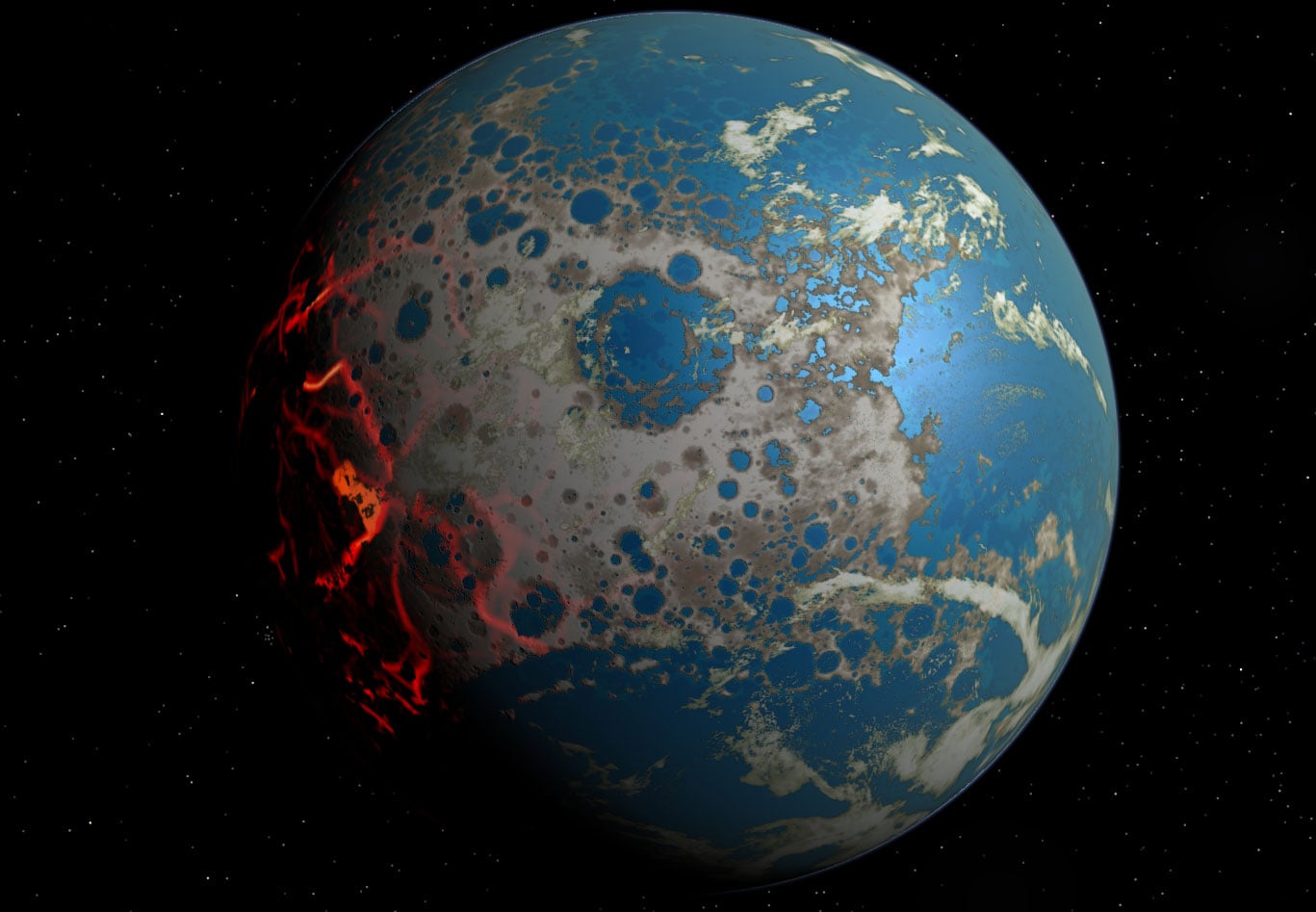
The Surprising Way Asteroids May Have Helped Life Begin on Earth – SciTechDaily
Asteroid impacts, traditionally viewed as agents of mass extinction, may have actually facilitated the start of life on Earth by creating protected, energy-rich hydrothermal systems. According to reports from SciTechDaily, these high-energy events could have pushed early biological precursors underground, shielding them from lethal surface radiation while providing the chemical gradients necessary for the first metabolic processes to emerge.
How Asteroid Impacts Created Habitable Subsurface Zones
The prevailing narrative regarding asteroids focuses on the Cretaceous-Paleogene (K-Pg) event, where a massive impact ended the reign of the dinosaurs. However, scientific analysis suggests a different role for similar events during Earth’s infancy. Instead of merely destroying, these impacts may have acted as biological catalysts by modifying the planet’s crust.
When a large asteroid strikes the Earth, the kinetic energy is converted into immense heat, melting vast quantities of rock and creating deep craters. SciTechDaily reports that these impact sites can form long-lived hydrothermal systems. As seawater or groundwater seeps into the hot, fractured rock of a crater, it creates a circulation system similar to deep-sea volcanic vents. These environments provide three critical components for the origin of life: liquid water, mineral catalysts, and a steady source of chemical energy.
These “impact-induced” hydrothermal vents differ from volcanic vents in their scale and distribution. While volcanic vents are tied to tectonic plate boundaries, asteroid impacts can create these life-sustaining pockets anywhere the crust is breached. This suggests that the early Earth may have been dotted with localized “oases” of habitability long before the planet’s surface became stable.
The Role of the Subsurface as a Biological Refuge
The surface of early Earth was a hostile environment. Without a robust ozone layer, the planet was bombarded by intense ultraviolet (UV) radiation from the sun. Additionally, the “Late Heavy Bombardment” period saw frequent collisions that could boil the oceans and strip away the atmosphere.
Research highlighted by SciTechDaily indicates that the subsurface offered a critical sanctuary. By driving organic molecules and water deep into the crust, asteroid impacts effectively moved the “cradle of life” underground. In these subterranean pockets, early life forms were protected from the volatile surface conditions. This shift in perspective suggests that life did not just survive the asteroid bombardment—it may have been spurred by it.
Key advantages of the underground environment include:
- Radiation Shielding: Several meters of rock provide total protection from UV and X-ray radiation.
- Thermal Stability: Subsurface temperatures remain more constant than surface temperatures, which fluctuated wildly.
- Chemical Concentration: Porous rocks in impact zones can concentrate organic molecules, increasing the likelihood of complex chemical reactions.
Comparing the “Destroyer” and “Creator” Roles of Asteroids
The duality of asteroid impacts is a central theme in modern planetary science. To understand how an object can both kill a species and start a biological lineage, it is necessary to look at the scale and timing of the events.
| Impact Phase | Primary Effect | Biological Outcome | Example/Context |
|---|---|---|---|
| Early Earth (Hadean/Archean) | Crustal fracturing and hydrothermal heating | Catalyzed prebiotic chemistry; created refuges | Early hydrothermal vents |
| Late Heavy Bombardment | Global heating and atmospheric stripping | Pushed life deeper into the crust | Subsurface microbial survival |
| K-Pg Event (66 Ma) | Global winter and food chain collapse | Mass extinction of non-avian dinosaurs | Chicxulub crater |
While the Chicxulub impact is the most famous “destroyer,” the same physical processes—heat, pressure, and water circulation—would have operated during the planet’s first billion years. The difference lies in the existing biological state of the planet. In the Hadean eon, there was no complex ecosystem to destroy, only a chemical soup waiting for a spark. The asteroid provided that spark.
Chemical Delivery vs. Physical Catalyst
The discussion regarding the surprising way asteroids may have helped life begin on Earth – SciTechDaily involves two distinct scientific theories: panspermia and the impact-catalyst theory. It is a common misconception that these are the same, but they describe different mechanisms.
Panspermia suggests that asteroids acted as delivery vehicles. In this model, comets and meteorites brought water, amino acids, and perhaps even microbial life from other star systems to Earth. The asteroid is the “mailman” delivering the ingredients.
The Impact-Catalyst Theory, however, focuses on the energy of the crash. It argues that even if the ingredients were already present on Earth, they needed a specific environment to organize into life. The asteroid is the “chef,” providing the heat and the pressure-cooker environment of a hydrothermal vent to synthesize those ingredients into living cells.
Many scientists now believe these two processes worked in tandem. Asteroids delivered the organic building blocks, and subsequent impacts created the hydrothermal laboratories where those blocks could be assembled.
Implications for the Search for Extraterrestrial Life
If life on Earth began in the subsurface zones created by asteroid impacts, the search for life on other planets must shift. Traditionally, astronomers have looked for “Goldilocks” planets—worlds with surface water and moderate temperatures. However, the SciTechDaily report suggests that the surface is a misleading indicator.
This theory expands the “habitable zone” of a solar system. A planet that appears dead on the surface, such as Mars, could still harbor life in deep-seated hydrothermal systems created by ancient impacts. Mars has a history of heavy bombardment similar to Earth’s, meaning it likely possesses the same types of impact-induced subsurface refuges.
Astrobiologists are now prioritizing targets such as:
- Mars’ Impact Craters: Searching for evidence of ancient subsurface water circulation.
- Europa and Enceladus: Investigating how tidal heating (a different energy source but similar result) creates hydrothermal vents beneath ice shells.
- Exoplanets: Modeling the impact history of planets to determine if they had the “catalyst” events necessary for life.
Common Misconceptions About Asteroids and Life
The idea that asteroids helped start life often meets resistance because of the ingrained image of the “dinosaur killer.” Several points of confusion persist in the public understanding of this topic.
Misconception: “Asteroids only bring water.”
While asteroids did deliver significant amounts of water and organic carbon, their primary contribution to the origin of life may have been the physical energy of the impact. The heat generated by a collision can trigger chemical reactions that would otherwise take millions of years to occur at lower temperatures.
Misconception: “Life could not survive the heat of an impact.”
While the immediate impact site is vaporized, the surrounding areas experience a different phenomenon. The heat radiates outward and downward, creating a gradient. Life does not emerge at the point of impact, but in the hydrothermal systems that form in the aftermath, where temperatures are moderate and stable.
Misconception: “This theory replaces the primordial soup theory.”
The “primordial soup” theory suggests life began in shallow tide pools. The impact-catalyst theory doesn’t necessarily disprove this; it simply provides a more viable alternative for a time when the Earth’s surface was too radioactive and unstable for tide pools to exist. It is possible that life began underground and only migrated to the surface once the atmosphere stabilized.
The Timeline of Impact-Driven Evolution
To understand the progression from a sterile rock to a living planet, one must look at the chronological sequence of planetary events. The relationship between collisions and biology evolved over eons.
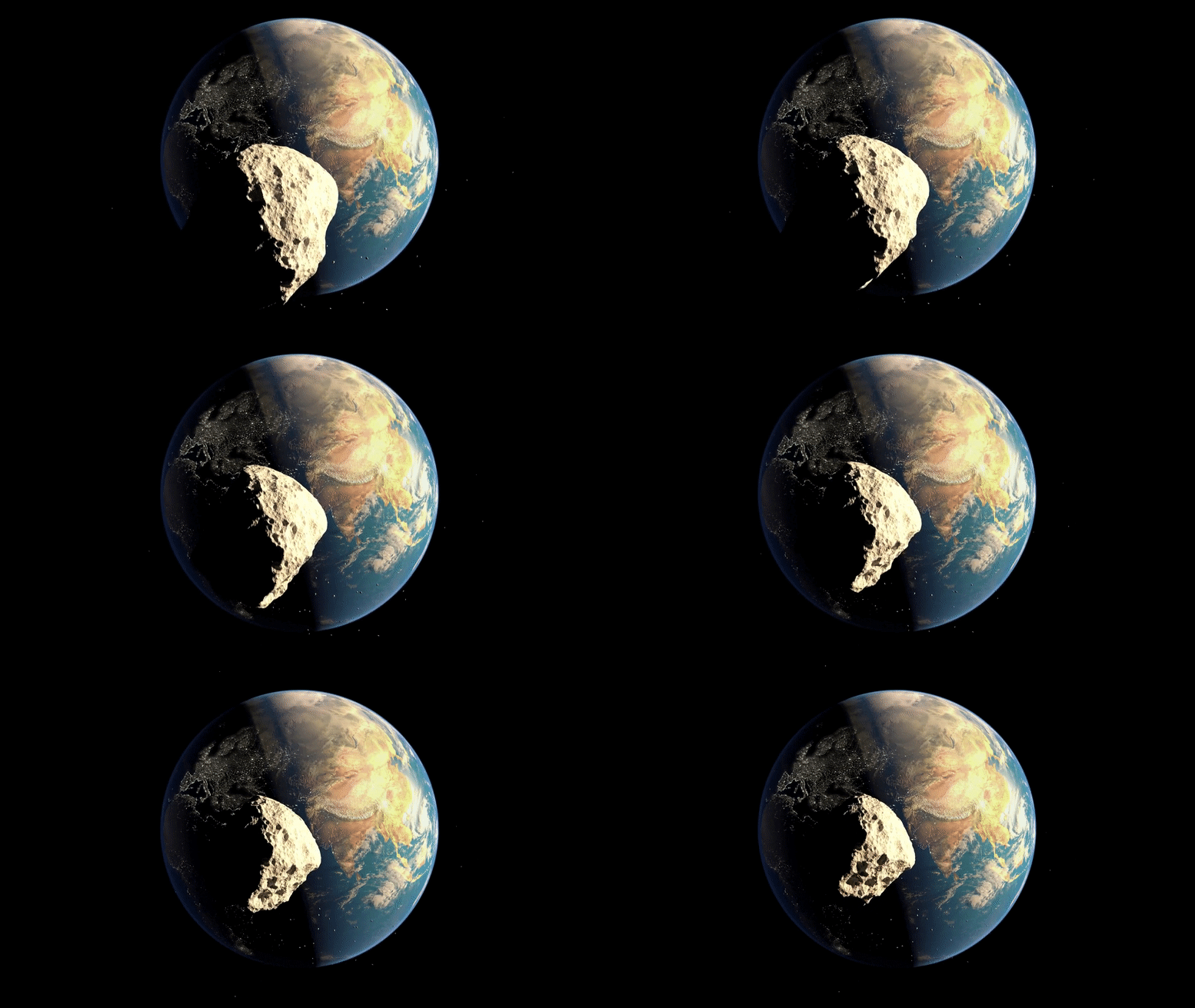
During the Hadean Eon (4.6 to 4.0 billion years ago), the Earth was a magma ocean. Asteroid impacts during this time were likely too frequent and too violent for life to take hold, but they were essential for delivering the heavy elements and water that would eventually make life possible.
As the planet cooled into the Archean Eon (4.0 to 2.5 billion years ago), the frequency of impacts decreased, but their size remained significant. This was the “sweet spot” for the impact-catalyst theory. Impacts were large enough to create deep hydrothermal systems but infrequent enough to allow early biological precursors to stabilize without being wiped out by a daily barrage of fire.
By the Proterozoic Eon, life had moved from these subsurface pockets into the open oceans. The role of asteroids shifted from being a catalyst for origin to being a driver of evolution, where periodic extinctions cleared ecological niches, allowing new and more complex species to emerge.
Frequently Asked Questions
Did the asteroid that killed the dinosaurs also help start life?
No. The Chicxulub impact happened 66 million years ago, long after life had already evolved into complex forms. However, the type of event—a massive asteroid strike—is similar to the events that may have catalyzed the origin of life billions of years earlier.
How does an asteroid impact create a hydrothermal vent?
The impact generates immense heat that melts the crust. As the crater cools, water from the surface or ocean seeps into the fractured rock, is heated by the remaining thermal energy, and then rises back up. This creates a circulating system of hot, mineral-rich water.
Why is the subsurface better for early life than the surface?
The early Earth lacked an ozone layer, meaning the surface was blasted with lethal UV radiation. The subsurface provided a physical shield of rock, while the hydrothermal systems provided the chemical energy that life needs to grow in the absence of sunlight.
Could this process happen on other planets?
Yes. Any rocky planet with water and a history of asteroid impacts could theoretically develop these subsurface hydrothermal oases. This is why scientists are particularly interested in the impact craters of Mars.
What is the difference between panspermia and the impact-catalyst theory?
Panspermia is the theory that asteroids brought life or its ingredients to Earth. The impact-catalyst theory is that the energy and environment created by the impact allowed life to form from ingredients already present.
The shift in scientific thinking regarding asteroids reveals a complex relationship between catastrophe and creation. By reframing the “dinosaur killer” as a potential “life bringer,” researchers are uncovering a planetary history where destruction was a prerequisite for existence. The evidence suggests that the very events that make space seem hostile may be the reason we are here to observe it.
For those interested in how these planetary dynamics affect our understanding of the cosmos, a related explainer on astrobiology provides further context on the search for life beyond Earth.
