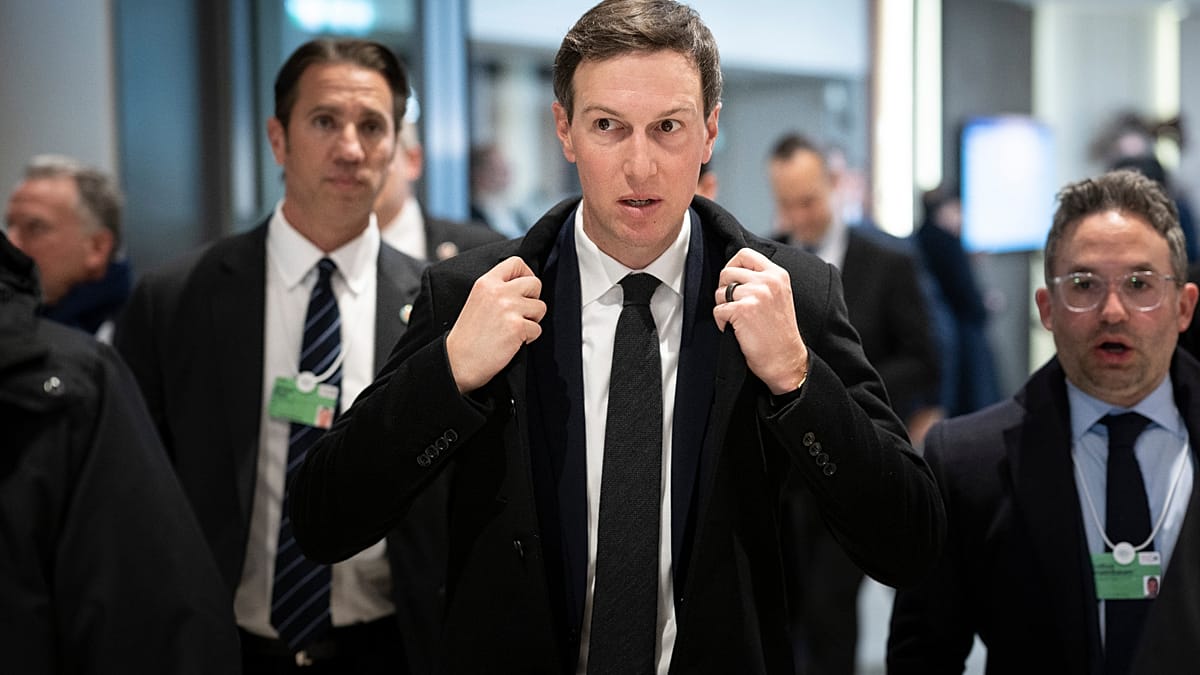
Who is the man funding Albania’s controversial property deal?
Jared Kushner, the former senior advisor to U.S. President Donald Trump, is the investor funding a luxury beach resort project in Albania. The deal has triggered massive public protests and official government probes into the legality of the land acquisition, though the Albanian Prime Minister has stated the project will move forward.
The details of the Albanian seaside resort project
The controversy centers on a high-end tourism development on the Albanian coast, backed by Jared Kushner. While the project is framed as a boost to the nation’s tourism sector, it has become a flashpoint for political unrest. According to reports from Politico.eu, Albanian authorities have launched a probe into the seaside resort project to determine if the property deal followed legal protocols.
The project involves the acquisition of prime coastal land, a move that has drawn scrutiny from both local activists and international observers. The primary tension lies between the government’s desire for foreign direct investment and the public’s concern over land rights and transparency. According to the Irish Independent, the Albanian Prime Minister has remained firm in his support for the development, asserting that the resort will be built despite the scale of the public backlash.
Key elements of the dispute include:
- Land Acquisition: Questions regarding how the specific seaside plots were secured for the project.
- Environmental Impact: Concerns from local groups about the effect of a massive luxury complex on the Mediterranean coastline.
- Political Influence: Allegations that the investor’s political connections facilitated a deal that would not be available to other developers.
Who is Jared Kushner and why is his involvement controversial?
To understand why this property deal has sparked such intensity, it is necessary to look at the profile of the man funding it. Jared Kushner served as a senior advisor to the U.S. government during the Trump administration, where he managed high-level diplomatic portfolios, including the Abraham Accords. Since leaving public office, Kushner has focused on private equity through his firm, Affinity Partners.
Kushner’s transition from a powerful government official to a global real estate and investment mogul has been a subject of international scrutiny. Critics argue that his previous political roles provide him with an unfair advantage when negotiating deals with foreign governments. In the case of Albania, the intersection of private profit and political legacy has fueled suspicions of “crony capitalism.”
“The involvement of a former U.S. official in a sensitive land deal in a developing democracy often raises questions about transparency and the rule of law,” according to analysis of the regional political climate.
The controversy is not merely about the money invested, but the perceived lack of a competitive bidding process. Local opposition groups claim that the deal reflects a pattern of granting preferential treatment to well-connected foreigners at the expense of local residents and environmental protections.
Public unrest and the scale of the protests
The reaction on the ground in Albania has been swift and significant. Al Jazeera reports that thousands of people have rallied in the streets, marking some of the largest protests the country has seen against a single development project. These demonstrations are not limited to a small group of activists but have grown into a broader movement against the government’s handling of national assets.
The Times of Israel notes that opposition to the Kushner resort persists, with protesters citing a lack of transparency and the potential displacement of local interests. The rallies often feature demands for the immediate cancellation of the deal and a full, independent audit of the land transfer process.
The protests have evolved through several stages:
- Initial Discovery: Local reports first surfaced regarding the ownership and funding of the coastal plots.
- Grassroots Mobilization: Environmental groups and local residents began organizing small-scale pickets.
- Mass Demonstrations: The movement expanded into city-wide rallies, drawing thousands of citizens who view the deal as a symbol of government corruption.
The Albanian government’s stance and the official probe
Despite the mounting pressure from the streets, the Albanian administration has not wavered. According to the Irish Independent, the Prime Minister has explicitly stated that the beach resort will be built. The government’s logic is rooted in economic development; they argue that a project of this magnitude will bring high-paying jobs, increase luxury tourism, and signal to other global investors that Albania is open for business.
However, the government is attempting to balance this resolve with a veneer of legality. Politico.eu reports that Albanian authorities are currently probing the project. This investigation is ostensibly designed to ensure that all regulatory hurdles were cleared and that the land was acquired legally. Critics, however, view the probe as a strategic move to quiet the protesters without actually intending to halt the construction.
| Stakeholder | Position | Primary Motivation |
|---|---|---|
| Jared Kushner | Investor/Developer | Commercial profit and portfolio expansion. |
| Albanian Government | Supporter | Economic growth and foreign investment. |
| Local Protesters | Opponents | Land rights, transparency, and ecology. |
| Albanian Authorities | Investigating | Legal verification and regulatory compliance. |
Economic implications vs. social costs
The debate over the Kushner resort mirrors a larger conflict playing out across many Balkan nations: the tension between rapid modernization and the preservation of local sovereignty. On one hand, the government points to the “multiplier effect” of luxury tourism. A resort of this scale typically brings infrastructure improvements, such as better roads and upgraded utilities, which can benefit nearby villages.
On the other hand, the social costs are often borne by the local population. When prime coastal land is privatized for luxury use, it often restricts public access to beaches and drives up the cost of living for residents. According to reports from Al Jazeera, the protests are as much about the “right to the coast” as they are about the specific identity of the investor.
Furthermore, the use of a high-profile American figure as the lead investor adds a geopolitical dimension. For the Albanian government, having a name like Kushner attached to the project provides a certain level of international prestige and a perceived link to U.S. business interests. For the opposition, it represents a form of “economic colonialism” where foreign elites can bypass local laws through political leverage.
Comparing the narratives: Media and Official reports
There is a notable contrast in how different outlets frame this story. While local Albanian reports focus heavily on the visceral anger of the protesters and the perceived betrayal by the state, international outlets like Politico.eu focus more on the regulatory and legal mechanics of the probe. The Irish Independent highlights the executive determination of the Prime Minister, framing the story as a clash of wills between a leader and his populace.
This divergence in framing reveals the core of the issue: is this a legal dispute over land deeds, or a political crisis over governance? The government insists it is the former, while the thousands of people in the streets insist it is the latter.
To get a clearer picture, one must look at the timeline of events as reported across these sources:
| Event | Context/Source | Outcome |
|---|---|---|
| Deal Announcement | Initial project filings | Kushner linked to luxury resort funding. |
| Public Outcry | Al Jazeera / Times of Israel | Mass rallies and protests erupt nationwide. |
| PM Statement | Irish Independent | Confirmation that the project will proceed. |
| Official Probe | Politico.eu | Authorities begin investigating the deal’s legality. |
Common misconceptions about the property deal
Several misunderstandings have circulated regarding the funding and the nature of the deal. First, some believe the U.S. government is directly involved in the funding. This is incorrect; the investment is private, coming from Jared Kushner’s own business ventures and his private equity firm. There is no evidence of official U.S. Treasury or State Department funding for the resort.
Second, there is a misconception that the “probe” mentioned by Politico.eu is a move to cancel the project. In the context of Albanian politics, such investigations often serve as a way to “clean” a deal—identifying minor clerical errors to fix so that the project can proceed with a stamp of official approval, rather than as a genuine attempt to reverse the land transfer.
Finally, some observers assume the protests are purely environmental. While ecology is a factor, the primary driver is the perceived lack of transparency. The “who” (Kushner) is just as important as the “what” (the resort) because it symbolizes the ease with which global elites can access national resources.
Related context for further reading
- Detailed explainer on Balkan land privatization laws
- Analysis of foreign direct investment in Southeast Europe
- Report on the rise of luxury tourism in the Mediterranean
Frequently Asked Questions
Who is the man funding the Albanian resort?
The project is funded by Jared Kushner, a former senior advisor to the U.S. government and the son-in-law of Donald Trump. He is investing through his private business interests.
Why are people protesting the property deal?
Protesters are concerned about the lack of transparency in how the land was acquired, the potential for environmental damage, and the perception that political connections were used to bypass fair competition.
Is the Albanian government stopping the project?
No. According to the Prime Minister, the government intends to move forward with the construction of the resort despite the public protests.
Is there a legal investigation into the deal?
Yes, Politico.eu reports that Albanian authorities have launched a probe into the seaside resort project to investigate the legality of the property deal.
Where is the resort located?
The project is located on the Albanian coast, targeting the luxury tourism market in the Mediterranean region.
The standoff between the Albanian government and the protesting public remains unresolved. While the legal probe continues, the Prime Minister’s commitment to the project suggests that the resort will eventually be built. The outcome will likely serve as a litmus test for how Albania handles the tension between attracting high-profile foreign investment and maintaining public trust in the rule of law.
