Petri dishes transformed microbiology research and modern medical science
The development of the Petri dish transitioned laboratory science from unpredictable liquid cultures to precise, observable experiments. This vessel remains a cornerstone of modern medical research and global food safety protocols.

Before the arrival of the standardized Petri dish, the study of microbiology was defined by unpredictable, opaque containers. Researchers attempting to isolate individual microorganisms were often forced to rely on swirling bacterial broths, a chaotic medium that made genuine scientific precision nearly impossible. By transitioning from unstable liquid cultures to a flat, gelled surface, science gained the visibility and control necessary to move beyond guesswork and into the era of modern medicine. This shift, anchored by the development of nutrient agar, remains a fundamental pillar of contemporary science.
The innovation arrived through a practical redesign of existing laboratory techniques. Julius Richard Petri, a German bacteriologist working as an assistant to Robert Koch, addressed the persistent failure of open vessels to maintain sterility. His solution was an elegant, lidded glass container that allowed for essential air exchange while protecting the growth medium from airborne contamination. According to Science Equip, this adjustment transformed the lab experience: processes that once spanned weeks or were deemed impossible could now be observed with clarity in a matter of days or hours.
Related media

The Architecture of Discovery
The Petri dish became more than just a storage vessel; it provided a clear stage for identifying life-saving breakthroughs. The most iconic application occurred in 1928, when Alexander Fleming noticed a mould contaminant destroying surrounding Staphylococcus bacteria within a culture plate. This accidental observation established the foundation for the antibiotic era. Beyond individual discoveries, the use of agar-based plates is now essential for quality control in the global food supply. By allowing for the isolation and counting of pathogens such as Salmonella, Listeria, and E. Coli, these tools enable labs to verify sanitation standards from raw material processing to final packaging.
The utility of the dish has since expanded into diverse disciplines, including bioremediation and synthetic biology. In these fields, researchers use solid media to monitor genetically modified organisms or to identify microbes capable of breaking down environmental pollutants. Even space agencies have utilized these tools, deploying them to the International Space Station to observe microbial behavior in zero-gravity environments.
Refining the Germ Theory
The success of the Petri dish was deeply entwined with the broader historical understanding of microbes. In 1856, Louis Pasteur conducted research into the souring of beet root alcohol, leading to his discovery that fermentation was driven by yeast rather than simple chemical processes. As documented by Google Sites, Pasteur identified rod-shaped microbes in spoiled alcohol, speculating that these organisms were the culprits behind the spoilage. This insight paved the way for the germ theory of disease, which later enabled the development of vaccines for conditions such as rabies and anthrax. Pasteurization—a process of controlled heating—eventually provided a critical industrial method to kill harmful microorganisms without altering the quality of products like beer and wine.
Evolution of Agricultural Infrastructure
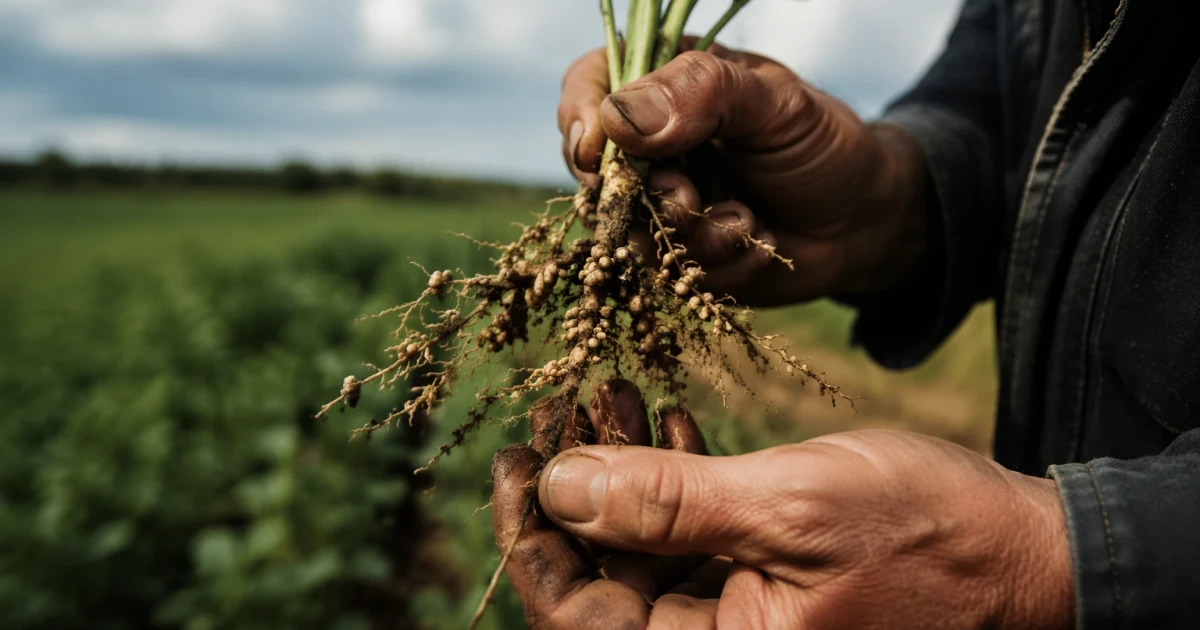
While the Petri dish advanced laboratory precision, parallel shifts in agricultural science have reshaped global land use. Nitrogen-fixing bacteria, specifically Rhizobia, act as a biological engine for soil health by converting atmospheric nitrogen into forms usable by legumes. According to The Sheffield Press, this symbiotic partnership supplies a major share of the nitrogen needed for agriculture, reducing the reliance on synthetic chemistry. The USDA maintains significant resource collections of these bacteria, emphasizing that access to effective strains is a vital component of economic resilience for farms unable to afford constant fertilizer inputs.
This reliance on subterranean biology exists within the context of the larger, shifting history of food production. The Neolithic Revolution, beginning approximately 11,700 years ago, saw humans transition from nomadic foraging to settled agricultural societies. As noted in research concerning the Neolithic Revolution, this period birthed not only new food-production techniques but also cross-group organizations and the initial foundations of centralized administration.
What to Watch Next
Despite the long history of these tools, science continues to evolve as researchers encounter the limitations of traditional methods. Conventional Petri dishes are static, often failing to replicate the dynamic, complex environments found in nature, leading to the prevalence of "unculturable" microbial species.
- Microfluidics: Researchers are increasingly turning to miniaturized chambers that simulate natural ecosystems more accurately than solid agar.
- Computational Modeling: New tools are being developed to map microbial interactions that current laboratory cultures cannot fully capture.
As these technologies develop, the simple Petri dish remains a foundational instrument, even as it is supplemented by sophisticated simulations and data-driven ecological models designed to unlock the remaining mysteries of microbial life.
Archypedia is dedicated to independent, evidence-backed reporting. This briefing was synthesized from primary source reporting, corroborated across independent newsrooms, and verified against our Editorial Standards.
Transparency record
Evidence behind this report
This report synthesizes 5 distinct sources. Open the source ledger below to compare the underlying coverage.
Prepared under the Archypedia Editorial Policy by the Niko Vale editorial desk profile. AI-assisted tools may support drafting and verification; public accountability remains with Archypedia. Report an error.