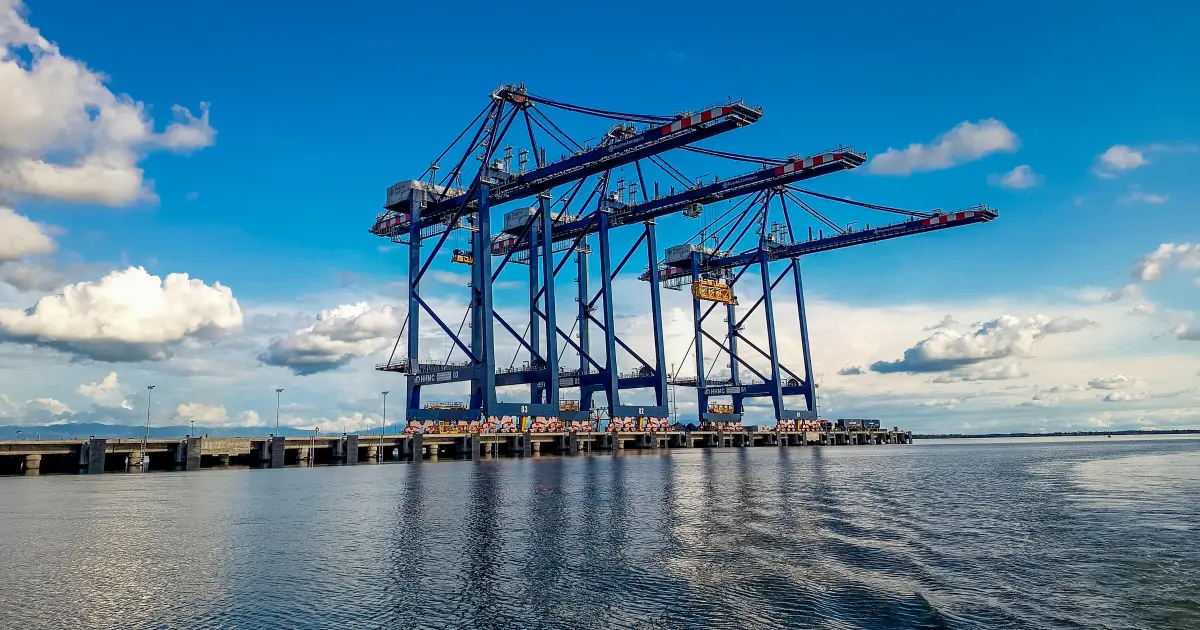
Puerto Antioquia received the Maersk Monte Verde, a vessel capable of transporting more than 5,500 containers, according to local media reports. This arrival serves as a technical validation of the port’s infrastructure, demonstrating its capacity to support large-scale maritime logistics and high-volume trade operations.
Technical Requirements for High-Capacity Vessels
Handling a ship of the Maersk Monte Verde‘s scale requires specific engineering and operational standards. To accommodate vessels that carry over 5,500 containers—standardized as Twenty-foot Equivalent Units (TEUs)—a port must maintain precise berth depths to prevent grounding. Additionally, the facility must deploy ship-to-shore cranes with the reach and lift capacity necessary to service the wider beam of these larger vessels.
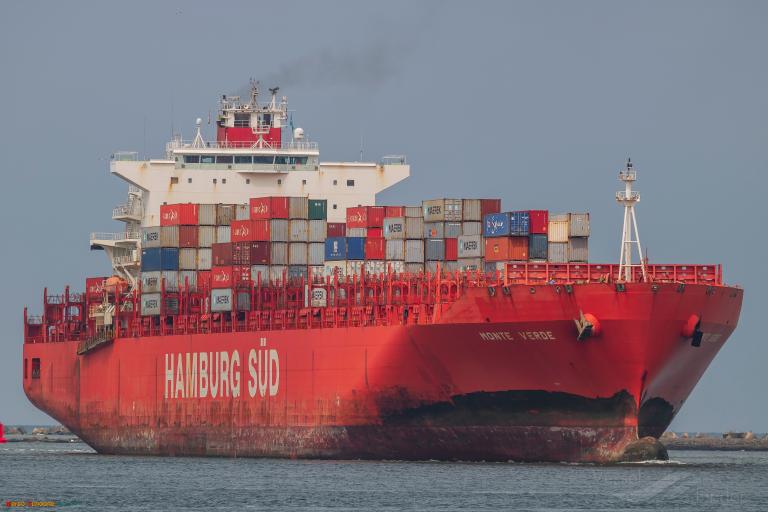
These technical specifications are critical for minimizing turnaround time. Efficient loading and unloading of high-capacity ships reduce the time a vessel spends in port, which directly impacts the operational overhead for shipping lines.
Logistical Implications for Regional Trade
The ability to dock larger ships allows for greater economies of scale in the supply chain. By moving more cargo in a single voyage, shipping operators can reduce the cost per container. According to local reports, this capability is intended to optimize regional trade corridors, potentially lowering the landed cost of goods for importers and increasing the competitiveness of local exporters.
Integrating these larger vessels into the port’s rotation shifts the logistics model toward higher density and lower frequency of shipments, which typically reduces congestion if the land-side infrastructure can match the ship’s discharge rate.
