
Combing the General and the Specific for Urban Science and Policy – The National Tribune
Urban science and policy are shifting toward a hybrid methodology that integrates broad theoretical frameworks with site-specific data to resolve city-scale challenges. This approach, described as combing the general and the specific for urban science and policy, aims to eliminate the failure of “one-size-fits-all” urban planning by anchoring macro-level strategies in the granular realities of local neighborhoods. According to policy analysts, this synthesis allows city governments to apply global best practices while respecting the unique geographic, social, and economic idiosyncrasies of individual districts.
Why Urban Science Requires Both General and Specific Frameworks
The tension between general urban theories and specific local needs has historically created a gap in city governance. General urban science focuses on scalable laws—patterns of density, transit-oriented development, and economic agglomeration that appear across most major cities. These models provide the “what” and “why” of urban growth, offering a roadmap for sustainability and efficiency.
However, specific urban policy deals with the “where” and “how.” It involves the precise placement of a bus stop, the zoning of a single block, or the cultural heritage of a specific plaza. When policymakers rely solely on general models, they risk implementing “cookie-cutter” solutions that ignore local friction. Conversely, focusing only on the specific can lead to fragmented development that lacks a cohesive vision for the city’s future.
Integrating these two scales creates a feedback loop. General theories provide the hypothesis, specific data provides the test, and the results refine the general theory. This iterative process ensures that policy is both visionary and pragmatic.
| Feature | General Urban Science (Macro) | Specific Urban Policy (Micro) |
|---|---|---|
| Focus | Scalable patterns and global trends | Neighborhood dynamics and local constraints |
| Goal | Systemic efficiency and sustainability | Livability and community-specific needs |
| Data Source | Census data, satellite imagery, global benchmarks | Community surveys, hyper-local sensors, zoning maps |
| Risk | Over-generalization (ignoring local context) | Fragmentation (lack of city-wide cohesion) |
How Combing the General and the Specific Improves City Policy
The application of this dual-track approach manifests in several critical areas of urban management. By combining high-level science with local specificity, cities can move from reactive maintenance to proactive design.
Transit and Mobility Integration
General urban science promotes the “15-minute city” concept, where essential services are within a short walk or bike ride from home. While this is a powerful general model, its application must be specific. In a high-density ward in Tokyo, the 15-minute city is an existing reality supported by narrow streets and mixed-use zoning. In a sprawling suburb of Atlanta, achieving the same goal requires specific policy interventions, such as converting vacant strip malls into community hubs or implementing micro-transit shuttles.
Policy analysts argue that applying the Tokyo model to Atlanta without specific modification would fail. Instead, the “combing” method uses the general goal (accessibility) but adapts the specific tool (zoning changes and transit types) to fit the local geography.
Environmental Resilience and Green Infrastructure
On a general level, urban science advocates for “sponge cities”—urban areas designed to absorb and filter rainwater to prevent flooding. This is a general scientific principle. However, the specific implementation varies. A coastal city like Miami requires specific policies regarding sea-wall integration and mangrove restoration, whereas a landlocked city like Berlin might focus on permeable pavements and green roofs.
When these two perspectives are combined, the city doesn’t just buy “green tech”; it implements a localized ecological strategy that aligns with the city’s broader climate goals.
Housing Density and Zoning
General urban science suggests that increasing density near transit hubs reduces carbon emissions and lowers housing costs. This is a broad systemic truth. However, specific policy must address “neighborhood character” and infrastructure capacity. If a city increases density (general) without upgrading the specific sewage lines or school capacities of that neighborhood (specific), the policy creates a crisis rather than a solution.
“The failure of modern urbanism often stems from a divorce between the architect’s blueprint and the citizen’s lived experience. Combing the general and the specific bridges this divide.”
The Role of Technology in Blending Macro and Micro Data
The ability to combine general and specific perspectives has been accelerated by new technological tools. Data science now allows policymakers to toggle between “zoom levels” in real-time, making the synthesis of general and specific information possible at scale.
Digital Twins and Predictive Modeling
Digital twins—virtual replicas of physical cities—allow planners to test general theories in a specific environment. For example, a city can apply a general theory about traffic flow to a digital model of a specific intersection to see if the theory holds true under local conditions. This removes the guesswork from policy implementation.
IoT and Hyper-Local Sensing
The Internet of Things (IoT) provides the “specific” data needed to inform “general” policy. Sensors that track air quality on a block-by-block basis allow a city to move from a general air quality policy (which might be based on one city-wide sensor) to a specific intervention (such as pedestrianizing a specific street that consistently shows high pollution spikes).
GIS and Spatial Analysis
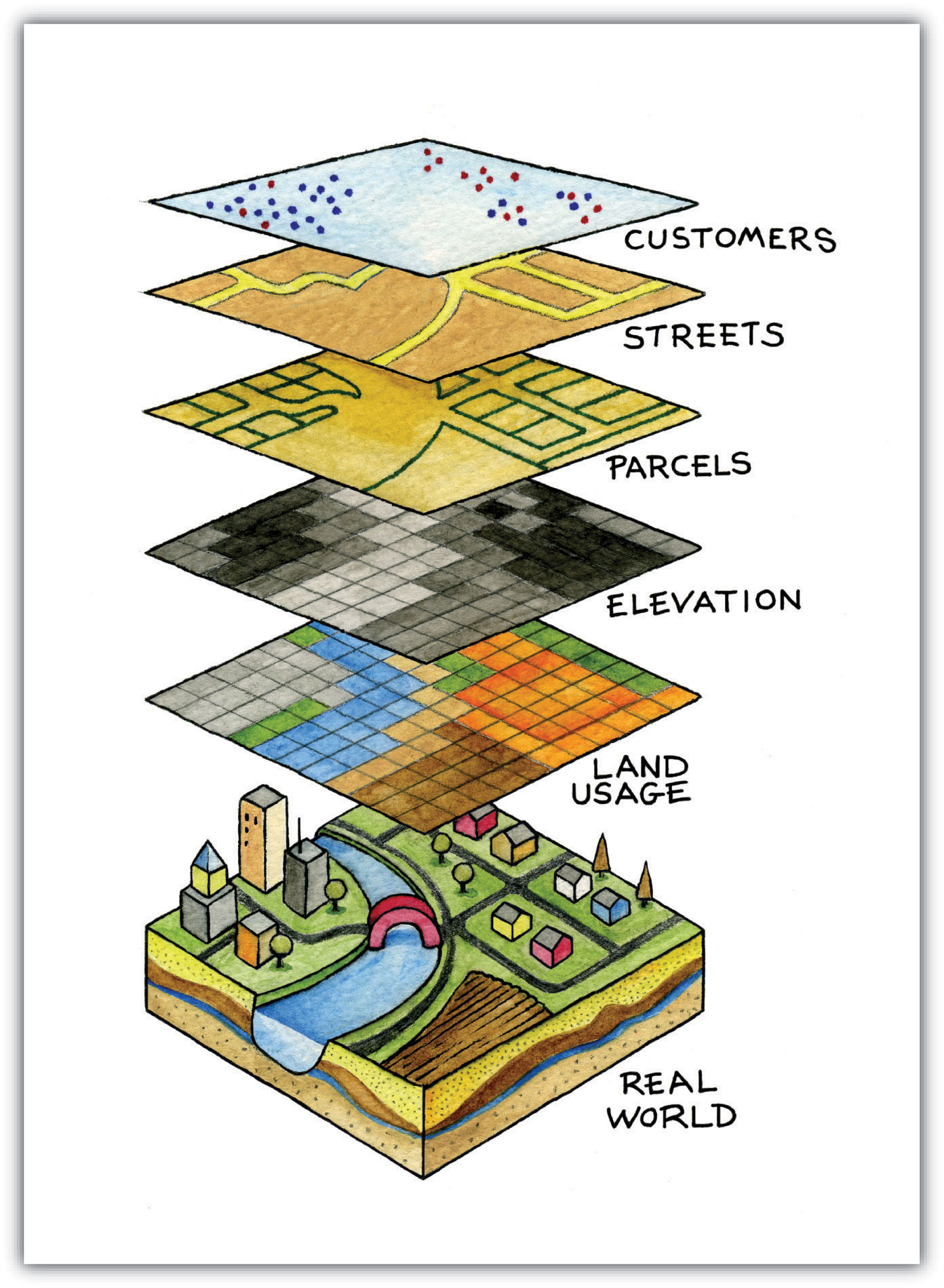
Geographic Information Systems (GIS) enable the layering of general datasets (like regional economic trends) over specific maps (like property ownership or utility layouts). This layering is the literal act of “combing” data, allowing policymakers to see where general trends are clashing with specific local constraints.
For those interested in how these tools are implemented, a related explainer on smart city infrastructure provides more detail on the hardware required for this data synthesis.
Common Misconceptions About Urban Science and Policy
There are several frequent misunderstandings regarding the integration of general and specific approaches in urban planning.

- Misconception: Local input replaces scientific modeling. In reality, local input (the specific) informs and validates the model (the general). One does not replace the other; they calibrate each other.
- Misconception: General models are “outdated.” General models are not outdated; they are essential for maintaining a city’s long-term trajectory. Without them, a city becomes a collection of disconnected projects rather than a functioning organism.
- Misconception: This approach is only for “Smart Cities.” While technology helps, combing the general and the specific is a philosophical approach to governance. It can be done with paper maps and town hall meetings just as effectively as with AI and sensors, provided the intent is to synthesize the two scales.
Stakeholders and Their Roles in the Synthesis Process
Successfully combining general and specific urban science requires coordination across different levels of authority and expertise. No single entity possesses both the macro-vision and the micro-detail.
The Role of Urban Scientists and Academics
Academics provide the general frameworks. They analyze data from hundreds of cities to identify what works. Their role is to provide the evidence-based “best practices” that serve as the starting point for policy.
The Role of City Planners and Civil Engineers
Planners act as the translators. They take the general science and determine how it fits into the specific physical and legal constraints of the city. They manage the technical transition from theory to asphalt.
The Role of Community Leaders and Residents
Residents provide the “ground truth.” They identify the specific failures of general policies—such as a new bike lane that disrupts a vital local loading zone for small businesses. Their feedback is the primary source of “specific” data that forces the refinement of general models.
The Role of Political Legislators
Politicians provide the legal authority to implement changes. Their challenge is to balance the long-term general goals (e.g., carbon neutrality by 2050) with the immediate specific demands of their constituents (e.g., more parking on Main Street).
Implications for Future Urban Governance
The move toward combing the general and the specific suggests a future where urban policy is more fluid and less prescriptive. Instead of 20-year “Master Plans” that are often obsolete by the time they are printed, cities are moving toward “Adaptive Frameworks.”
These frameworks establish general goals—such as “increasing canopy cover by 20%”—but leave the specific methods to be determined by neighborhood-level data and community preference. This shifts the role of the city government from a top-down commander to a platform provider that enables local solutions within a general strategic boundary.
This shift has significant economic implications. When policies are tailored to specific local contexts, the risk of “white elephant” projects—expensive infrastructure that no one uses—decreases. Investment becomes more efficient because it is targeted based on specific need rather than general assumption.
For further reading on the economic impact of these changes, see our analysis of urban investment trends.
Challenges to Implementing a Hybrid Urban Approach
Despite the benefits, integrating general science with specific policy faces several systemic hurdles.
The “Silo” Effect in Government
Most city governments are organized into silos. The department handling general transit planning rarely communicates with the department handling specific neighborhood zoning. Breaking these silos is necessary to ensure that general goals are supported by specific regulations.
Data Privacy vs. Granularity
The more “specific” the data, the more it risks infringing on individual privacy. Tracking movement patterns at a neighborhood level is essential for urban science, but it requires rigorous anonymization and ethical oversight to maintain public trust.
Political Short-Termism
General urban science often deals with long-term horizons (decades), while specific policy is often driven by short-term political cycles (2–4 years). This creates a tension where long-term general goals are sacrificed for short-term specific wins.
Frequently Asked Questions
What does “combing the general and the specific” actually mean in urban science?
It refers to the process of integrating broad, scalable urban theories (the general) with hyper-local data and community-specific needs (the specific). The goal is to create policies that are scientifically sound yet locally appropriate.
Why can’t cities just use general urban models?
General models provide a baseline for what works on average, but they cannot account for unique local variables such as topography, existing cultural heritage, or specific economic anomalies. Relying only on general models often leads to policies that are rejected by the community or fail in practice.
How does technology help in blending these two approaches?
Tools like Digital Twins, GIS (Geographic Information Systems), and IoT sensors allow planners to visualize how a general policy change will affect a specific street or building in real-time, allowing for precise adjustments before implementation.
Who is responsible for ensuring the “specific” needs are met in city planning?
While city planners manage the technical side, community leaders and residents are the primary sources of specific data. Effective urban governance requires a formal mechanism for this “ground truth” to reach the people designing the general frameworks.
Can this approach be applied to small towns, or is it only for mega-cities?
It is applicable to any settlement. Even a small town can use general science (e.g., principles of walkable downtowns) and adapt them to their specific local identity and economic base.
